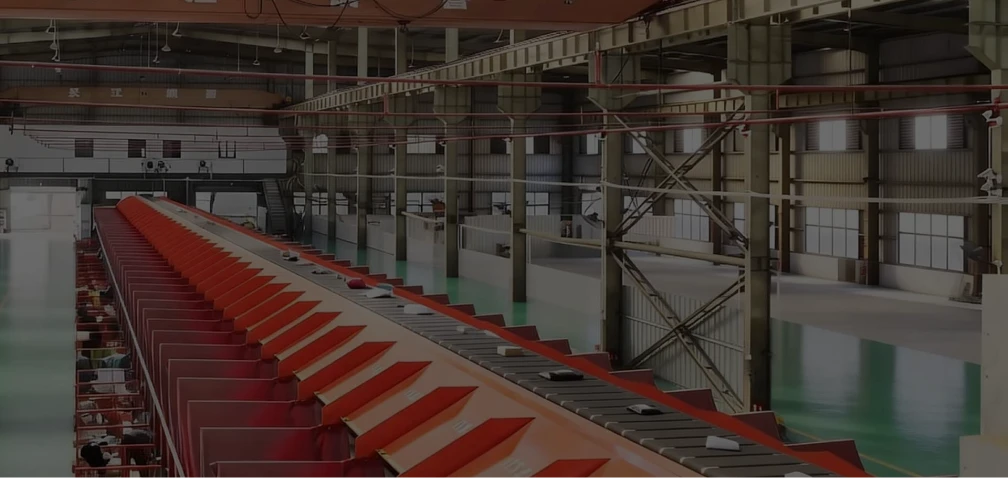
Put Walls in Warehouses and Fulfillment Processes
Multi-Vehicle Dual-Channel Seeding Wall System
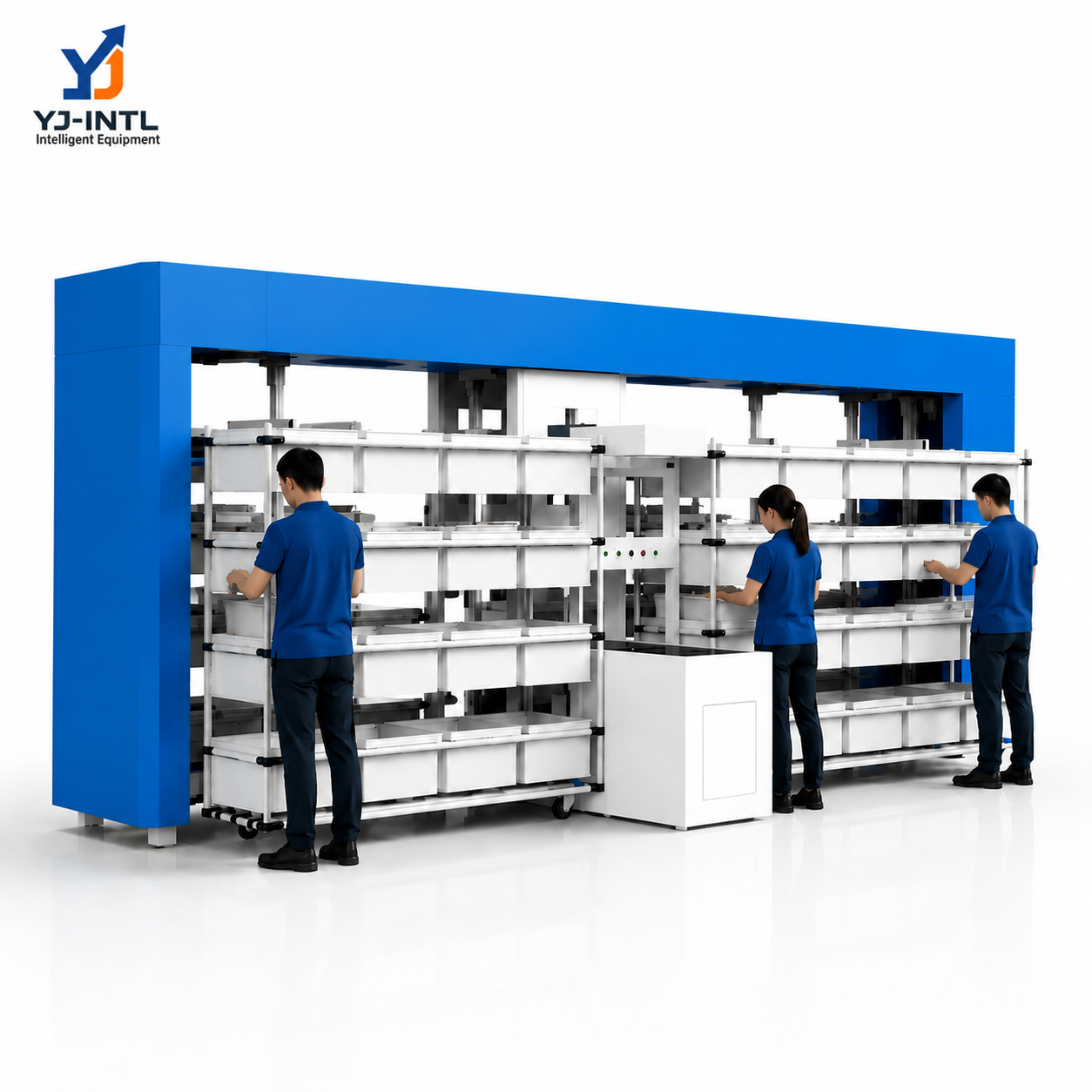
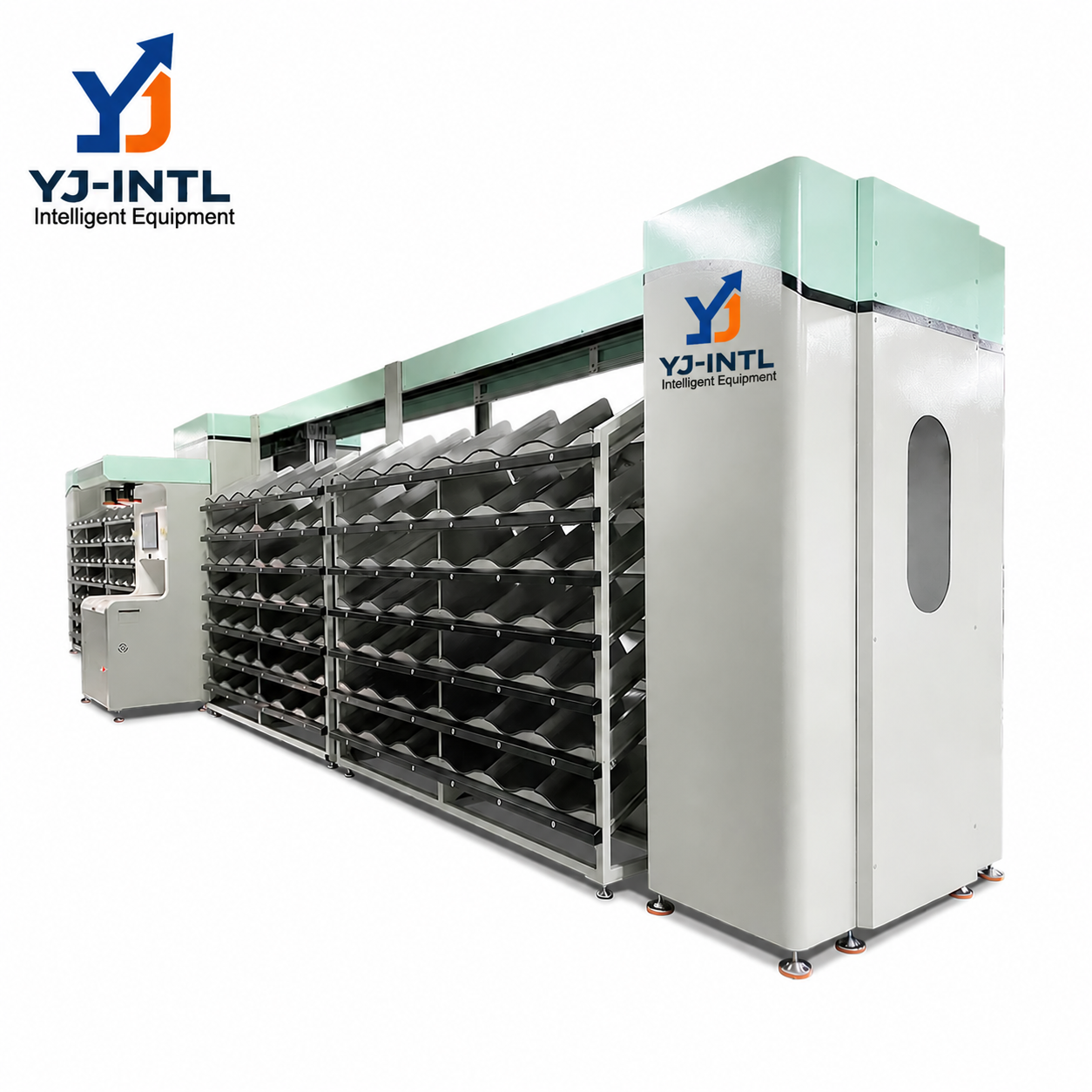
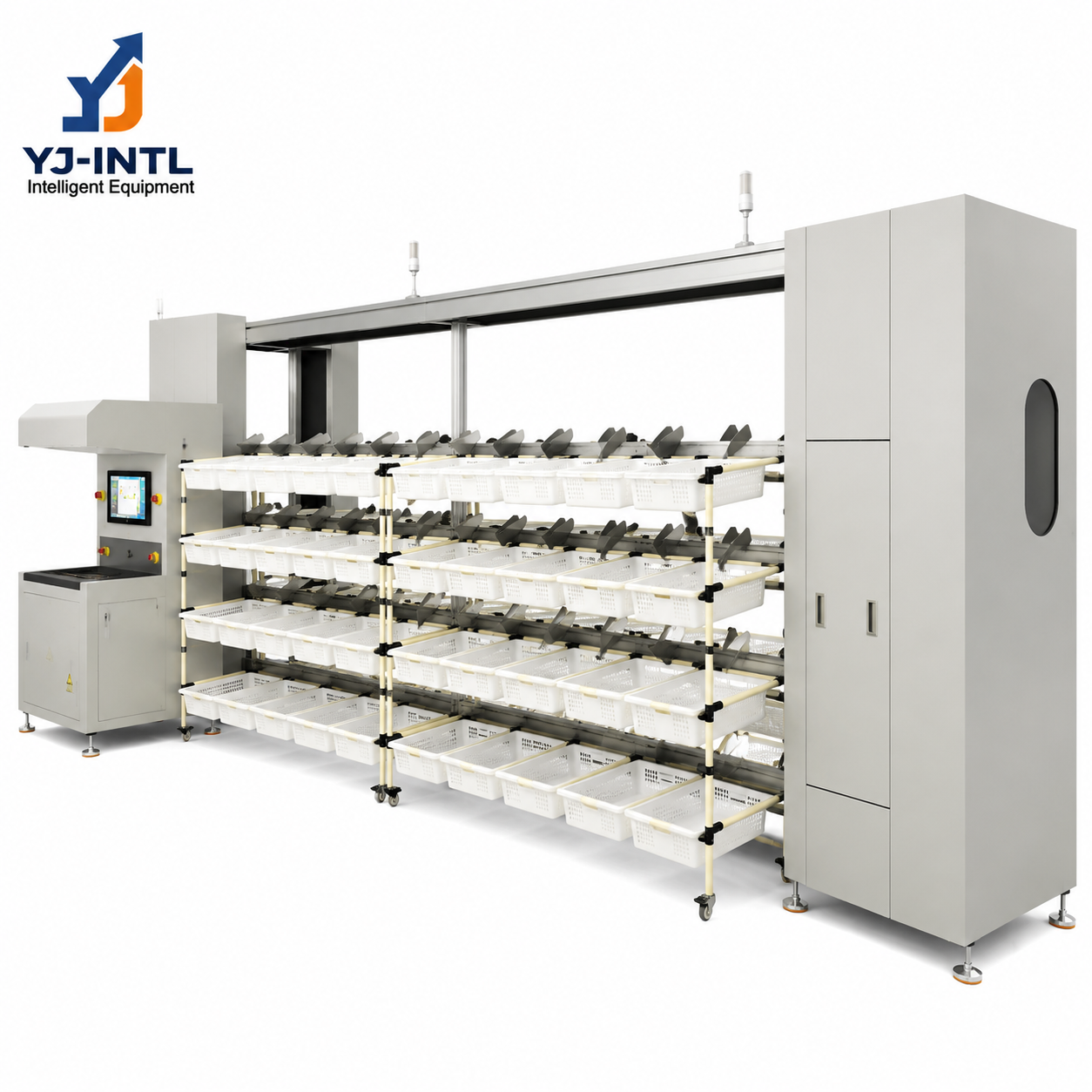
The YJ-INTL Dual-Channel Put Wall System is designed for fulfillment operations that need to consolidate high volumes of small orders into clearly defined destination locations. Its dual-channel architecture separates and organizes order flows while keeping multiple sorting positions within a compact operator-facing workstation.
The system can be configured with different numbers of sorting slots, bin sizes, workstation layouts and software interfaces according to order profiles and available warehouse space. With a reference processing range of 1,500–2,500 PPH, it is suitable for e-commerce fulfillment, retail replenishment, 3PL operations and other piece-picking environments where manual sorting becomes difficult to control.
- Dual-Channel Parallel Sorting
- 1,500–2,500 PPH Reference Throughput
- Customizable Sorting Slots
- High-Density Multi-Level Layout
- WMS / ERP Integration
- Reduced Manual Sorting Work
- Modular Fulfillment Configuration
Technical Configuration
| Specification | Reference Configuration | Specification | Reference Configuration |
|---|---|---|---|
| System Type | Dual-Channel Put Wall System | Application | Order Sorting / Fulfillment |
| Reference Throughput | 1,500–2,500 PPH | Sorting Structure | Multi-Level Modular |
| Sorting Positions | Customized | Channel Configuration | Dual Channel |
| Bin Configuration | Customized | Bin Quantity | Customized |
| Workstation | Central / Customized | Identification | Barcode / System Interface |
| Software Interface | WMS / ERP | Control | Industrial Control System |
| Sorting Method | Operator-Assisted Automatic Guidance | Order Consolidation | Multi-Order |
| Layout | Single-Sided / Customized | Installation | Floor-Mounted |
| Application | E-Commerce / Retail / 3PL | Configuration | Project-Based |
Note: Because the supplied product images do not include a dedicated technical specification sheet for this exact dual-channel model, the following values should be treated as a reference configuration for website presentation, not a fixed engineering specification. Final parameters should be confirmed according to the customer's order profile and layout.
Details
Put Wall Designed Around Order Flow, Not Just Storage
Traditional put walls are often treated as static racks with bins. In an automated fulfillment environment, however, the real challenge is coordinating orders, destinations, operators and inventory movement.
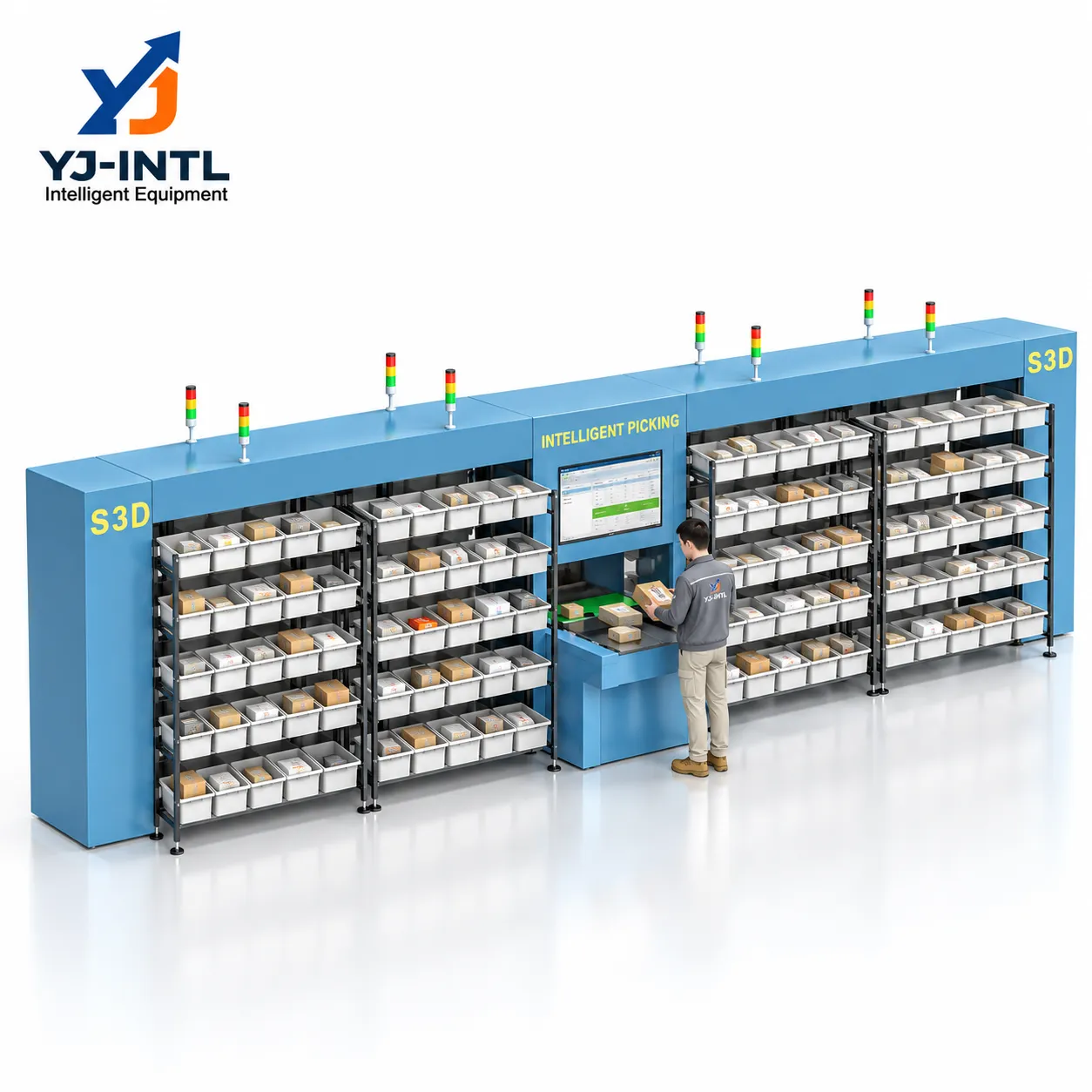
YJ-INTL's dual-channel put wall is designed as a sorting workstation within the fulfillment process. Products arriving from an upstream picking or sorting process are directed to their assigned order location, allowing operators to complete multiple orders within the same work area. The result is a more structured transition between piece picking, order consolidation and outbound packing.
Dual-Channel Architecture for Parallel Processing
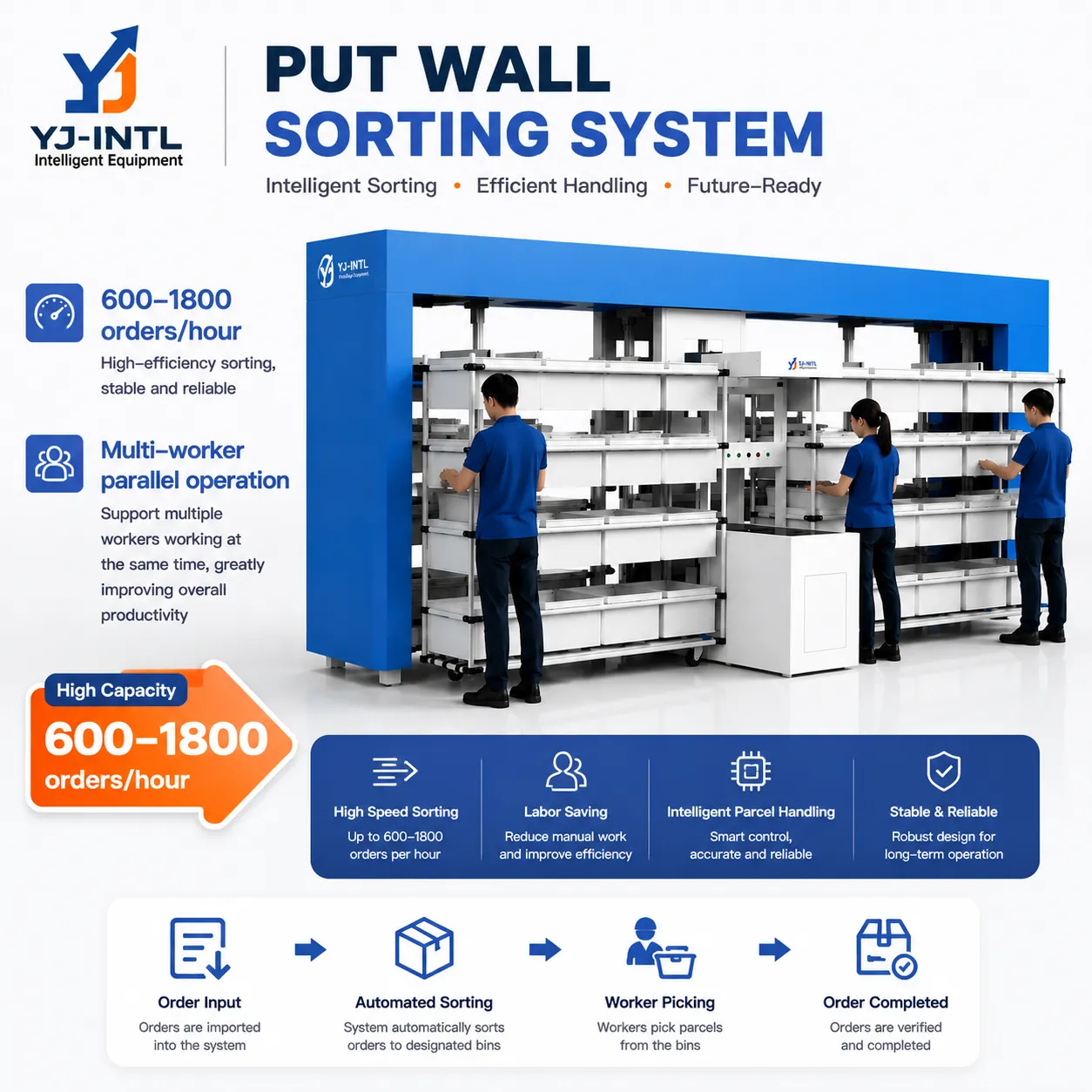
The defining feature of this system is its two-channel operating structure.
Instead of relying on a single long sorting wall, the system can divide order destinations into separate processing zones. This allows the equipment layout to be adapted to different order volumes, SKU distributions and operator workflows.
The dual-channel configuration can be particularly useful when:
- Two order flows need to be processed simultaneously
- Different order groups require separate destinations
- The warehouse needs to increase slot density
- Operators need shorter walking distances
- Multiple order waves are processed in parallel
The exact channel arrangement can be engineered around the customer's order profile and warehouse layout.
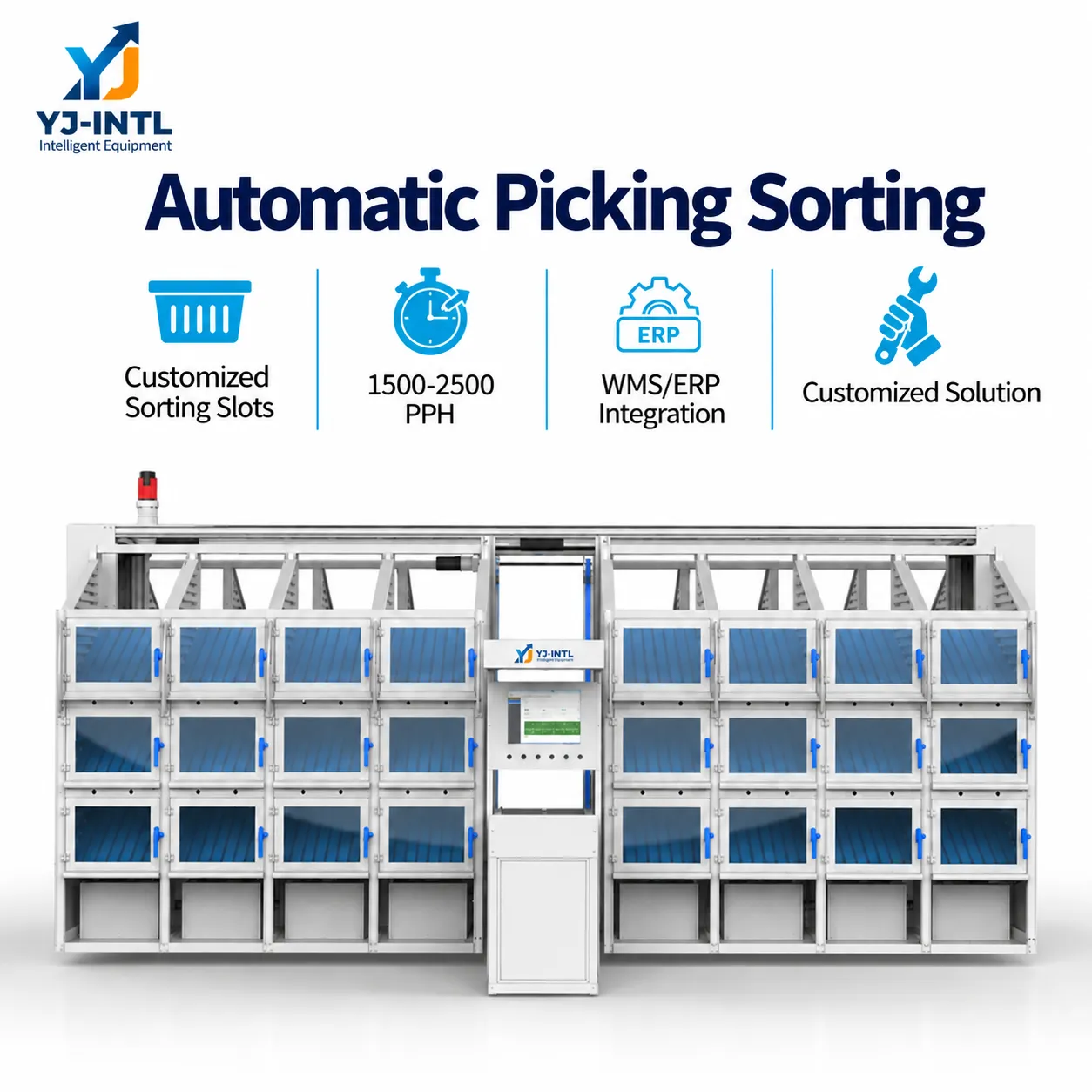
High-Density Sorting in a Compact Footprint
Warehouse space is often limited by existing racks, packing stations and transportation equipment.
The put wall uses a multi-level vertical structure to increase the number of available destinations without requiring the sorting area to expand proportionally.
Depending on the application, the system can be configured with:
- Multiple vertical levels
- Different bin dimensions
- Different numbers of sorting positions
- Single-sided or multi-sided operation
- Central operator workstation
- Customized workstation height
- Dedicated replenishment and collection areas
This makes the system suitable for warehouses where floor space is more constrained than vertical space.
Customized Sorting Positions
Every fulfillment operation has a different number of active orders.
A small operation may need dozens of destinations, while a large fulfillment center may require hundreds of order locations across several modules.
The put wall can therefore be configured according to the required number of sorting positions.
Possible configuration variables include:
Sorting slots → Bin size → Number of levels → Channel layout → Workstation arrangement → Overall dimensions
This modular approach allows the equipment to be scaled according to current operational requirements and future order growth.
Engineering Advantages
Modular Mechanical Structure
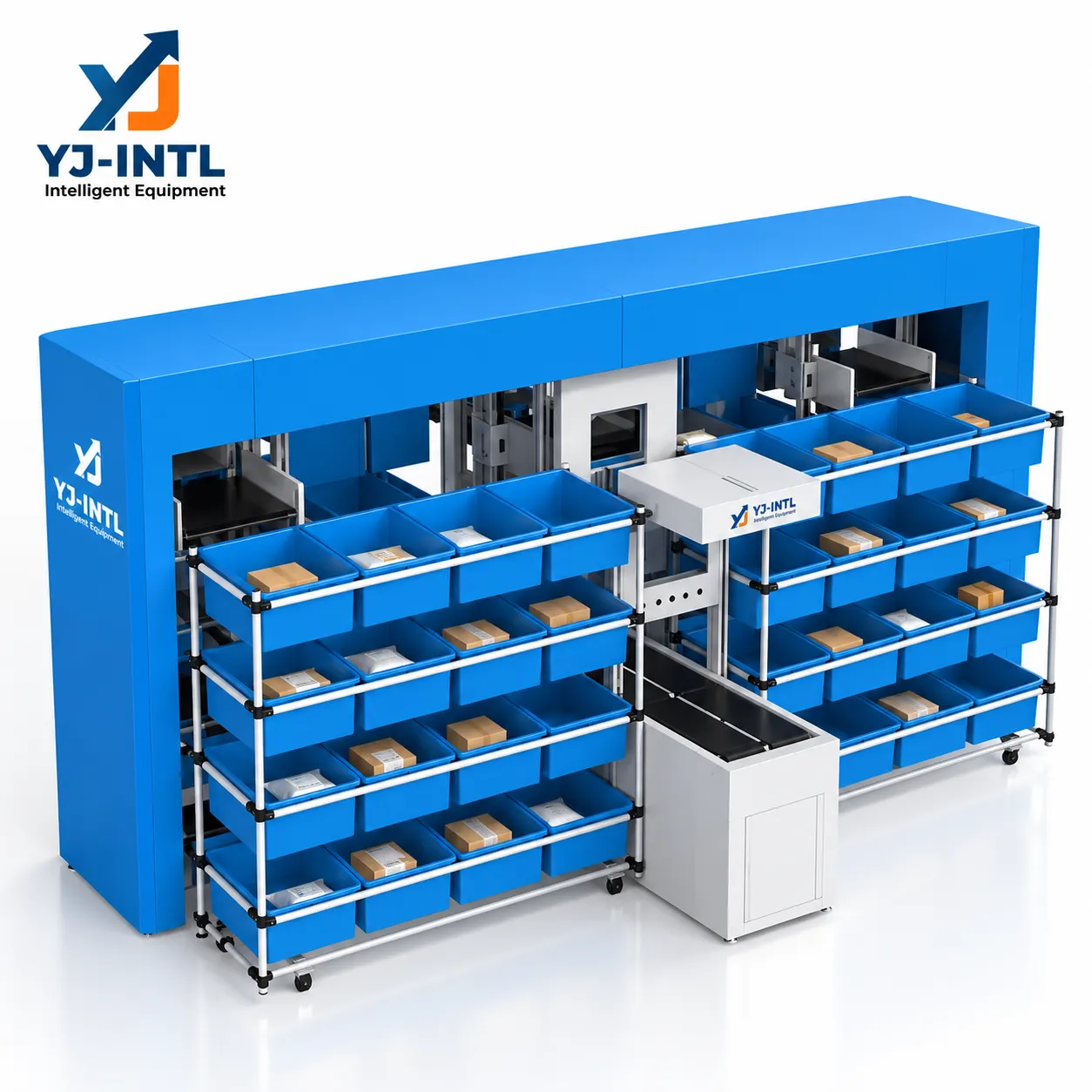
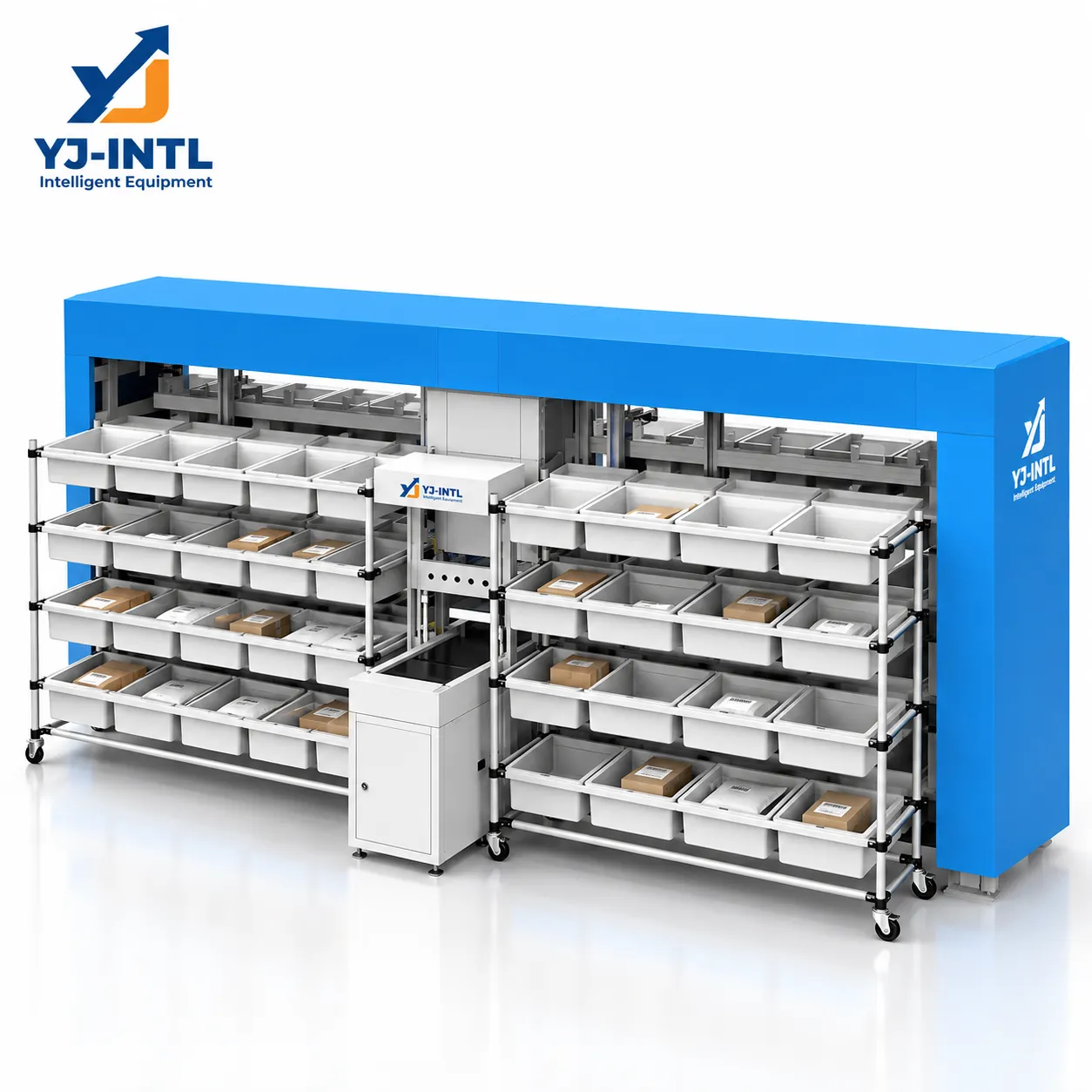
The system can be assembled from modular sorting sections, making the overall configuration easier to adapt to different warehouse layouts.
Vertical Space Utilization
Multi-level sorting positions increase destination density while maintaining an operator-oriented working area.
Configurable Bin Arrangement
Bin quantity, size and layout can be adjusted according to SKU dimensions and order characteristics.
Centralized Control
The workstation can be integrated with the warehouse control process instead of operating as an isolated manual rack.
Flexible System Integration
The put wall can be connected with upstream conveyors, picking systems, barcode scanners and warehouse software according to project requirements.
 |  |
|---|
Why Choose YJ-INTL?
Application-Based Equipment Engineering
The system is configured around actual warehouse conditions, including order volume, SKU profile, available space and destination requirements.
Mechanical + Electrical + Software Coordination
A put wall becomes more useful when its mechanical structure, operator interface and warehouse software work as one process.
Customized Layout Development
Sorting positions, levels, bins, channels and workstation configuration can be adapted to the customer's facility.
Designed for Integration
The system can be positioned alongside conveyors, picking equipment, barcode identification and other fulfillment automation.
Suitable for System-Level Projects
For customers looking beyond a single machine, the put wall can become one module within a broader warehouse automation solution.
FAQ
A dual-channel put wall system is a warehouse order-sorting workstation that uses two parallel sorting channels to organize products into designated order destinations. It is commonly used between picking and packing for order consolidation.
The reference processing range shown for the YJ-INTL put-wall solution is 1,500–2,500 PPH. Actual throughput depends on order profile, number of destinations, operator configuration, product characteristics and upstream and downstream capacities.
The number of sorting positions is project-specific. YJ-INTL can configure the quantity according to daily order volume, active destinations, bin arrangement and available warehouse space.
Yes. Bin dimensions and slot arrangements can be customized according to the size and characteristics of the products being processed. This is important when one system needs to handle different SKU profiles.
Put walls are particularly suitable for small parcels, e-commerce products, retail items, spare parts and other piece-level products that need to be consolidated into individual orders.
Yes. The dual-channel architecture is designed for fulfillment environments where multiple order flows or a high number of destinations need to be organized within a compact workstation.
The system can be integrated with a WMS so that order and destination information can be exchanged with the warehouse management process. The exact interface depends on the customer's existing software architecture.
ERP connectivity can be supported where required. For larger automation projects, the put wall can also be incorporated into a broader WCS or warehouse-control architecture.
An upstream conveyor is not mandatory for every configuration. The put wall can be designed for manual induction, conveyor-fed products or integration with an automated picking and conveying process.
Yes. One of its primary applications is order consolidation. Items belonging to the same customer order can be accumulated at an assigned sorting position before being transferred to packing.
The system reduces reliance on operators remembering or manually locating destinations by providing structured sorting positions and, where configured, visual or software-assisted destination instructions.
Yes. Because the system uses a modular structure, additional sorting sections or positions can be considered when order volume or destination requirements increase. Expansion depends on the original layout and available space.
YJ-INTL can evaluate warehouse dimensions, order volume, SKU characteristics, destination quantity, operator workflow and upstream/downstream equipment before defining the layout.
For an initial quotation, useful information includes warehouse dimensions, required throughput, daily and peak order volume, product dimensions and weights, number of sorting destinations, bin requirements, existing equipment and WMS/ERP interface requirements.
Yes. The dual-channel put wall can be designed as part of a larger fulfillment workflow involving conveyors, picking systems, barcode identification, packing equipment and warehouse software.
Throughput should be calculated from peak hourly order volume rather than average daily volume alone. Order lines, SKU dimensions, destination distribution, induction rate, operator capacity and downstream packing capacity should also be considered.