From Linear Sorters to Intelligent Parcel Sortation: 8 Years of Innovation at YINGJIE

In parcel logistics, automation is rarely achieved with a single piece of equipment.
As parcel volumes increase, package profiles become more diverse, and logistics facilities face different space and labor constraints, sorting systems need to evolve with the operation.
For YJ-INTL, this evolution has been an eight-year journey.
Founded in October 2018, Zhejiang Yingjie Technology Co., Ltd. has focused on the research, development, manufacturing, and sales of intelligent logistics equipment, with a particular focus on automated parcel sorting. From its early linear sorting equipment to a portfolio covering narrow-belt and multi-level loop sorters, and from traditional induction to unmanned parcel feeding, the company has continued to expand its sorting capabilities based on changing logistics requirements.
Today, YJ-INTL has developed a product portfolio of seven core sorting categories and three unmanned parcel feeding systems, providing different levels of automation for different site sizes, parcel profiles, and operating conditions.
This is the story of how that product evolution took place.

From Linear Sorting to a Broader Sortation Portfolio
YJ-INTL's journey started with linear sorting equipment.
During the rapid expansion of automated sorting in the Chinese express delivery industry between 2017 and 2021, automation was no longer limited to the largest distribution centers. Smaller and medium-sized parcel stations were also looking for practical ways to improve sorting efficiency and reduce manual work.
Against this background, YINGJIE developed linear cross-belt sorting equipment aimed at smaller parcel stations and other sites with relatively limited automation requirements.
The objective was not simply to build another sorting machine.
It was to make automated parcel sorting more adaptable to the actual operating conditions of different logistics sites.
As parcel volumes, facility layouts, and sorting requirements continued to change, YJ-INTL gradually expanded beyond linear sorting into narrow-belt, single-level loop, double-level loop, triple-level loop, Mini Loop, and NC multi-category loop solutions. Together, these products form the company's seven-category core sorting portfolio.
Seven Core Parcel Sorting Solutions for Different Operating Conditions
One of the lessons from developing sorting equipment over the years is that there is no single sorting configuration suitable for every logistics operation.
A regional distribution center, a small parcel station, a high-volume hub, and a facility handling irregular packages may have completely different requirements.
YINGJIE's seven core product categories were developed around this principle.
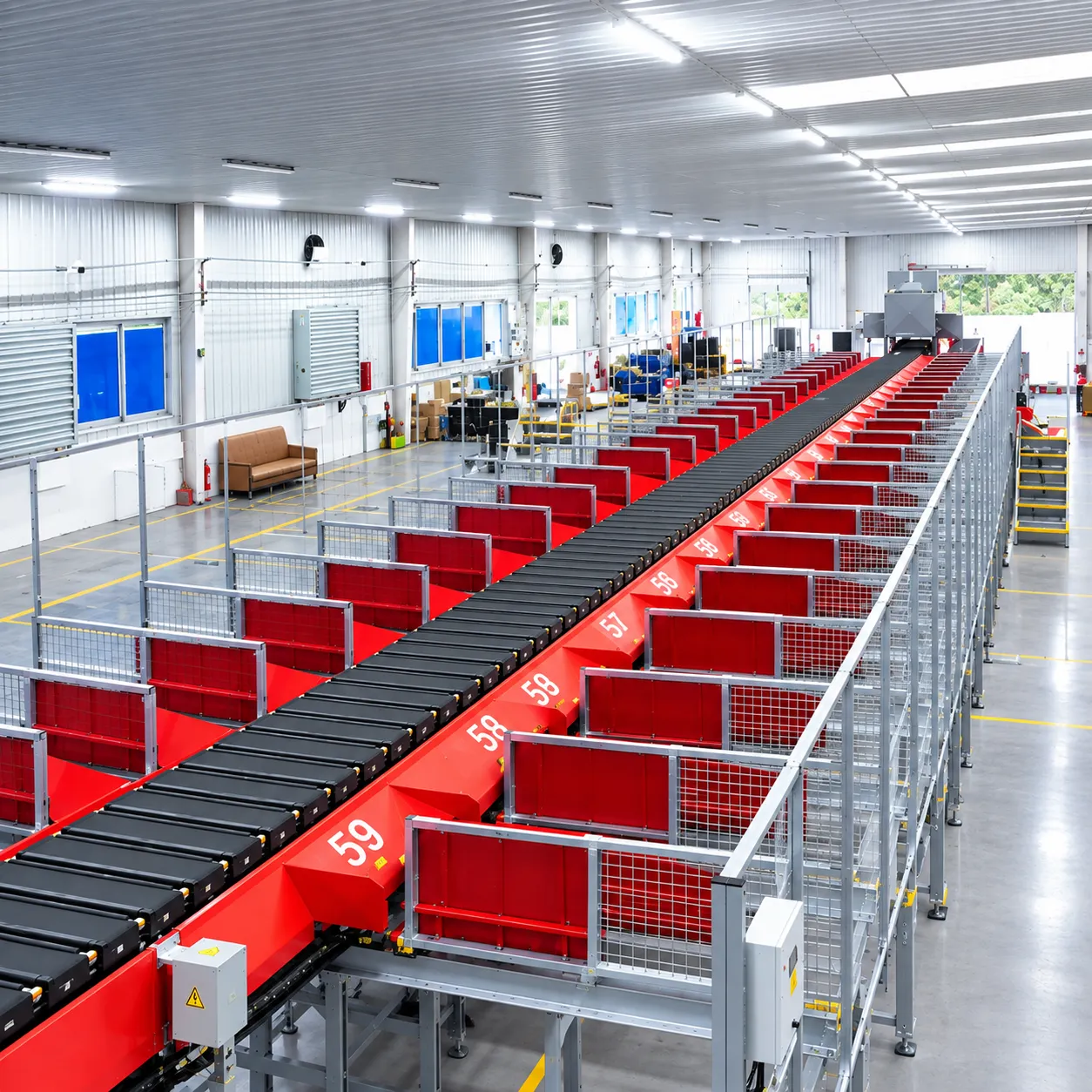
1. Linear Sorters: The Foundation of YINGJIE's Parcel Sortation Journey
YINGJIE's parcel sorting journey started with linear sorting equipment.
During the rapid development of automated sorting technology between 2017 and 2021, logistics operators were increasingly looking for automation solutions beyond large-scale distribution centers. Smaller and medium-sized parcel stations also needed efficient sorting equipment that could reduce manual operations and improve processing efficiency.
Based on this market demand, YINGJIE developed linear cross-belt sorting equipment to provide practical automation solutions for smaller logistics sites and parcel handling scenarios.
As the foundation of YINGJIE's sorting technology development, linear sorters established the company's experience in parcel handling, sorting control, and logistics automation integration.
Typical applications:
- Regional parcel stations
- Small and medium logistics centers
- Sites requiring flexible automation deployment
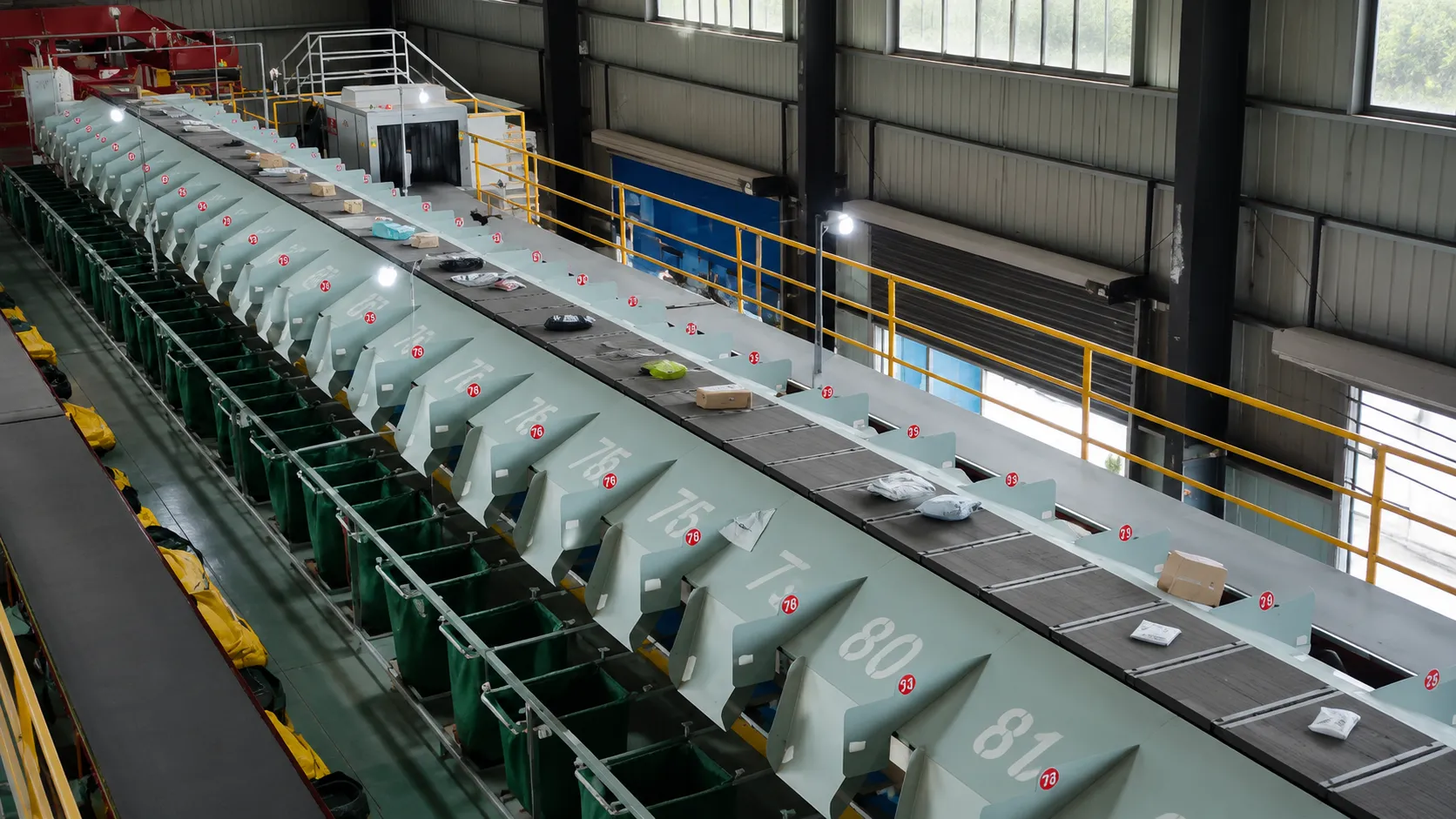
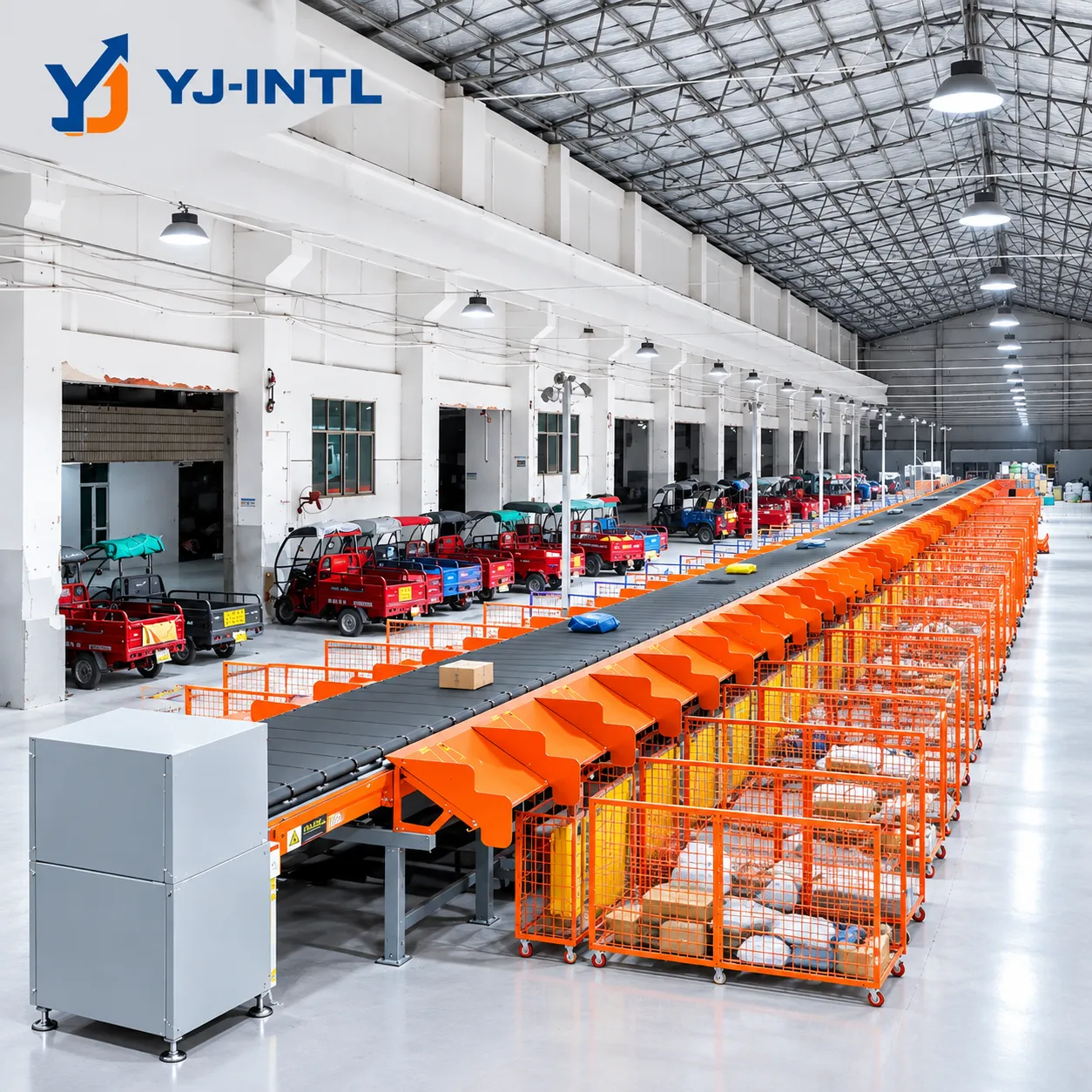
2. Narrow-Belt Sorters: Flexible Automation for Different Parcel Flows
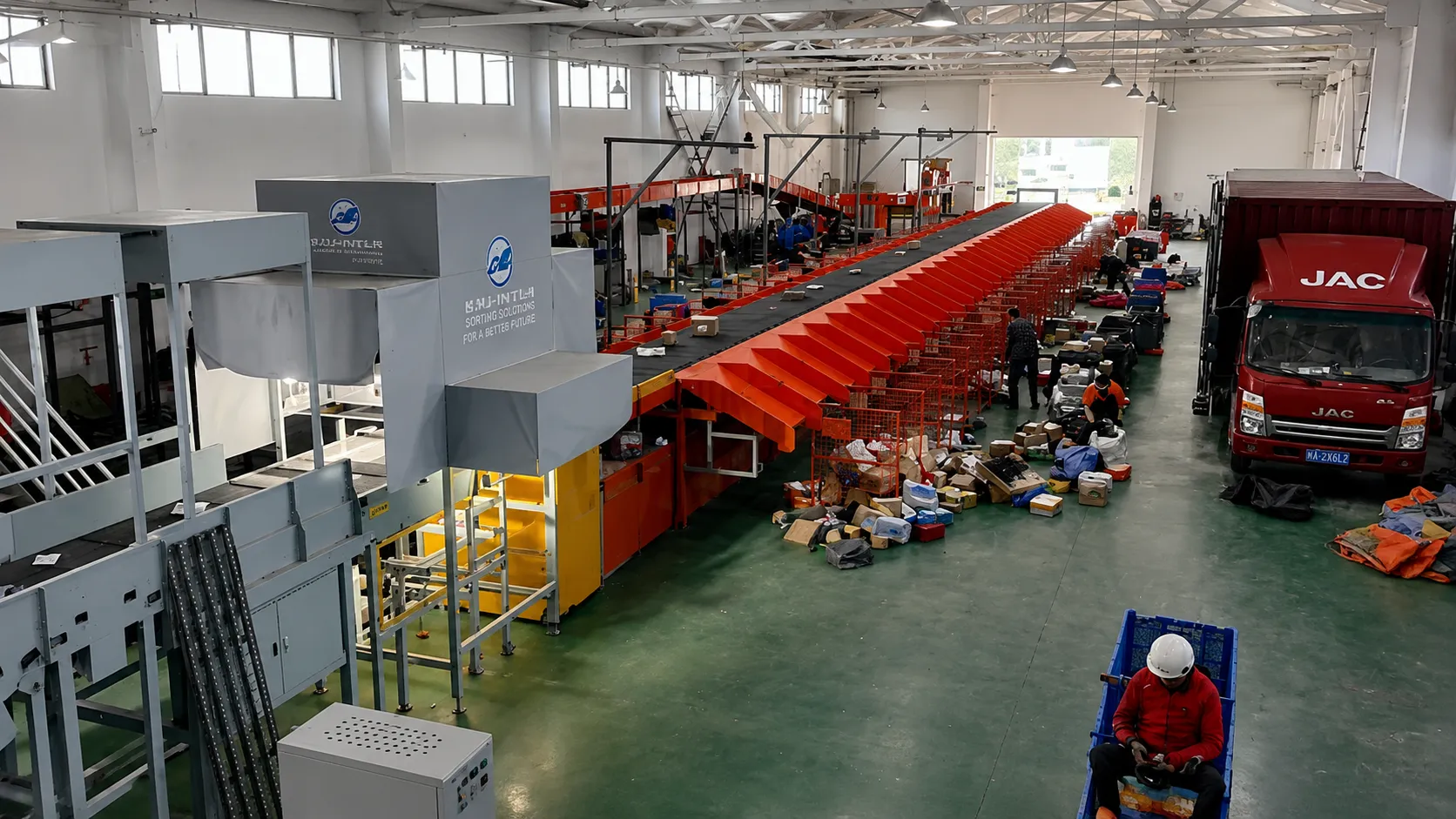
YINGJIE's narrow-belt sorting solutions have evolved into two main configurations: a lightweight narrow-belt system and a high-speed narrow-belt system with automatic parcel feeding.
The lightweight configuration is designed for flexible site adaptation and a relatively low deployment threshold.
The high-speed configuration goes further by integrating several processes before parcels enter the sorting system. Parcels can pass through automatic de-stacking, singulation, six-sided barcode scanning, and feeding before entering the sorting carts.
This configuration is particularly suited to applications involving larger parcels and higher levels of front-end automation.
3. Single-Level Loop Sorters: Efficient Sorting for Distribution Centers
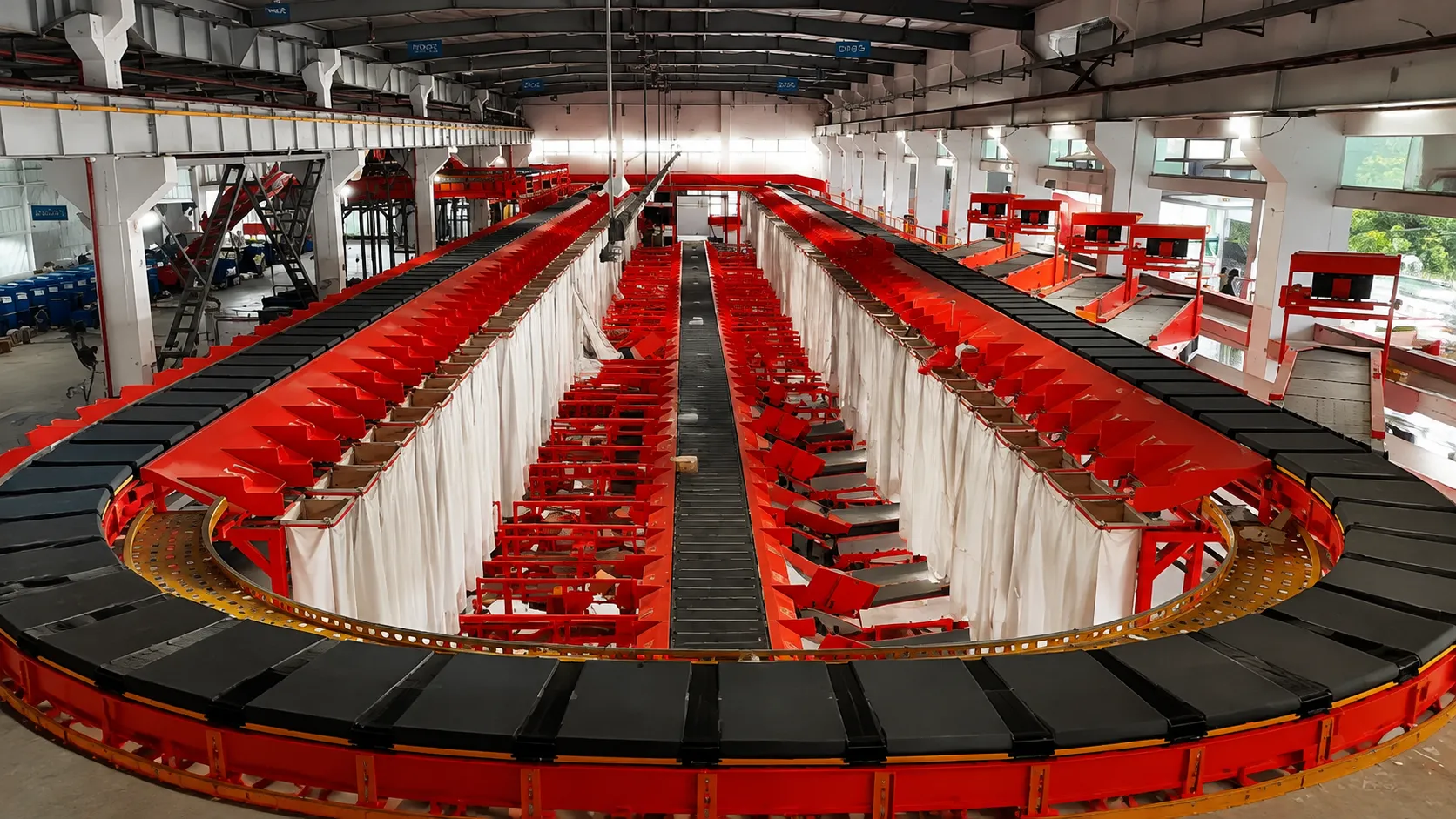
The single-level loop sorter is designed for distribution centers, sorting centers, and facilities with relatively high outbound parcel volumes.
Its circular sorting configuration provides stable and efficient parcel handling while allowing the system to adapt to different site requirements.
For logistics operators looking for a conventional automated sorting configuration without introducing additional vertical levels, a single-level loop can provide a straightforward approach to increasing sorting efficiency.
4. Double-Level Loop Sorters: Making Better Use of Vertical Space
Floor space can become a major constraint when designing an automated sorting system.
Instead of continuously extending the sorting line horizontally, a double-level configuration makes use of vertical space.
YINGJIE's double-level loop sorter is designed for transfer centers, distribution centers, and consolidation facilities. Its two-level configuration can share sorting chutes while making better use of the available facility space.
For facilities where floor area is limited but sorting requirements continue to grow, vertical system design can provide another way to increase operational capacity.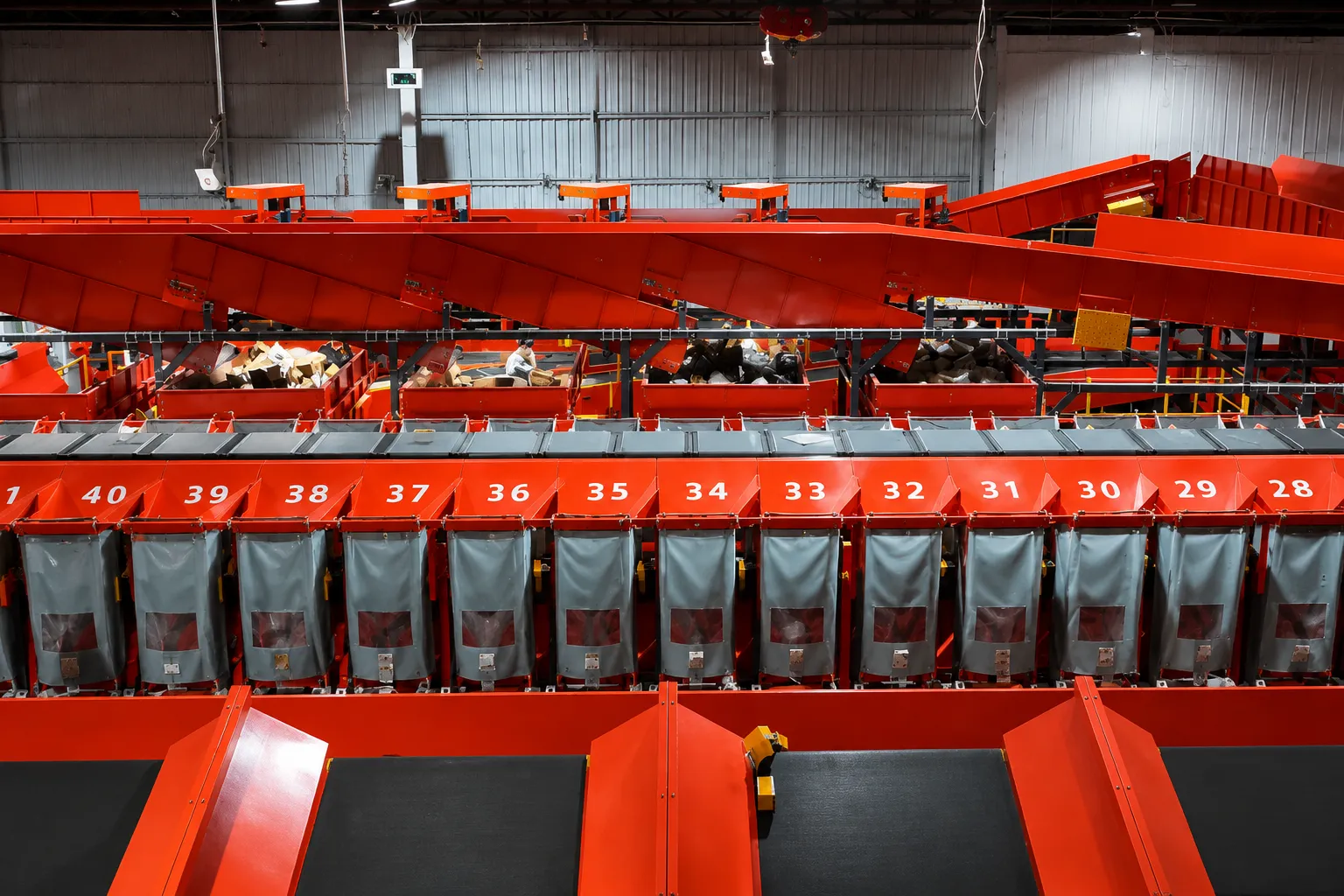
5. Triple-Level Loop Sorters: Designed for High-Volume Operations
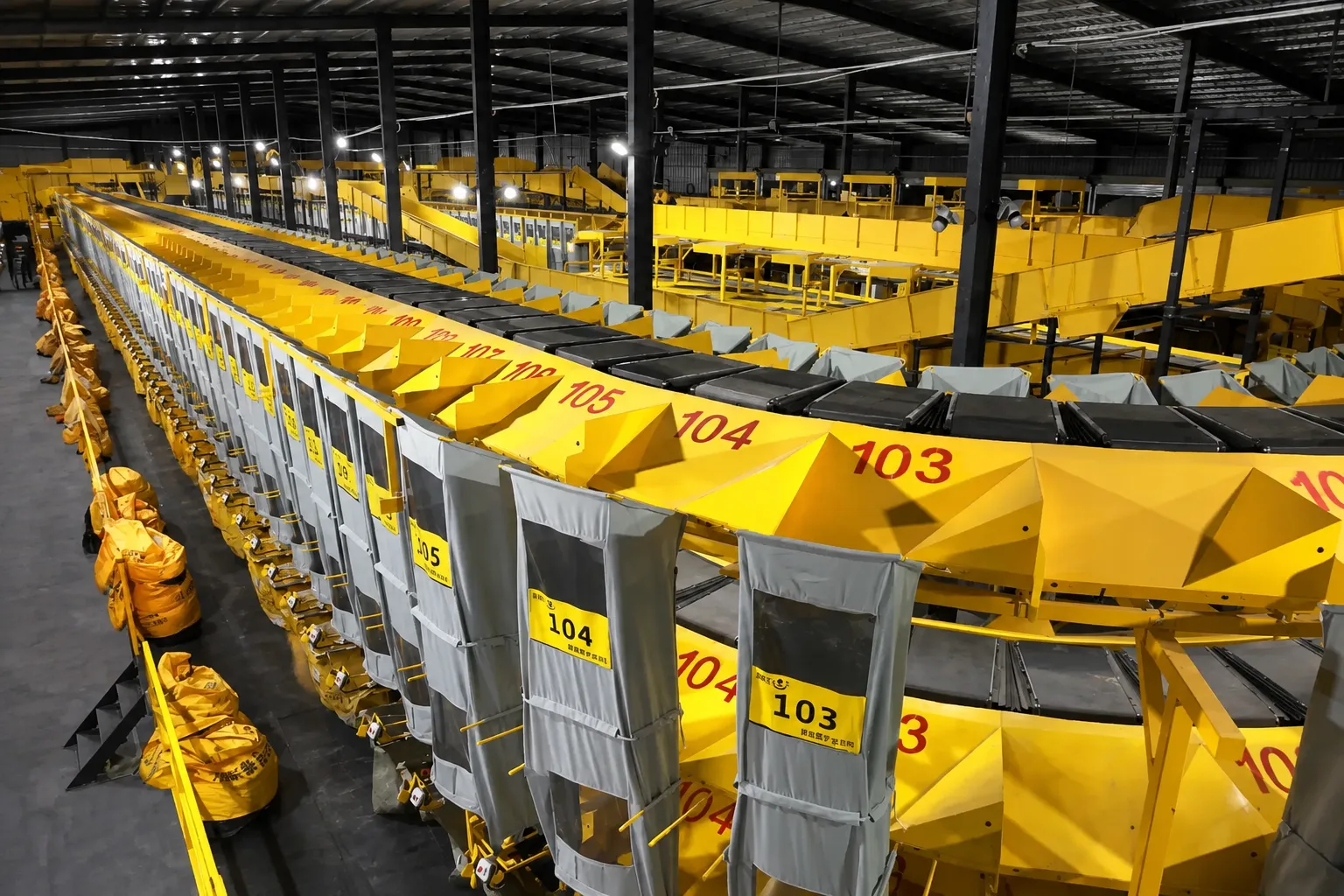
When parcel volumes become significantly higher, a multi-level configuration can provide additional sorting capacity within the same site footprint.
The triple-level loop uses three sorting levels with shared chutes. Each level is equipped with an independent drive system, allowing the configuration to adapt to different sorting operating conditions.
The design is intended for logistics sites with high parcel volumes and helps increase the site's sorting workload capacity and overall operating efficiency.
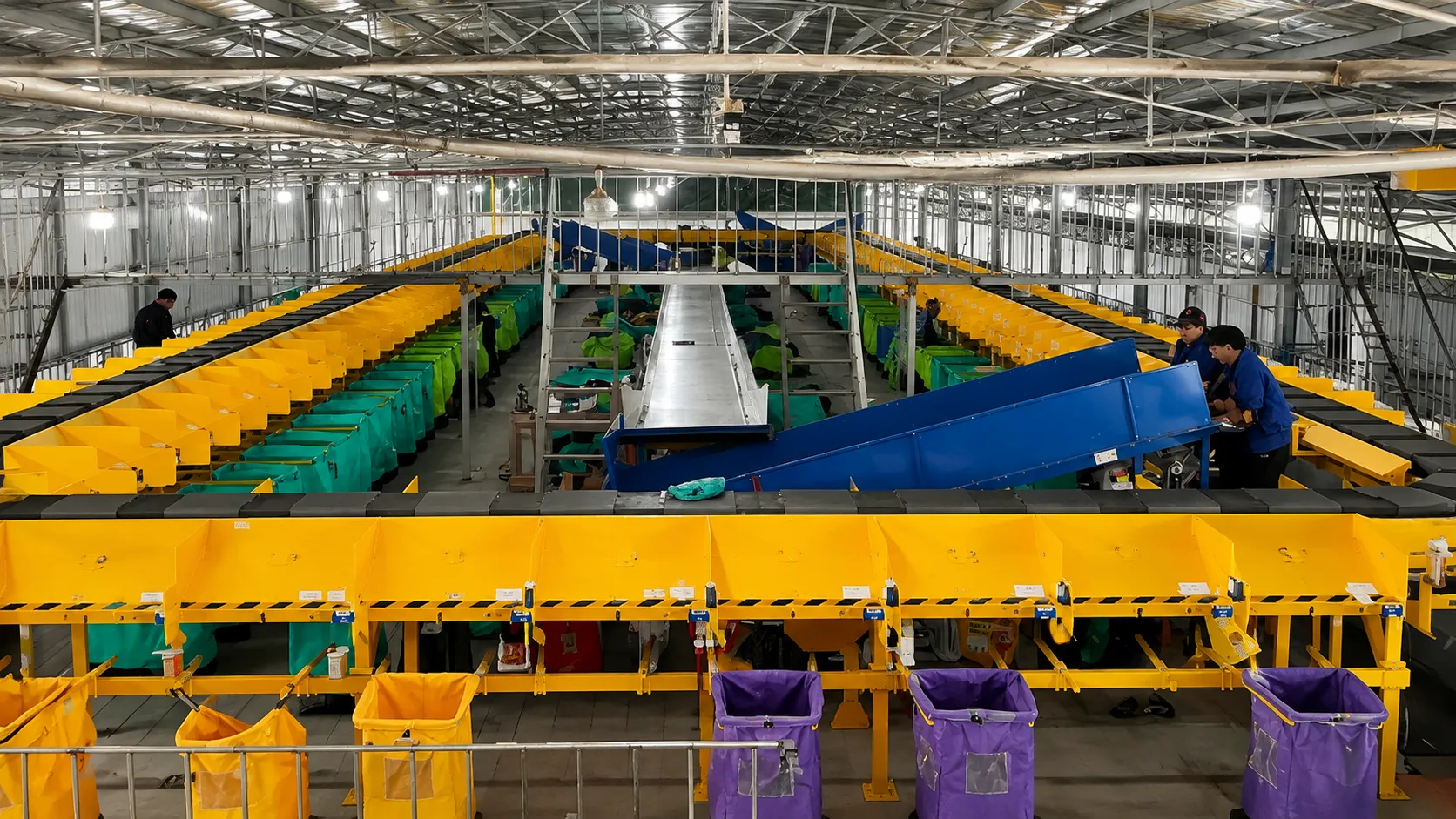
6. Mini Loop: Automation for Smaller Logistics Sites
Automation does not have to start with a large-scale sorting center.
This is the role of yj-intl's Mini Loop.
The Mini Loop is designed for small and medium-sized logistics sites where space, parcel volume, and investment budgets may be more limited.
Compared with a large sorting installation, its positioning focuses on lightweight automation, convenient maintenance, and a lower overall investment level.
For sites with moderate parcel volumes and limited budgets, the Mini Loop provides a way to introduce automated sorting without necessarily adopting a large-scale system.
This reflects an important part of Yj-intl's product philosophy:
7. NC Multi-Category Loop: Sorting Irregular and Non-Standard Parcels
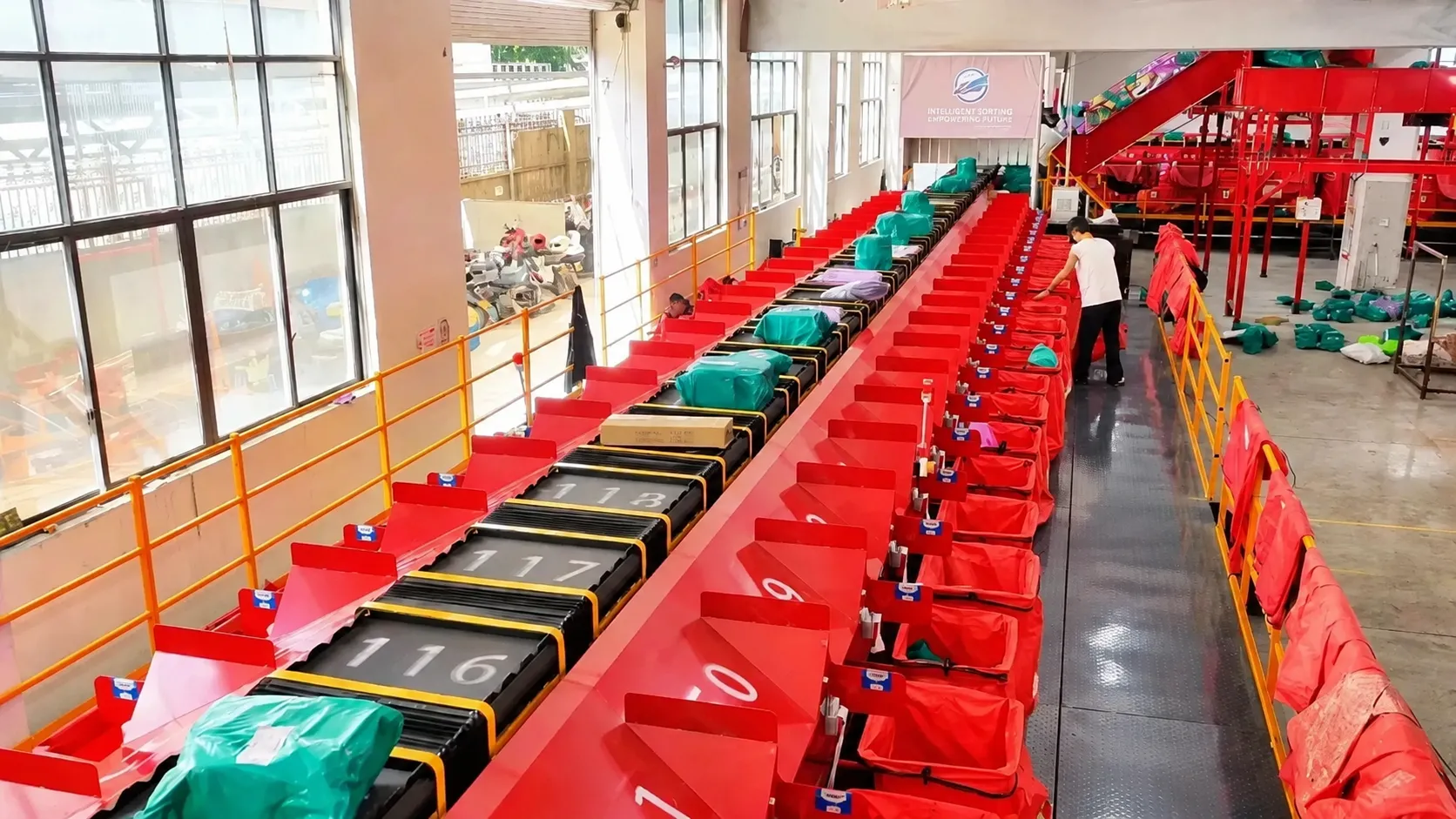
Not every parcel is a standard carton.
Logistics operations increasingly handle soft packages, irregular parcels, and other non-standard package shapes. These parcels can create additional challenges for conventional sorting equipment.
YINGJIE developed the NC Multi-Category Loop to expand the range of parcel profiles that can be handled.
The system is positioned for sorting irregular, soft, and non-standard parcels, helping logistics operators address a broader mix of package types.
For e-commerce, courier, and distribution operations handling diverse parcel profiles, the ability to accommodate different package shapes can be an important part of overall sorting-system design.
Beyond the Sorter: Three Unmanned Parcel Feeding Systems
Developing the main sorting line is only one part of automation.
Parcels first need to be introduced into the sorting system.
Traditional manual induction can become a bottleneck when sorting volumes increase. To address this front-end challenge, YINGJIE developed three unmanned parcel feeding systems during its continued development in automated sorting.
These include:
- Dual-Lane Automatic Parcel Feeding
- Robotic Arm Unmanned Parcel Feeding
- One-to-One Unmanned Parcel Feeding
Together, they extend automation from the sorting line to the parcel induction process.
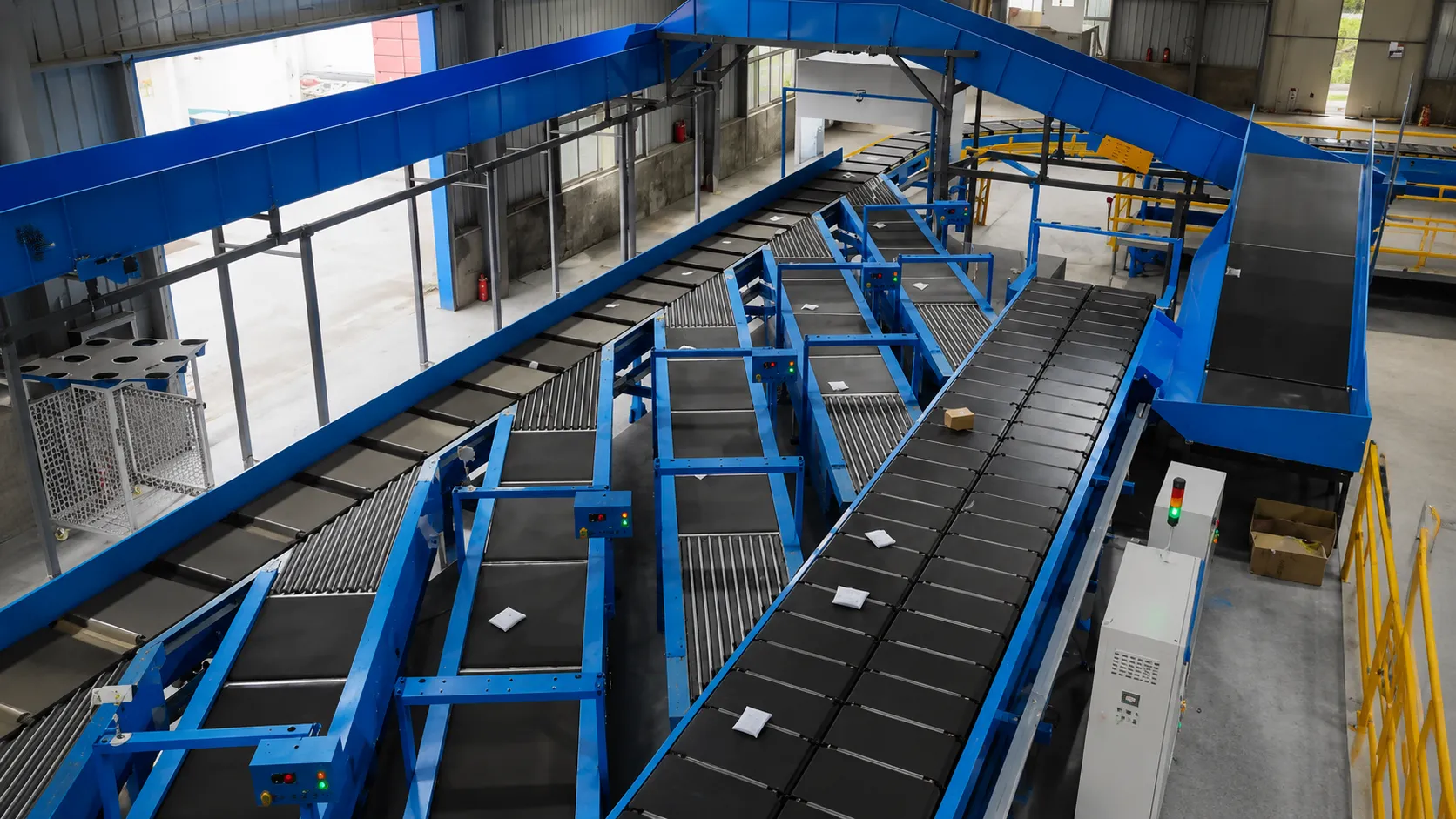
1. Dual-Lane Automatic Parcel Feeding
The dual-lane automatic feeding system is positioned at the front end of an automated sorting system.
Its process integrates:
De-stacking → Singulation → Six-Sided Scanning → Dual-Lane Conveying → Feeding
The system uses a six-section feeding station and is designed for continuous automated operation.
By reducing dependence on manual parcel induction, the system aims to improve sorting efficiency while reducing labor requirements. The original solution is also designed for continuous 24/7 operation.
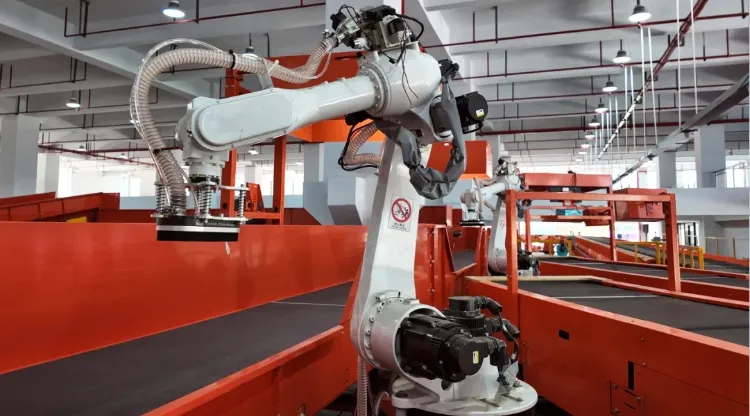
2. Robotic Arm Unmanned Parcel Feeding
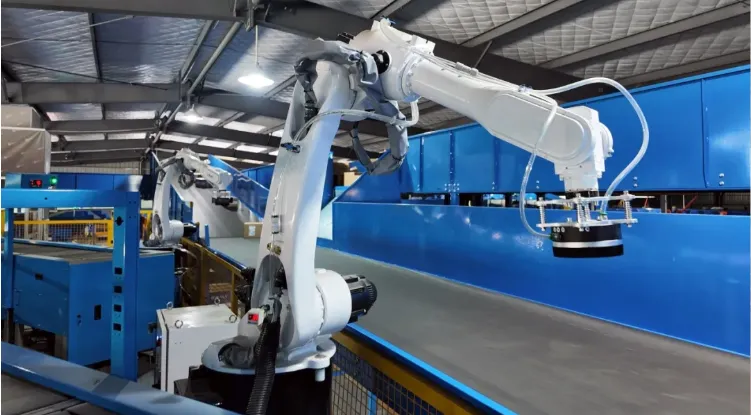
Another approach to automated induction is the use of industrial robotics.
YINGJIE's robotic arm feeding solution combines an industrial robotic arm with a high-precision 3D vision camera and flexible gripping components.
The system is designed to perform:
- 3D object positioning
- Object recognition
- Pose detection
- Flexible gripping
- Non-damaging parcel handling
The technology can be applied to unmanned parcel induction, sorting loading, and other material-handling applications.
This approach is particularly relevant when parcel handling requires more flexible perception and gripping capabilities than conventional fixed feeding mechanisms.
 |  |
|---|
3. One-to-One Unmanned Parcel Feeding
Not every facility needs the same number of induction stations at all times.
Peak seasons can create sudden increases in parcel volume, while off-peak periods may operate at significantly lower throughput.
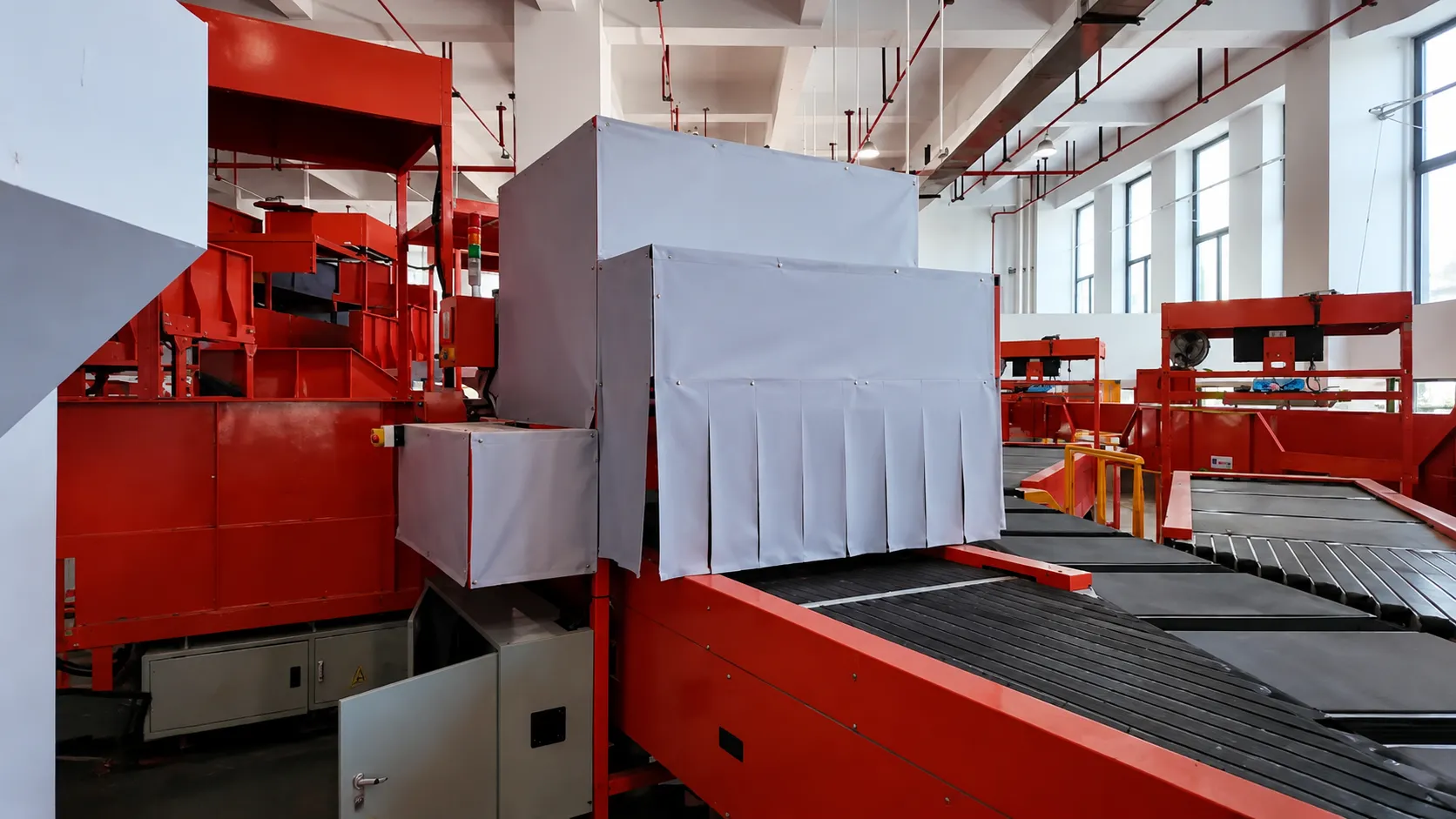
YINGJIE's one-to-one unmanned parcel feeding system addresses this challenge through an independent modular configuration for each workstation.
Each station can integrate its own:
De-stacking + Scanning + Feeding
module.
The modular design allows equipment to be added or removed according to operational requirements. It can also support phased expansion, while a failure at one individual unit does not necessarily affect the entire main sorting line.
This makes the concept particularly relevant for distribution centers dealing with fluctuating parcel volumes.
What Eight Years of Development Have Shown
Looking at YINGJIE's product evolution, one thing becomes clear:
Parcel sorting automation cannot be designed around equipment alone.
The right solution depends on multiple factors:
- Site size
- Parcel volume
- Parcel dimensions and profiles
- Parcel shape
- Number of sorting destinations
- Available floor space
- Labor availability
- Peak and off-peak volume fluctuations
- Required level of automation
This is why Yj-intl has moved from a single initial sorting product toward a broader portfolio of equipment and feeding technologies.
The company's stated approach is to provide flexible, modular sorting configurations for different site scales and operating conditions, rather than forcing every customer into the same system architecture.
From Individual Equipment to Modular Sortation Solutions
A modern parcel sorting project often involves more than a sorter.
The complete process may include parcel induction, de-stacking, singulation, barcode scanning, conveying, sorting, and destination handling.
YINGJIE's development therefore extends across three key areas:
- R&D and Product Development:Continuous development of sorting equipment and automated feeding technologies.
- Delivery and Service:Supporting equipment deployment and project implementation.
- Collaboration and Operations:Working with different operating environments and logistics requirements.
The company's eight-year development summary identifies these three areas as part of its broader capability framework.
According to the company's 2026 anniversary data, YINGJIE has an annual production capacity of more than 1,500 equipment sets, more than 4,000 deployed projects, and cooperation experience with more than 10 express delivery brands.
For an international logistics automation project, this experience is important because equipment selection is only the beginning. The final system still needs to match the facility layout, parcel characteristics, sorting destinations, operating process, and future expansion requirements.
Why Modular Automation Matters for the Future of Parcel Sortation
The future of logistics automation will not necessarily be defined by making every system larger.
Instead, flexibility may become equally important.
A smaller logistics site may need a compact Mini Loop.
A high-volume distribution center may require a multi-level loop configuration.
A facility handling irregular parcels may need a more flexible sorting solution.
A site with labor-intensive induction may benefit from automated feeding.
And a facility experiencing significant seasonal fluctuations may need a modular architecture that can expand over time.
This is the reason Yj-intl's product development has gradually moved toward a combination of different sorting and feeding technologies.
Rather than treating automation as a one-size-fits-all product, the goal is to create a combination of equipment that matches the actual logistics operation.
Making Advanced Sortation More Accessible
After eight years of development, Yj-intl's vision goes beyond building sorting equipment.
The company aims to make reliable cross-belt sorting and logistics automation accessible to logistics companies of different sizes, industrial facilities, factories, and regional parcel hubs—not only the largest logistics enterprises.
This vision can be summarized in one idea:Automation should be practical, scalable, and accessible to more logistics operators
For some customers, that may mean starting with a compact automated sorting system.
For others, it may mean combining a high-speed sorter with automated parcel feeding, scanning, and other front-end technologies.
The important point is not simply how advanced a machine is.
It is whether the complete solution fits the customer's volume, space, parcel profile, budget, and future growth.
Looking Ahead: The Next Stage of Intelligent Parcel Sortation
From its first linear sorting equipment to a portfolio of seven core sorting categories and three unmanned feeding systems, YINGJIE's eight-year journey has been driven by changing logistics requirements.
The evolution tells a simple story:Linear Sorting → Narrow-Belt Sorting → Multi-Level Loop Sorting → Multi-Category Sorting → Unmanned Parcel Feeding → Modular Sortation Solutions
And the journey is not finished. As parcel logistics continues to evolve, sorting systems will need to become more flexible, more automated, and better adapted to different operating environments. For YINGJIE, the next stage is about continuing to develop sorting technologies while expanding the scenarios in which intelligent logistics automation can create practical value. One thing. One team. Moving forward together.
FAQ
What types of parcel sorting systems does YINGJIE offer?
Yj-intl's core portfolio includes linear cross-belt sorting, narrow-belt sorting, single-level loop, double-level loop, triple-level loop, Mini Loop, and NC Multi-Category Loop solutions.
What is a Mini Loop sorter used for?
The Mini Loop is designed for small and medium-sized logistics sites with limited space, moderate parcel volumes, and more constrained investment budgets. It provides a lightweight approach to automated parcel sorting
Can automated sorting systems handle irregular parcels?
Yj-intl's NC Multi-Category Loop is designed to handle a wider range of parcel profiles, including irregular, soft, and non-standard parcels.
What is unmanned parcel feeding?
Unmanned parcel feeding automates the process of introducing parcels into a sorting system. YINGJIE offers dual-lane automatic feeding, robotic arm feeding, and one-to-one modular feeding solutions.
Which sorting system is suitable for a high-volume distribution center?
The appropriate system depends on parcel volume, destinations, facility layout, parcel characteristics, and other project requirements. Yj-intl's portfolio includes single-level, double-level, and triple-level loop configurations for different operating conditions.
Can a parcel sorting system be expanded later?
Modular system architecture can make phased expansion easier. Yj-intl's one-to-one unmanned feeding concept, for example, is designed so individual modules can be added or removed according to changing operational requirements.