
Transport
Telescopic Belt Conveyor Systems Solutions
Telescopic Conveyors Built Around Real Loading Operations
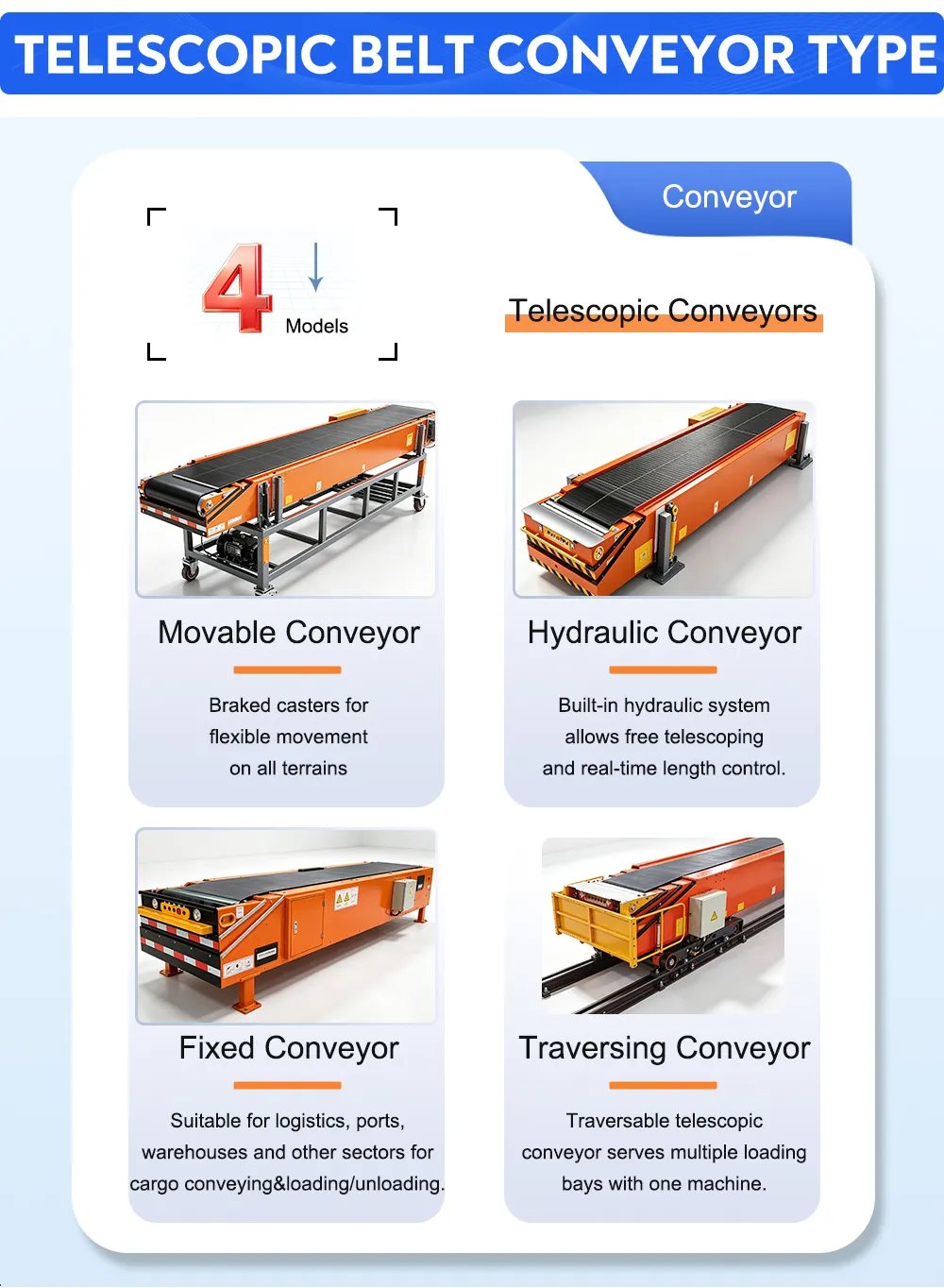
The YJ-INTL telescopic belt conveyor is designed to minimize the distance between operators and cargo during truck loading and unloading operations. The unit can extend directly into trailers or loading docks and retract automatically upon completion of the task, thereby reducing the walking, lifting, and manual handling required by logistics personnel when moving cartons, parcels, and various packaged goods.
This product series offers customization options for length, belt width, operating height, and mobility configurations. Users can tailor the layout to suit specific dock configurations, access conditions at loading bays, and material flow requirements. Additionally, parameters such as conveying speed, extension length, control systems, and interface configurations can be customized to meet specific project needs. YJ-INTL views the telescopic conveyor as an integral component of a comprehensive material handling system rather than as an isolated, standalone piece of equipment.
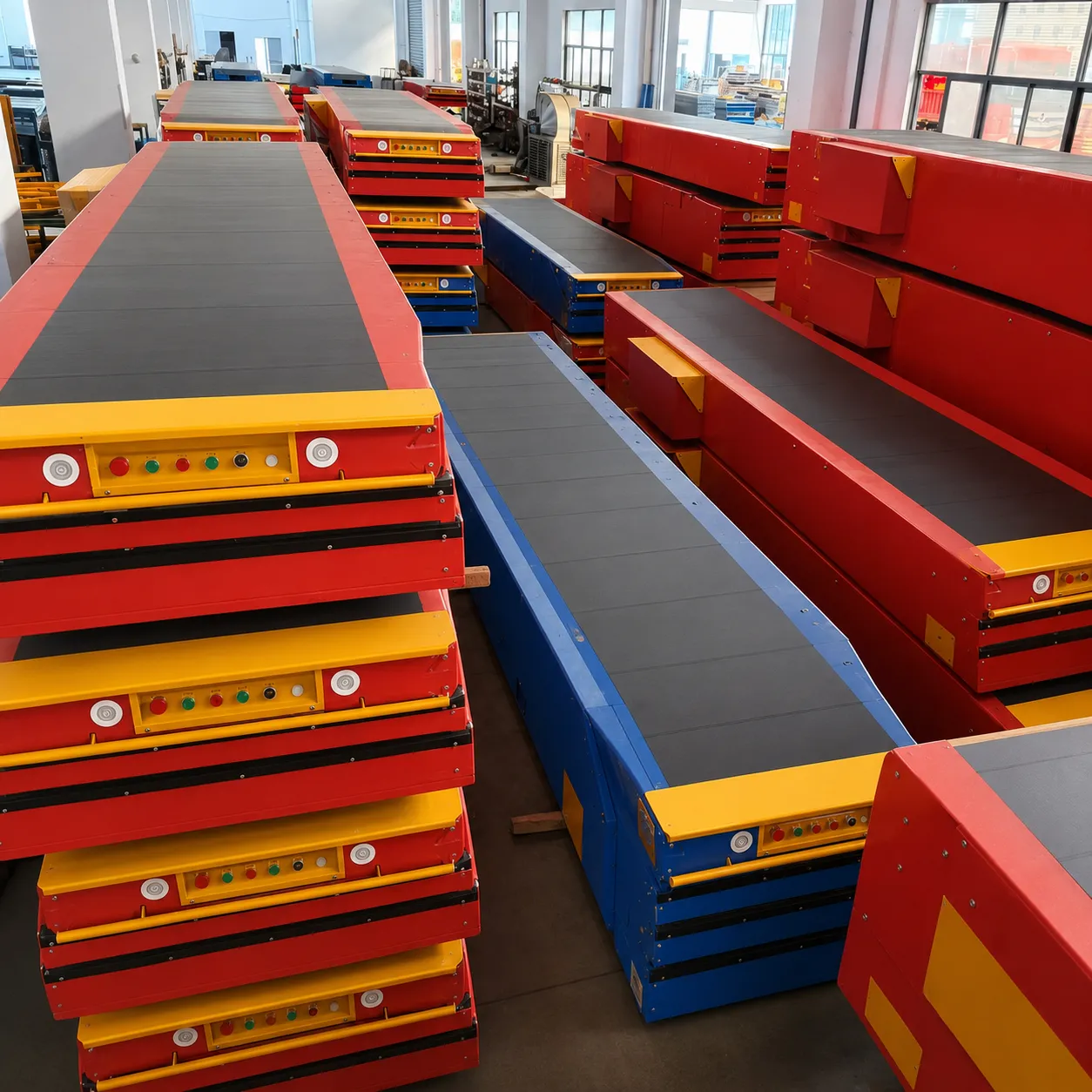
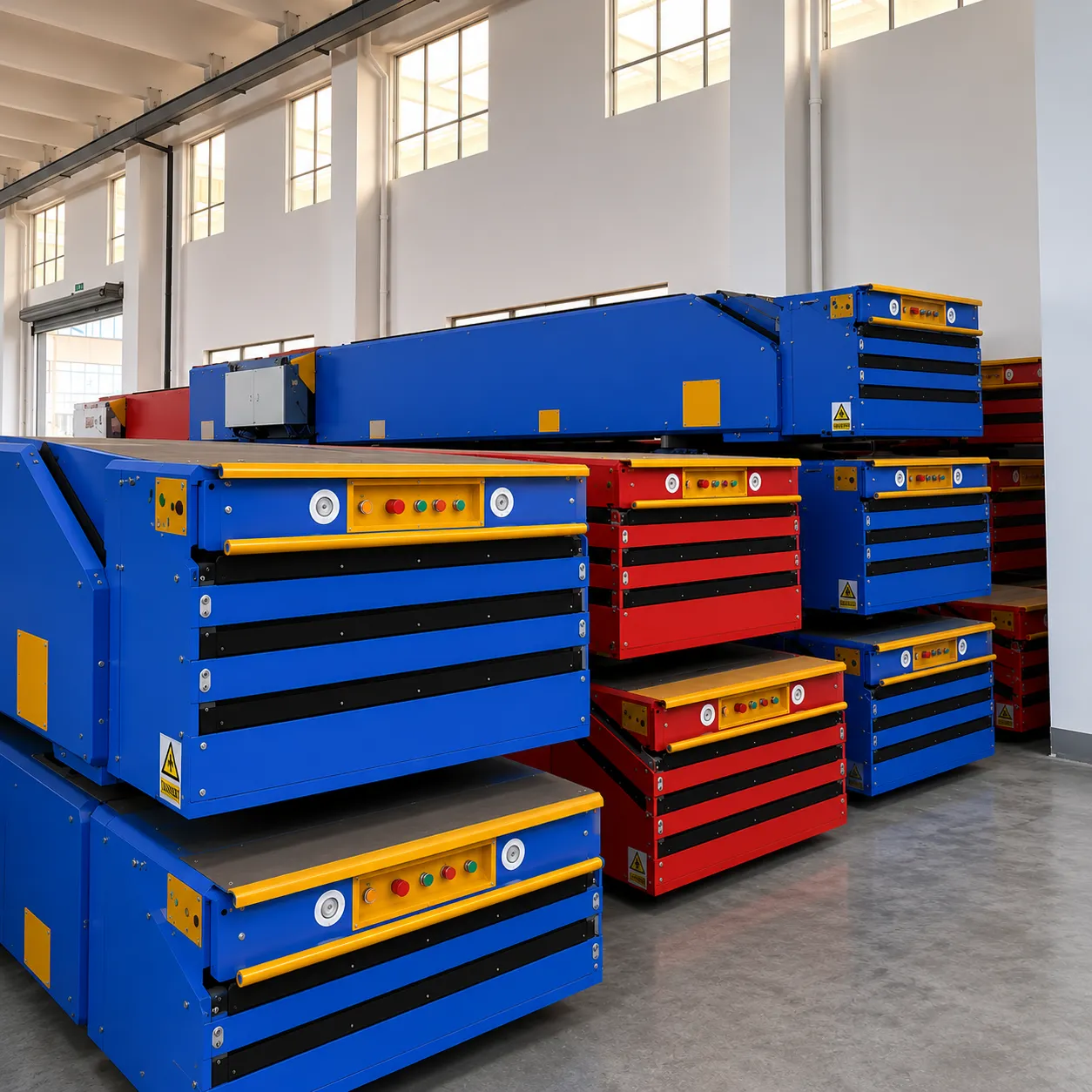
Telescopic Belt Conveyor Configurations for Different Loading Bays
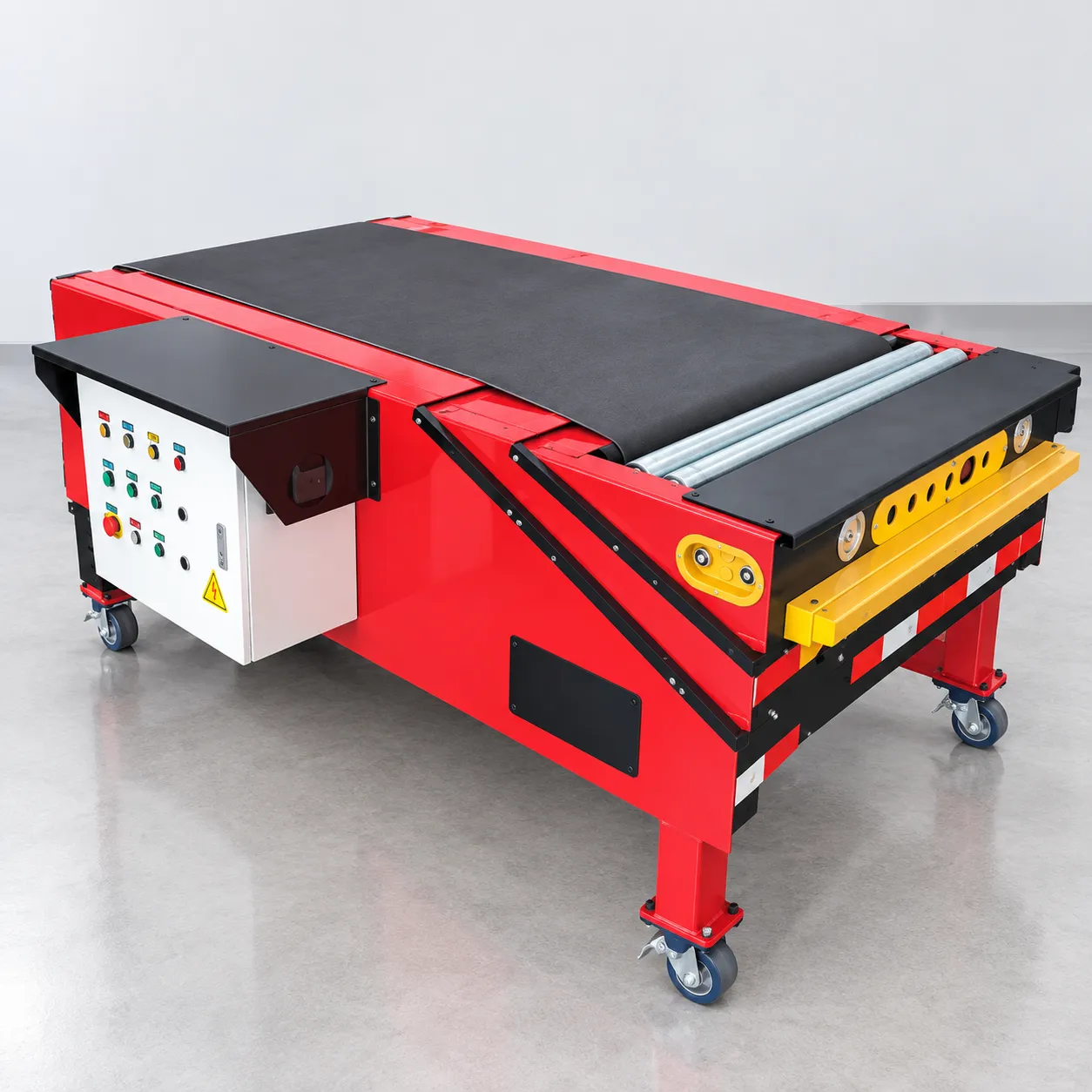
Mini Compact Type Telescopic Conveyor
The YJ-INTL Mini Telescopic Belt Conveyor is a compact material-handling solution designed for loading and unloading areas where available floor space is limited but operators still need a more efficient way to move cartons, parcels and packaged goods between the warehouse and vehicle. Unlike long multi-section telescopic conveyors designed primarily for deep trailer access, the Mini Telescopic Conveyor focuses on compact installation, flexible positioning and practical operator access . Its integrated belt conveying structure brings the transport surface closer to the loading point while reducing unnecessary manual carrying. The compact configuration makes it suitable for warehouses, distribution facilities, parcel handling areas, manufacturing plants and other operations that need a flexible conveyor without installing a large permanent loading system.
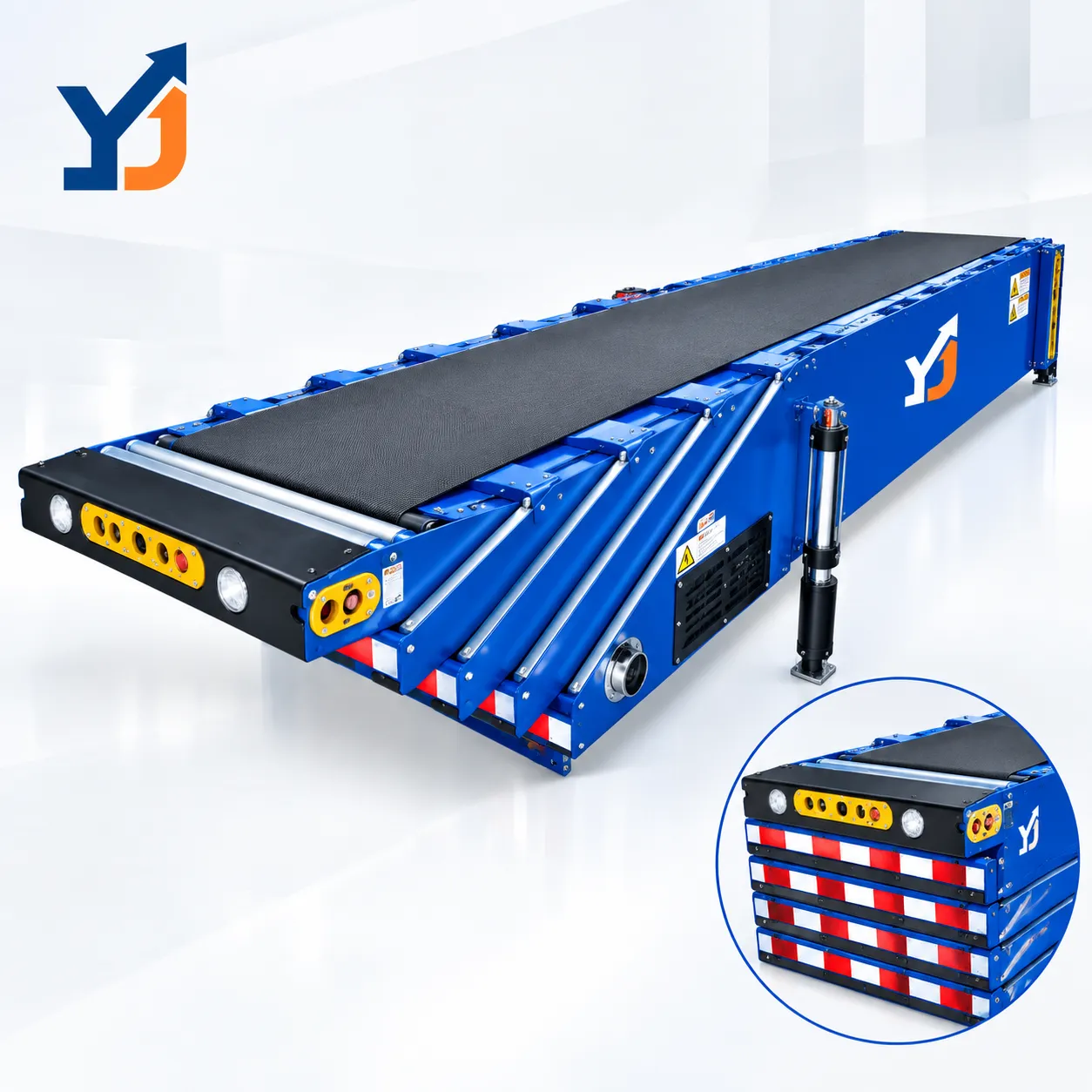
Five-Section Telescopic Belt Conveyor
The YJ-INTL Five-Section Telescopic Belt Conveyor is engineered for loading and unloading environments where the required operating reach extends well beyond the capability of conventional fixed or short-section conveyors. With a maximum extension length of up to 17,000 mm , this five-section configuration provides an extended conveying path from the fixed warehouse position toward the interior of trucks and trailers. The machine is available with 6,000 mm and 7,000 mm fixed sections , corresponding to maximum extension lengths of 16,000 mm and 17,000 mm . A 3.7 kW conveyor motor drives the belt, while a dedicated 1.5 kW telescopic motor controls extension and retraction.
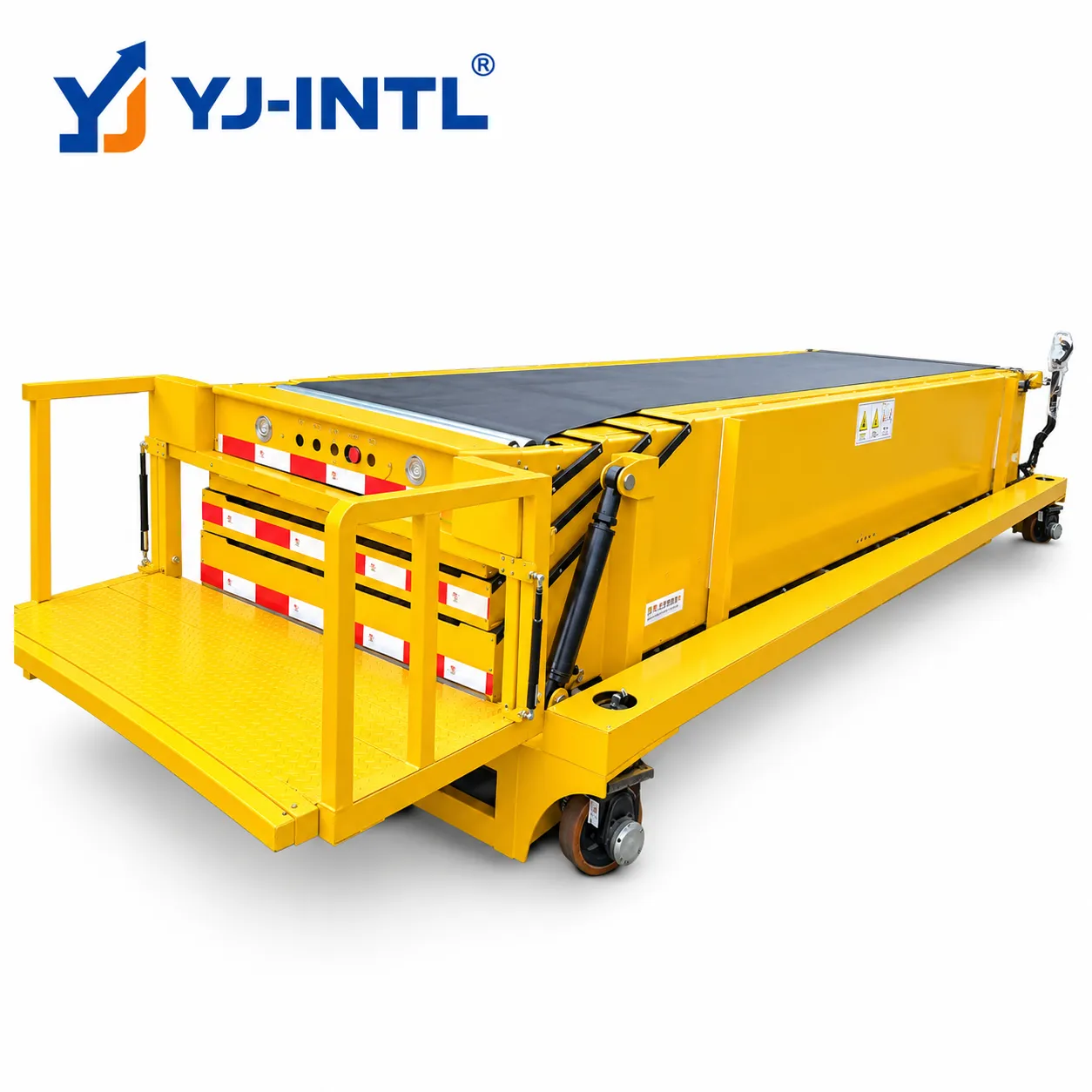
Four-Section Telescopic Extension Device
The Four-Section Telescopic Extension Belt Conveyor is engineered to streamline trailer loading and unloading operations in logistics hubs, distribution centers, and e-commerce fulfillment facilities. Designed with premium BS700/T700 high-strength steel and a flexible 4-section extension framework, this conveyor reaches deep into long trucks to eliminate manual parcel carrying, drastically reduce turnaround times, and boost loading efficiency.
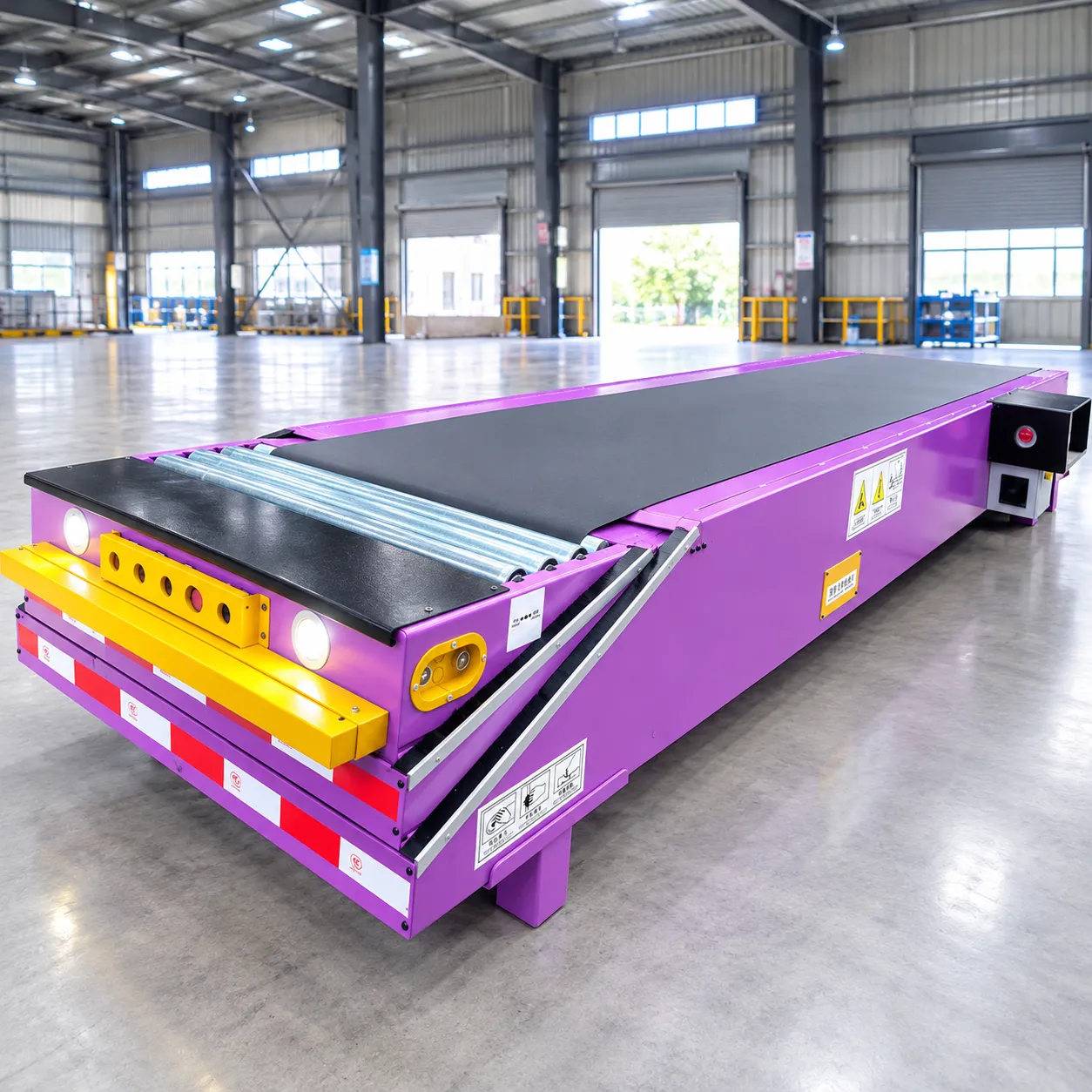
Three Section Telescopic Belt Conveyor
The YJ-INTL 3-Section Telescopic Belt Conveyor is engineered for loading and unloading operations where the conveying point needs to reach deep inside trucks, trailers or other vehicle compartments. Compared with shorter telescopic configurations, the three-section structure provides a longer available extension range while keeping the machine retracted when the loading position does not require maximum reach. According to the supplied specification, the available configurations cover 4,000–7,000 mm fixed sections and maximum extension lengths from 5,000 to 9,500 mm .
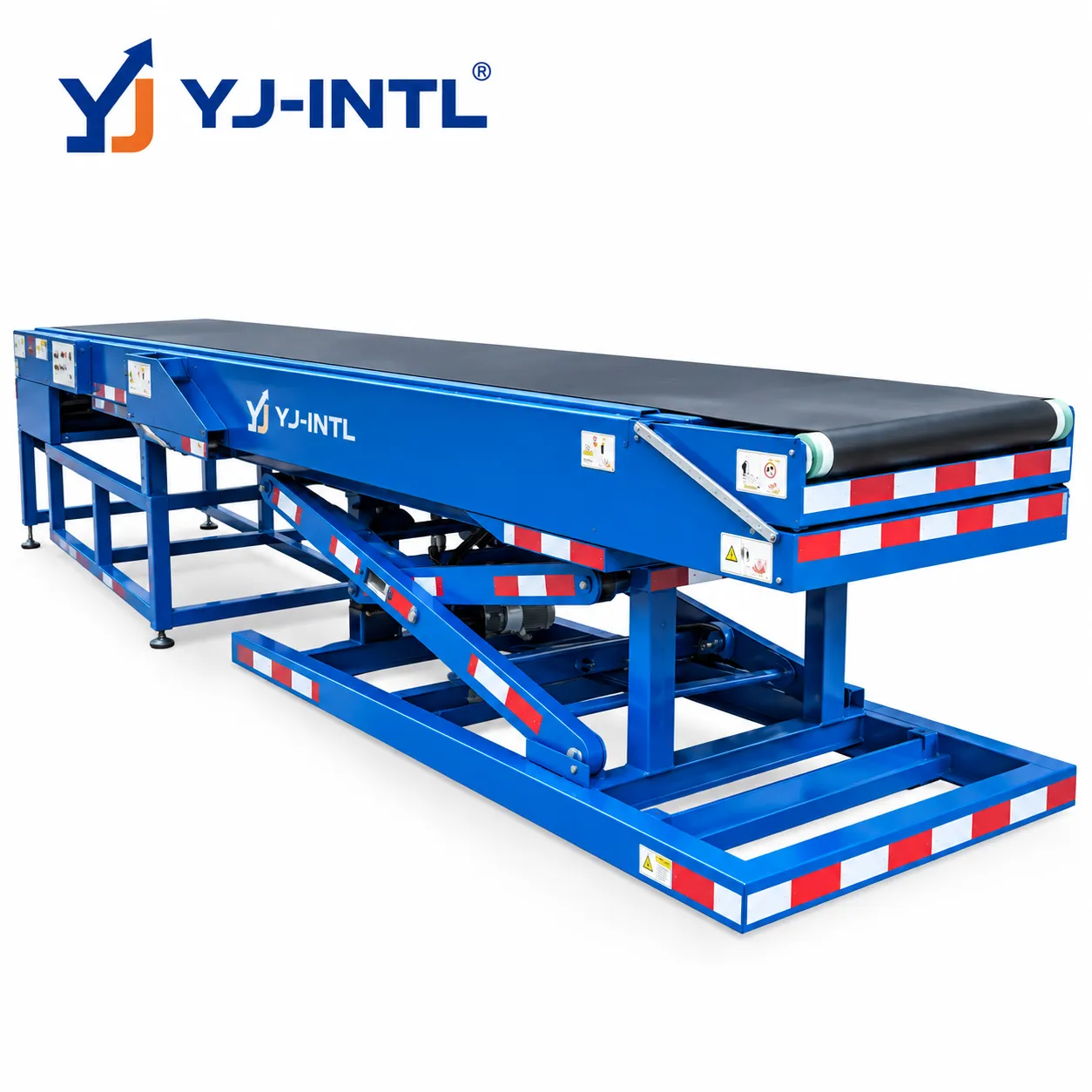
2-Section Telescopic Belt Conveyor for Truck Loading & Unloading
The YJ-INTL 2-Section Telescopic Belt Conveyor is designed to bring the conveying point closer to the inside of trucks, trailers and loading bays, reducing the need for workers to repeatedly carry goods between the dock and vehicle. Its two-section telescopic structure combines a fixed conveyor section with an extendable section, allowing the conveyor to reach deeper into the loading area while maintaining a compact footprint when retracted. The system is suitable for cartons, parcels, bags and other packaged goods handled in warehouses, distribution centers, express logistics hubs and manufacturing facilities.
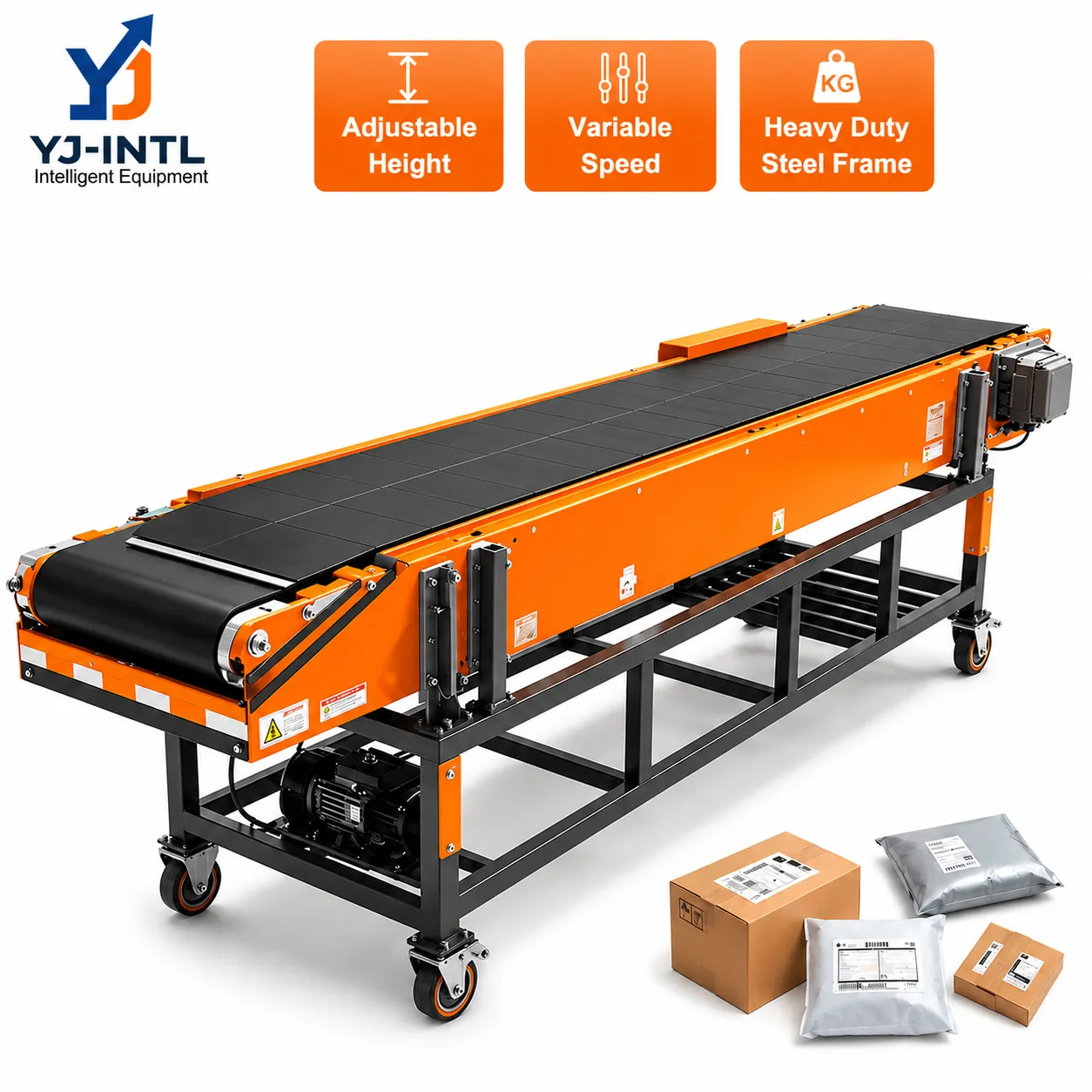
Movable Truck Loading Telescopic Belt Conveyor
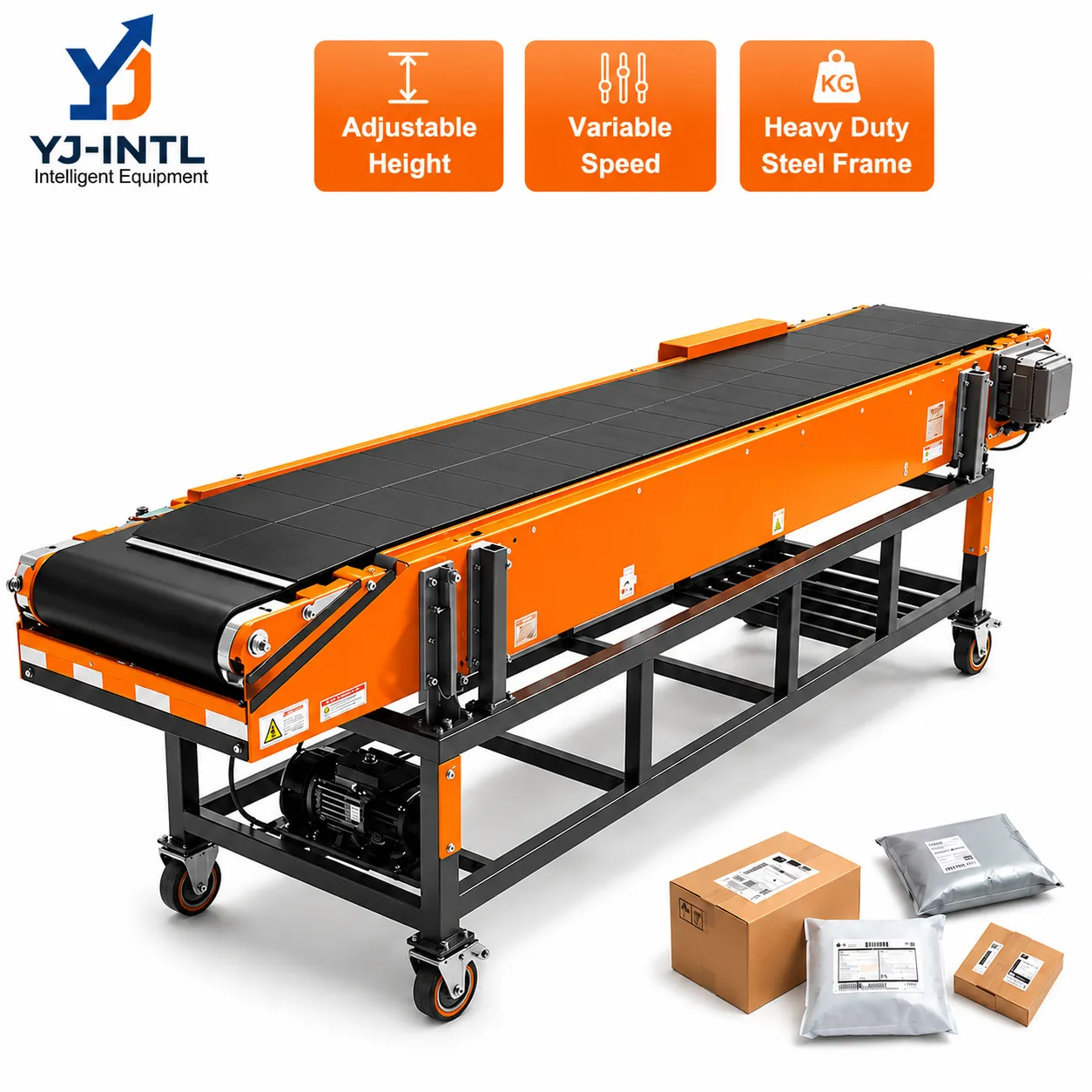
The Truck Loading Telescopic Belt Conveyor is designed specifically for loading and unloading cartons, parcels and packaged goods between warehouse facilities and trucks. Its telescopic belt structure allows the conveying section to extend toward the vehicle, while the adjustable-height and hydraulic positioning structure helps adapt the conveyor to different loading elevations. The product configuration shown in the source material also emphasizes a heavy-duty belt frame, high-speed conveying and customized dimensions , making it suitable for demanding warehouse and logistics loading operations.
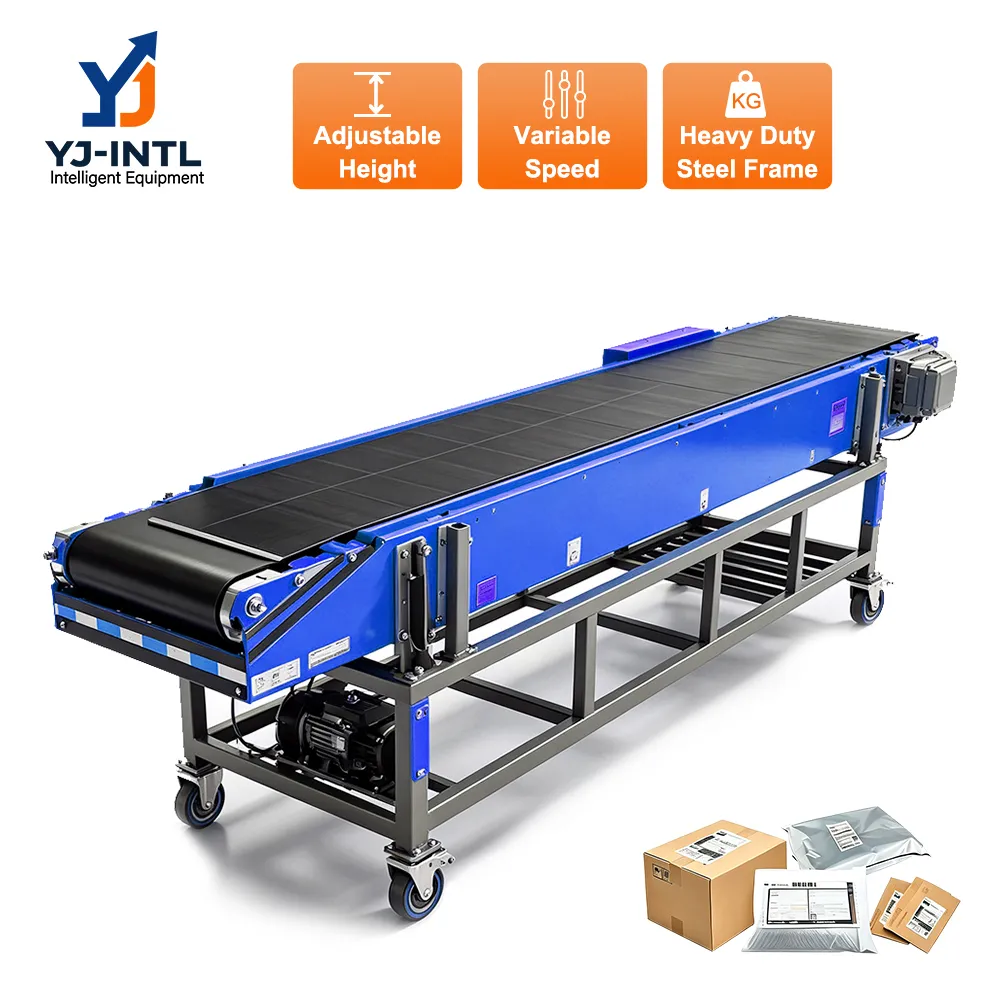
Automatic Telescopic Belt Conveyor for Truck Loading & Unloading
The Automatic Telescopic Belt Conveyor is designed to bring powered conveying directly into truck loading, unloading and warehouse handling areas. Its telescopic structure extends the conveyor toward the working position, reducing the distance operators need to manually move cartons and parcels. The system shown in the product material focuses on adjustable height, heavy-duty construction, fast conveying, flexible configuration and easier operation . Optional components such as casters and remote-control functions allow the conveyor to be adapted to different warehouse layouts and loading conditions.
Where Telescopic Belt Conveyors Deliver the Most Value
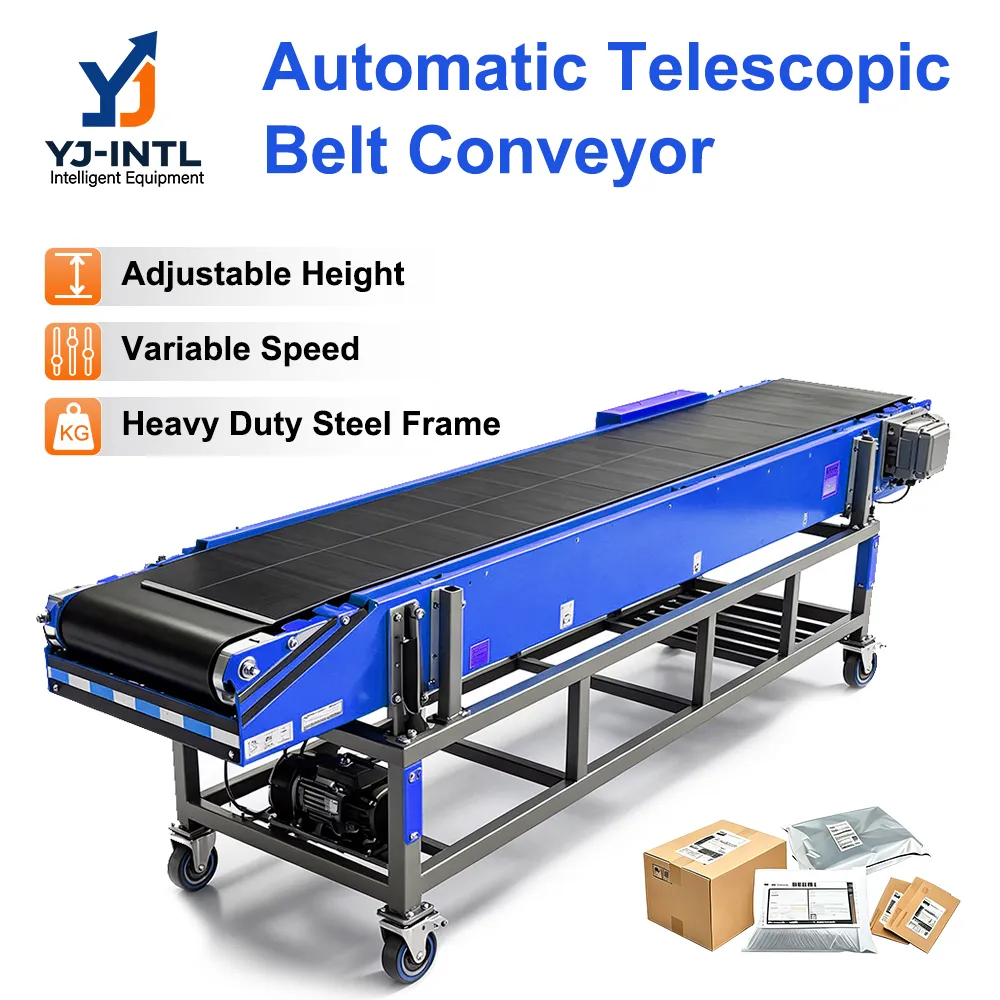
Express & Parcel Hubs
Use telescopic conveyors at inbound and outbound docks to speed parcel loading and unloading during peak periods.
E-Commerce Fulfillment Centers
Connect packing, staging and dispatch areas with a conveyor that can reach deeper into trailers without requiring a long permanent conveyor footprint.
Distribution Warehouses
Reduce manual transfer distance between dock doors and staging zones while keeping the loading area adaptable to different vehicle positions.
Manufacturing & Shipping Areas
Move cartons and finished goods from production or packing zones toward trucks with a controlled, ergonomic conveying route.
Technical Specifications for YJ-INTL Telescopic Belt Conveyors
| Specification | Details | Specification | Details |
|---|---|---|---|
| Product Type | Mobile / Fixed Telescopic Belt Conveyor | Suit Products | Cartons, Parcels, Bags, Totes and Packaged Goods |
| Typical Maximum Length | Up to 15 m per conveyor configuration | Conveyor Speed | 5–20 m/min, adjustable |
| Maximum Parcel Load | Up to 60 kg, subject to configuration | Belt Width | 500 / 600 / 700 / 800 mm options |
| Telescopic Structure | Multi-section extendable design | Working Height | Adjustable / project configured |
| Mobility | Fixed or mobile configuration | Control | Electric drive with local controls; remote control optional |
| Drive Components | Motor and transmission system | Frame Material | Carbon steel or stainless steel according to application |
| Integration | Fixed conveyors, DWS, sortation and warehouse control systems | Warranty | 1 year |
| Condition | New | Customization | Length, width, height, layout and control options |
| Typical Applications | Parcel, carton and packaged-goods loading/unloading | Origin | China |
Why Choose YJ-INTL Telescopic Belt Conveyor Solutions?
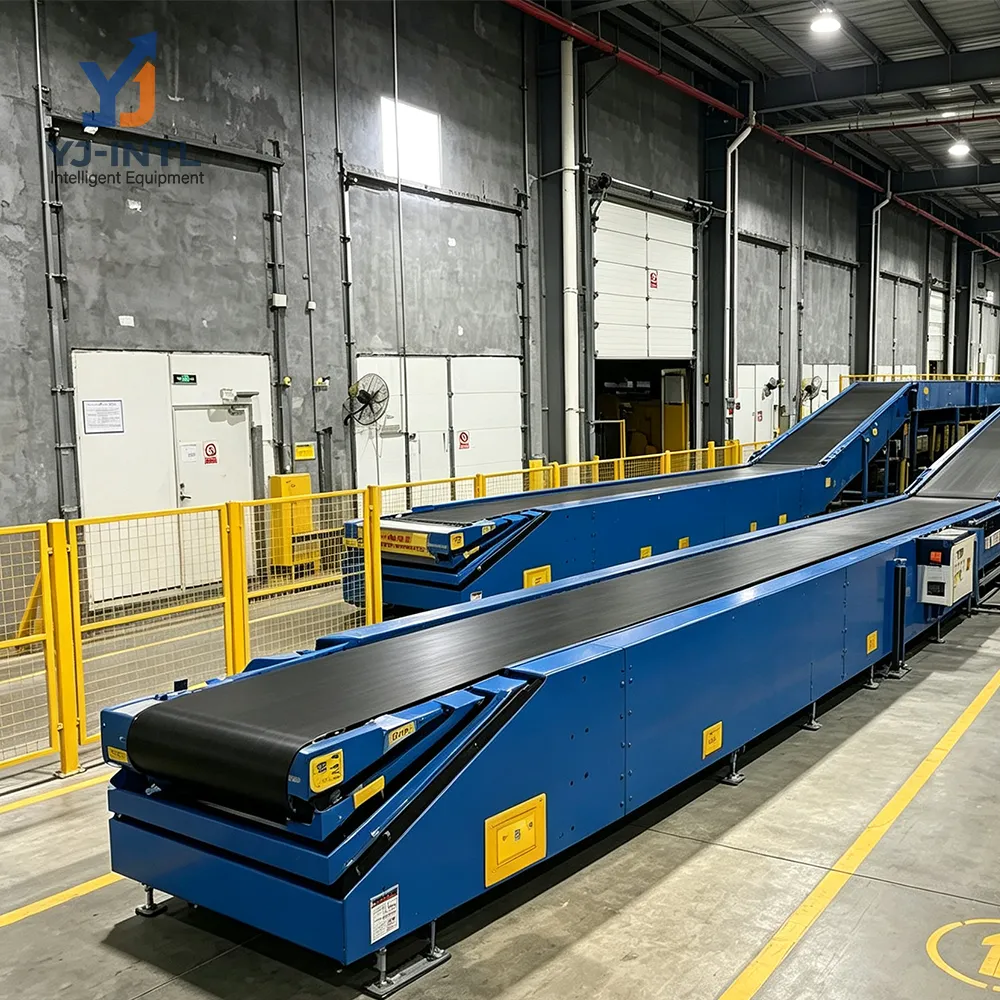
Reach the Loading Zone
The extendable conveyor brings powered conveying closer to the trailer interior, reducing the distance operators need to carry parcels and cartons by hand.
Case Studies
Real-world deployments measured by the numbers they deliver.
All Projects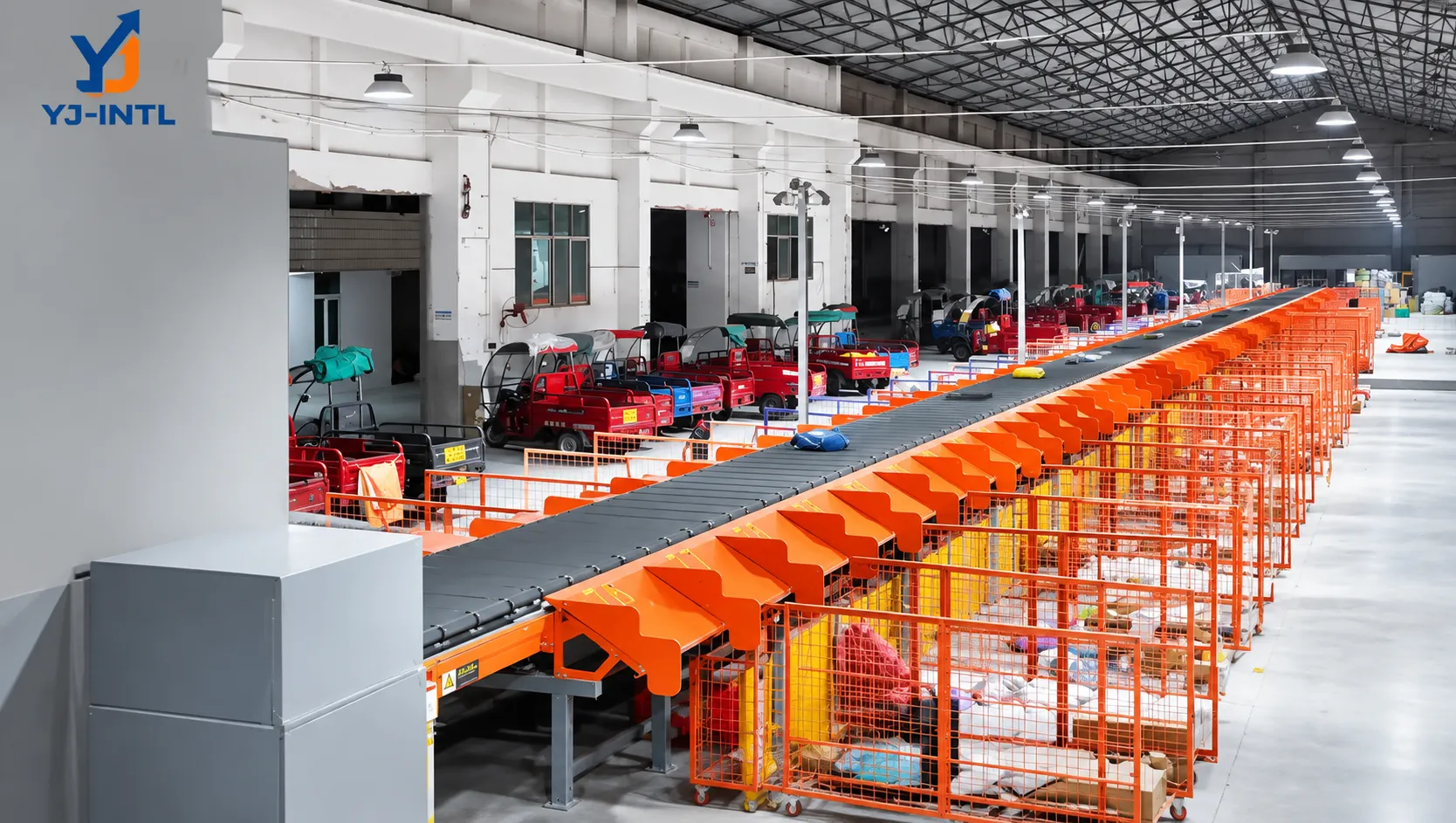
Quanzhou YTO Express Hub: Automated Narrow Belt Sorter Achieving 10,000 PPH Capacity
10,000 PPH99.99%50 kg4–5 Operators
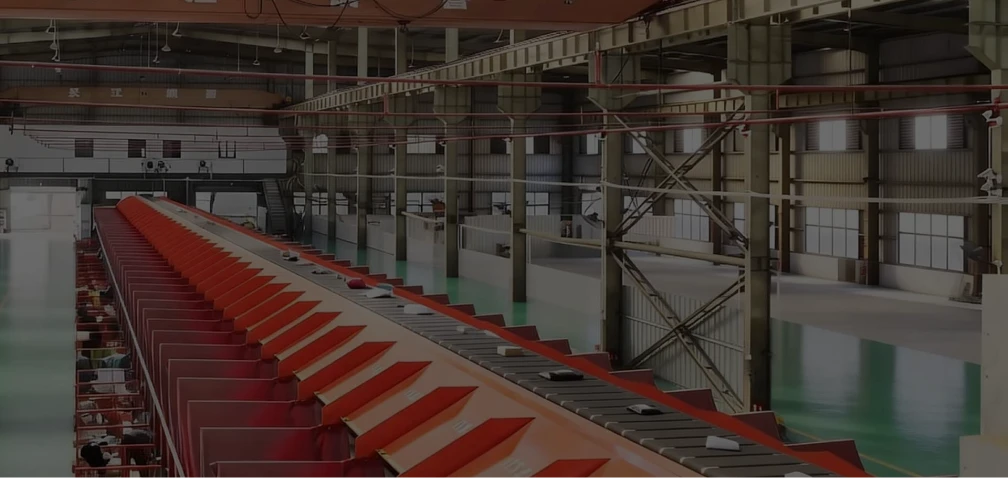
To handle heavy seasonal parcel volume surges in coastal e-commerce centers, Quanzhou YTO Express Hub upgraded its sorting infrastructure with YJ-INTL's narrow belt sorter. Featuring unaligned blind infeed, multi-car linkage for bulky cargo, and precision side-discharge chutes, the line handles up to 10,000 parcels per hour with a 99.99% scan accuracy while requiring only 4-5 operators on site.
"In coastal manufacturing hubs like Quanzhou, parcel profiles range from tiny polybags to heavy footwear cartons. The YJ-INTL narrow belt sorter transformed our operations—allowing operators to drop mixed cargo onto the belt without manual pre-sorting. The multi-car linkage carries oversized bags effortlessly, and our labor footprint dropped from 12 workers to just 4 per shift."
Regional Operations Manager, Quanzhou YTO Express Distribution Hub
FAQ
A telescopic belt conveyor is a powered conveyor with an extendable multi-section structure. It can project toward the interior of a truck or loading area and retract after loading or unloading, bringing the conveying point closer to the work area.
By moving parcels mechanically into or out of a vehicle, the conveyor reduces the amount of walking and manual carrying required between the dock and trailer. This can improve loading consistency, operator ergonomics and dock productivity.
YJ-INTL configurations can reach up to about 15 m in the stated product configuration. The actual usable extension depends on the selected length, number of sections, site layout and load requirements, so the final dimension should be confirmed during engineering.
Yes. The conveying speed can be configured in the typical 5-20 m/min range, while working height can be adjusted or engineered for the loading-bay conditions. Exact ranges depend on the final mechanical and electrical configuration.
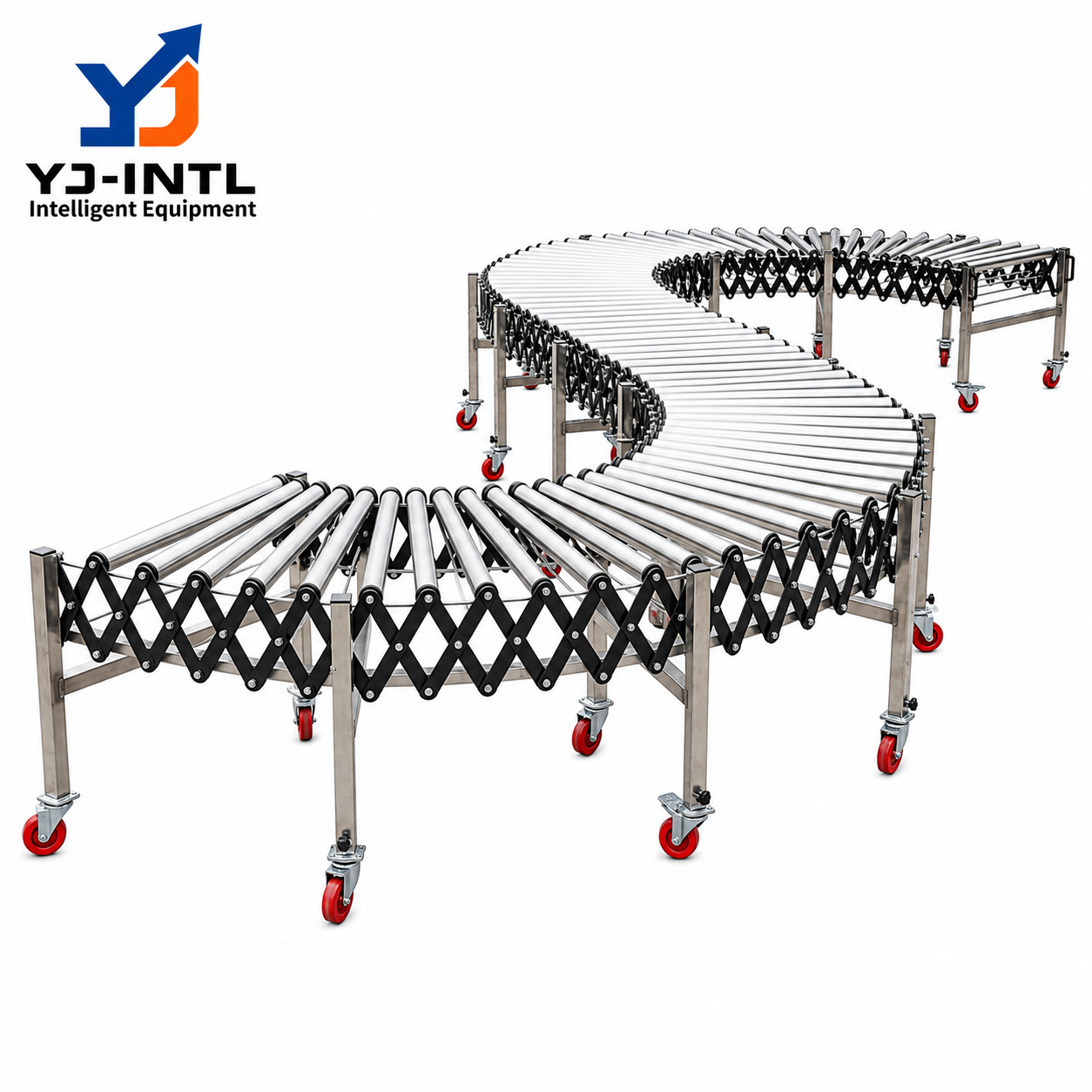
YJ-INTL can provide straight, O-type and S-type arrangements. The appropriate layout depends on the dock geometry, required turning direction, available floor space and how the conveyor must connect to other equipment.
Yes. A mobile configuration can be provided where the conveyor needs to serve multiple loading positions. Wheel, frame and control arrangements should be selected according to the required movement frequency and site conditions.
The conveyor is intended for unit loads such as cartons, parcels, bags and packaged goods that meet the selected belt width and load limits. For unusual shapes, fragile products or demanding operating conditions, the parcel profile should be reviewed before configuration.
Yes. Telescopic belt conveyors can be designed to interface with fixed belt conveyors, roller conveyors, DWS stations, sortation equipment and other material-handling lines. Mechanical handoff, control logic and product spacing should be considered during system design.
A quotation normally requires the required conveyor length, belt width, working-height range, parcel dimensions and weight, target speed, loading-bay dimensions, vehicle type, whether mobility is required, available power supply and any upstream or downstream equipment that must be connected.
Routine maintenance should include inspection of the belt and rollers, cleaning of the conveying surface, checking drive and transmission components, verifying fasteners and guards, and periodic inspection of electrical and control components. Maintenance intervals should follow the final equipment configuration and operating environment.
What Is a Telescopic Belt Conveyor?
A telescopic belt conveyor is a flexible loading and unloading machine developed for operations where a permanent conveyor cannot efficiently reach the inside of a vehicle. Its extendable sections allow the conveying surface to move closer to the working point, then retract to a compact position when the task is finished.
For logistics operators, the value is not simply the extension mechanism. The equipment changes the physical flow of goods at the dock: parcels can be conveyed deeper into a trailer, cartons can be transferred continuously between staging and loading areas, and operators spend less time carrying goods across the dock.
How the Telescopic Conveyor Fits Into a Warehouse Workflow
Staging → Conveyor Infeed → Telescopic Extension → Vehicle Loading / Unloading → Retraction → Dock Changeover
When connected to upstream conveyors or sorting equipment, the telescopic unit can become the final conveying section of an automated outbound line. For semi-automated loading, operators can feed parcels directly onto the belt. For higher-volume projects, the conveyor can be engineered around the existing material flow and control architecture.
Engineering Considerations Before Purchase
- Parcel dimensions, weight distribution and packaging type
- Required extension length and total conveyor footprint
- Truck or trailer dimensions and dock-door geometry
- Required belt width and conveying speed
- Working-height range and operator access
- Fixed or mobile deployment between dock doors
- Upstream and downstream conveyor interfaces
- Electrical supply and control requirements
These parameters determine the mechanical configuration, drive sizing, section arrangement and control architecture. YJ-INTL recommends confirming the application before finalizing the equipment specification rather than selecting a telescopic conveyor from length alone.
Telescopic Conveyor for Complete Logistics Automation
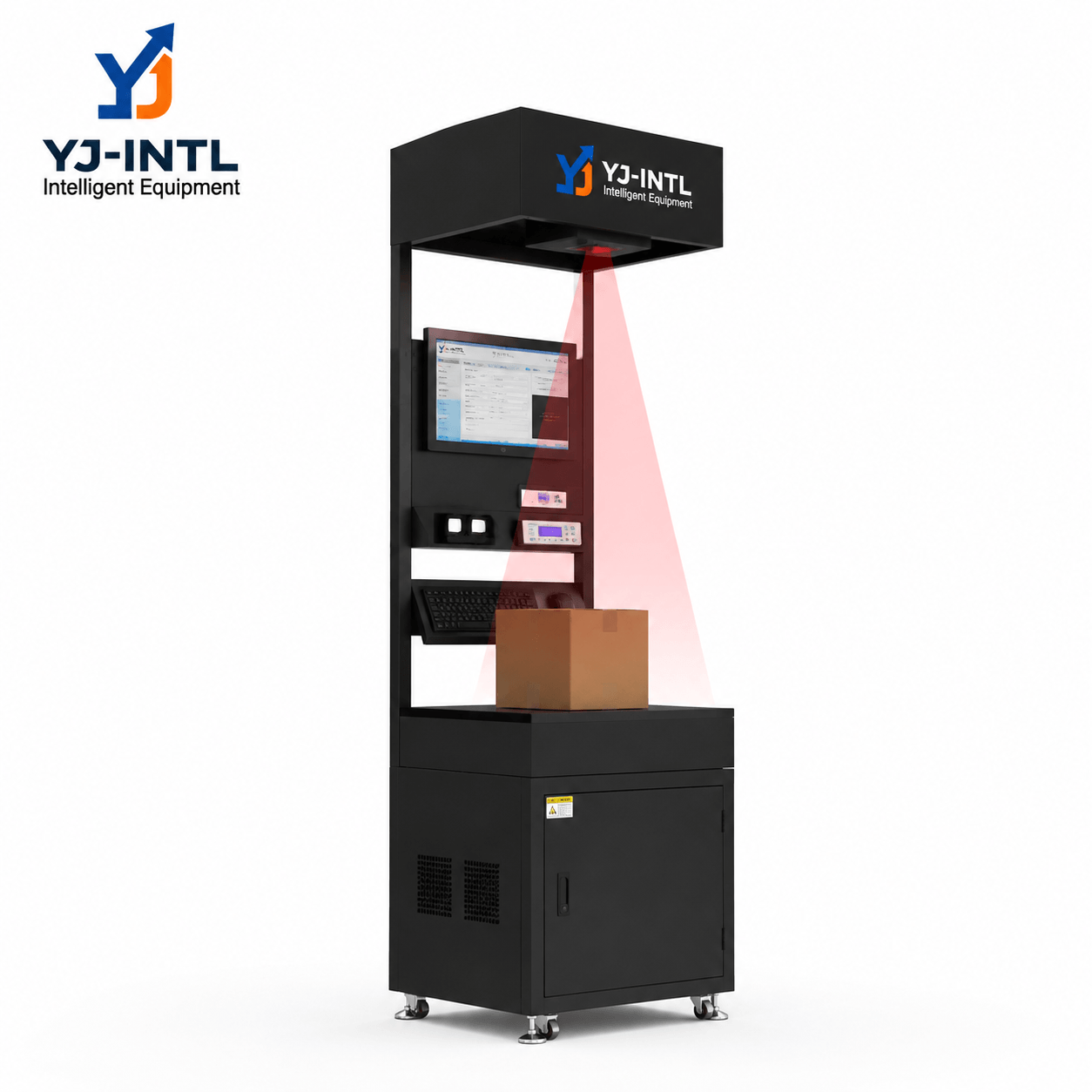
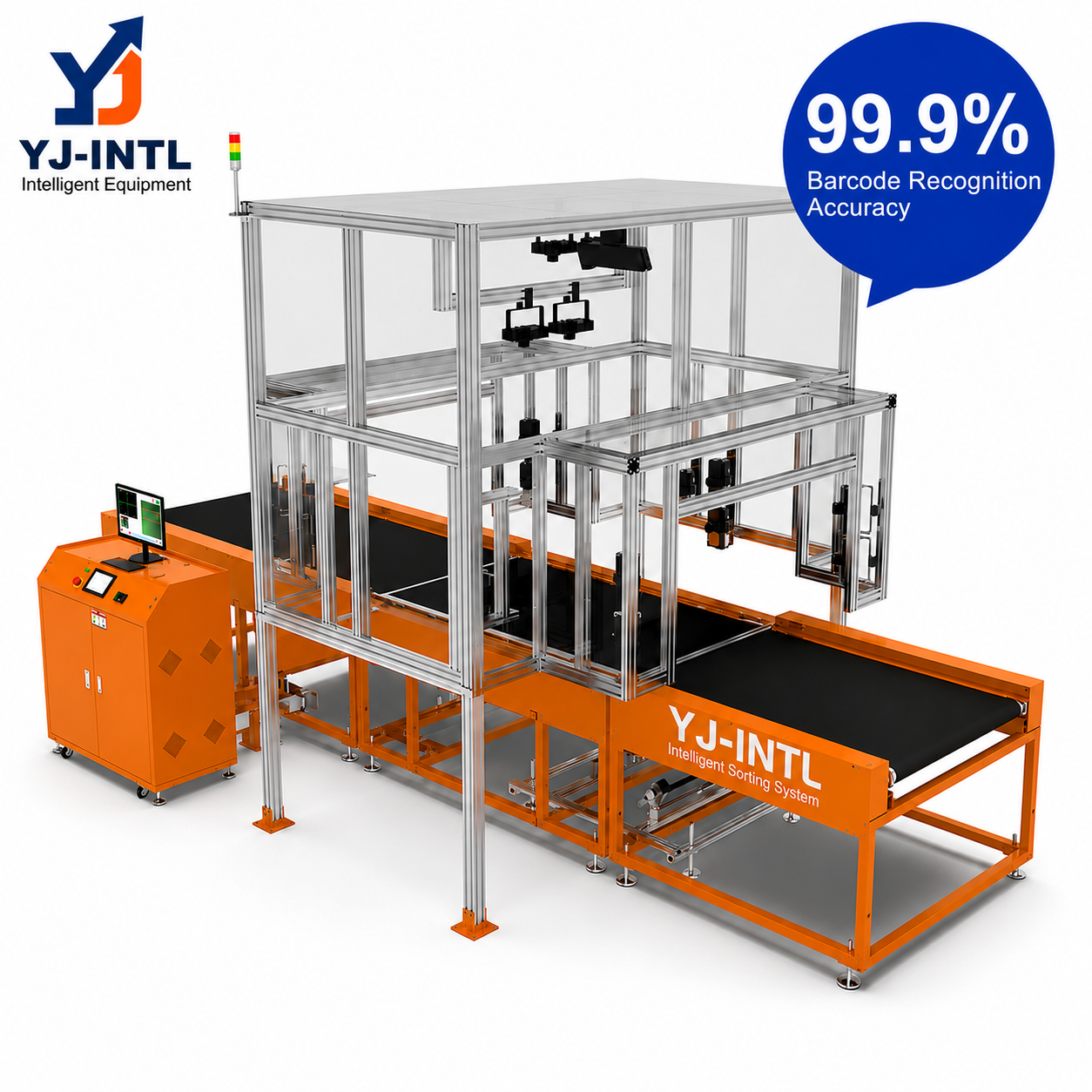
In a modern distribution center, loading and unloading equipment often sits at the boundary between automated material flow and vehicle operations. A telescopic belt conveyor can bridge this boundary by connecting warehouse conveying with the truck-loading process. When required, YJ-INTL can combine telescopic conveying with DWS, barcode identification, sorting equipment and WCS-controlled conveyor lines to create a more continuous outbound workflow.
YJ-INTL provides project-based conveyor engineering, including layout planning, equipment configuration, manufacturing, integration support and commissioning assistance. Final performance depends on the selected configuration, site conditions and operating profile.