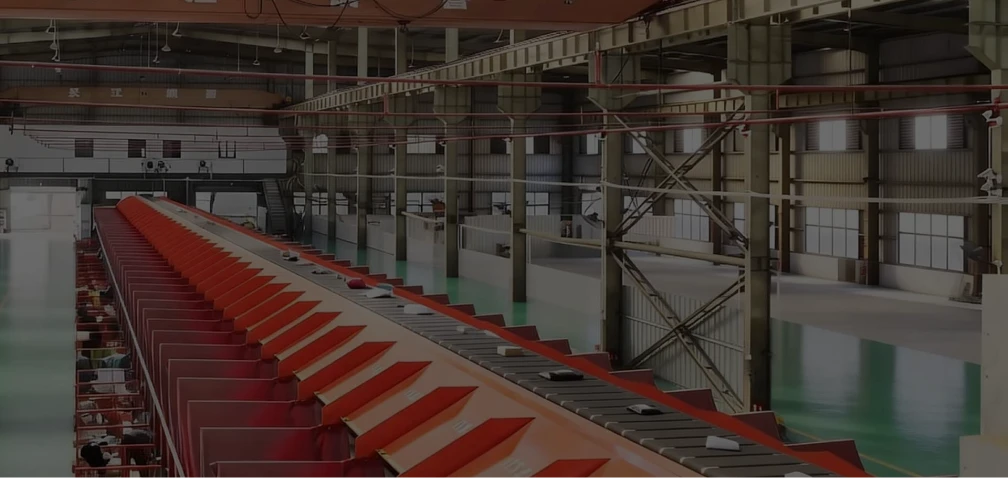
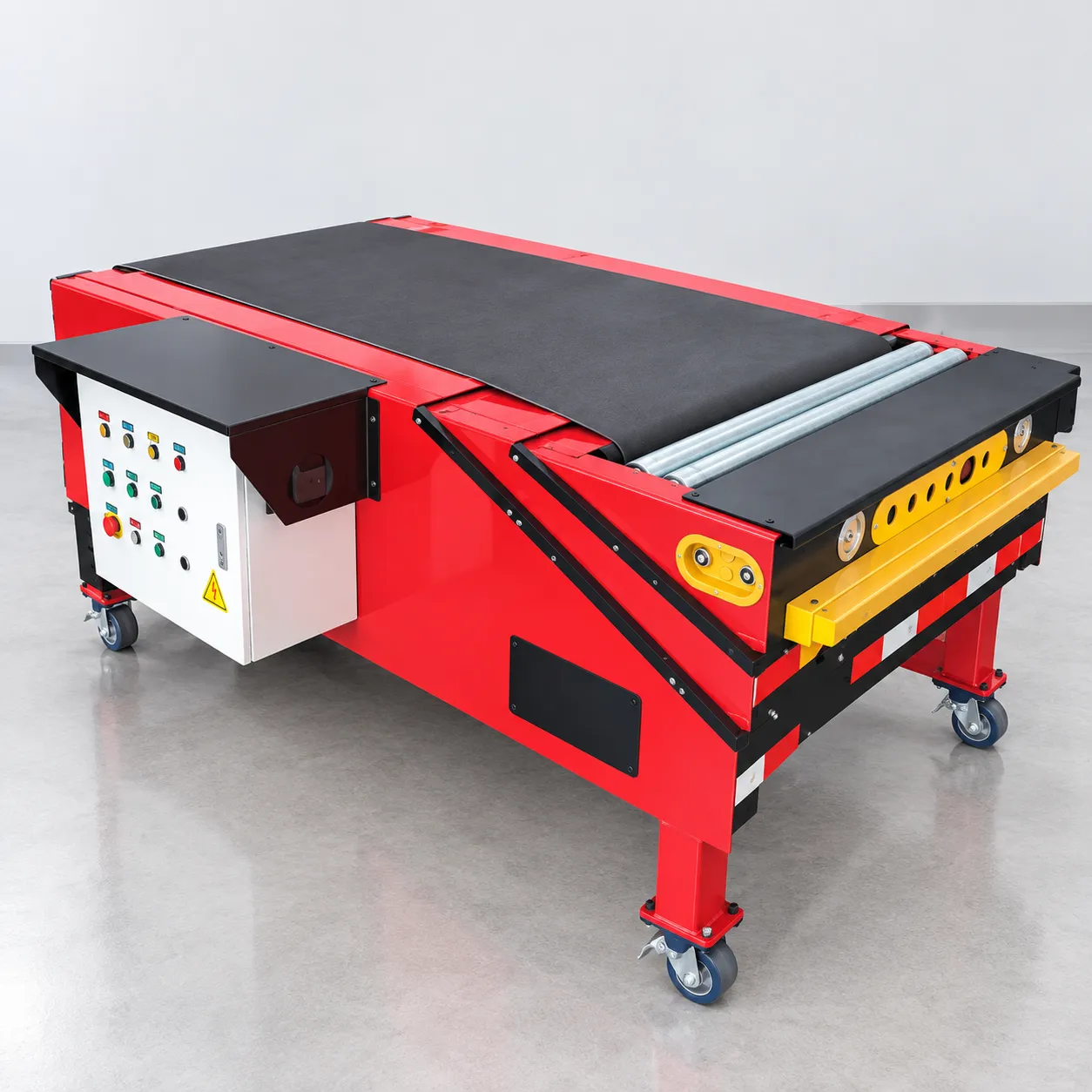
Heavy-Duty Loading & Unloading Automation for Modern Warehousing & Logistics
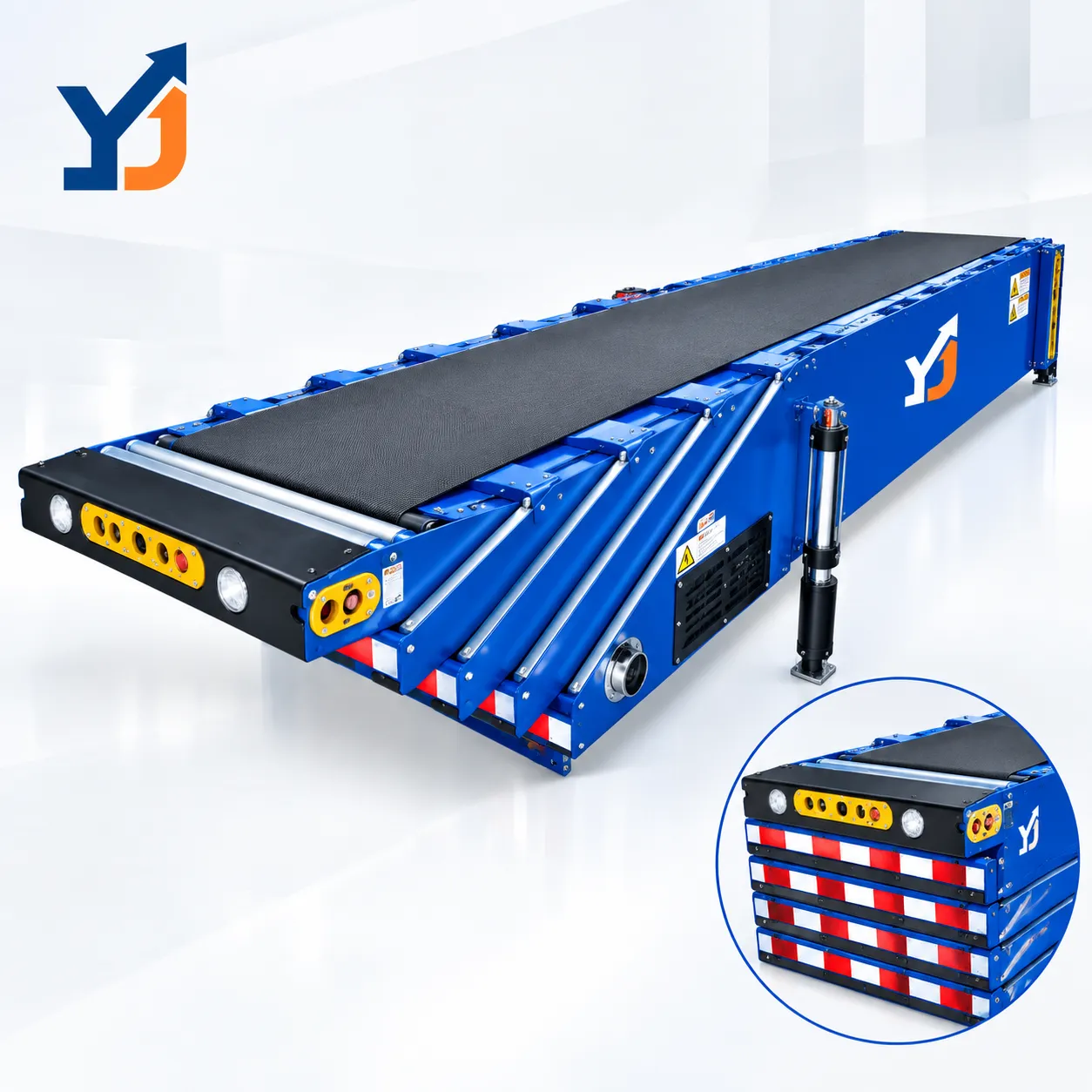
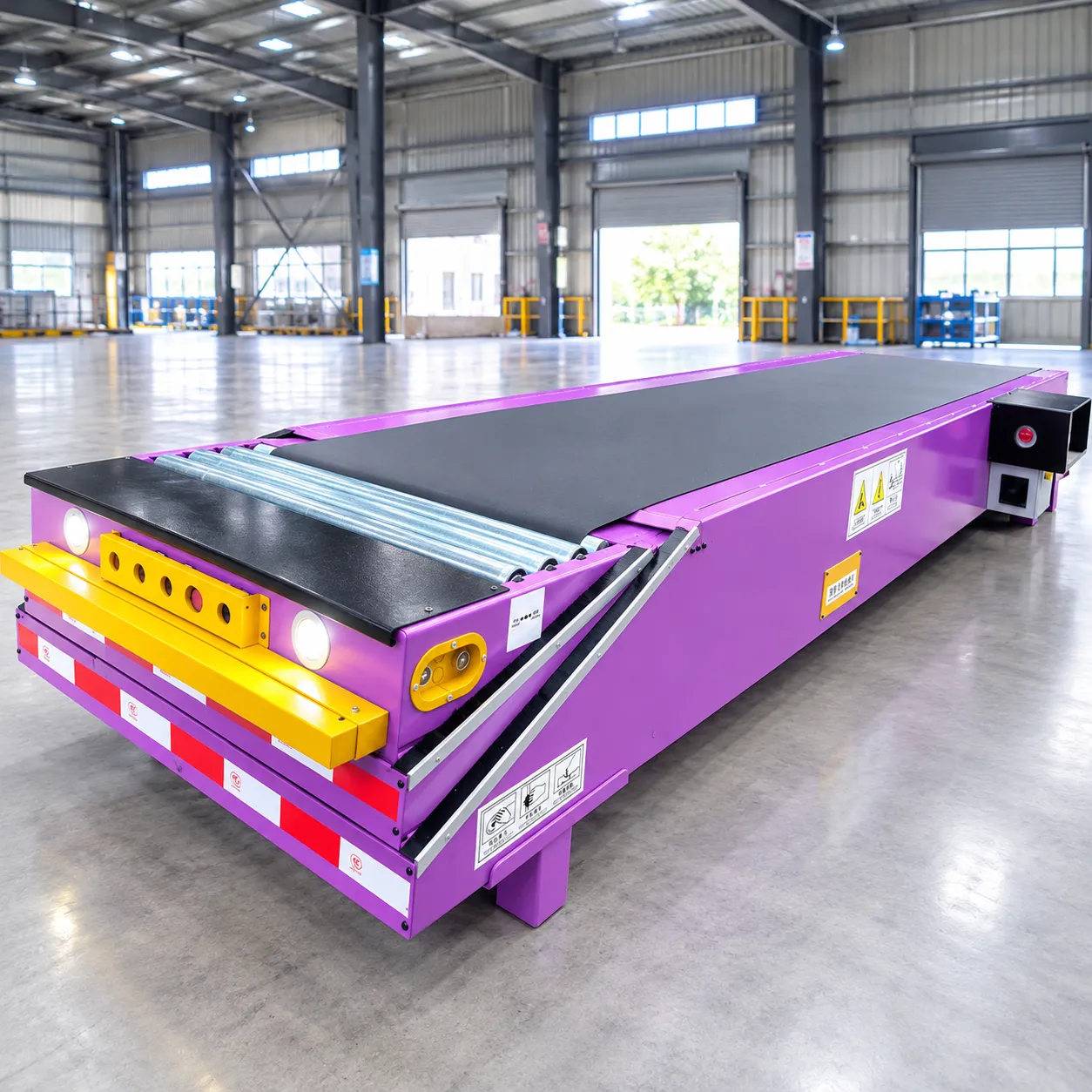
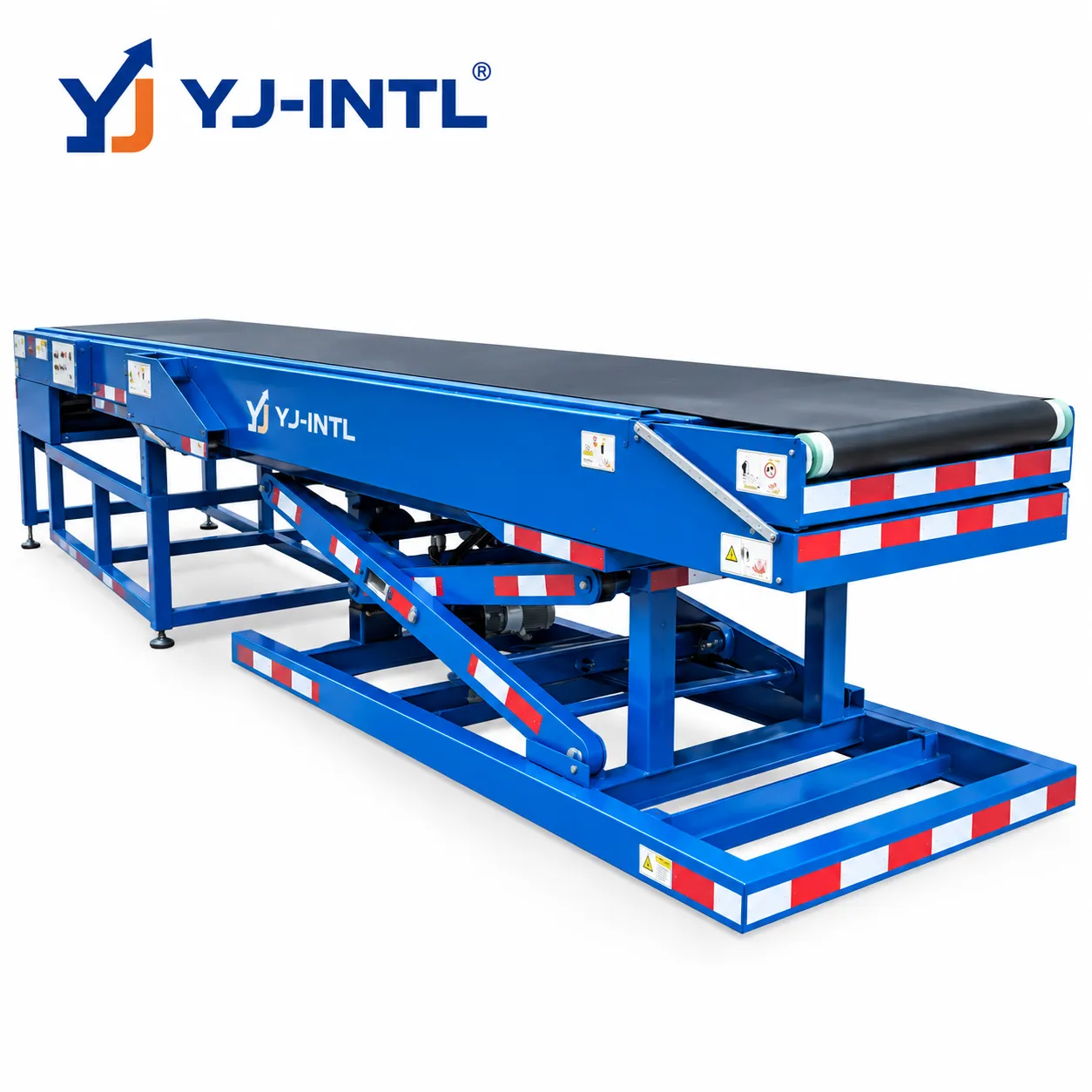
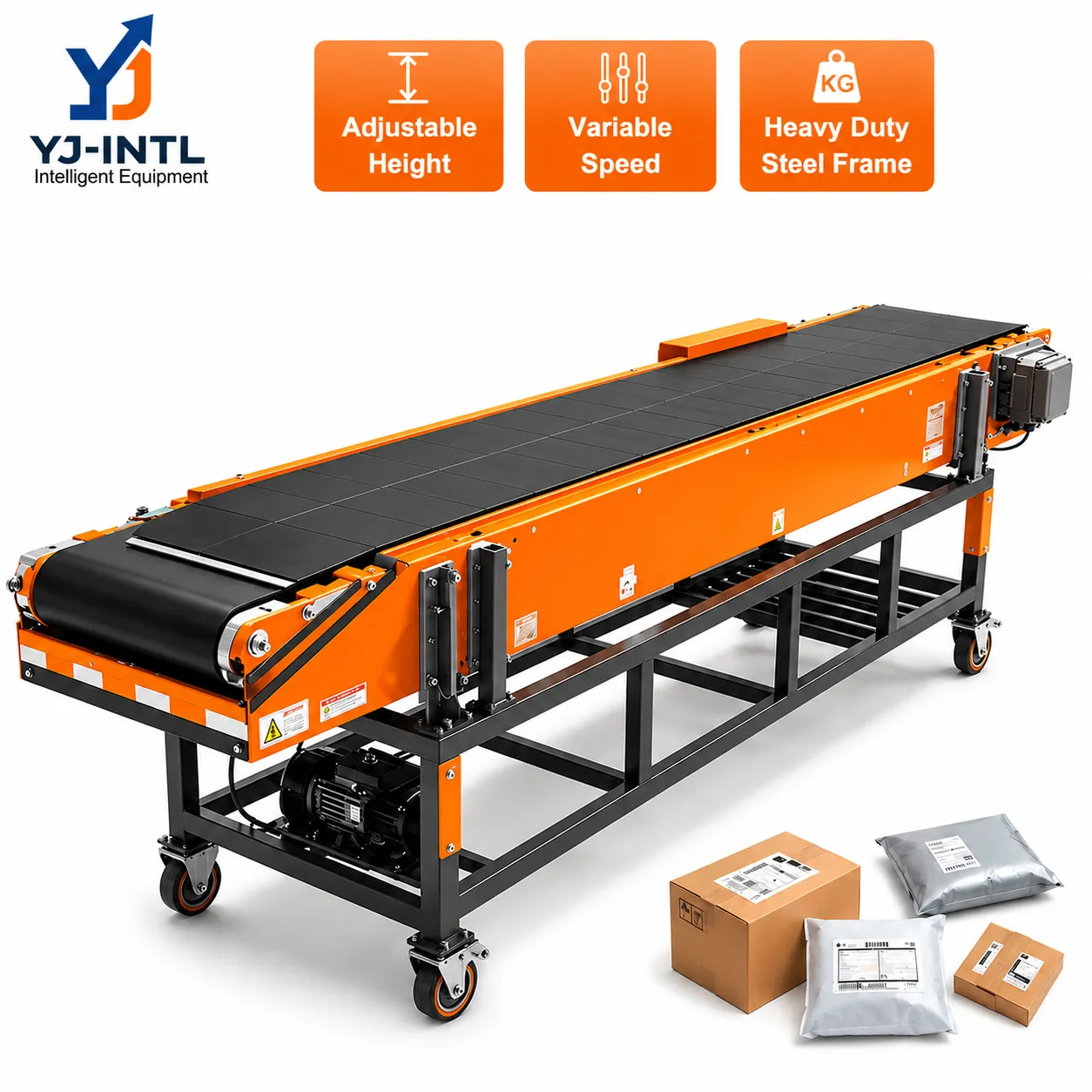
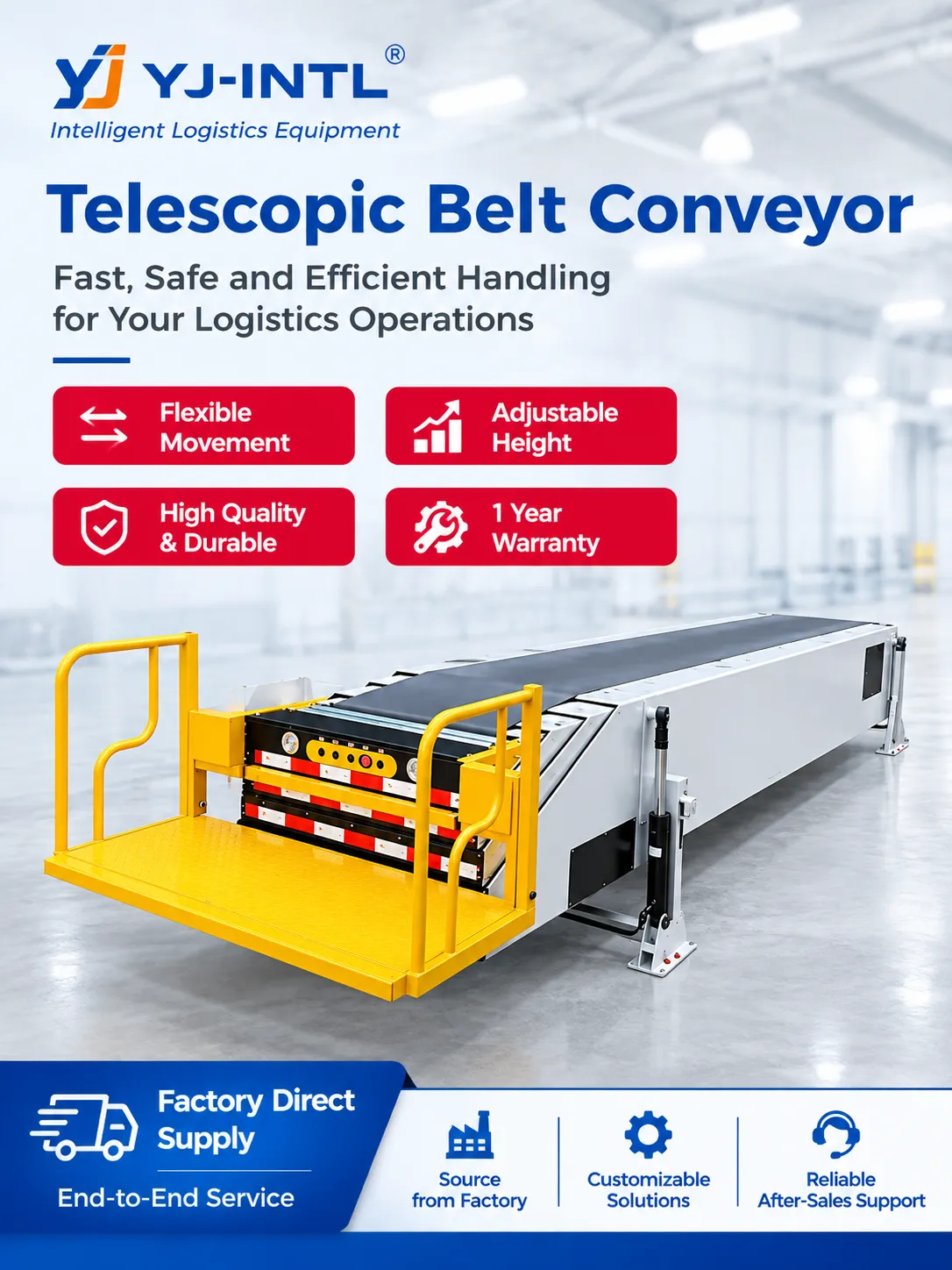
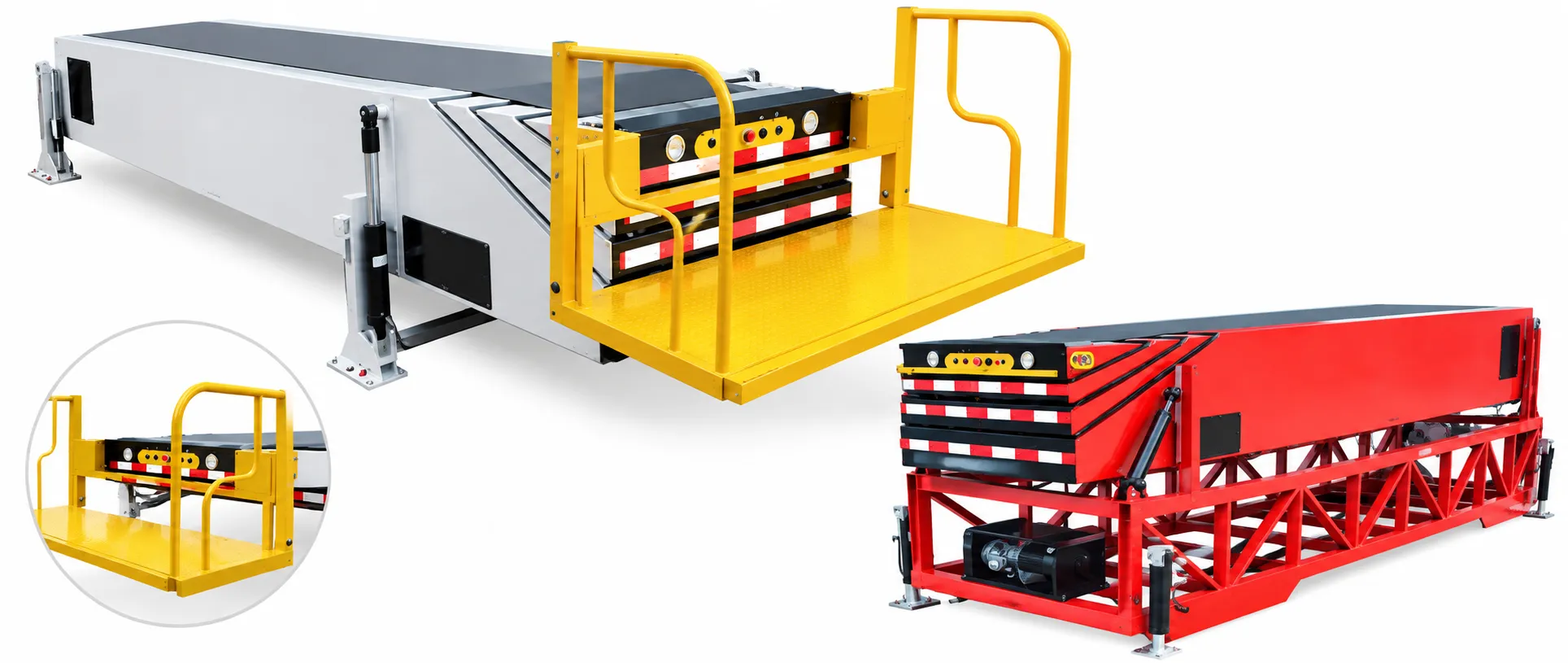
Four-Section Telescopic Extension Device
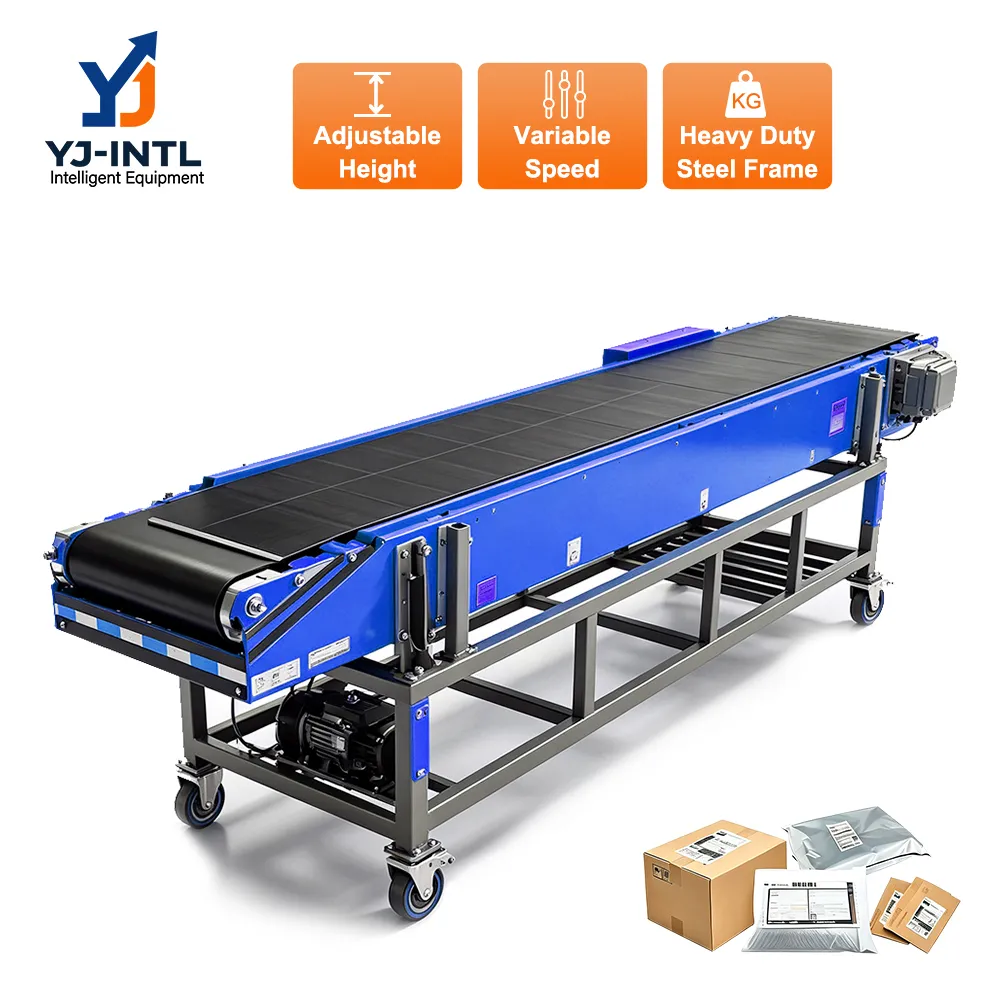
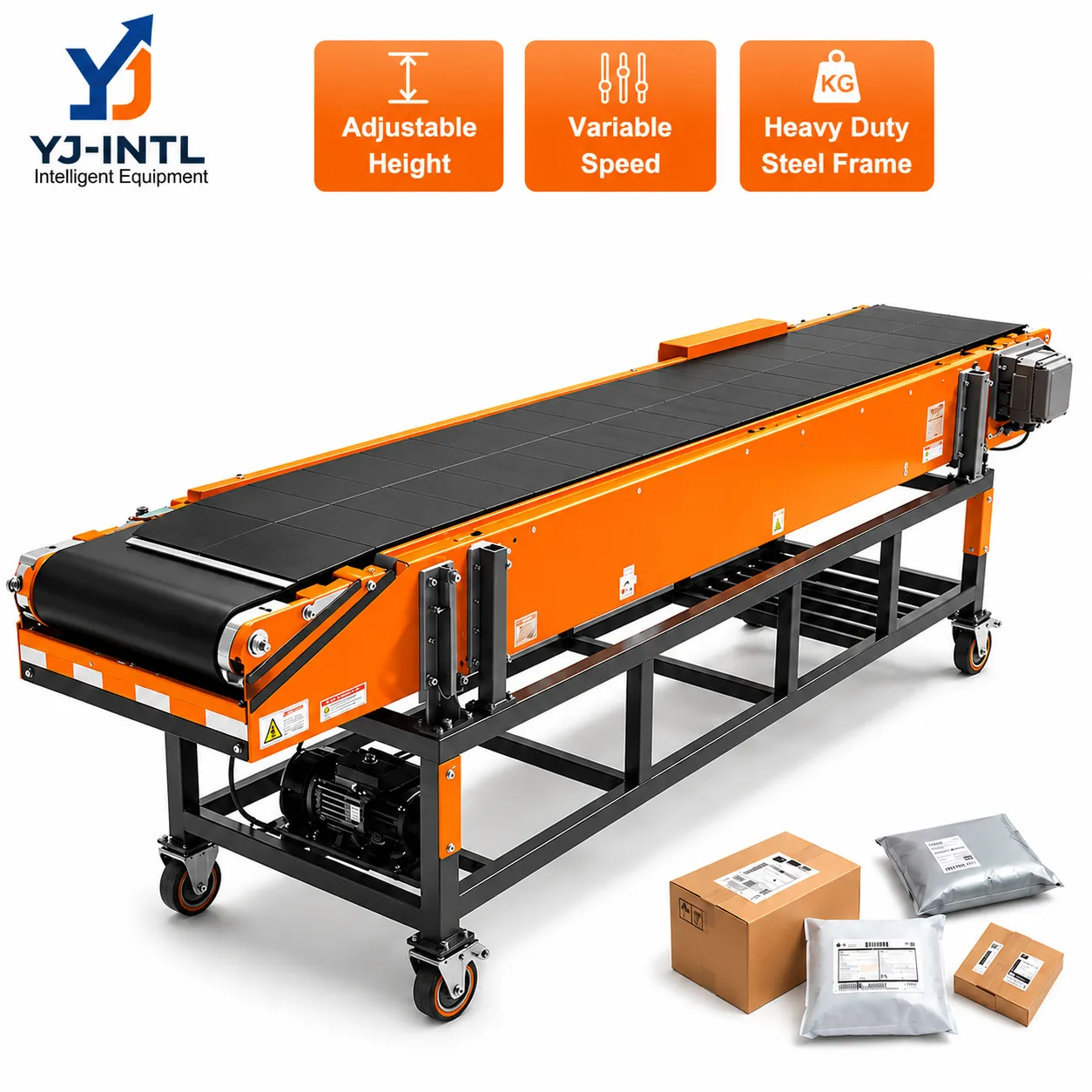
The Four-Section Telescopic Extension Belt Conveyor is engineered to streamline trailer loading and unloading operations in logistics hubs, distribution centers, and e-commerce fulfillment facilities. Designed with premium BS700/T700 high-strength steel and a flexible 4-section extension framework, this conveyor reaches deep into long trucks to eliminate manual parcel carrying, drastically reduce turnaround times, and boost loading efficiency.
- 4-Section Long-Reach Telescopic Structure
- Up to 17,000 mm Maximum Extension
- 5,000–8,000 mm Fixed Section Options
- 10–40 m/min Variable Conveying Speed
- 10 m/min Extension / Retraction Speed
- 2.2 kW Conveyor Motor + 0.75 kW Telescopic Motor
- 3 mm PVK Impact-Resistant Composite Belt
Technical Specifications
| Specification | Details | Specification | Details |
|---|---|---|---|
| Equipment Type | 4-Section Telescopic Belt Conveyor | Application | Truck / Trailer Loading & Unloading |
| Fixed Section | 5,000 / 6,000 / 7,000 / 8,000 mm | Maximum Extension | 9,000 / 12,000 / 14,000 / 17,000 mm |
| Minimum Altitude | ≥760 mm | Equipment Self-Weight | 2.1 / 2.4 / 2.7 / 3.0 T |
| Conveying Speed | 10–40 m/min, variable-frequency adjustable | Extension / Retraction Speed | 10 m/min, variable-frequency drive |
| Rated Load Capacity | ≤80 kg/m² | Belt | 3 mm PVK impact-resistant composite belt |
| Belt Joint | Steel-clamped joint | Conveyor Motor | 2.2 kW |
| Frequency Converter | Delta / Schneider | Electrical System | Independent distribution cabinet |
| Main Beam | ≥6 mm steel plate | Main Beam Height | ≥750 mm |
| Secondary Beam | ≥5 mm steel plate | Secondary Beam Height | ≥455 mm |
| Second Secondary Beam | ≥5 mm steel plate | Beam Height | ≥309 mm |
| Third Secondary Beam | ≥5 mm steel plate | Beam Height | ≥165 mm |
| Hydraulic Angle | 3.5° | Hydraulic Stroke | 285 mm |
| Mounting Hole Spacing | 615 mm | Active Roller | Φ180 × 850 mm |
| Active Roller Surface | Rubber covering ≥10 mm | Active Roller Shaft | 45# steel |
| Transmission Roller | Φ89 × 750 / Φ850 mm | Pressure Belt Roller | Φ50 mm |
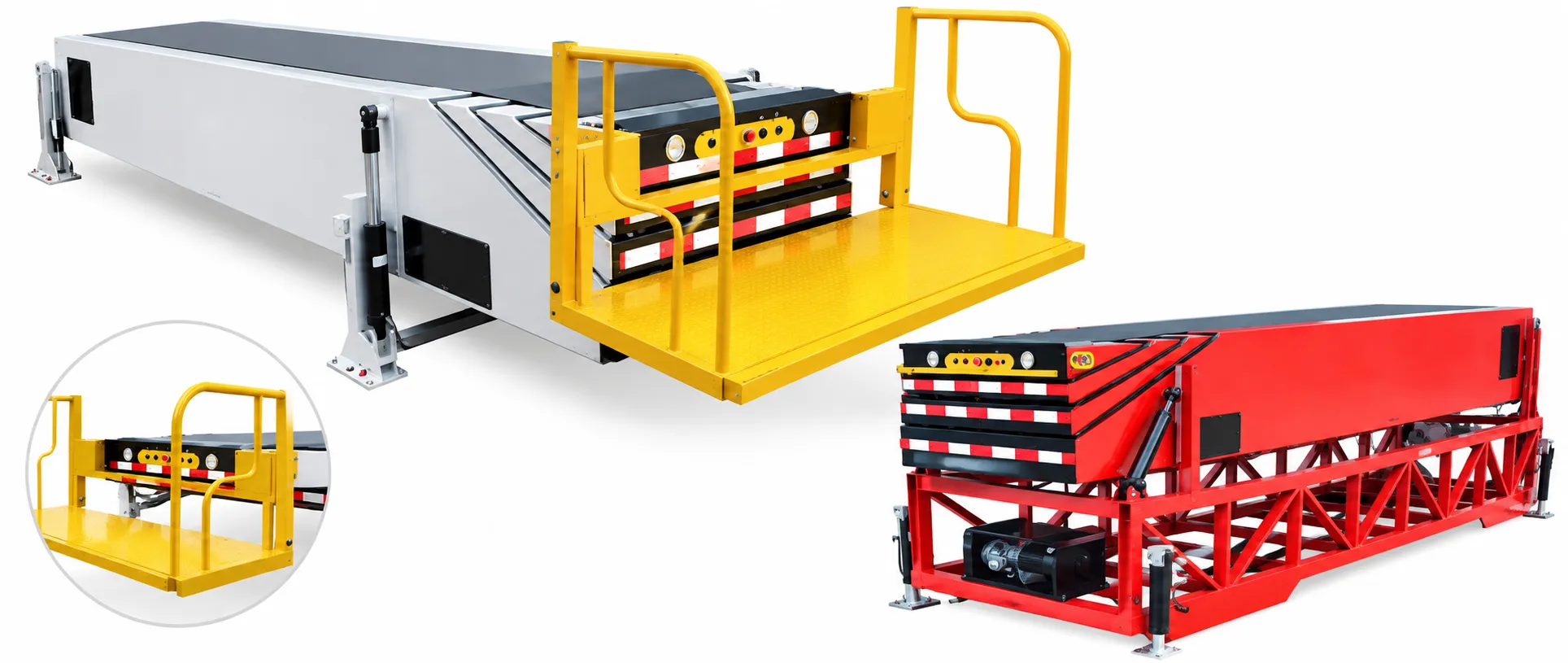
| Optional Features | Hydraulic lifting, platform, hump system, electric/mobile casters, counter, roof sweeping device | Structure | Long-reach multi-section telescopic construction |
Engineering Note: Final dimensions, extension configuration, motor selection, hydraulic system and optional equipment should be confirmed according to the actual project requirements.
Details
Designed for Long-Reach Loading Operations
The biggest limitation of many warehouse loading operations is not the conveyor's ability to move products—it is where the conveyor can deliver them. When the cargo position is deep inside a truck or trailer, a short conveyor leaves a significant distance between the conveyor end and the loading position. Operators may need to repeatedly move goods manually, reposition products or work farther inside the vehicle.
The YJ-INTL four-section telescopic conveyor approaches this problem differently. Instead of extending the operator's walking distance, the conveyor itself moves farther toward the cargo position. With configurations reaching up to 17 meters, the system is particularly suitable for projects requiring a substantial working reach between the fixed warehouse installation point and the vehicle interior.
Key Features & Operational Advantages:
- Heavy-Duty High-Strength Steel Frame: Built using premium BS700/T700 high-grade steel plates (up to 6mm thickness on main beams), offering high structural rigidity and long-term durability under demanding industrial use.
- Impact-Resistant PVK Belt Structure: Fitted with a 3mm PVK impact-resistant composite belt joined with steel clamps, delivering high wear resistance and smooth parcel transport.
- Variable Frequency Drive Control: Powered by VFD speed adjustment, allowing smooth conveying speeds (10–40 m/min) and steady extension/retraction (10 m/min) to align with operational pace.
- Versatile Custom Configurations: Offers optional hydraulic lifting, operator platforms, electric or mobile casters, package counters, and roof sweeping devices to suit various site layouts.
How to Select the Right Extension Length
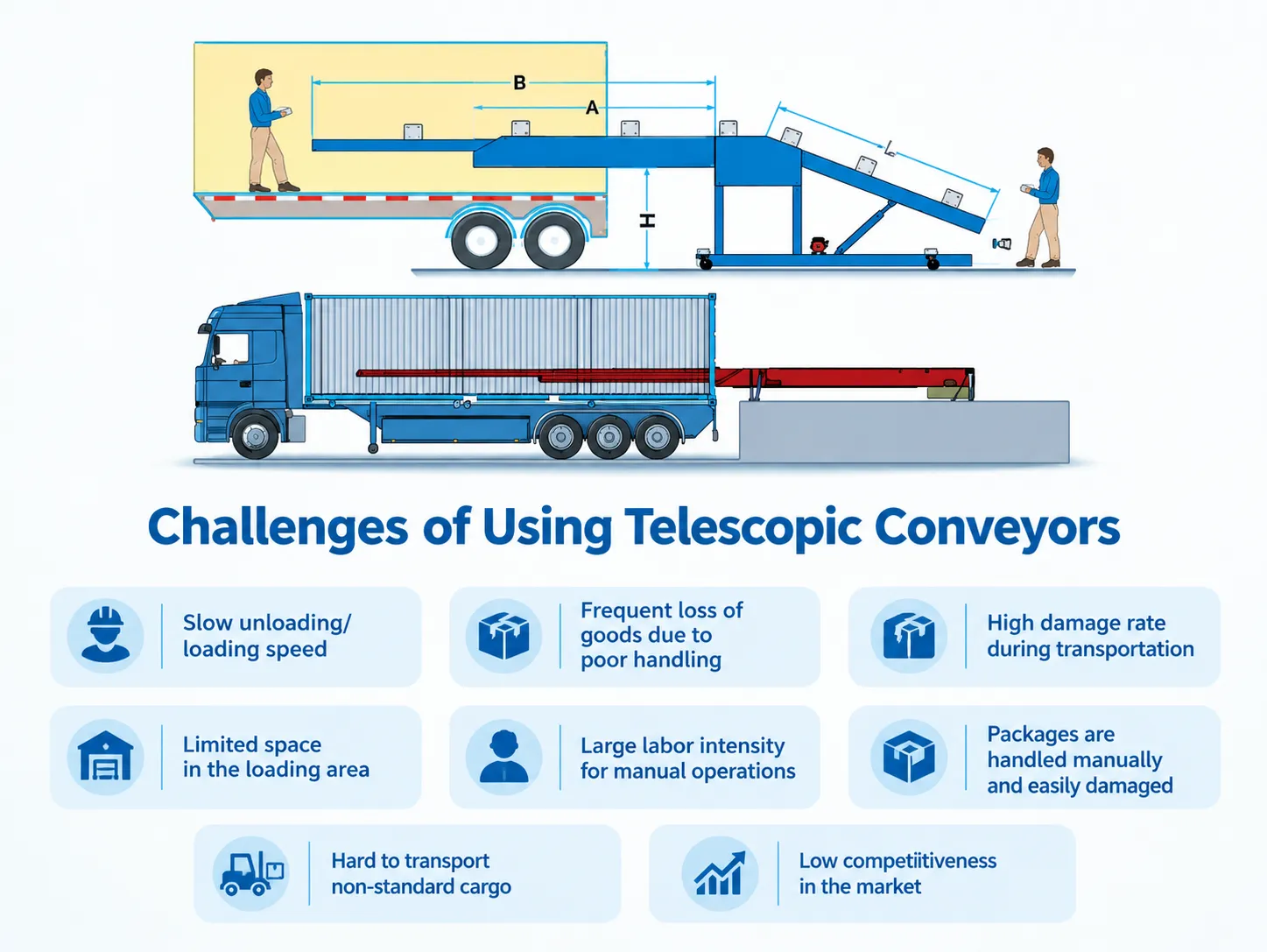
The maximum extension should be calculated from the actual loading geometry.
Step 1 — Measure the Fixed Installation Position
Determine where the rear/base section can be installed within the warehouse.
Step 2 — Measure the Vehicle Interface
Record the dock and vehicle-floor elevations.
Step 3 — Determine the Required Cargo Reach
Identify the deepest position that needs to be reached during loading or unloading.
Step 4 — Calculate the Working Extension
The required extension should provide sufficient reach without creating unnecessary structural or installation requirements.
Step 5 — Evaluate Vehicle Variations
If multiple truck or trailer types are used, the design should accommodate the relevant range.
Step 6 — Confirm Upstream Capacity
The telescopic conveyor speed should be coordinated with the conveyor or sorting system feeding it.
This is why YJ-INTL recommends selecting the machine based on the complete loading geometry, rather than choosing the longest available model by default.
Four-Section Telescopic Conveyor for Large-Scale Operations
For larger facilities, the value of a long-reach telescopic conveyor is not limited to extension length. It can also affect the organization of the loading workflow.
A properly designed system can help:
Reduce Unnecessary Carrying
The conveyor brings products closer to their final loading position.
Improve Loading Accessibility
Operators can work closer to the active conveyor end rather than repeatedly moving between the dock and cargo area.
Adapt to Vehicle Geometry
Different extension configurations can be selected according to the required reach.
Connect Automated and Manual Processes
The telescopic conveyor can form the final stage of an automated conveyor or sorting system while operators remain responsible for vehicle loading.
Improve Dock Utilization
The retractable structure allows the conveyor to occupy less working reach when maximum extension is not required.
Why Choose YJ-INTL?
For a long-reach telescopic conveyor, the machine itself is only one part of the project.
The more important question is: How does the conveyor fit into the customer's complete material-flow process? YJ-INTL approaches telescopic conveyor projects from the system level.
Application-Based Design
The equipment can be configured around the customer's dock dimensions, vehicle type, required extension, material characteristics and workflow.
Mechanical Engineering Capability
The technical configuration covers beam construction, steel grade, rollers, bearings, belt, drive system and hydraulic components.
Variable Configuration
Different fixed-section and extension combinations allow the equipment to be matched to different loading requirements.
Automation Integration
The telescopic conveyor can be positioned downstream of conveyors, sorters, DWS and other warehouse automation equipment.
Project Customization
Dimensions, speed, hydraulic configuration, electrical components and optional functions can be reviewed according to project requirements.
Complete Logistics Equipment Portfolio
YJ-INTL can provide not only telescopic conveyors but also conveying, sorting, DWS and other logistics automation equipment, allowing customers to coordinate multiple equipment packages through one engineering supplier.
FAQ
A 4-section telescopic belt conveyor is a long-reach conveyor system designed with multiple telescopic sections that extend and retract from a fixed base. It is used to bring the material transfer point closer to the cargo position inside trucks, trailers and other loading areas.
According to the supplied specification, the maximum extension length reaches 17,000 mm.
The available fixed-section configurations shown in the technical sheet are 5,000, 6,000, 7,000 and 8,000 mm, with corresponding maximum extension lengths of 9,000, 12,000, 14,000 and 17,000 mm.
The four-section configuration provides a longer available reach than the three-section configuration shown previously. The appropriate model should be selected according to the actual dock geometry, required reach and vehicle dimensions.
The specified conveying speed is 10–40 m/min with variable-frequency adjustment.
The specified extension and retraction speed is 10 m/min with variable-frequency drive control.
The rated load capacity specified in the technical sheet is ≤80 kg/m².
The conveyor uses a 3 mm PVK impact-resistant composite belt with a steel-clamped belt joint.
The specified conveying motor is 2.2 kW.
The specified telescopic motor is 0.75 kW.
The supplied specification identifies Delta or Schneider frequency converters, with the selection related to motor power.
Yes. The long extension range, including the maximum 17,000 mm configuration, makes the conveyor suitable for deep truck and trailer loading applications.
Yes. The supplied specification includes hydraulic adjustment with a 3.5° hydraulic angle and 285 mm stroke.
The specified hydraulic stroke is 285 mm, with mounting hole spacing of 615 mm.
The supplied technical specification identifies BS700, T700 or higher-grade steel plate for the major structural sections, with different plate thickness and beam-height requirements according to the section.
Optional configurations listed in the technical sheet include hydraulic lifting, personnel platform, hump system, electric casters, mobile casters, counter and roof sweeping device.
Yes. The conveyor can be engineered as part of an existing material-handling line. The conveyor interface, elevation, speed, controls and material flow should be confirmed during project engineering.
The required extension should be determined from the fixed installation position, dock geometry, vehicle dimensions and deepest cargo position that needs to be reached. YJ-INTL recommends completing this calculation before selecting the equipment configuration.
Yes. YJ-INTL can evaluate the fixed length, extension range, drive system, hydraulic configuration, electrical components and optional features according to the customer's warehouse and vehicle-loading requirements.