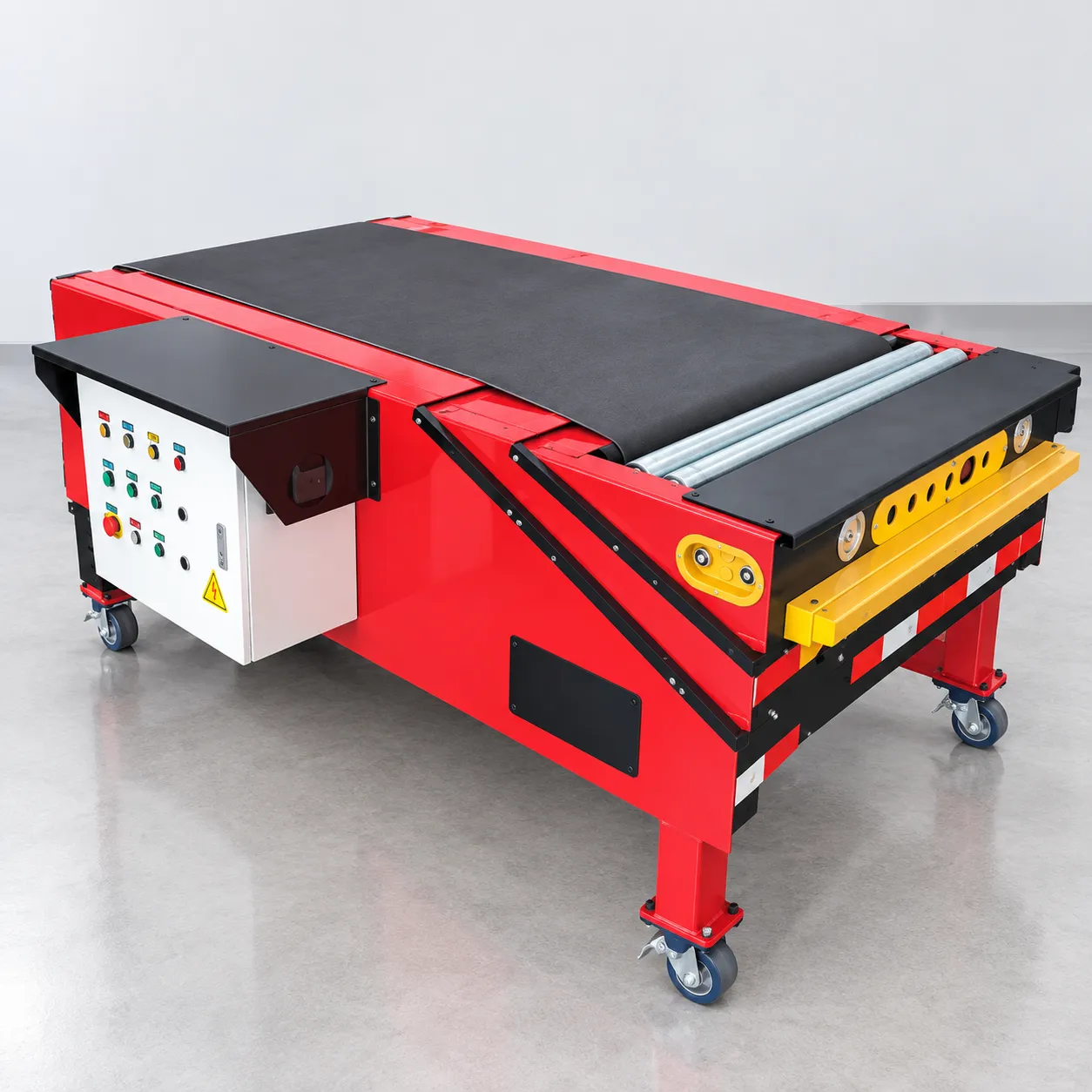
Five-Section Telescopic Belt Conveyor for Extra-Long-Reach Loading
Five-Section Telescopic Belt Conveyor
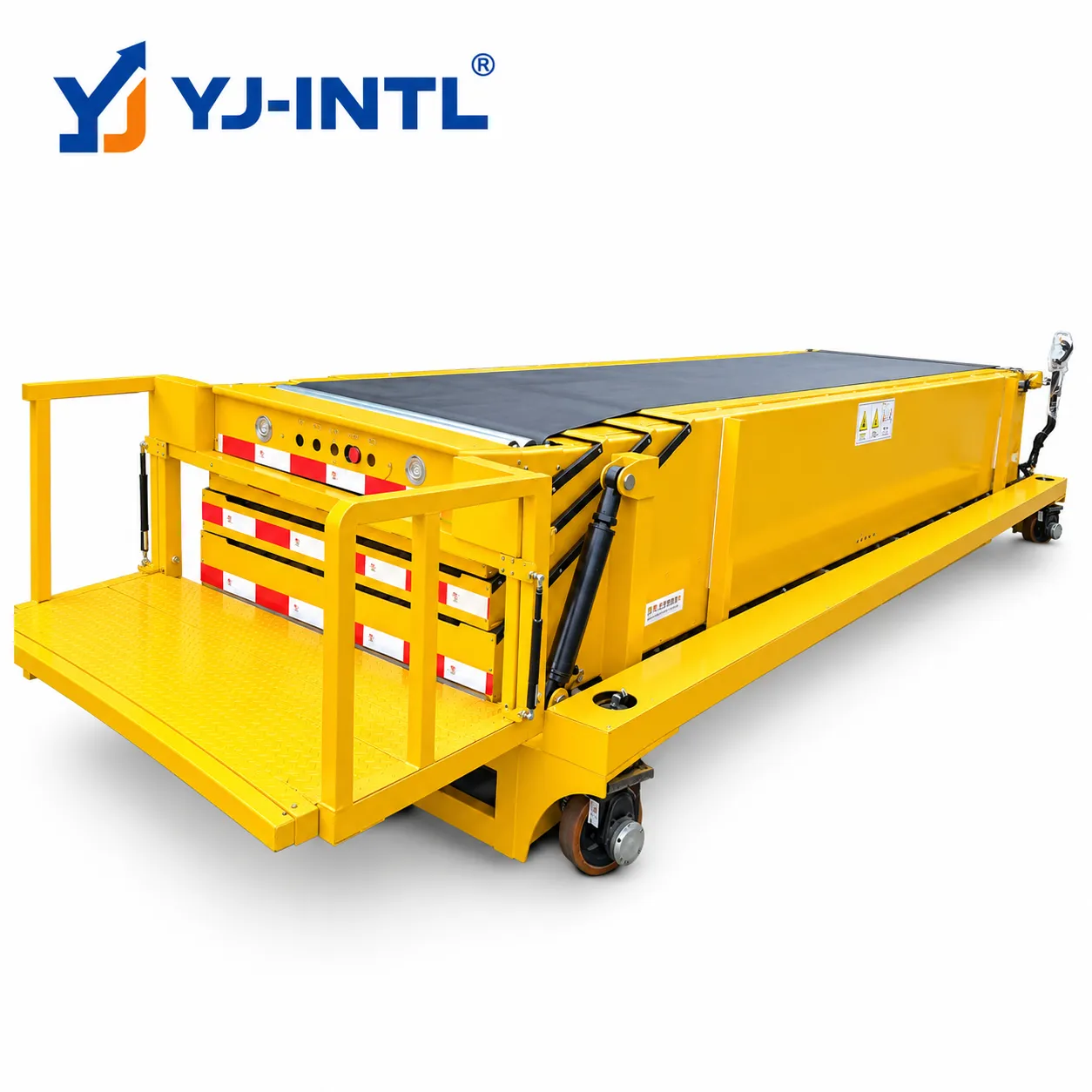
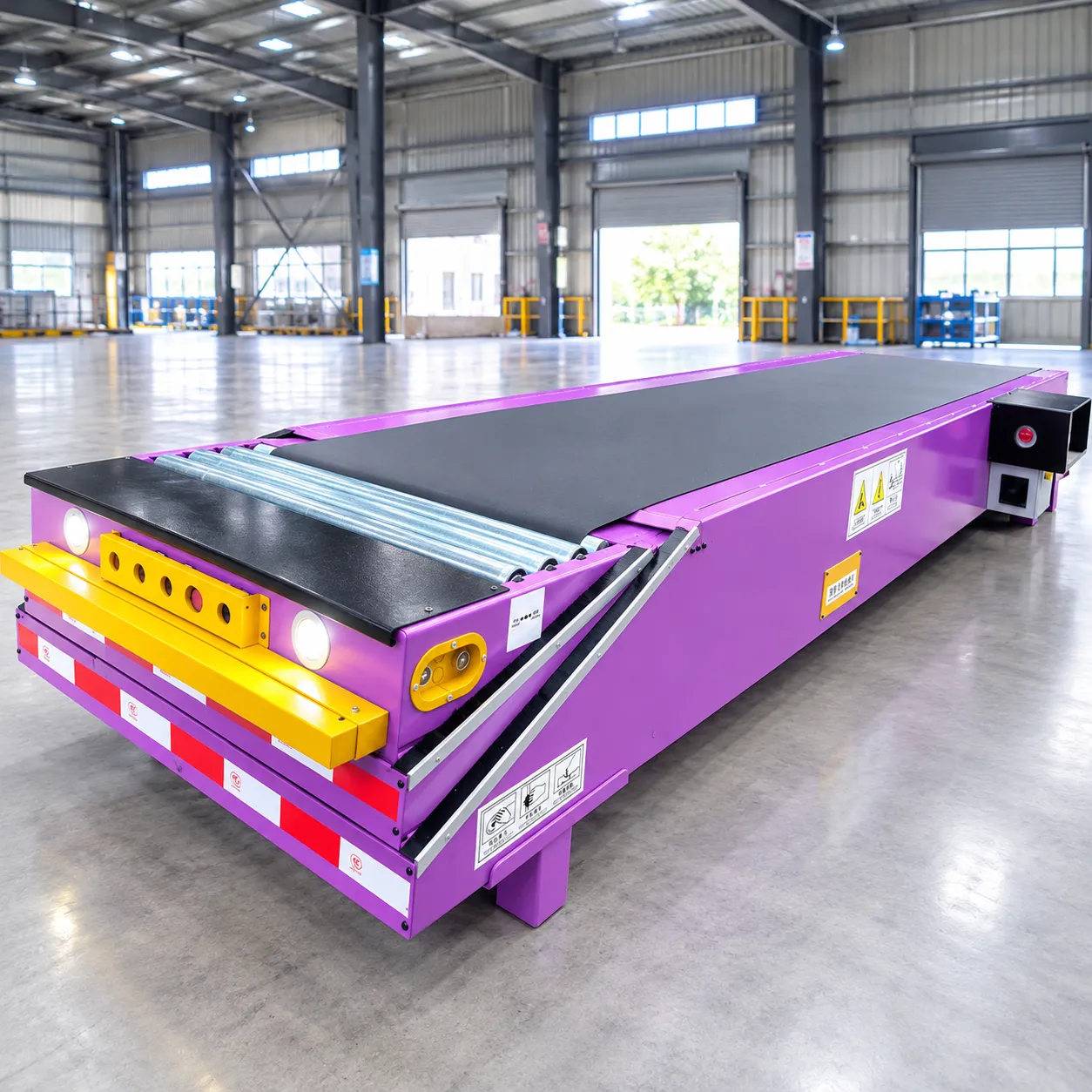
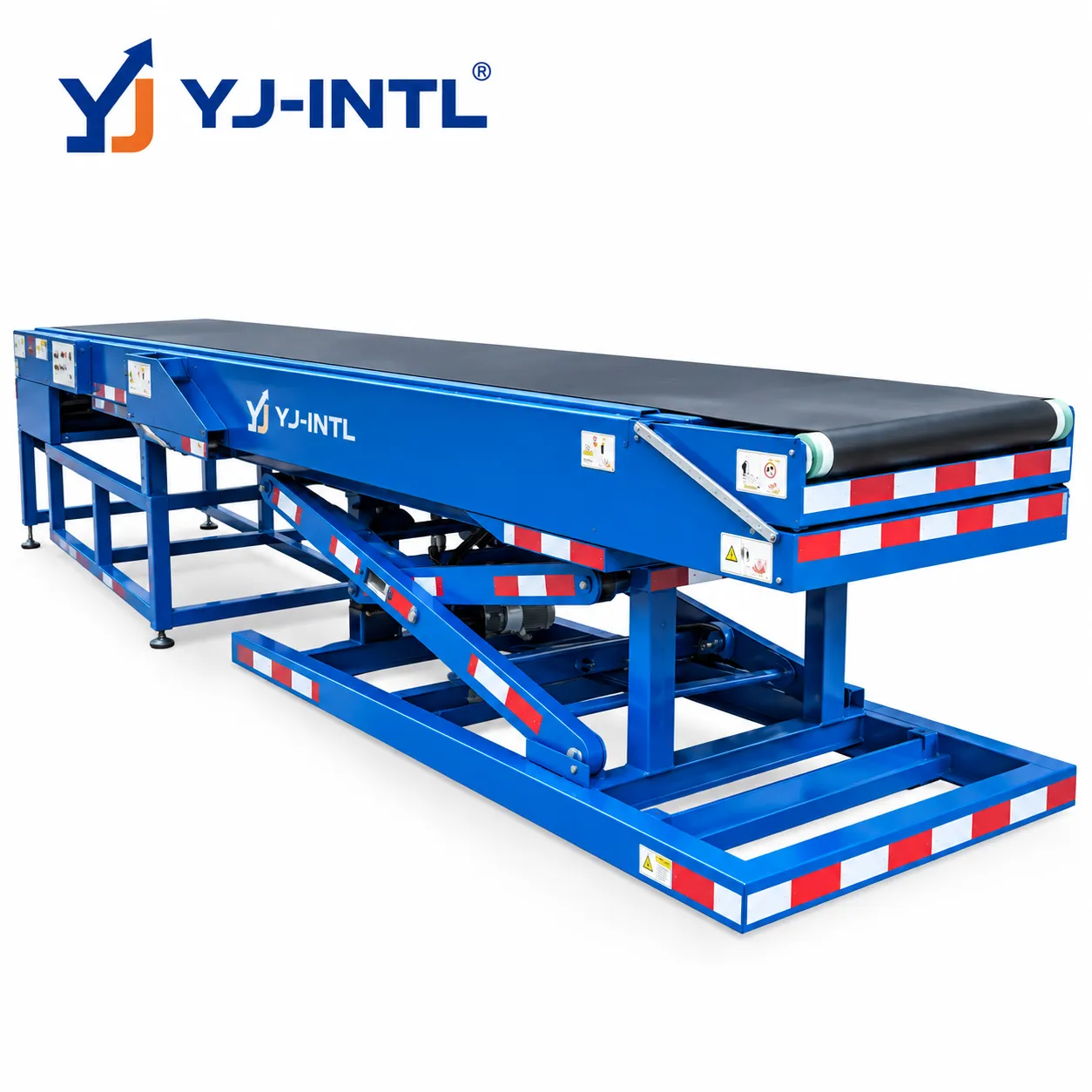
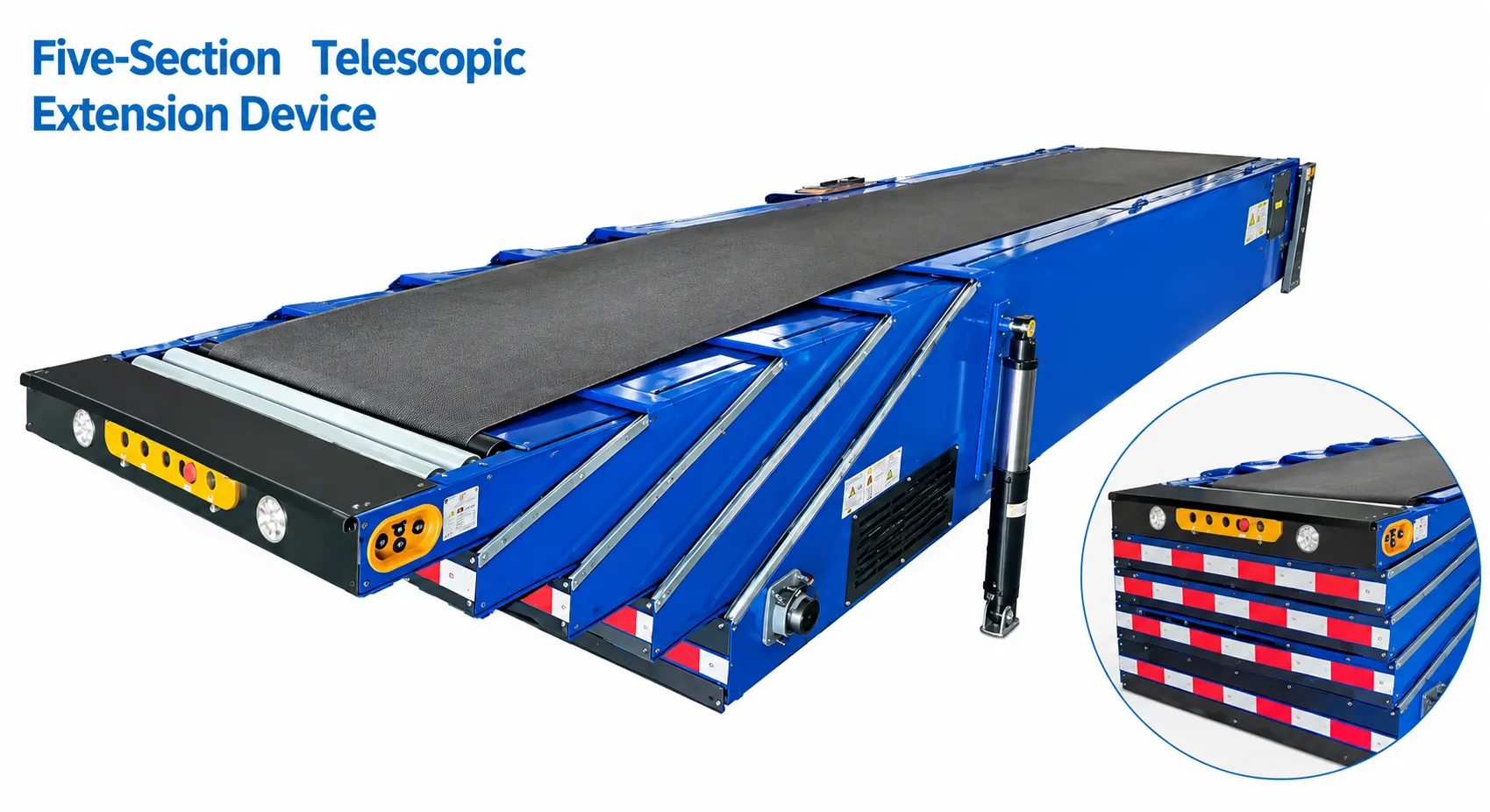
The YJ-INTL Five-Section Telescopic Belt Conveyor is engineered for loading and unloading environments where the required operating reach extends well beyond the capability of conventional fixed or short-section conveyors. With a maximum extension length of up to 17,000 mm, this five-section configuration provides an extended conveying path from the fixed warehouse position toward the interior of trucks and trailers.
The machine is available with 6,000 mm and 7,000 mm fixed sections, corresponding to maximum extension lengths of 16,000 mm and 17,000 mm. A 3.7 kW conveyor motor drives the belt, while a dedicated 1.5 kW telescopic motor controls extension and retraction.
- Five-Section Telescopic Construction
- Up to 17,000 mm Maximum Extension
- 6,000 / 7,000 mm Fixed Section Options
- 10–40 m/min Variable Conveying Speed
- 3.7 kW Conveyor Motor
- 1.5 kW Telescopic Motor
- 3 mm PVK Impact-Resistant Composite Belt
Technical Specifications
| Specification | Details | Specification | Details |
|---|---|---|---|
| Equipment Type | 5-Section Telescopic Belt Conveyor | Primary Application | Long-Reach Truck & Trailer Loading |
| Fixed Section | 6,000 / 7,000 mm | Maximum Extension | 16,000 / 17,000 mm |
| Minimum Altitude | ≥830 mm | Equipment Self-Weight | 3.0 / 3.4 T |
| Conveying Speed | 10–40 m/min, variable-frequency adjustable | Extension / Retraction Speed | 10 m/min, variable |
| Rated Load Capacity | ≤80 kg/m² | Belt | 3 mm PVK impact-resistant composite belt |
| Belt Joint | Steel-clamped joint | Conveyor Motor | 3.7 kW |
| Frequency Converter | Delta / Schneider | Electrical Configuration | Independent distribution system |
| Main Beam Thickness | ≥8 mm | Main Beam Steel | BS700 / T700 or higher |
| Main Beam Height | ≥820 mm | First Extension Beam | ≥6 mm, height ≥558 mm |
| Second Extension Beam | ≥6 mm | Beam Height | ≥400 mm |
| Third Extension Beam | ≥5 mm | Beam Height | ≥255 mm |
| Fourth Extension Beam | ≥5 mm | Beam Height | ≥110 mm |
| Active Roller | Φ219 × 870 mm | Active Roller Surface | Rubber covering ≥10 mm |
| Active Roller Shaft | 45# steel | Transmission Roller | Φ89 × 750 / Φ850 mm |
| Transmission Roller Shaft | 45# steel | Pressure Belt Roller | Approx. Φ50 mm |
| Hydraulic Angle | 3.5° | Hydraulic Stroke | 285 mm |
| Mounting Hole Spacing | 615 mm | Bearing | Harbin / Renben |
| Bearing Housing | TR / Renben / FSB | Optional Features | Hydraulic lifting, platform, hump system, electric/mobile casters, counter, roof sweeping device |
Engineering Note: The final equipment configuration should be confirmed against the actual loading geometry, vehicle dimensions, material characteristics, site conditions and electrical requirements.
Details
Built for Extra-Long-Reach Material Transfer
Long-distance vehicle loading creates a specific material-handling challenge.
The warehouse may have a fixed conveyor position, while the actual loading point is much farther inside the truck or trailer.
A conventional conveyor can transport the product efficiently but may still leave operators responsible for the final transfer.
The five-section telescopic design extends the conveyor itself.
Instead of increasing the manual carrying distance, the equipment brings the conveying surface toward the cargo position.
This makes the configuration particularly relevant for:
- Deep truck loading
- Trailer loading and unloading
- Large distribution centers
- High-volume outbound operations
- Long loading bays
- E-commerce fulfillment facilities
- Express logistics hubs
- 3PL warehouses
- Manufacturing dispatch areas
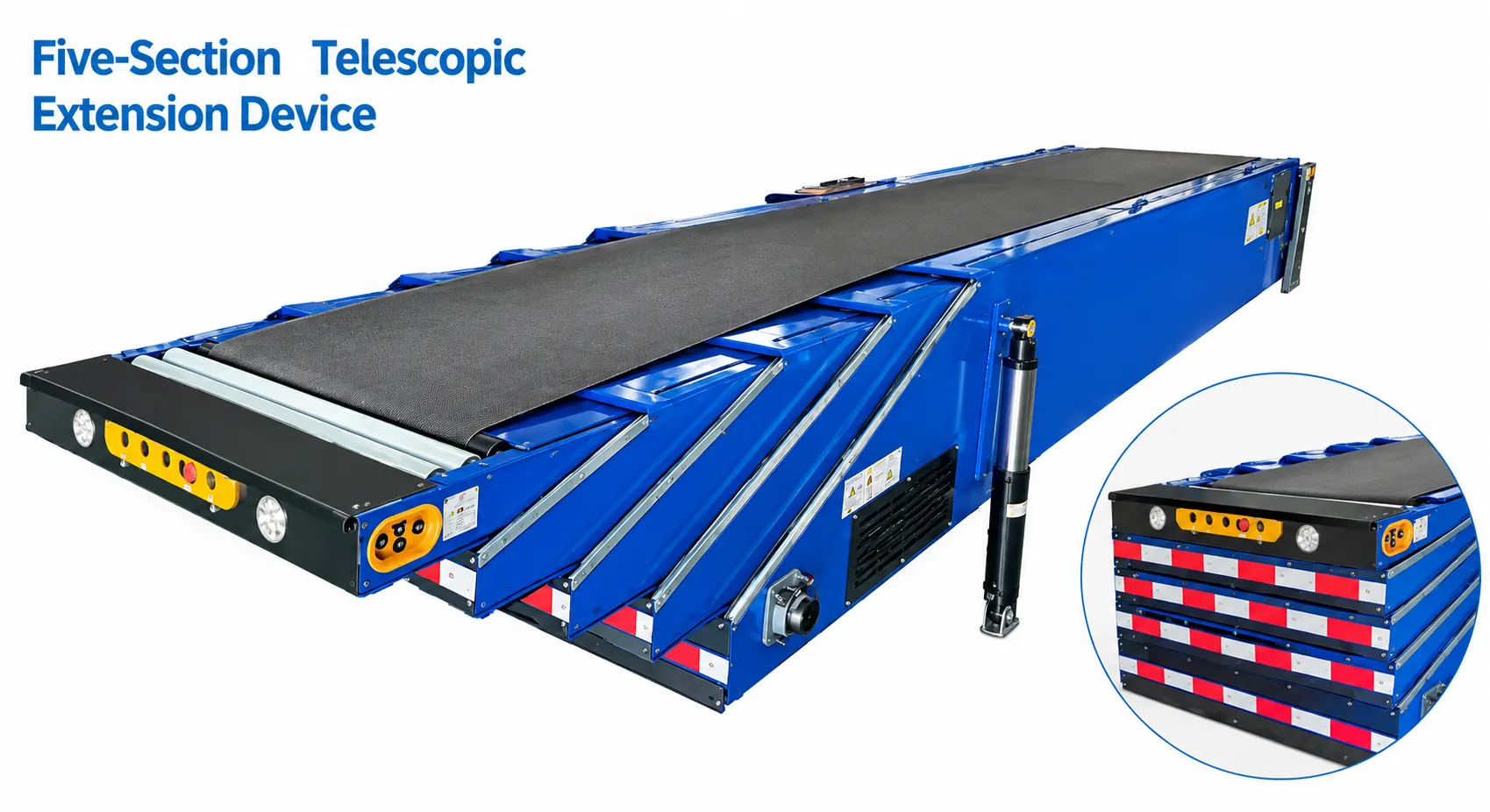
Long-distance conveying solution for trucks and trailers
This five-section conveyor is designed to bridge the gap between warehouse material flow and vehicle loading operations. During loading, the conveyor extends into the cargo area. During unloading, it reaches deep into the vehicle to transport goods back to the material flow area on the warehouse side.
This enables two operational workflows:
Outbound loading: Warehouse → Conveyor → Telescopic extension → Vehicle
Inbound unloading: Vehicle → Telescopic conveyor → Warehouse
Consequently, provided the project configuration allows, a single system can support both loading and unloading operations.
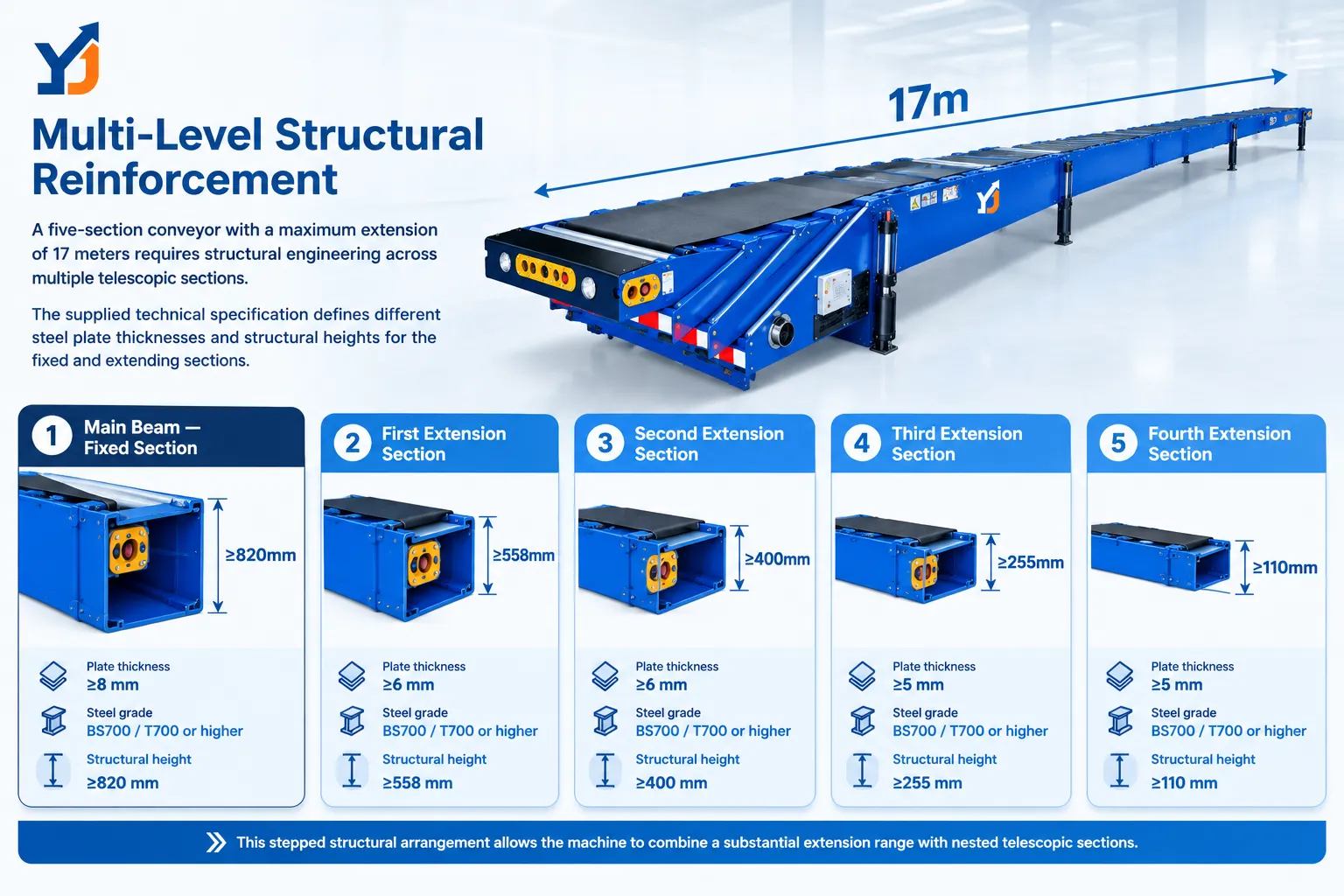
Multi-Level Structural Reinforcement
A five-section conveyor with a maximum extension of 17 meters requires structural engineering across multiple telescopic sections. The supplied technical specification defines different steel plate thicknesses and structural heights for the fixed and extending sections.
Main Beam — Fixed Section
- Plate thickness: ≥8 mm
- Steel grade: BS700 / T700 or higher
- Structural height: ≥820 mm
First Extension Section
- Plate thickness: ≥6 mm
- Steel grade: BS700 / T700 or higher
- Structural height: ≥558 mm
Second Extension Section
- Plate thickness: ≥6 mm
- Steel grade: BS700 / T700 or higher
- Structural height: ≥400 mm
Third Extension Section
- Plate thickness: ≥5 mm
- Steel grade: BS700 / T700 or higher
- Structural height: ≥255 mm
Fourth Extension Section
- Plate thickness: ≥5 mm
- Steel grade: BS700 / T700 or higher
- Structural height: ≥110 mm
This stepped structural arrangement allows the machine to combine a substantial extension range with nested telescopic sections.
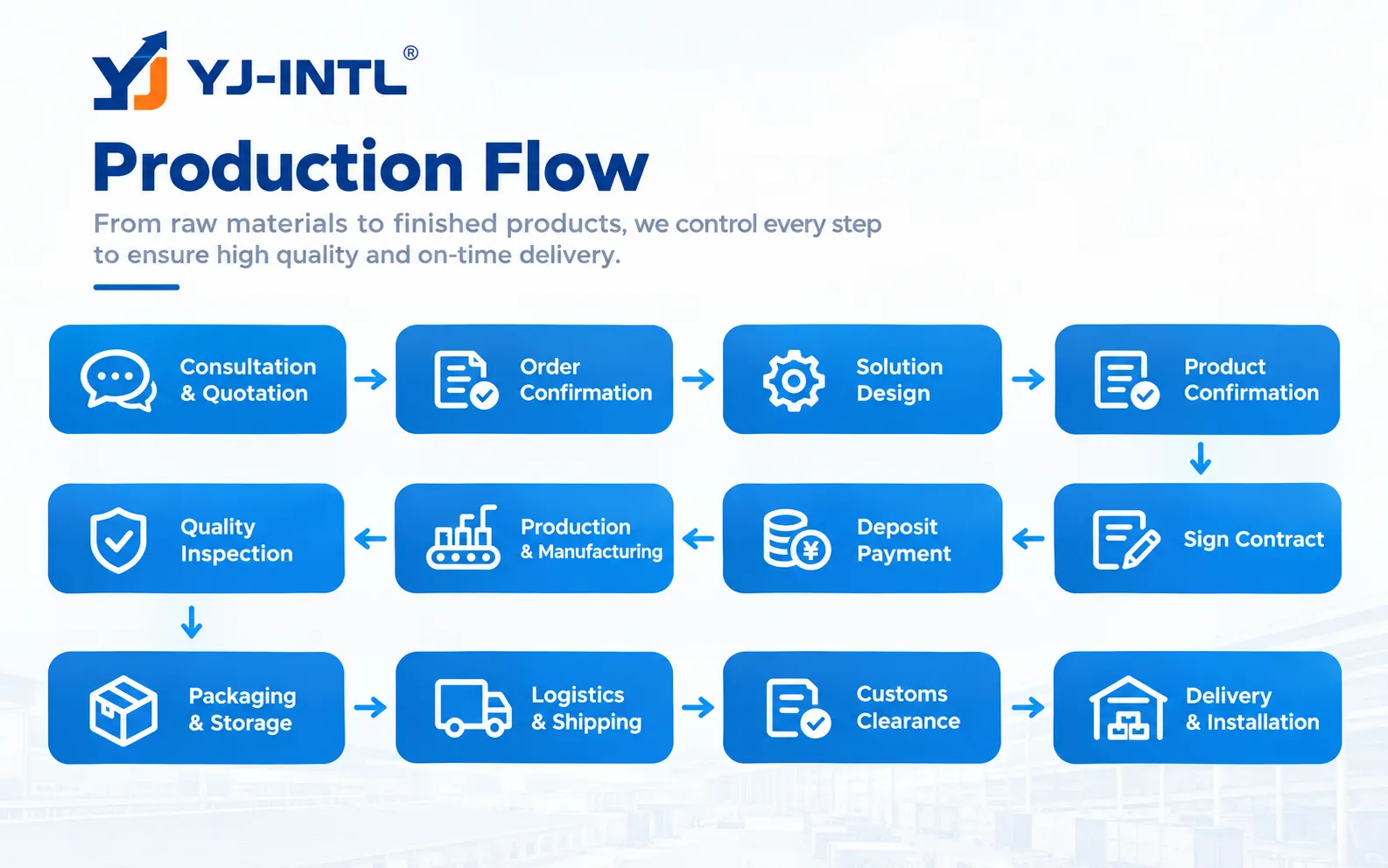
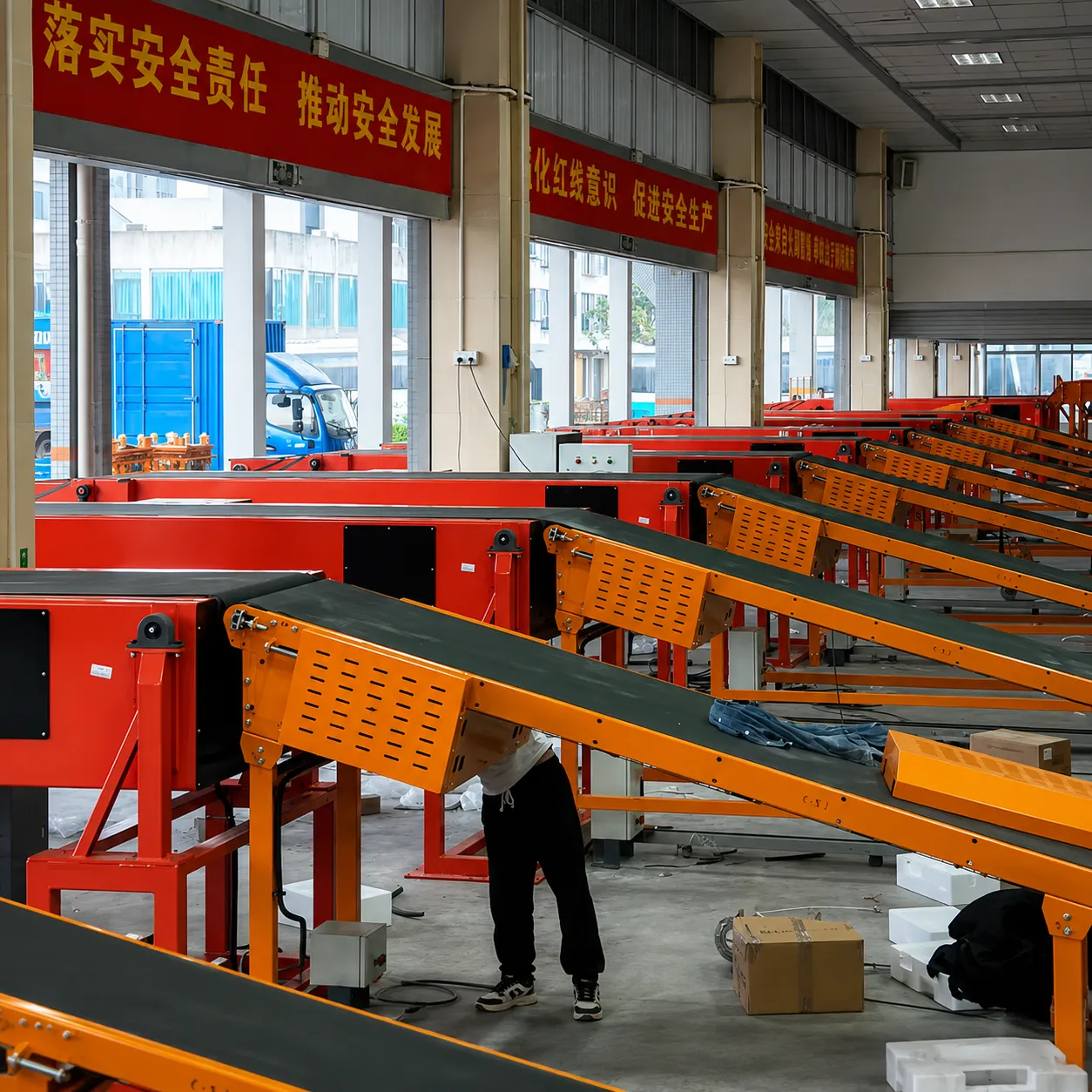
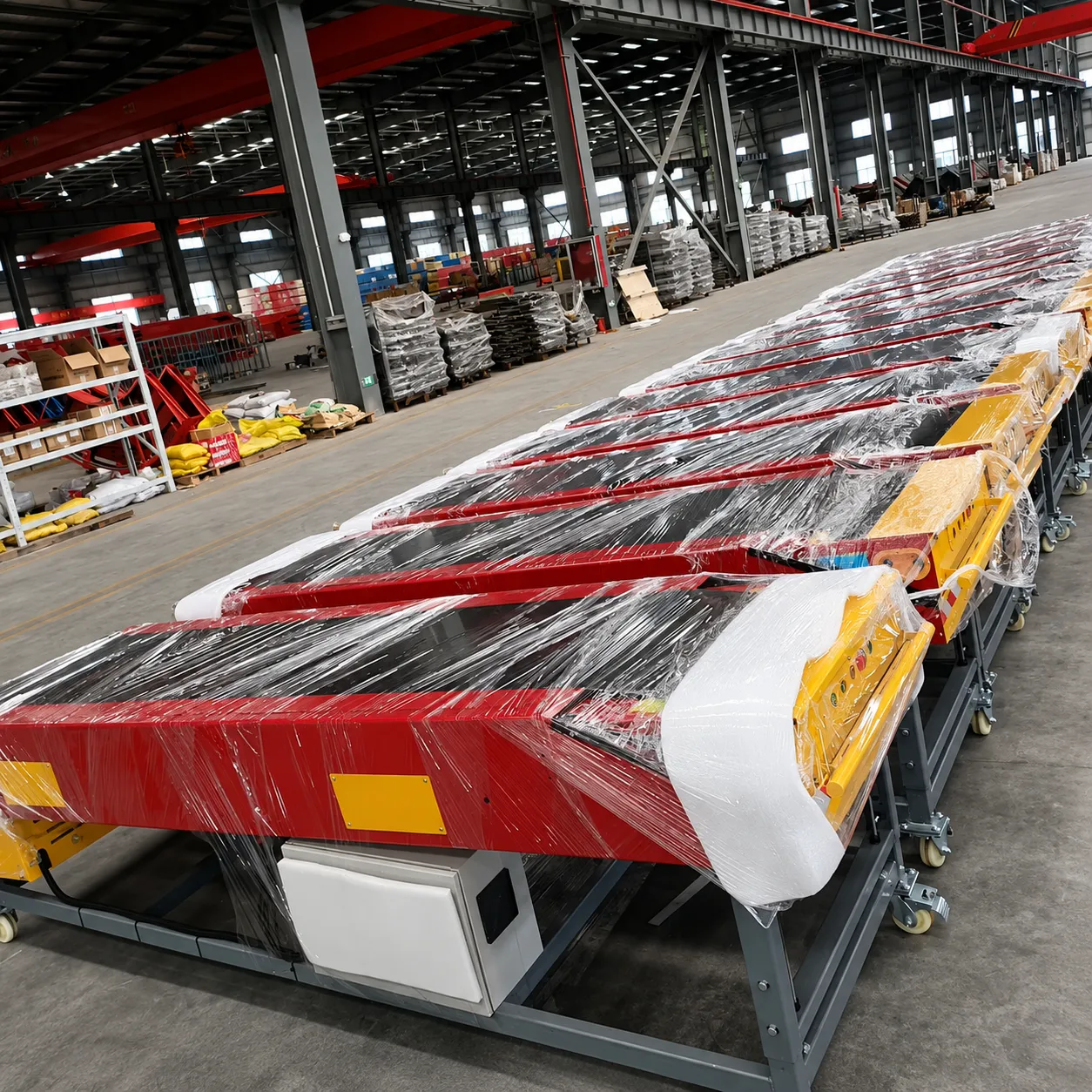
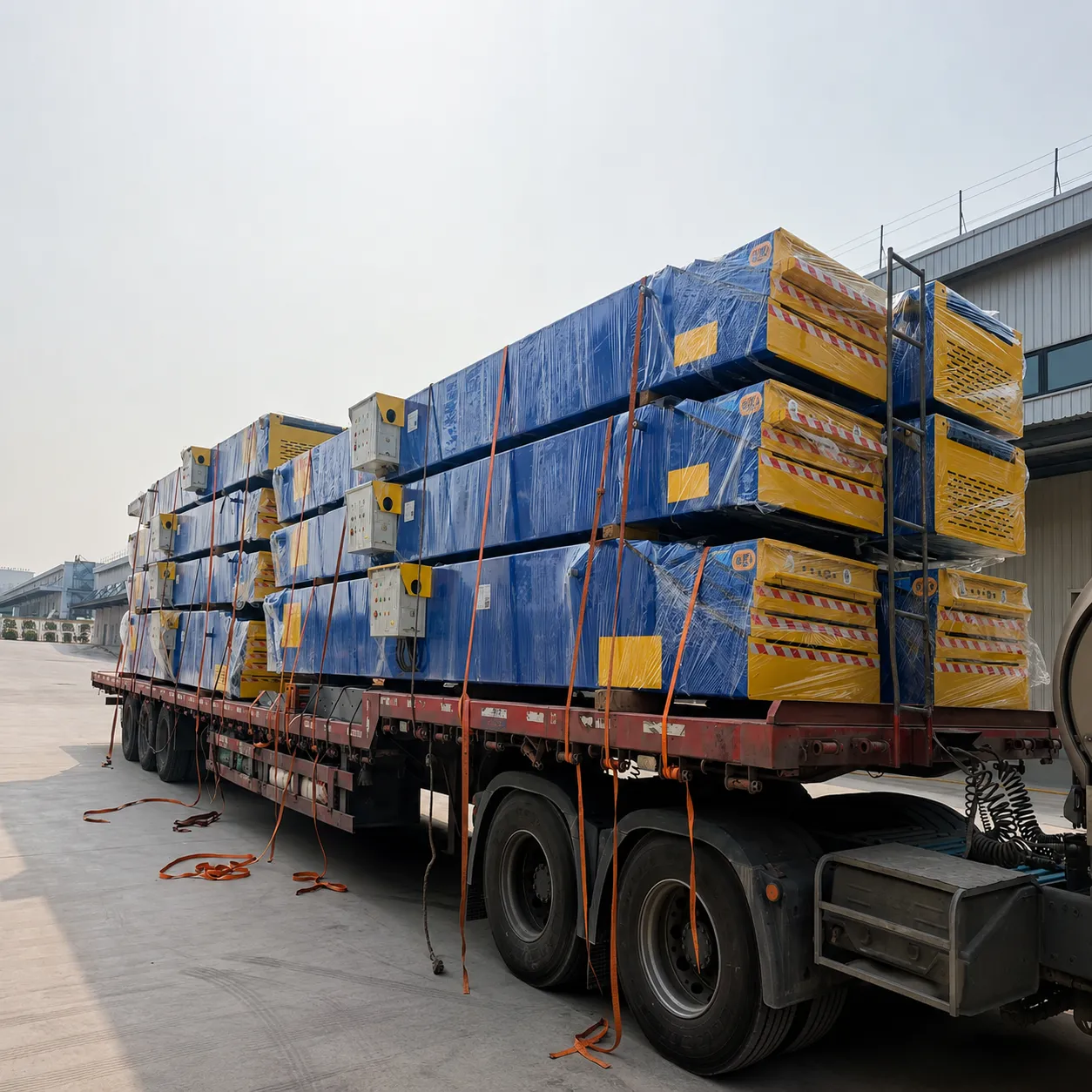
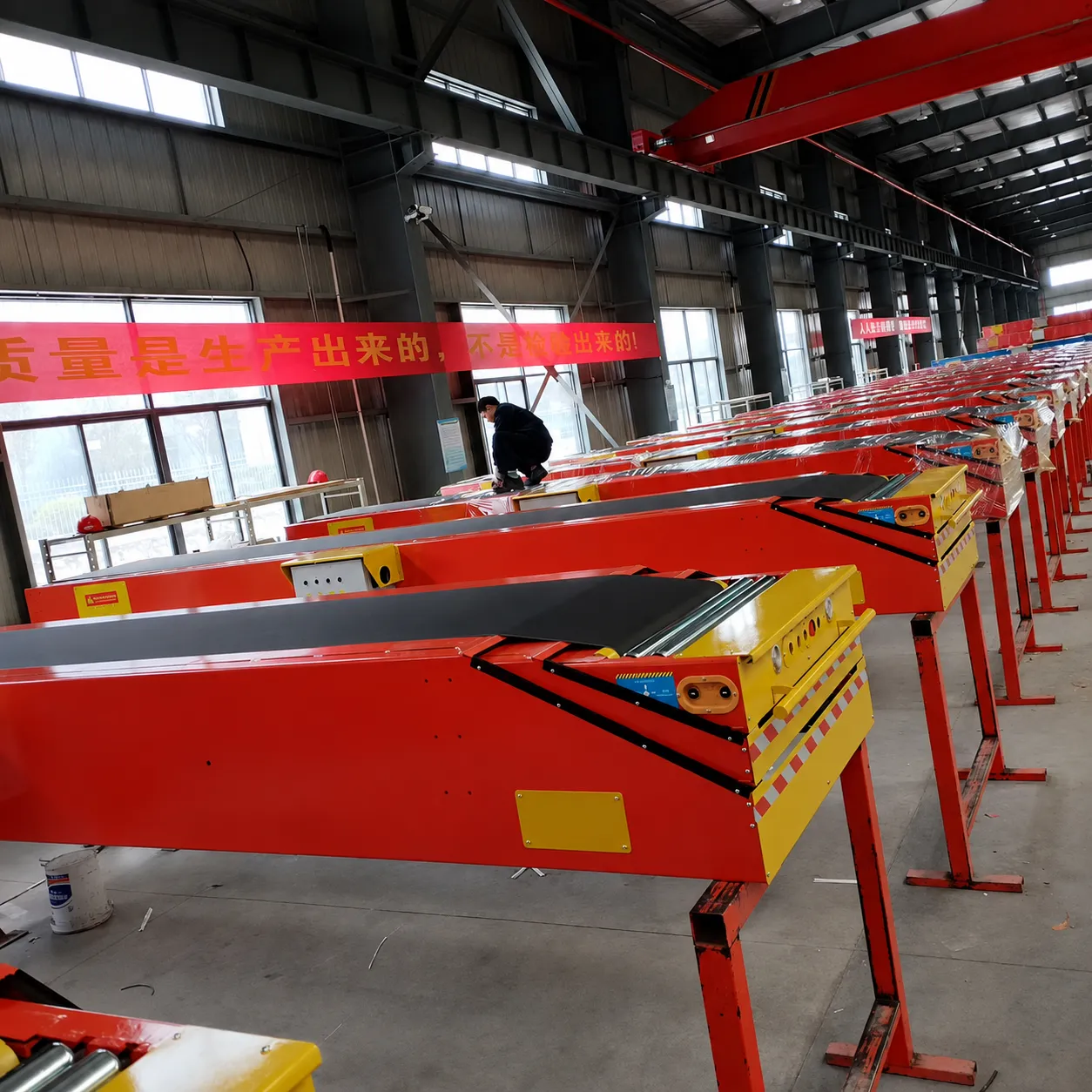
Five-Section Telescopic Belt Conveyor workflow
Applications
- Deep Truck Loading:The extended telescopic reach allows the conveyor to move deeper into the vehicle and bring the material-transfer point closer to the cargo position.
- Trailer Loading: Long trailer compartments may require substantially more reach than standard dock conveyors can provide.
- Large Distribution Centers: The equipment can be used at outbound loading docks where long-distance material transfer is required.
- E-Commerce Fulfillment Centers: Packed orders can be transferred from the fulfillment operation toward vehicles without relying entirely on manual carrying for the final distance.
- Express Logistics Hubs: The conveyor can form the final connection between parcel consolidation and outbound vehicle loading.
- 3PL Warehouses: The configurable reach allows the equipment to be considered for different loading arrangements and vehicle types.
- Manufacturing Dispatch: Finished goods can be transported from the warehouse or production area toward trucks and trailers.
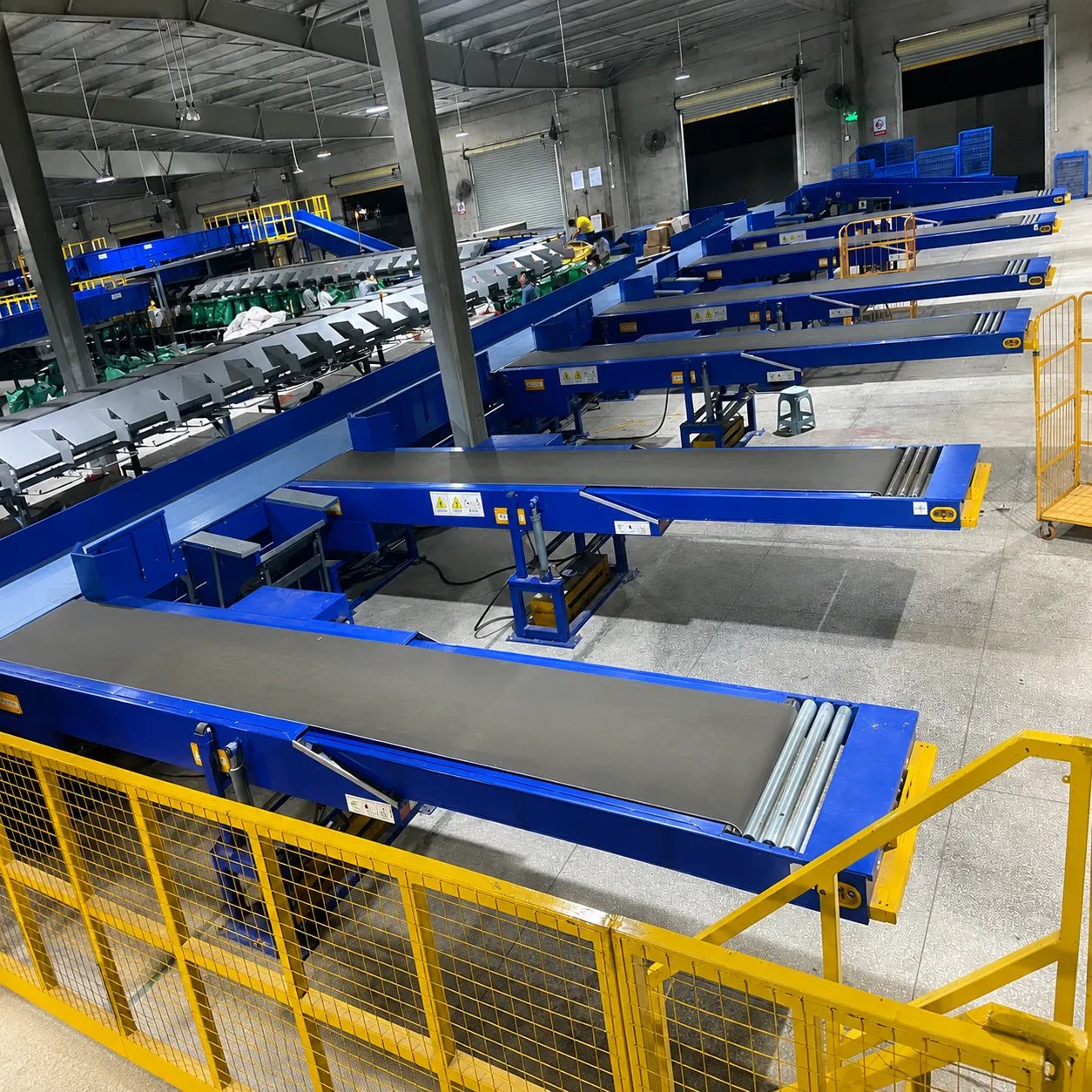 | 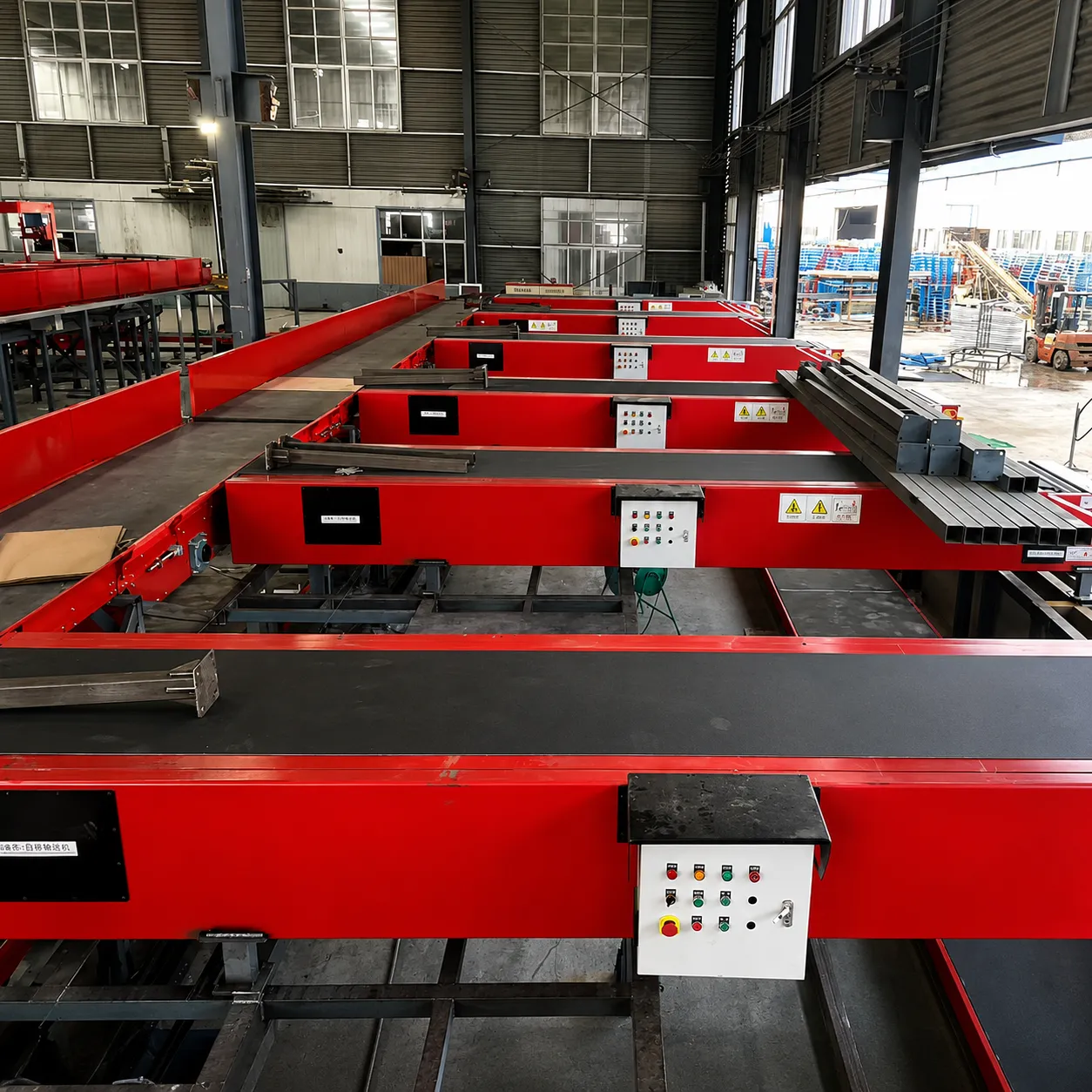 |  |
|---|---|---|
 |  |  |
When Should You Choose a Five-Section Telescopic Conveyor?
A five-section configuration becomes particularly relevant when the project has a large gap between the fixed conveyor position and the required loading point.
Consider this configuration when:
Long Reach Is the Primary Requirement
The required extension approaches or exceeds the practical range of shorter telescopic configurations.
Vehicles Have Deep Loading Areas
The conveyor needs to reach significantly farther into trailers or trucks.
The Fixed Installation Area Is Limited
A permanently long conveyor is not desirable around the dock.
Loading Volume Justifies Automation
The facility performs repeated loading and unloading operations throughout the day.
The Customer Needs a Project-Specific Configuration
The equipment needs to be engineered around vehicle dimensions, dock height and upstream conveyor connections.
FAQ
A five-section telescopic belt conveyor is a multi-stage extendable conveyor designed to provide a long conveying reach between a fixed warehouse position and a truck, trailer or other loading area. The multiple nested sections allow the machine to extend during operation and retract when the additional reach is not required.
According to the supplied technical specification, the maximum extension length is 17,000 mm.
The available fixed sections shown in the specification are 6,000 mm and 7,000 mm, corresponding to maximum extension lengths of 16,000 mm and 17,000 mm.
The five-section configuration is appropriate when the project requires a very long operating reach together with a substantial structural and drive configuration. It is particularly relevant for deep truck or trailer loading applications.
The main distinction is the configuration and engineering specification. The five-section model shown in the supplied material has a 3.7 kW conveyor motor, 1.5 kW telescopic motor, ≥830 mm minimum altitude and a heavier structural configuration.
The specified conveying speed is 10–40 m/min, with variable-frequency adjustment.
The specified extension and retraction speed is 10 m/min with variable-frequency control.
The supplied technical sheet specifies a rated load capacity of ≤80 kg/m².
The conveyor uses a 3 mm PVK impact-resistant composite belt with a steel-clamped belt joint.
The specified conveyor motor is 3.7 kW.
The specified telescopic motor is 1.5 kW.
The supplied technical sheet identifies Delta or Schneider frequency converters.
The main fixed-section beam uses ≥8 mm steel plate, with BS700/T700 or higher-grade steel specified. The extending sections use different thicknesses according to their position, including ≥6 mm and ≥5 mm configurations.
Yes. The supplied configuration includes a hydraulic system with a 3.5° hydraulic angle and 285 mm stroke.
The specified hydraulic stroke is 285 mm, with mounting hole spacing of 615 mm.
The conveyor can be configured for packaged materials such as cartons, parcels, bags and other suitable packaged goods. Final product compatibility should be confirmed according to dimensions, weight and operating conditions.
Yes. The conveyor can support both loading and unloading workflows when the installation and control configuration are designed for both operating directions.
Yes. The conveyor can be engineered as part of an existing material-handling system. The interface height, conveying direction, speed, controls and upstream equipment should be reviewed during project design.
Yes. YJ-INTL can configure the fixed length, extension range, drive system, hydraulic arrangement, electrical components and optional functions according to the customer's loading environment and project requirements.