Logistics Efficiency and Data Capture
Dynamic DWS Six-Side Scanning System
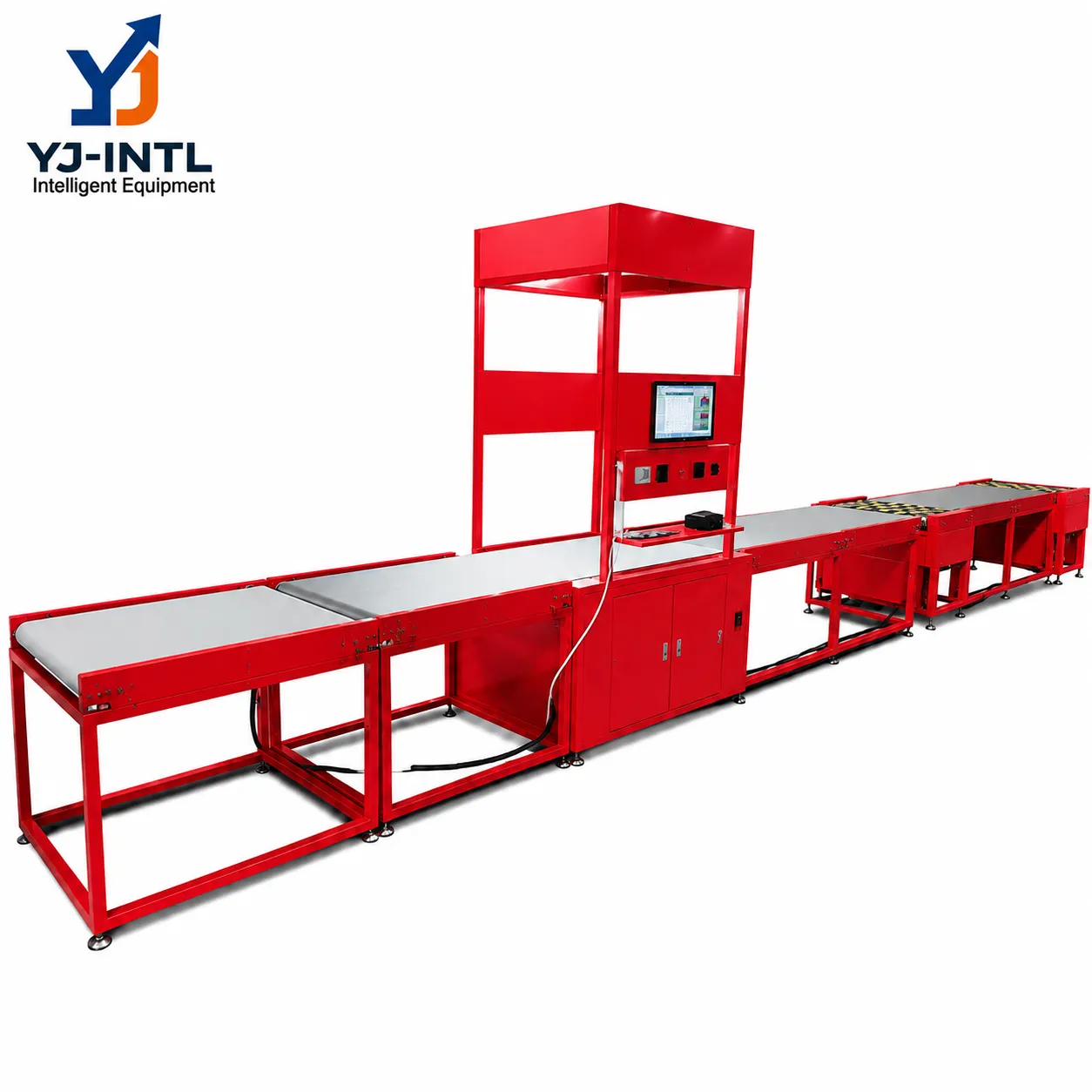
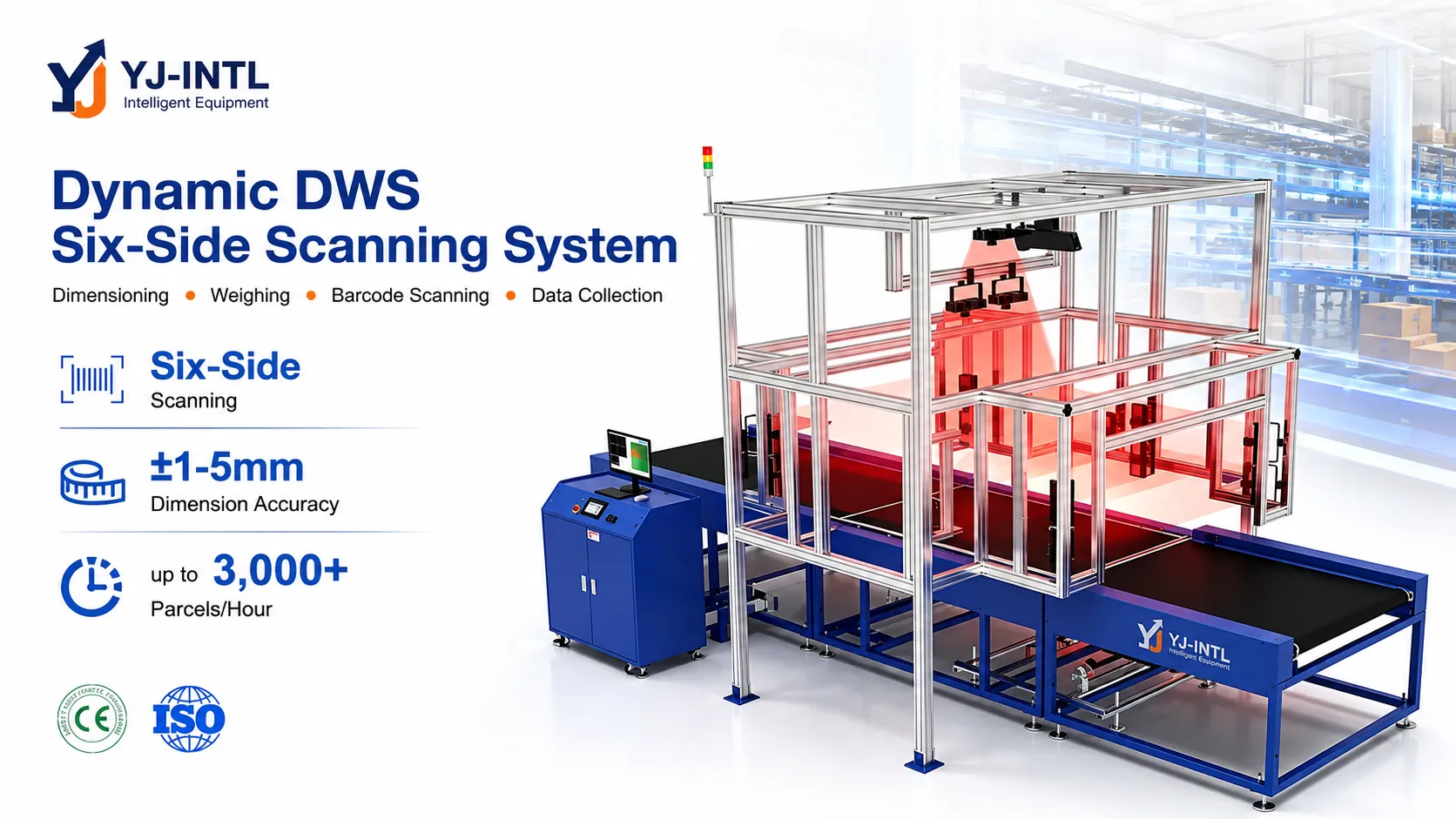
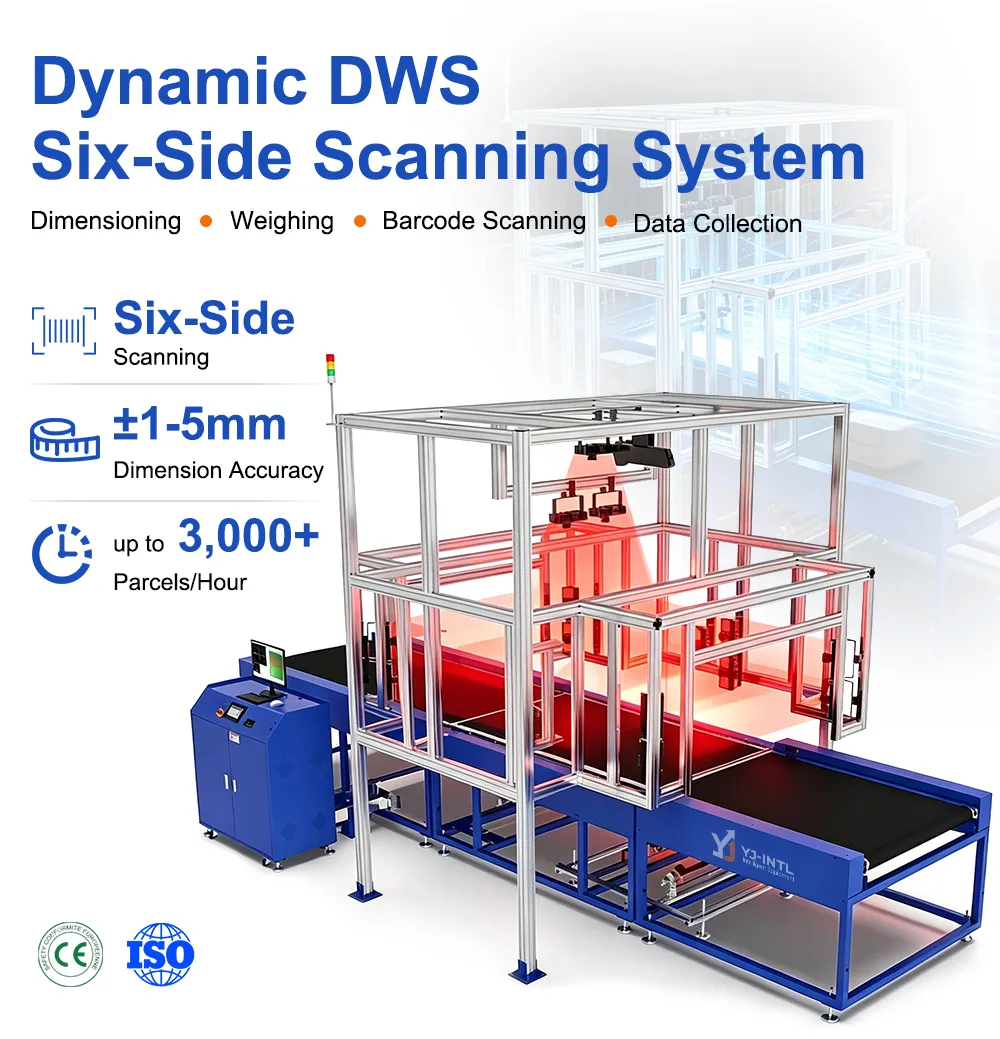
The Dynamic DWS Six-Side Scanning System is designed to capture parcel identification and measurement data while packages move through the conveyor line. By combining multi-side scanning, dynamic weighing and dimensional measurement, the system provides a more complete parcel data record before downstream sorting, shipping or warehouse processing.
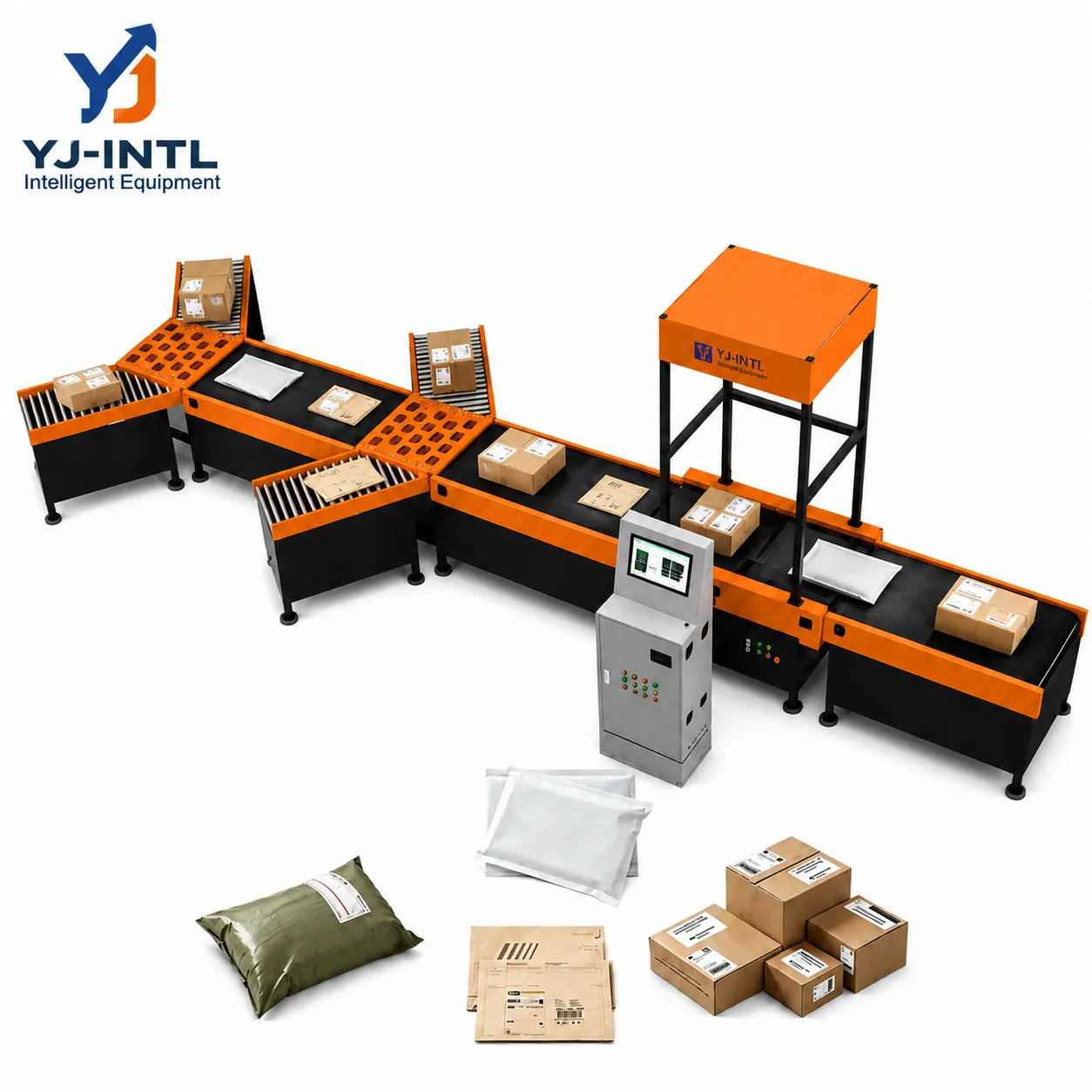
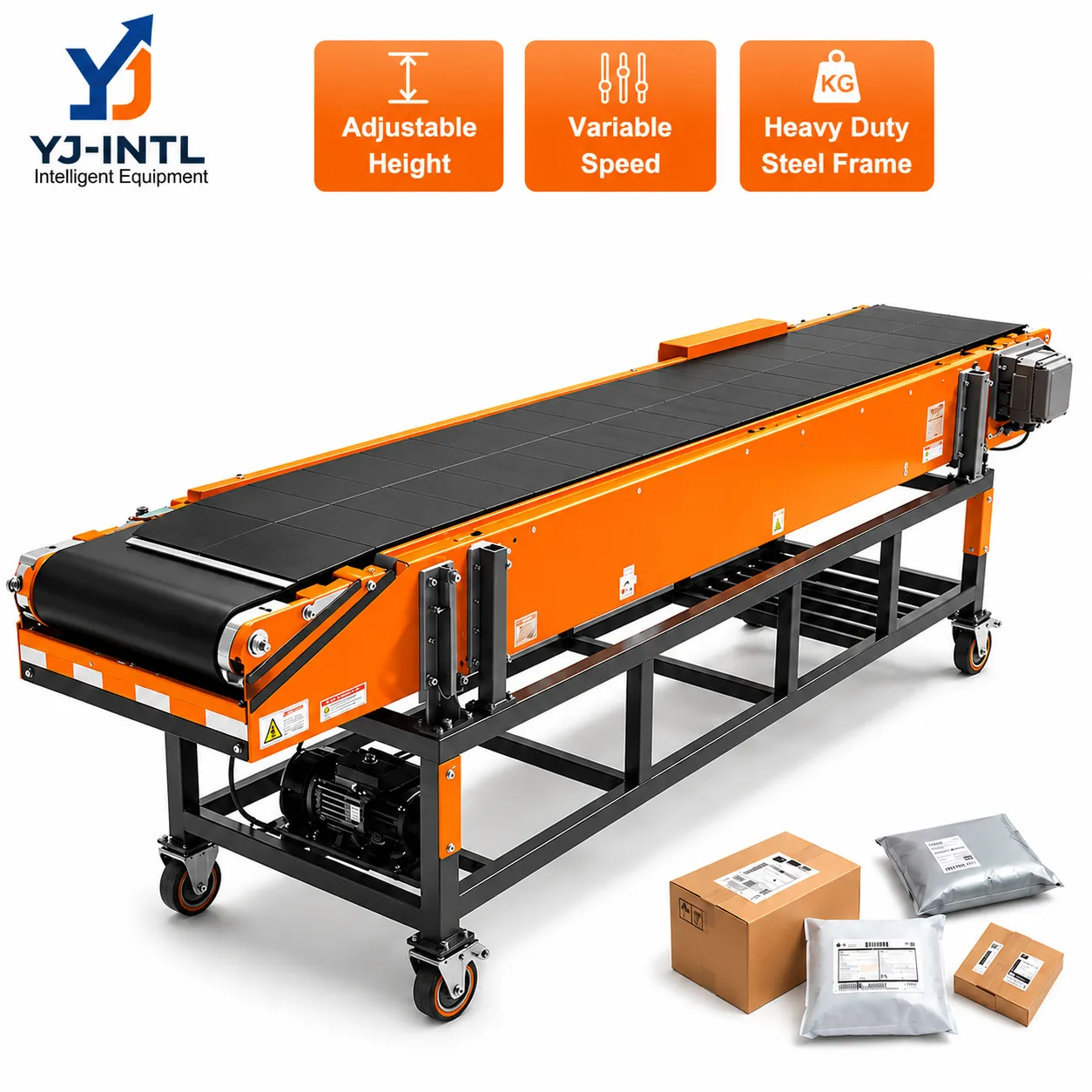
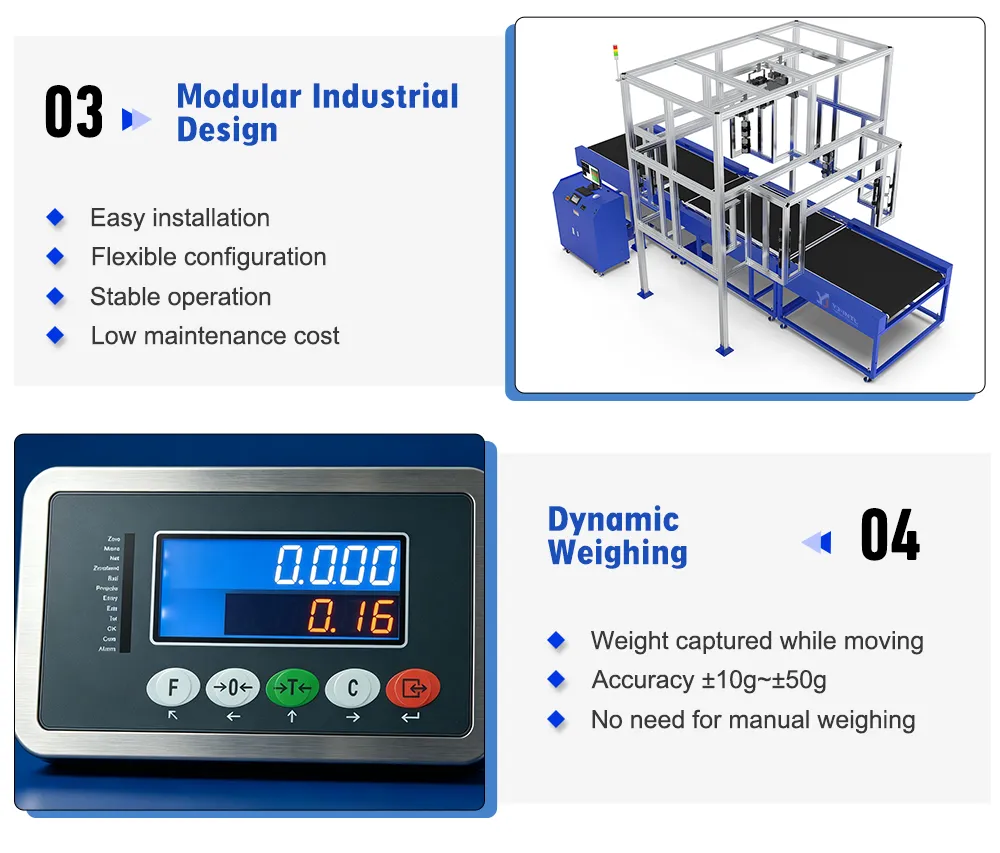
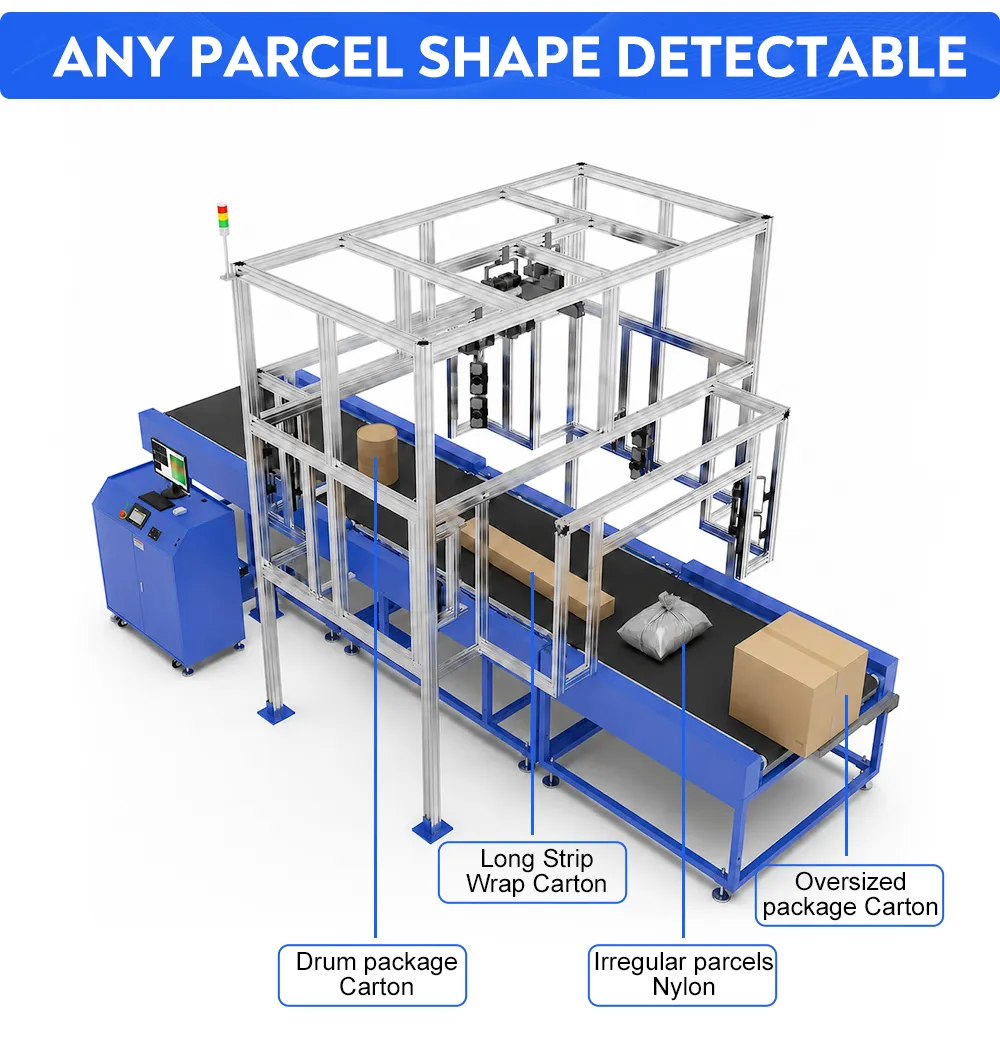
The system is shown with a movable belt conveyor and telescopic conveyor configuration, allowing the DWS section to be integrated into different material-flow layouts. This makes it suitable for e-commerce fulfillment centers, express distribution hubs, logistics warehouses and other operations that require automated parcel data acquisition without stopping the conveying process.
- Six-Side In-Motion Scanning
- Dynamic Weighing & Dimensioning
- Complete Parcel Data Capture
- Movable Belt Conveyor
- Telescopic Conveyor Integration
- Automated Parcel Identification
- Flexible Warehouse Deployment
- WMS / WCS Integration
Technical Specifications
| Parameter | Specification |
|---|---|
| Product Type | Dynamic DWS Six-Side Scanning System |
| Scanning Method | Six-Side In-Motion Scanning |
| Weighing | Dynamic Weighing |
| Dimensioning | Dynamic Dimension Measurement |
| Parcel Identification | Barcode / Parcel Data Capture |
| Conveyor Type | Movable Belt Conveyor |
| Telescopic Conveyor | Available According to Project |
| Scanning Coverage | Six-Side Configuration |
| Sorting Integration | Available |
| WMS Integration | Project Based |
| WCS Integration | Project Based |
| Conveyor Layout | Customized |
| Package Range | Project Based |
| Processing Capacity | Project Based |
| Installation | Customized According to Site |
Technical Note
Actual scanning performance, weighing range, dimensioning accuracy and processing capacity depend on parcel characteristics, conveyor speed, package spacing, barcode quality, system configuration and site conditions.
Details
Six-Side Scanning for More Complete Parcel Data
The main purpose of a six-side DWS system is to increase the amount of parcel information that can be captured while maintaining continuous material flow.
For a conventional single-view scanning arrangement, parcel orientation and label position can affect identification. A six-side scanning structure provides broader coverage around the moving parcel, helping reduce dependence on a fixed barcode-facing direction.
The system can combine: Scanning + Weighing + Dimensioning + Conveyor Tracking within one automated process.
Product Advantages
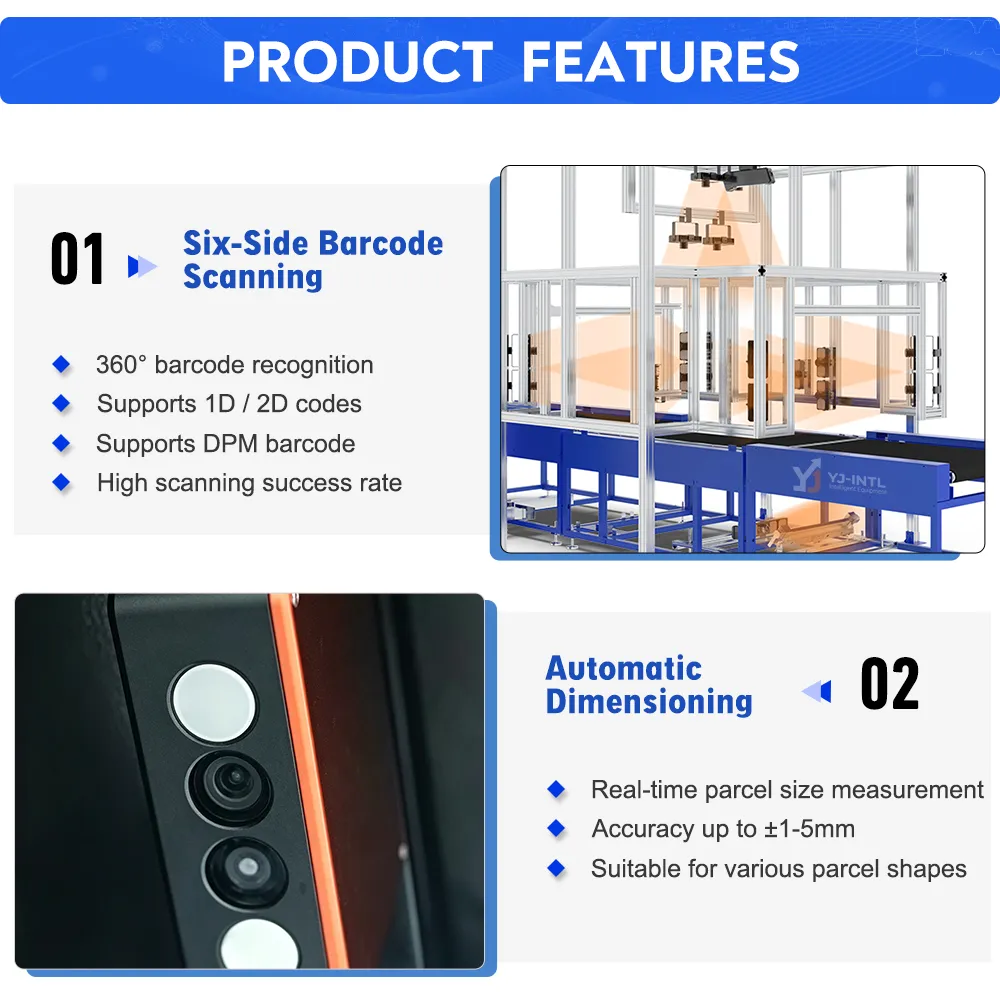
01. Six-Side Scanning Coverage
The system is designed to capture parcel information from multiple sides while the package is moving through the scanning section.
This helps address applications where labels may appear on different parcel surfaces and package orientation cannot be controlled precisely.
Customer Value
- Broader barcode scanning coverage
- Reduced dependence on fixed parcel orientation
- More complete parcel identification
- Suitable for mixed parcel flows
02. Dynamic Data Acquisition
Unlike static DWS equipment, the parcel does not need to remain stationary during the complete measurement process.
The package can pass continuously through the system while the DWS collects the required information.
Typical data can include: Barcode + Weight + Length + Width + Height
This makes the system more suitable for higher-volume automated logistics processes.
03. Integrated Dynamic Weighing & Dimensioning
The DWS section combines dynamic weighing and dimension measurement with the six-side scanning process.
Instead of sending the parcel to separate weighing and measuring stations, the system can collect the information within one continuous handling workflow.
This simplifies the parcel data acquisition process and reduces repeated manual handling.
04. Movable Belt Conveyor Integration
The source material specifically shows a movable belt conveyor configuration.
This allows the conveying section to be adapted to different system layouts and downstream process requirements.
The conveyor configuration can be engineered around:
- Infeed direction
- DWS position
- Sorting position
- Takeaway conveyor
- Available floor space
- Existing automation equipment
05. Telescopic Conveyor Compatibility
The product video and source material identify a telescopic conveyor configuration.
This can be useful when the DWS line needs to connect with loading, unloading or other variable-distance conveying processes.
The telescopic section can be designed according to the site layout and required material flow.
06. Continuous Parcel Processing
The combination of dynamic measurement and automated conveyor transport allows the DWS to operate as part of a continuous parcel processing line.
A typical process is: Parcel Infeed → Six-Side Scanning → Dynamic Weighing → Dimensioning → Data Processing → Sorting / Outbound This reduces the need to repeatedly stop and reposition parcels.
07. Flexible Integration with Sorting Systems
The DWS does not need to operate as an isolated measurement station.
It can be positioned upstream of:
- Cross Belt Sorter
- Narrow Belt Sorter
- Wheel Sorter
- Chute Sorting System
- Packing
- Outbound Conveyor
This allows the collected parcel information to be used directly in downstream sorting or fulfillment processes.
08. Data-Driven Logistics Processing
The DWS system transforms physical parcel characteristics into structured digital data.
A typical parcel record can combine:
Tracking Number
Weight
Length / Width / Height
Scanning Information
Sorting Destination
This provides a useful data foundation for automated logistics management.
How the Dynamic Six-Side DWS Works?
Step 1 — Parcel Infeed
Parcels enter the DWS line through the upstream conveyor.
Step 2 — Parcel Tracking
The system detects the parcel and tracks its position as it moves through the measurement area.
Step 3 — Six-Side Scanning
Multiple scanning positions capture barcode and identification information from different parcel surfaces.
Step 4 — Dynamic Weighing
The parcel is weighed while moving through the weighing section.
Step 5 — Dimension Measurement
The system captures the parcel's length, width and height.
Step 6 — Data Processing
The control system associates scanning and measurement information with the corresponding parcel record.
Step 7 — Downstream Processing
The parcel continues to sorting, packing, loading or another warehouse process according to the configured workflow.
Dynamic Six-Side DWS System Structure
A typical system can include:
Infeed Conveyor
Controls parcel entry and maintains an appropriate material flow.
Six-Side Scanning Section
Captures parcel identification information from multiple sides.
Dynamic Weighing Section
Collects parcel weight during conveyor movement.
Dimensioning Section
Measures parcel length, width and height.
Movable Belt Conveyor
Provides flexible connection between DWS and adjacent systems.
Telescopic Conveyor
Can be integrated when variable-length material transfer is required.
Control System
Coordinates scanning, weighing, dimensioning, parcel tracking and system communication.
Downstream Interface
Connects with sorting conveyors, packing or outbound logistics processes.
Applications
E-commerce Fulfillment
For automated collection of parcel dimensions, weight and identification data before sorting and dispatch.
Express Distribution Centers
Suitable for high-volume parcel processing where package orientation can vary.
3PL Warehouses
Useful for operations handling parcels from multiple customers and requiring standardized parcel data collection.
Distribution Centers
Can be installed upstream of automated sorting equipment to provide parcel information before routing.
Automated Outbound Processing
The system can be connected with downstream sorters, packing equipment and loading conveyors.
Why Choose YJ-INTL Dynamic Six-Side DWS?
Complete Parcel Data Acquisition
The system combines identification, weighing and dimension measurement in one continuous workflow.
Six-Side Scanning Coverage
Provides broader scanning coverage for parcels arriving in different orientations.
Conveyor-Level Integration
The DWS can be engineered as part of a complete conveying and sorting line.
Flexible Layout
Movable and telescopic conveyor configurations allow the system to adapt to different warehouse layouts.
WMS / WCS Ready
Parcel data can be connected with warehouse control and business systems according to project requirements.
Complete Logistics Automation Capability
YJ-INTL can integrate DWS with conveyors and sorting equipment to create a complete parcel processing solution.
FAQ
Yes. The system is designed to collect parcel weight while the parcel is moving through the dynamic weighing section.
Yes. The system can measure parcel length, width and height while the parcel is moving through the DWS process, subject to the selected dimensioning technology and parcel characteristics.
The applicable parcel range depends on the project configuration, including conveyor design, scanning equipment, weighing capacity, dimensioning range and parcel stability.
Yes. The six-side scanning architecture is designed to improve barcode capture opportunities when labels are positioned on different parcel surfaces.
Yes. The Dynamic Six-Side DWS can be installed upstream of cross-belt sorters, narrow-belt sorters, wheel sorters, chute sorting systems and other downstream processing equipment.
Yes. The system can provide parcel identification and measurement data to WCS, WMS, OMS or other warehouse systems according to the required interface architecture.
A conventional static DWS requires the parcel to be positioned at a measurement station before the data is captured. A dynamic six-side DWS collects parcel data while the package is moving and provides broader scanning coverage.
Yes. Conveyor length, width, infeed and outfeed positions, scanning tunnel arrangement, movable sections and downstream interfaces can be customized according to the site layout.
Yes. The supplied project material shows a configuration using a telescopic and movable belt conveyor. The exact telescopic structure depends on the site and material-flow requirements.
Project design normally requires parcel dimensions, parcel weight, barcode type and location, throughput target, conveyor speed, package spacing, facility layout, downstream sorting requirements and WMS/WCS interface information.