Linear Narrow Belt Sorter | 8,000–12,000 PPH Parcel Sorting System
Linear Narrow Belt Sorter | 8,000–12,000 PPH Parcel Sorting System
YJ-INTL Linear Narrow Belt Sorter is a high-throughput parcel sorting system designed for logistics, e-commerce and distribution centers. With 8,000–12,000 PPH reference throughput, up to 50kg load capacity and support for manual or automatic induction, it provides a flexible solution for standard, large and irregular parcels.
Key Benefits
- 8,000–12,000 PPH
- Max. 50kg Load
- Max. 1200 × 900 × 700mm
- 200 / 300mm Pitch
- 800 / 1000mm Belt Width
- Manual / Auto Induction
- Large & Irregular Parcel Compatible
- 200 / 300mm Carrier Pitch
- 800 / 1000mm Belt Width
- Manual or Automatic Induction
- Suitable for Large & Irregular Parcels
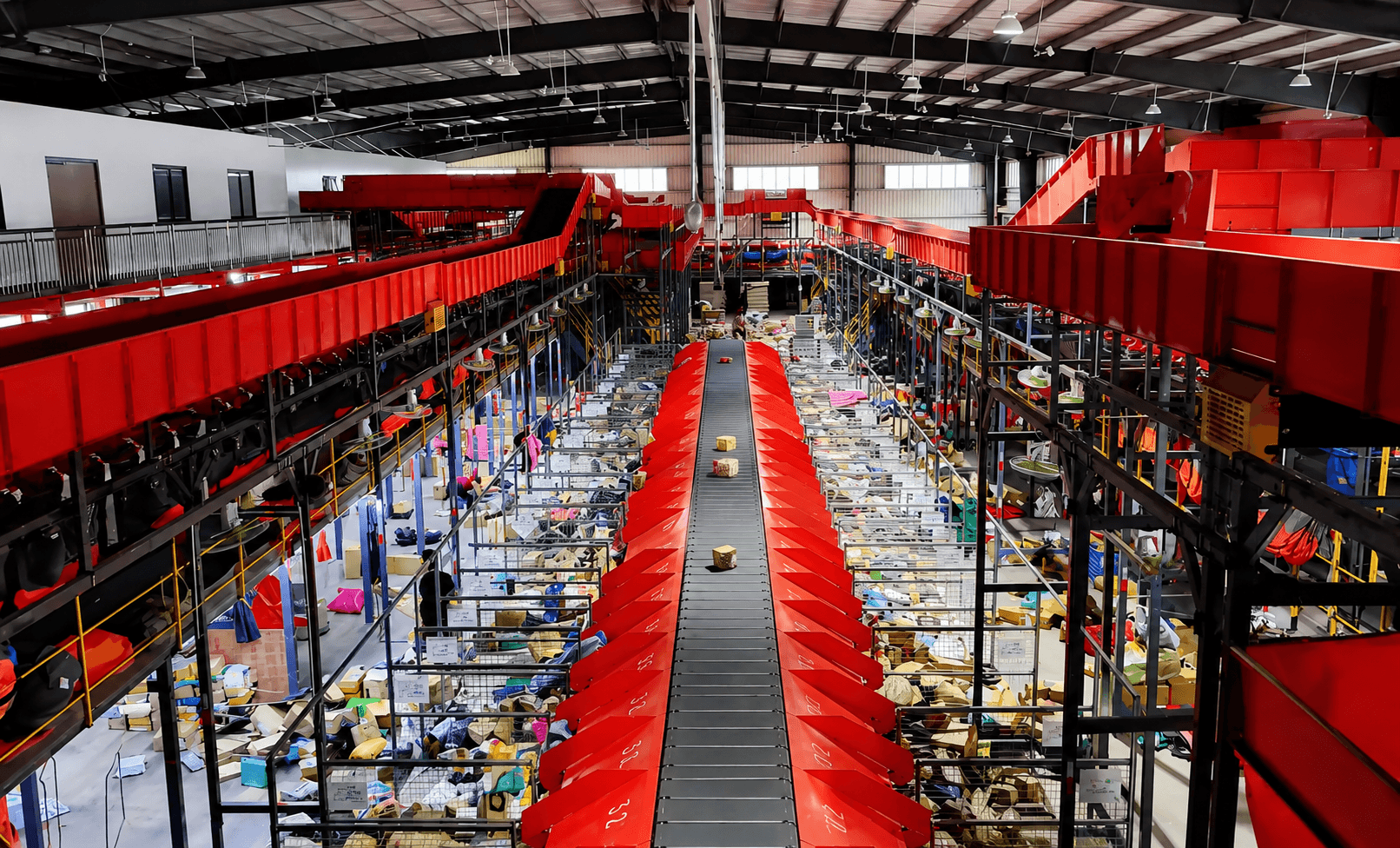
Linear Narrow Belt Sorter Technical Specifications
| Parameter | Specification |
|---|---|
| Product Type | Linear Narrow Belt Sorter |
| System Configuration | Straight / Linear |
| Sorting Throughput | 8,000–12,000 pieces/hour |
| Maximum Load | Up to 50 kg |
| Maximum Package Size | Up to 1200 × 900 × 700 mm |
| Carrier Pitch | 200 / 300 mm |
| Belt Width | 800 / 1000 mm |
| Induction Mode | Standard Manual Induction / Automatic Induction |
| Sorting Method | Automated lateral diversion |
| Application | Parcel sorting, logistics, express, e-commerce |
| Suitable Parcel Types | Standard, large and irregular parcels |
| System Layout | Linear / Customized |
| Downstream Connection | Sorting chutes / takeaway conveyors |
| Control System | Automated sorting control |
| System Integration | Available according to project requirements |
Details
Linear Narrow Belt Sorter for High-Volume Parcel Sorting
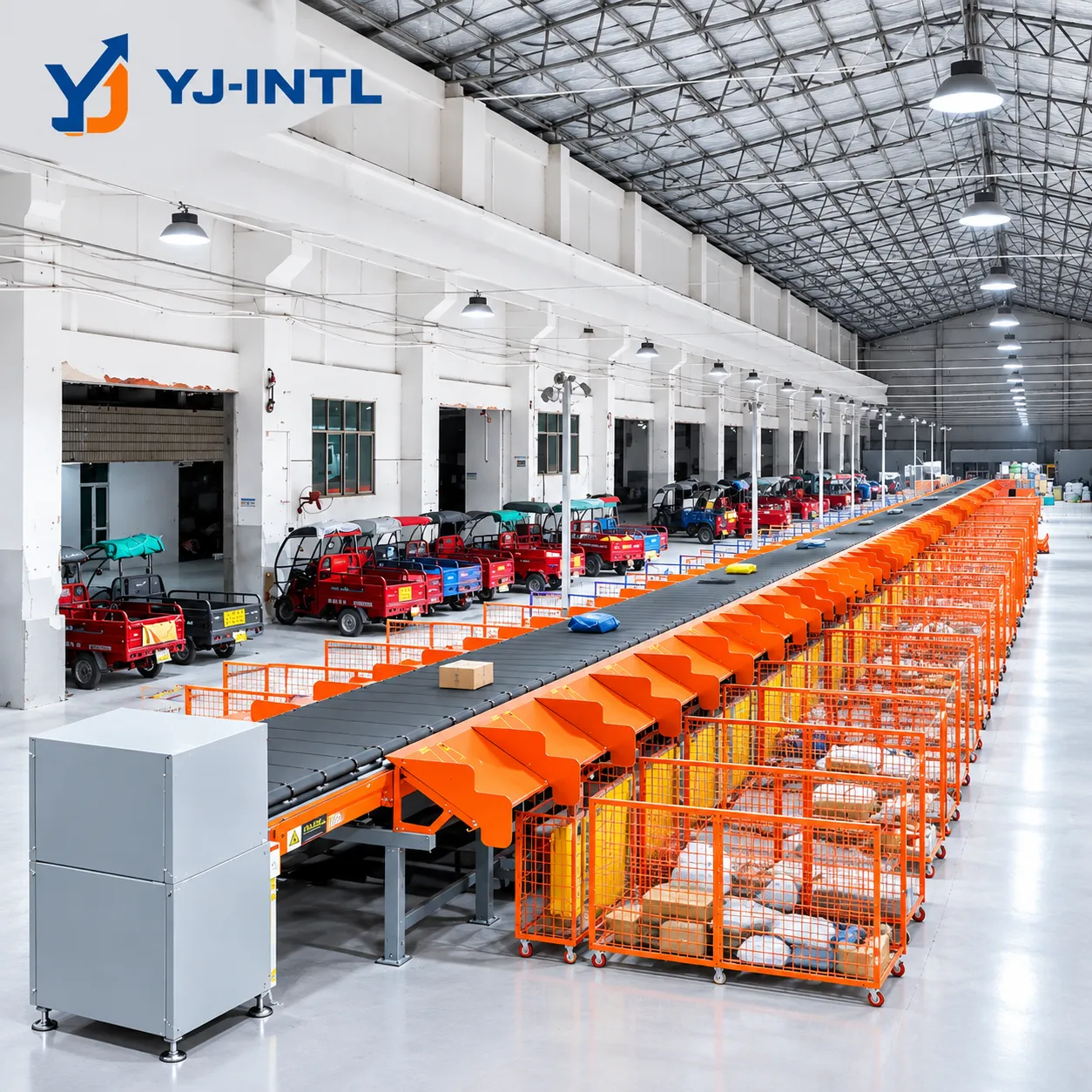
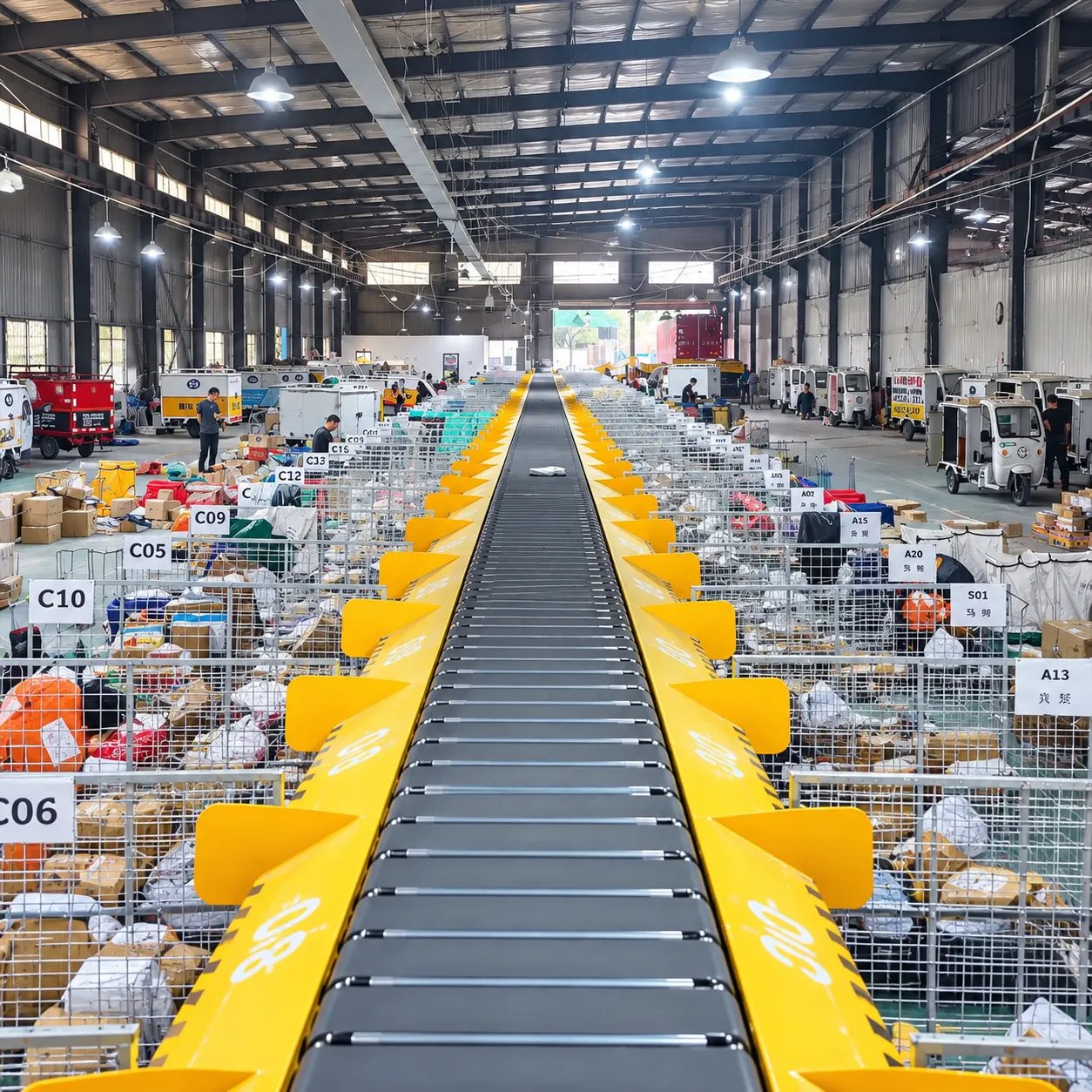
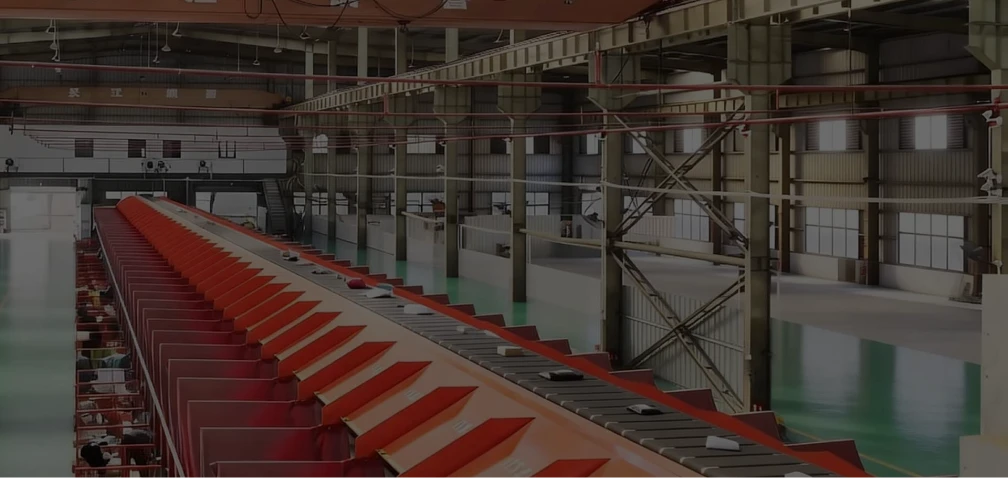
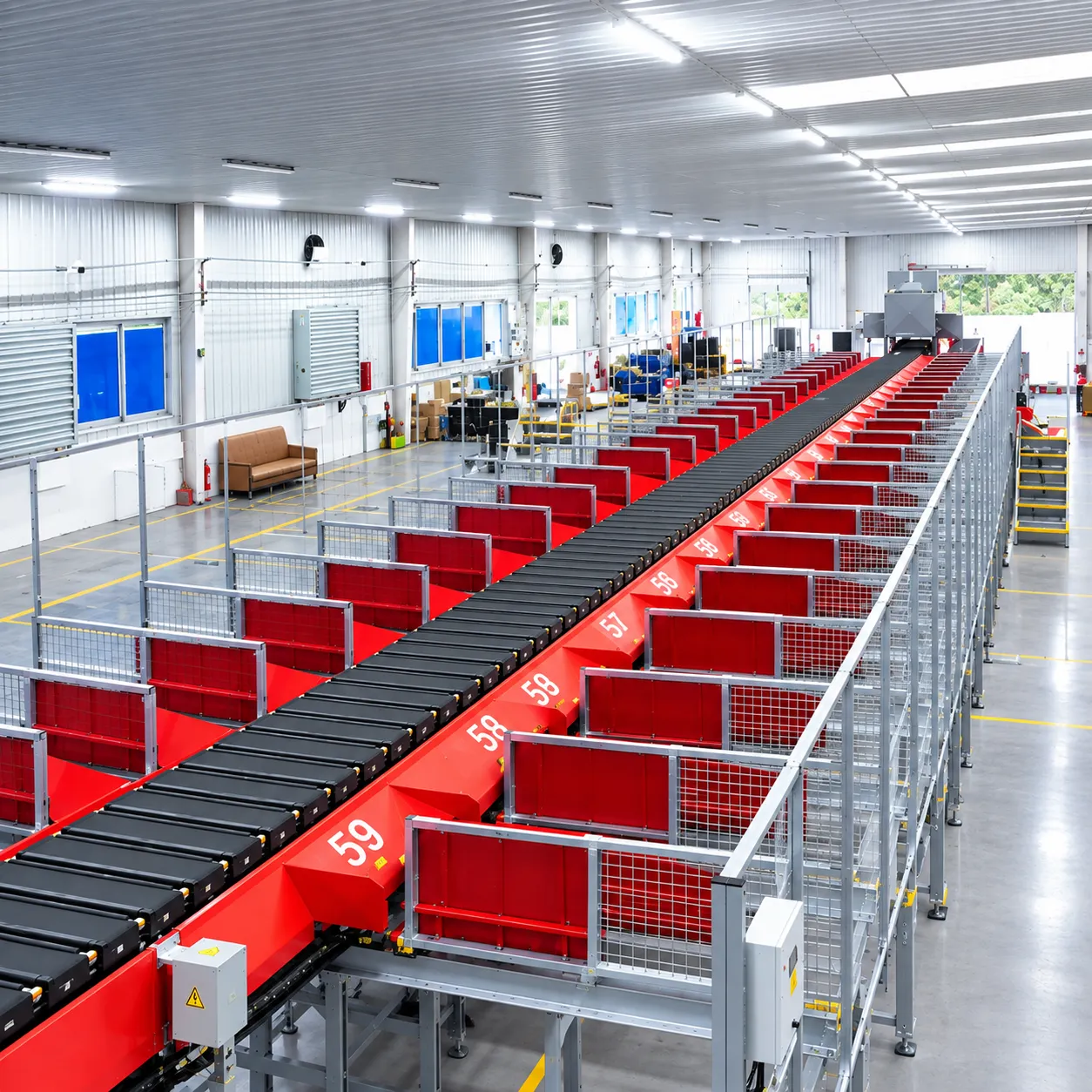
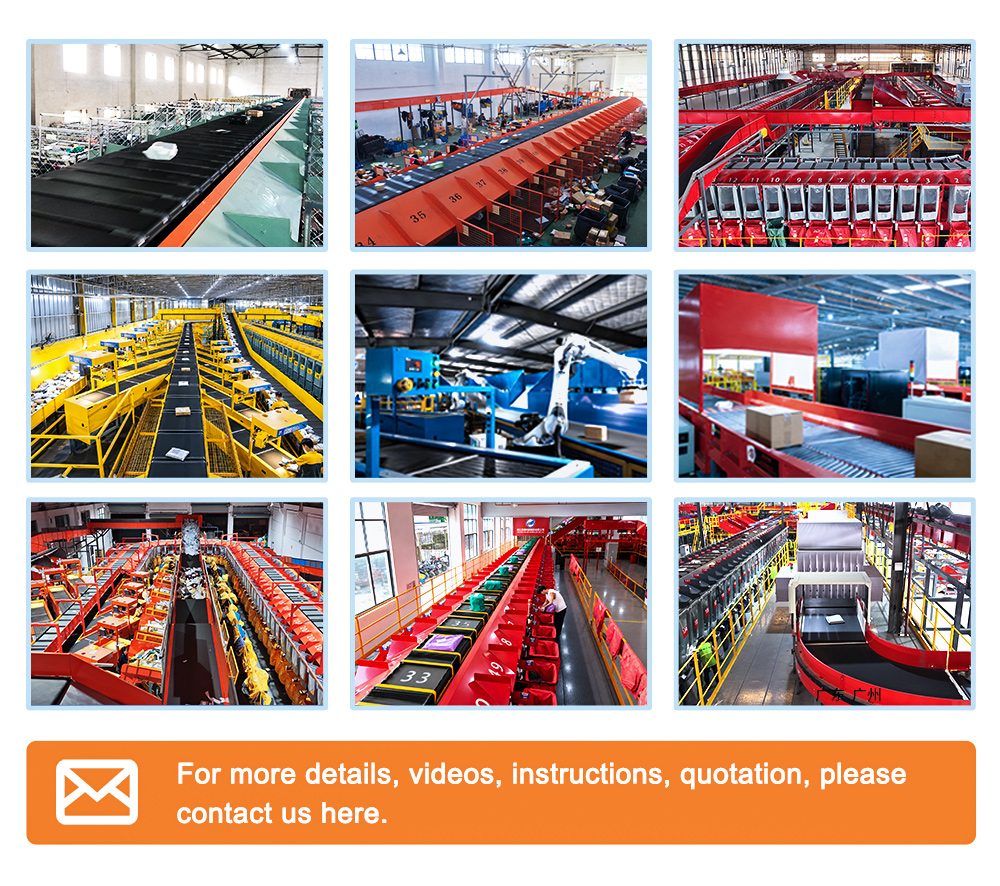
The Linear Narrow Belt Sorter is designed for distribution centers and parcel-processing operations that require continuous sorting across multiple destinations while maintaining a relatively simple and economical system configuration.
Unlike manual sorting, where operators need to identify and physically move parcels to different destinations, the linear narrow belt system automates the conveying and sorting process.
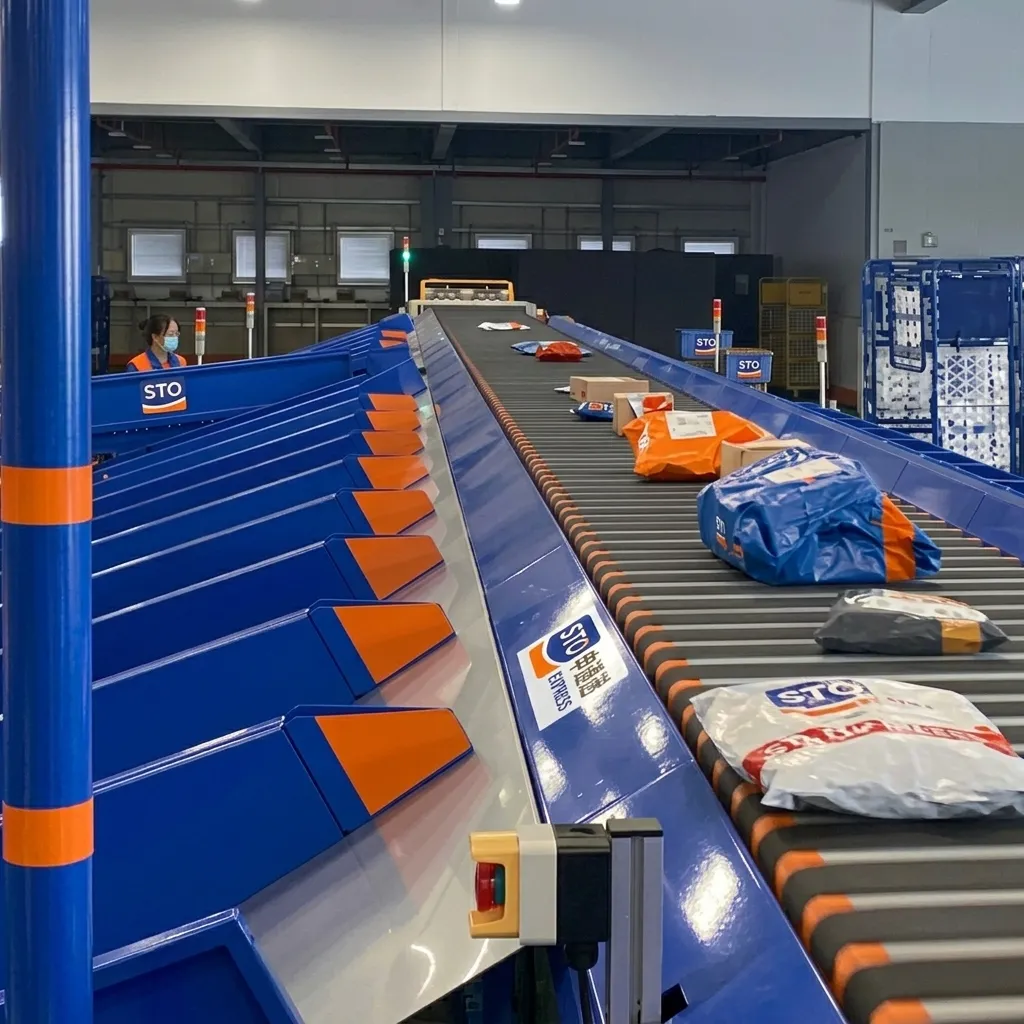
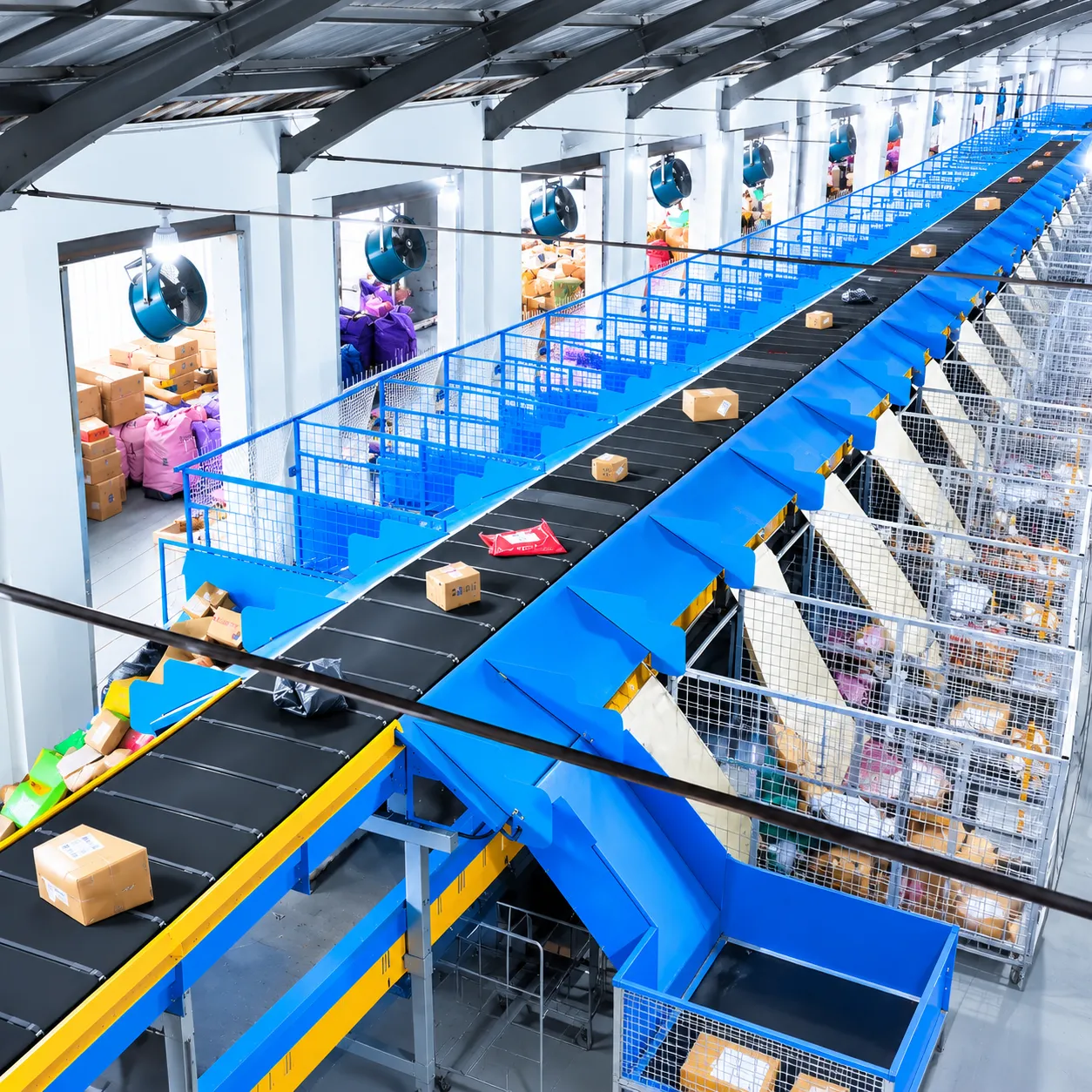
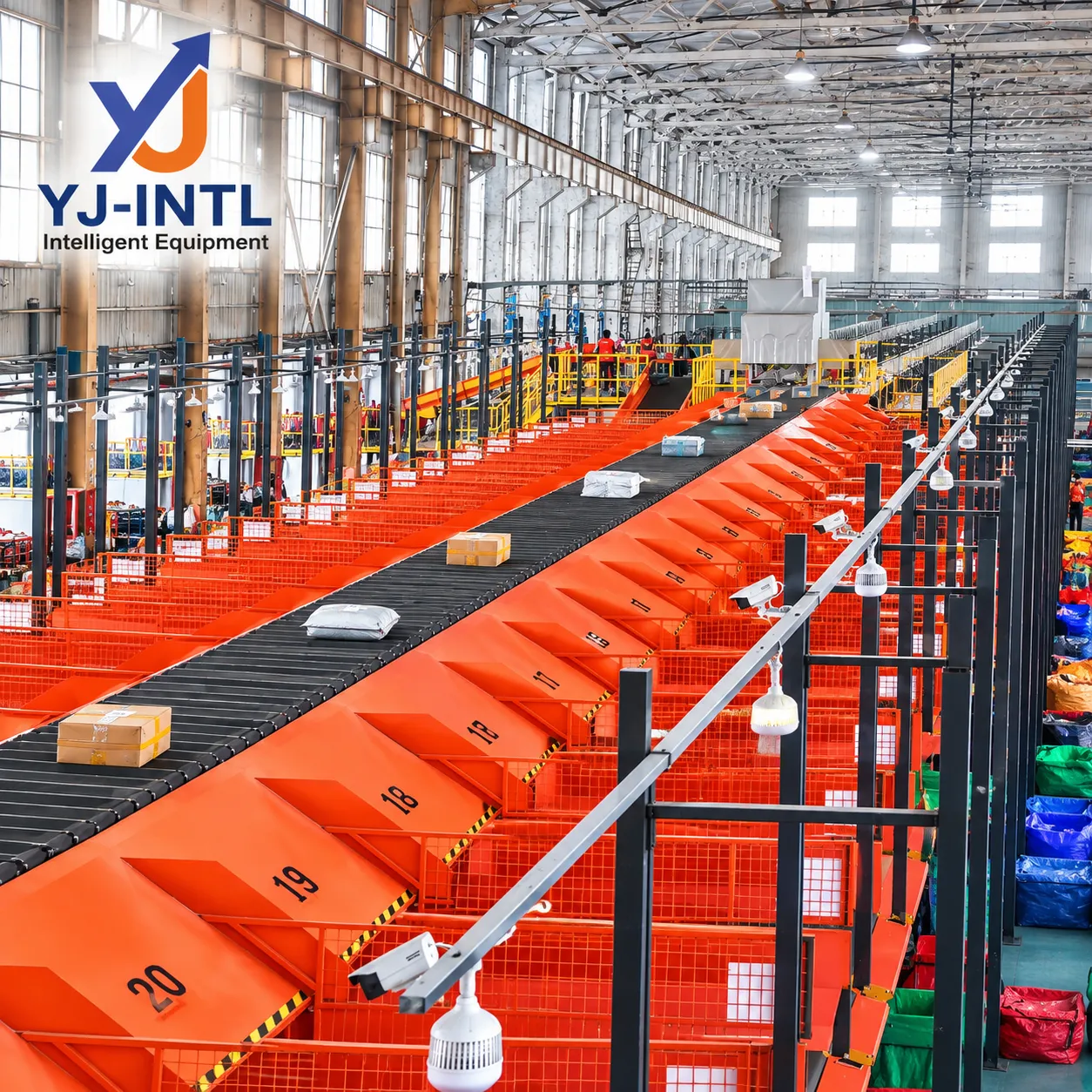
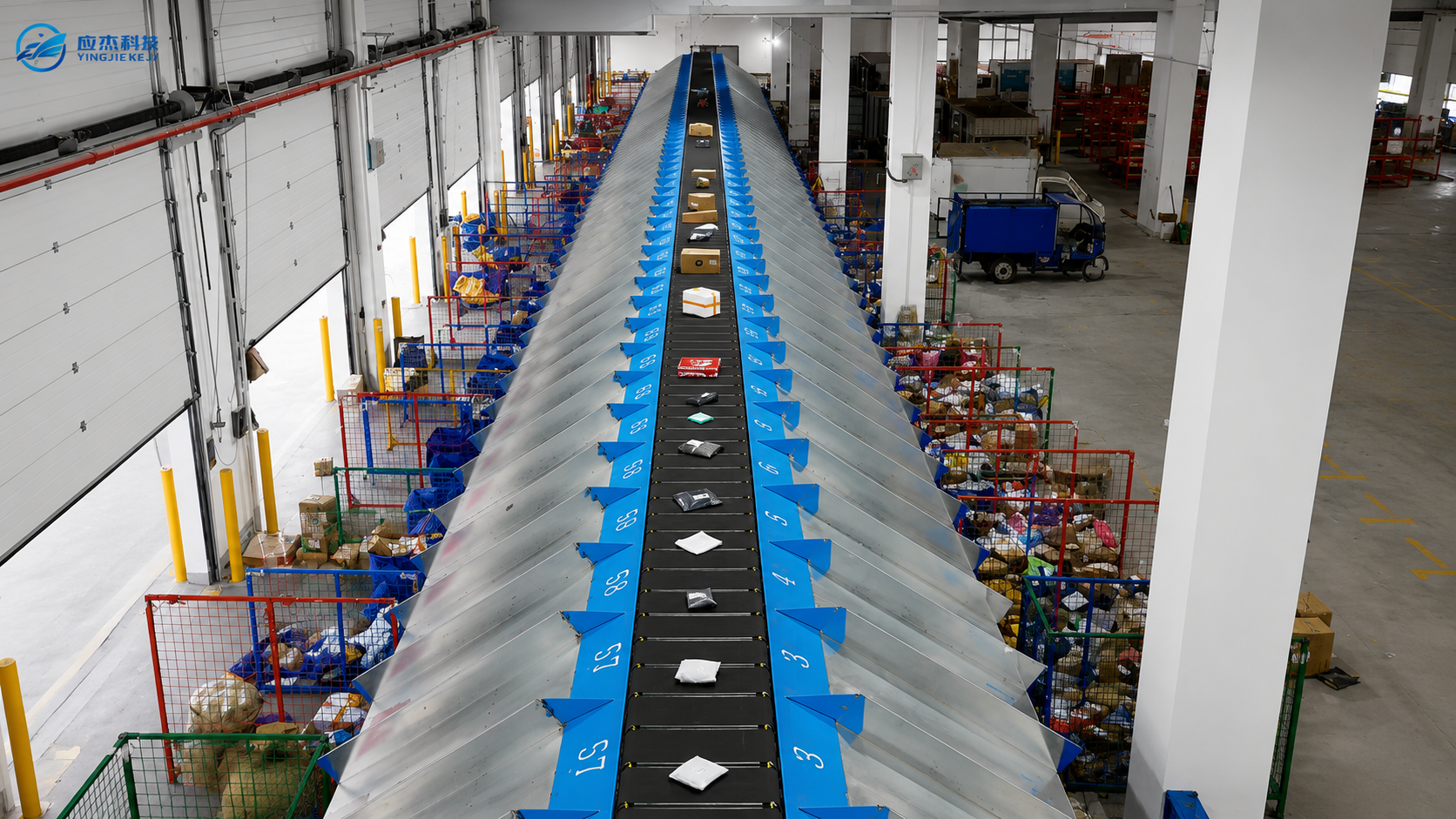
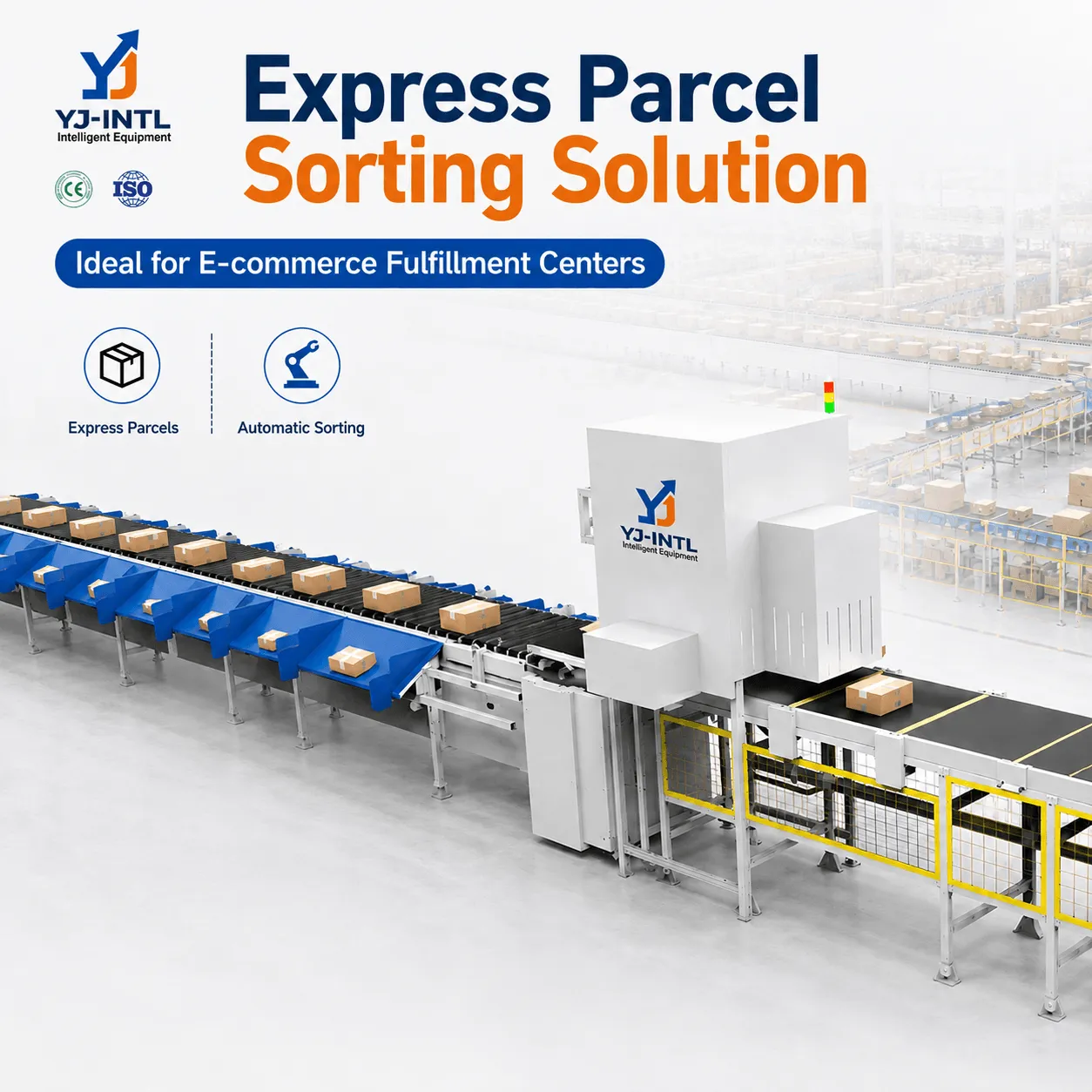
Parcels enter the sorter through a manual or automatic induction process, move continuously along the main conveying line and are diverted to the assigned destination according to the sorting control logic.
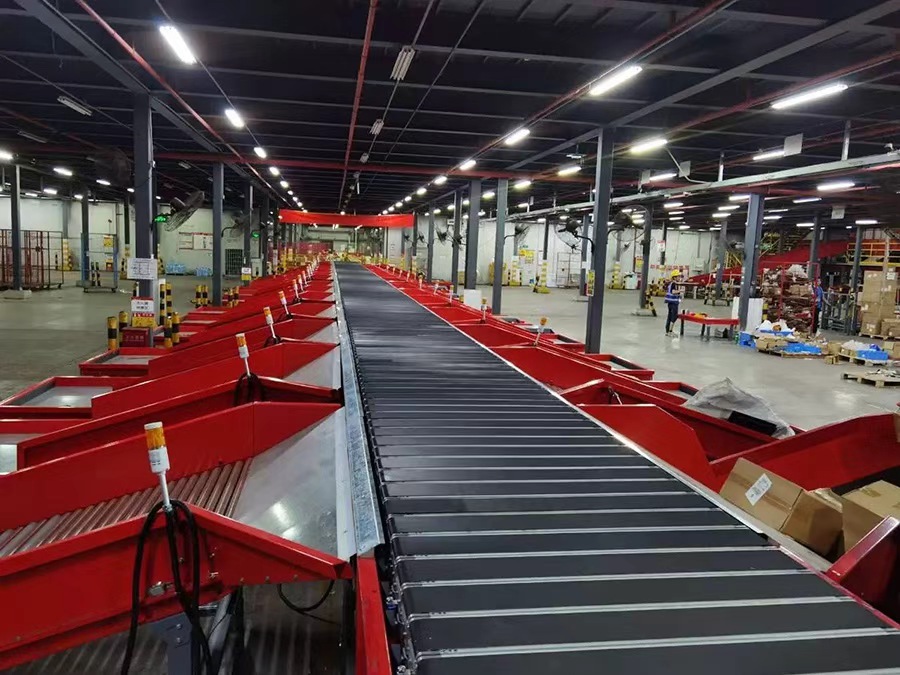
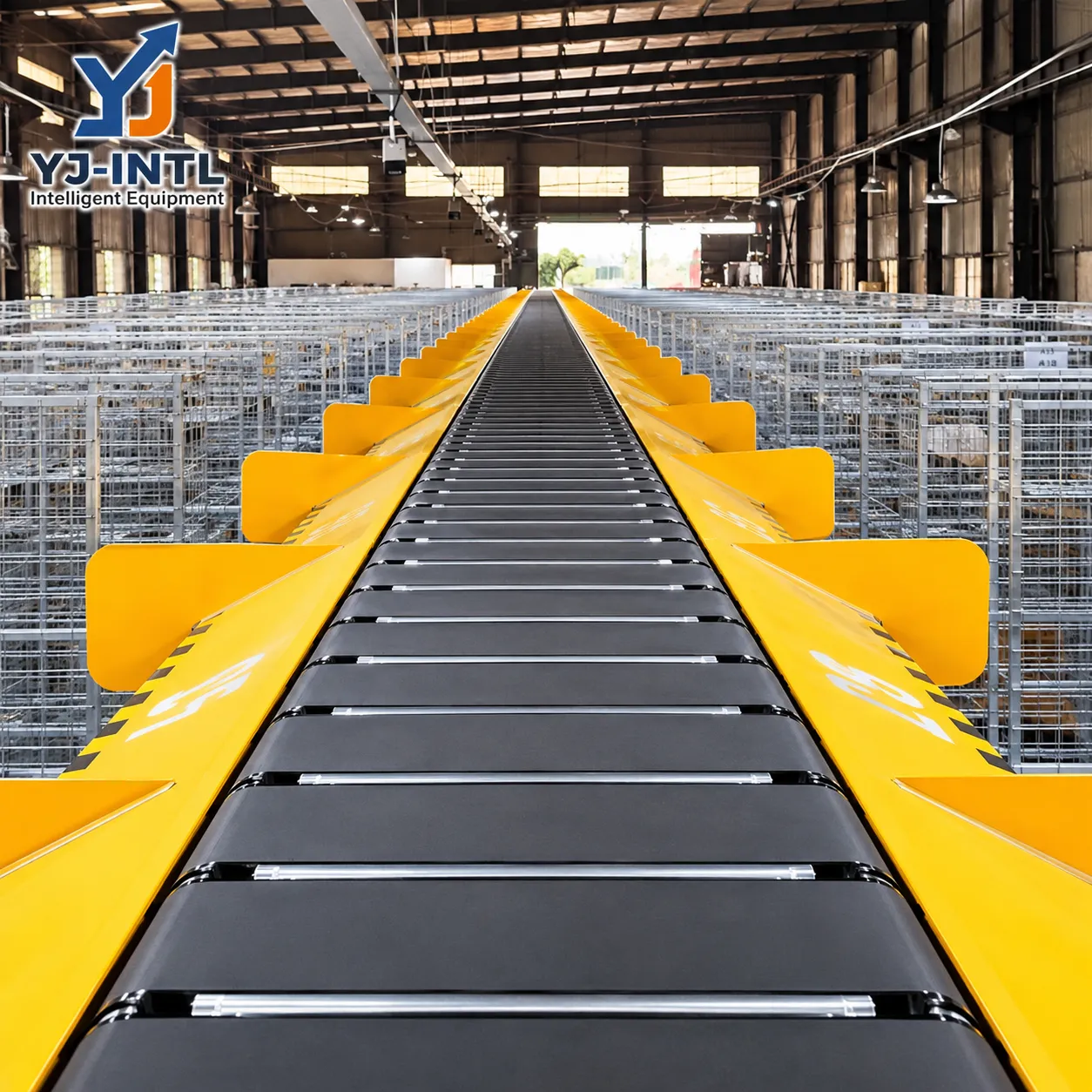
The straight-line architecture is particularly suitable for facilities where the available layout, destination arrangement or process flow favors a linear sorting configuration.
Applications
E-Commerce: Suitable for high-volume e-commerce parcel sorting involving mixed package sizes.
Express Logistics: Can sort parcels according to delivery routes, stations, regions or outbound lanes.
3PL Distribution: Suitable for multi-client logistics operations with multiple destinations.
Distribution Centers: Supports centralized outbound sorting and parcel consolidation.
Large Parcel Sorting: The stated 50kg maximum load and 1200 × 900 × 700mm maximum package size make the system suitable for applications involving larger parcel profiles.
Suitable Parcel Types
The Linear Narrow Belt Sorter can be considered for:
- Cartons
- E-commerce parcels
- Polybags
- Soft packages
- Large parcels
- Mixed-size packages
- Irregular parcels
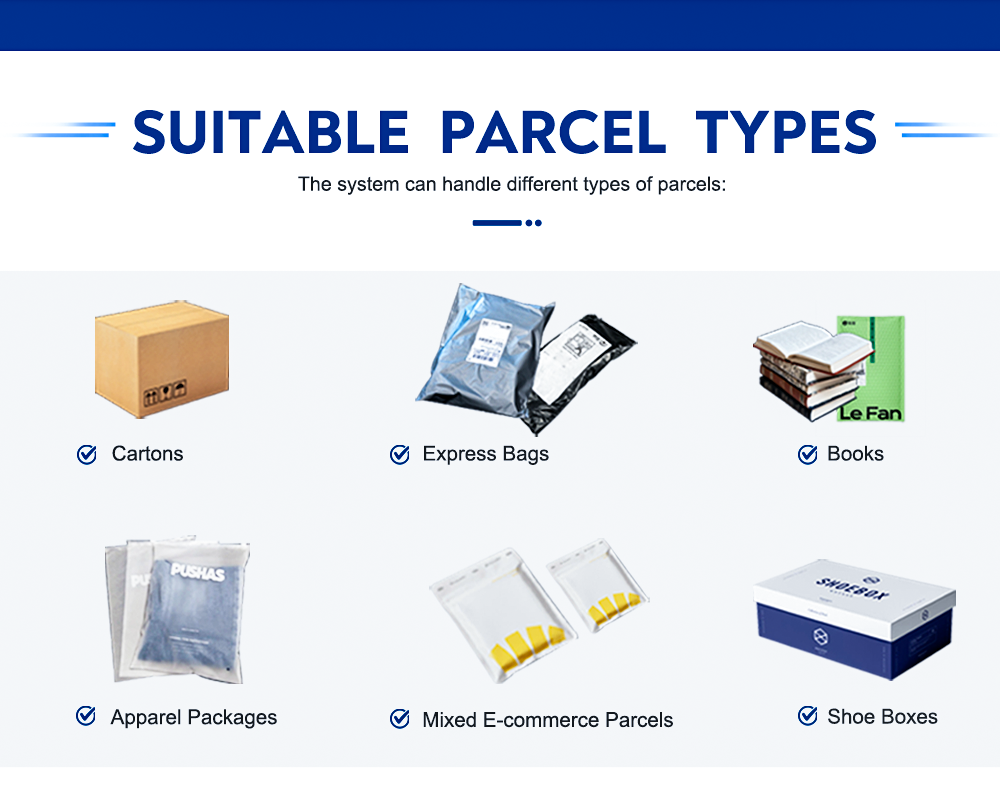
For highly deformable, unstable or unusually shaped packages, actual application testing should be conducted to confirm reliable conveying and sorting performance.
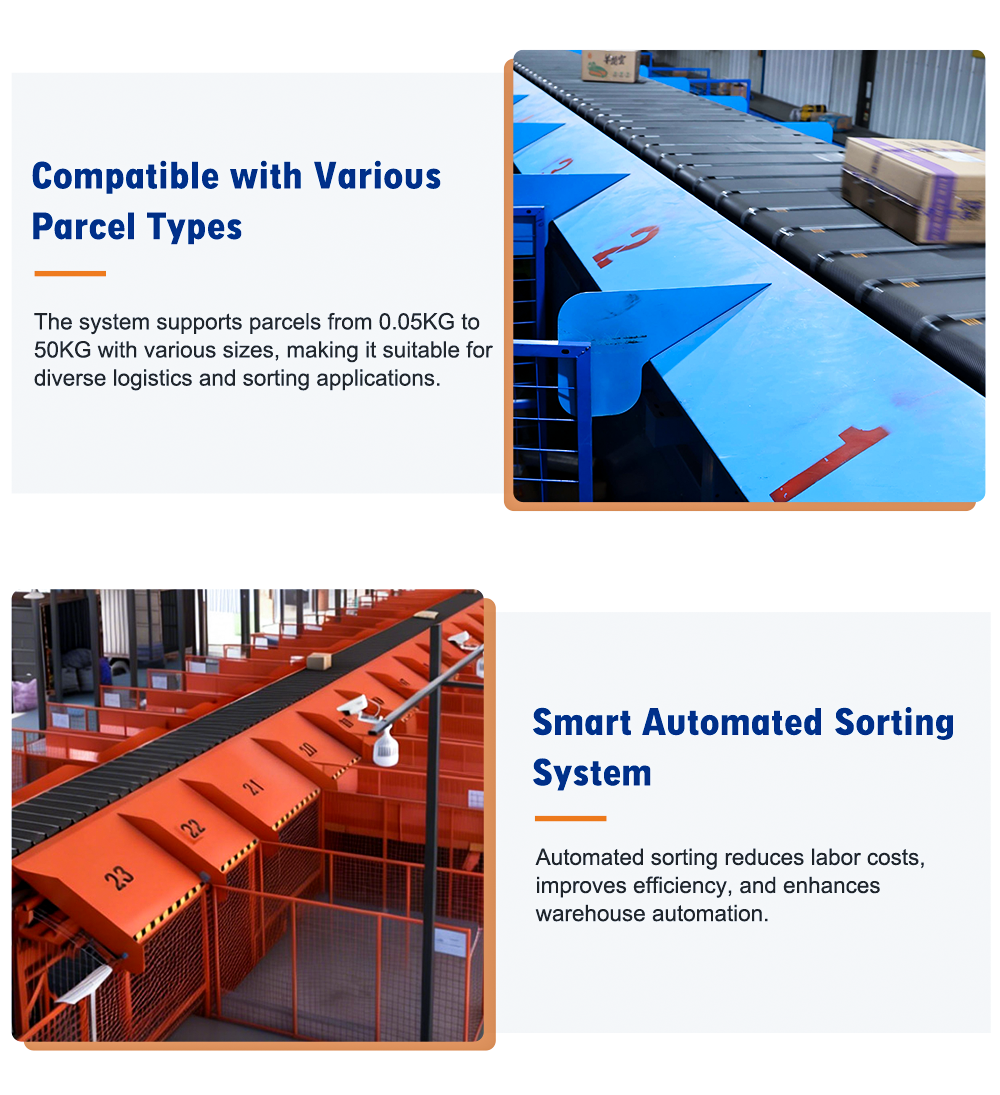
Why Choose YJ-INTL Linear Narrow Belt Sorter?
High Throughput
The supplied product specification indicates 8,000–12,000 pieces/hour, making the system suitable for high-volume parcel sorting.
Heavy Parcel Capability
Supports a stated maximum load of 50kg.
Large Package Compatibility
Supports a stated maximum package size of 1200 × 900 × 700mm.
Flexible Induction
Available with standard manual induction or automatic induction.
Flexible Belt Configuration
Supports 800mm and 1000mm belt width configurations.
Multiple Parcel Types
Suitable for standard, large, soft and irregular parcel applications when package characteristics meet system requirements.
Complete System Integration
Can be combined with barcode identification, DWS, WMS/WCS and downstream conveyor systems.
Custom Engineering
The linear sorting system can be designed around actual parcel characteristics, throughput requirements, destination count and facility layout.
FAQ
The supplied product specification indicates a sorting throughput of 8,000–12,000 pieces per hour. Actual throughput depends on parcel dimensions, weight, induction rate, spacing, destination distribution and downstream capacity.
The supplied specification indicates a maximum parcel load of up to 50kg. Final load capability should be confirmed according to parcel dimensions, shape and operating conditions.
The supplied product material specifies a maximum package size of up to 1200 × 900 × 700mm. Actual compatibility should also consider parcel weight, shape, center of gravity and loading orientation.
Yes. The supplied product material specifically identifies large and irregular parcels as suitable application scenarios. Final compatibility depends on the physical characteristics and stability of the actual parcels.
Yes. The system shown in the supplied material supports both standard manual induction and automatic induction configurations. The appropriate configuration depends on the upstream process and required level of automation.
The supplied specification lists 800mm and 1000mm belt width options. The final belt width should be selected according to parcel dimensions, throughput and system layout.
The supplied specification lists 200mm and 300mm pitch configurations. The appropriate pitch depends on parcel characteristics, required throughput and sorting density.
Yes. The Linear Narrow Belt Sorter can be integrated with DWS equipment for parcel dimensioning, weighing and identification according to project requirements.
Typical applications include e-commerce fulfillment, express logistics, 3PL distribution, parcel hubs and distribution centers handling high volumes of mixed-size parcels.
Capacity should be selected based on peak hourly volume rather than average daily volume alone. Parcel dimensions, weight distribution, induction rate, destination distribution, sorting spacing and downstream capacity should also be considered when determining the final system configuration.