YJ-INTL Automated Narrow Belt Parcel Sorting System for Express, E-Commerce and 3PL
Linear Narrow Belt Parcel Sorting System For E-commerce Fulfillment
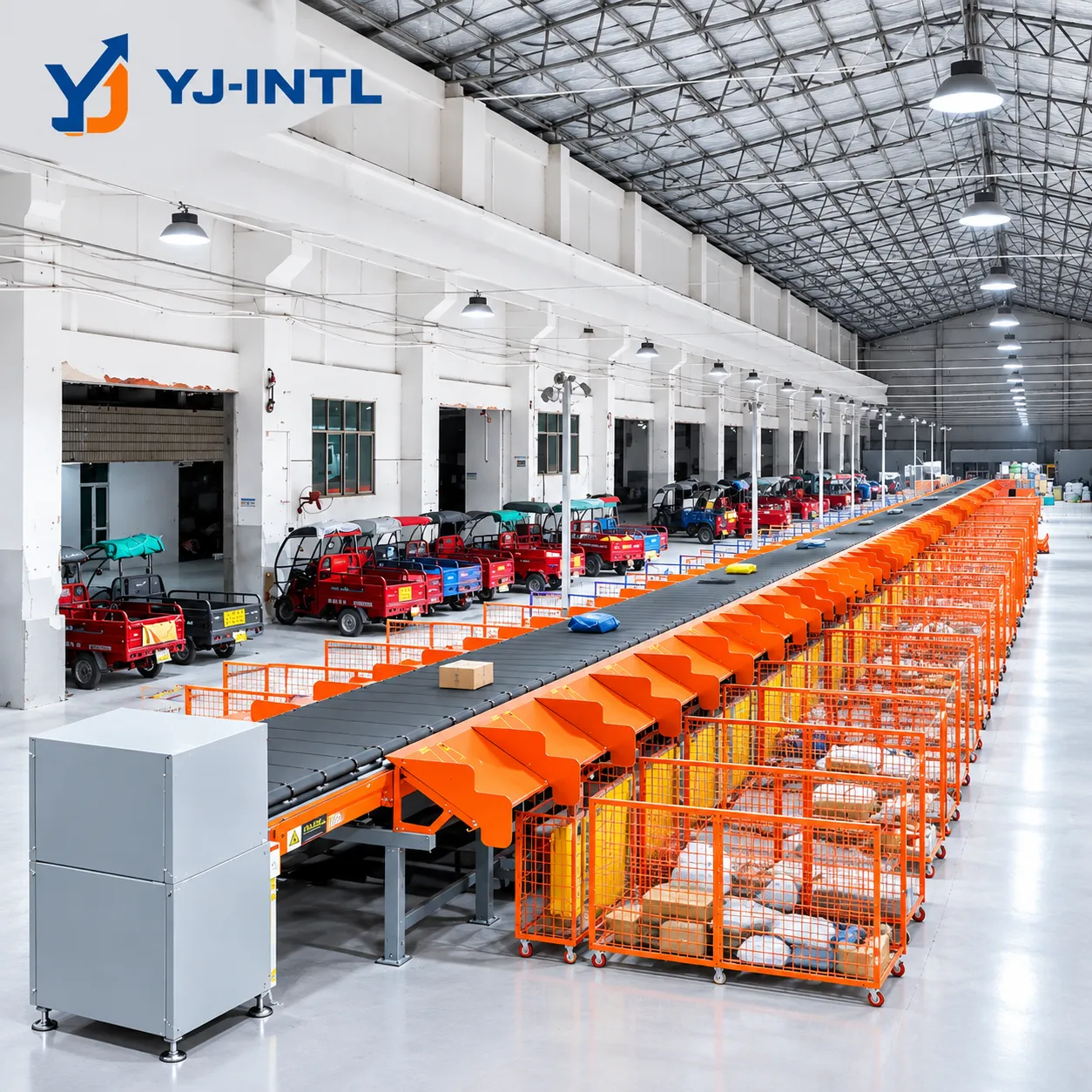
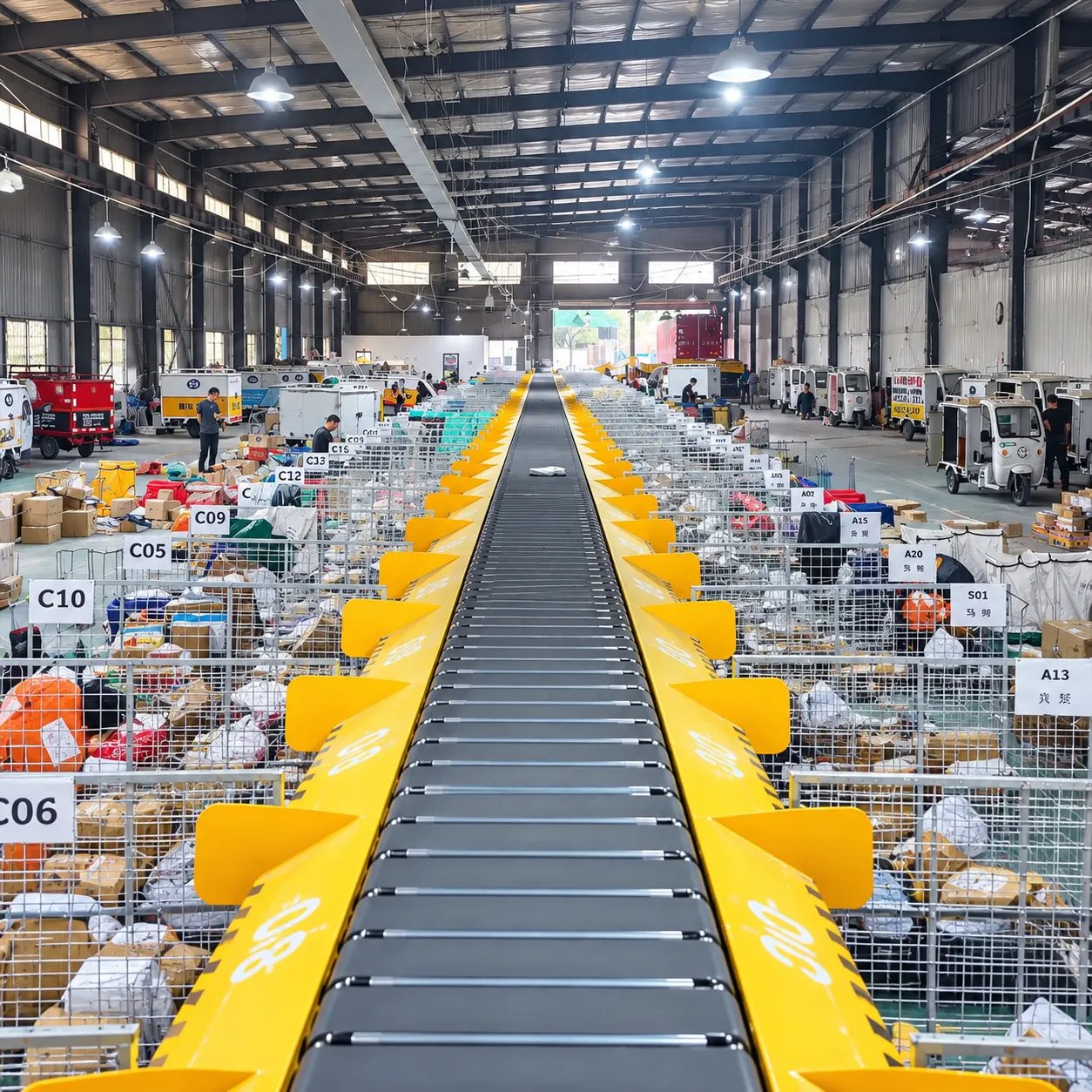
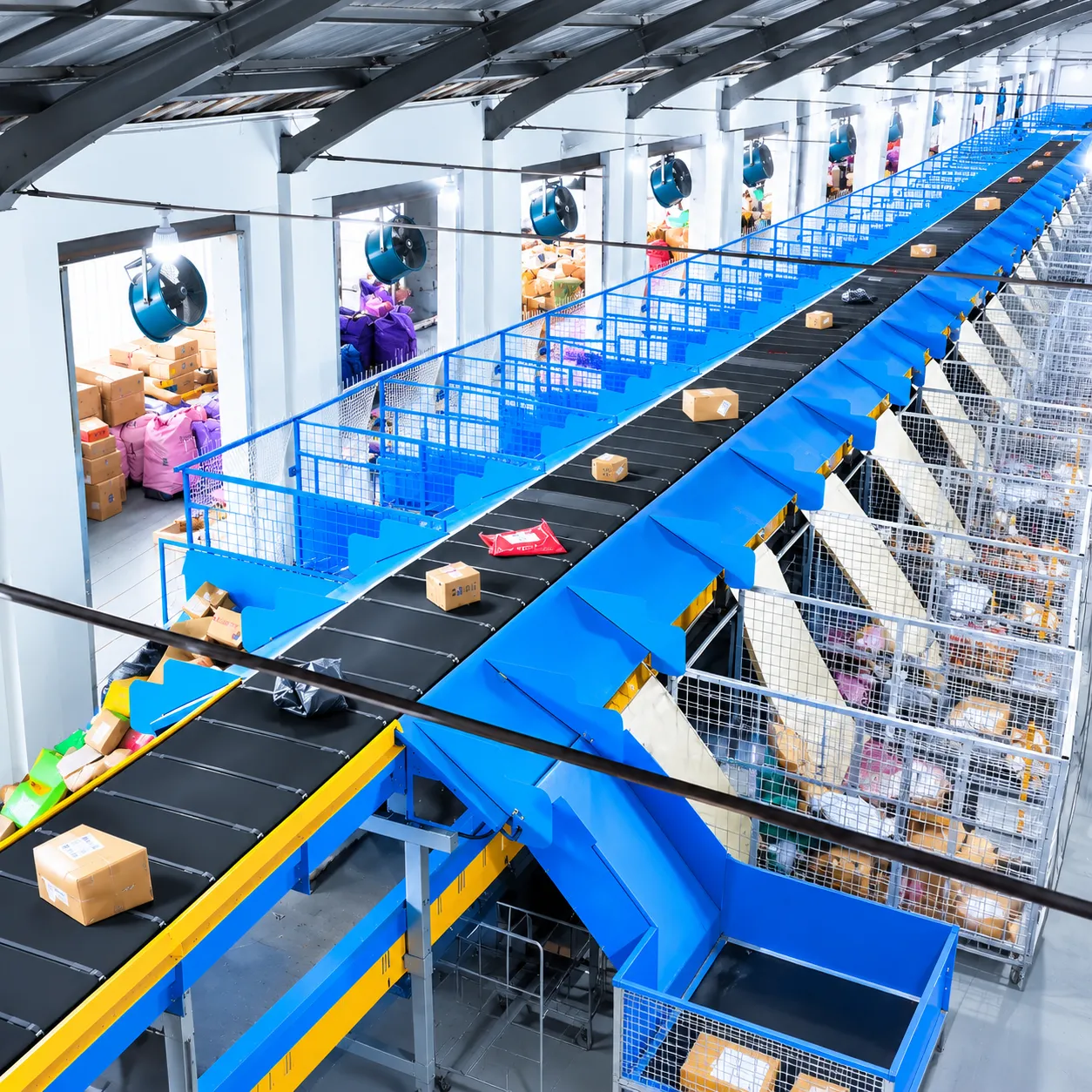
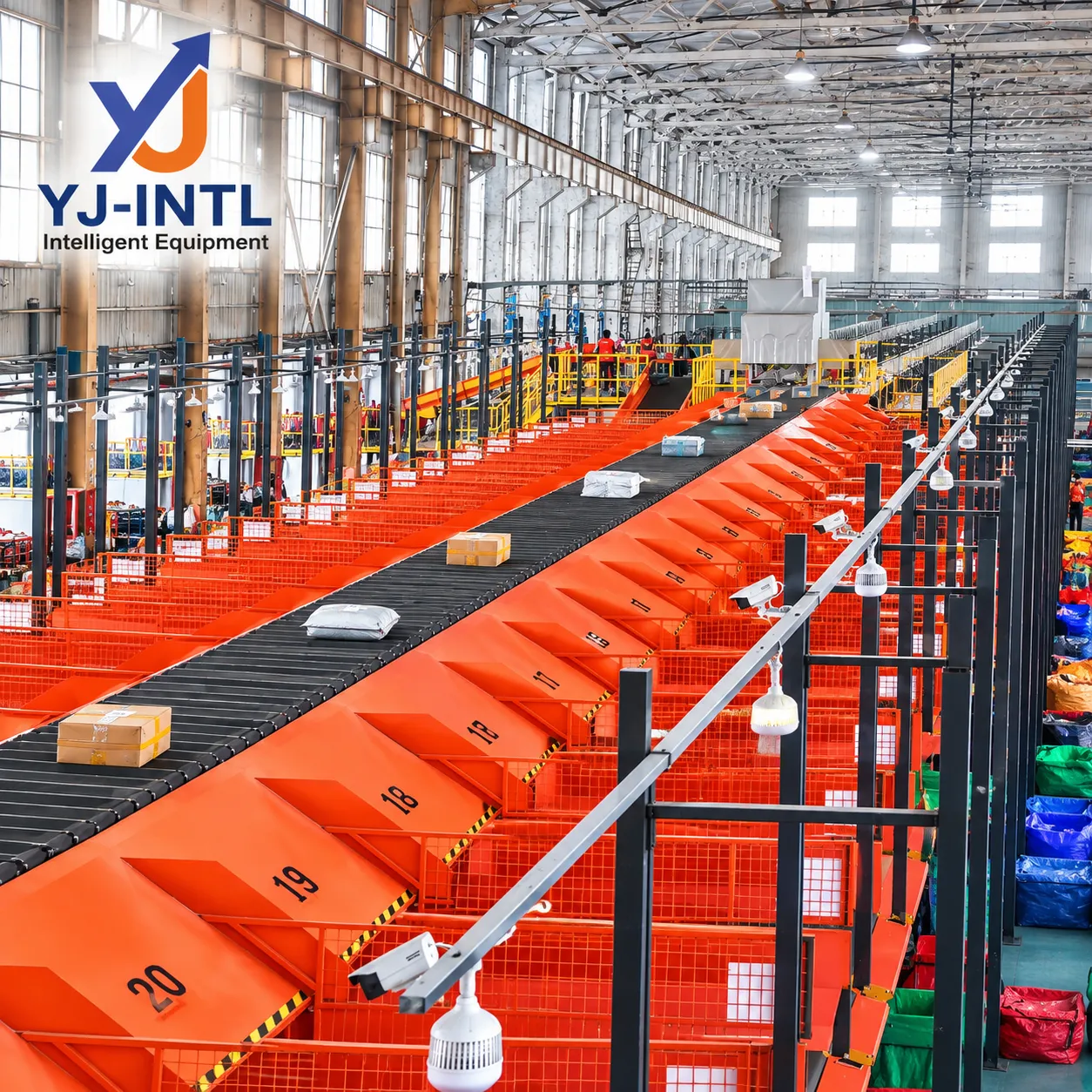
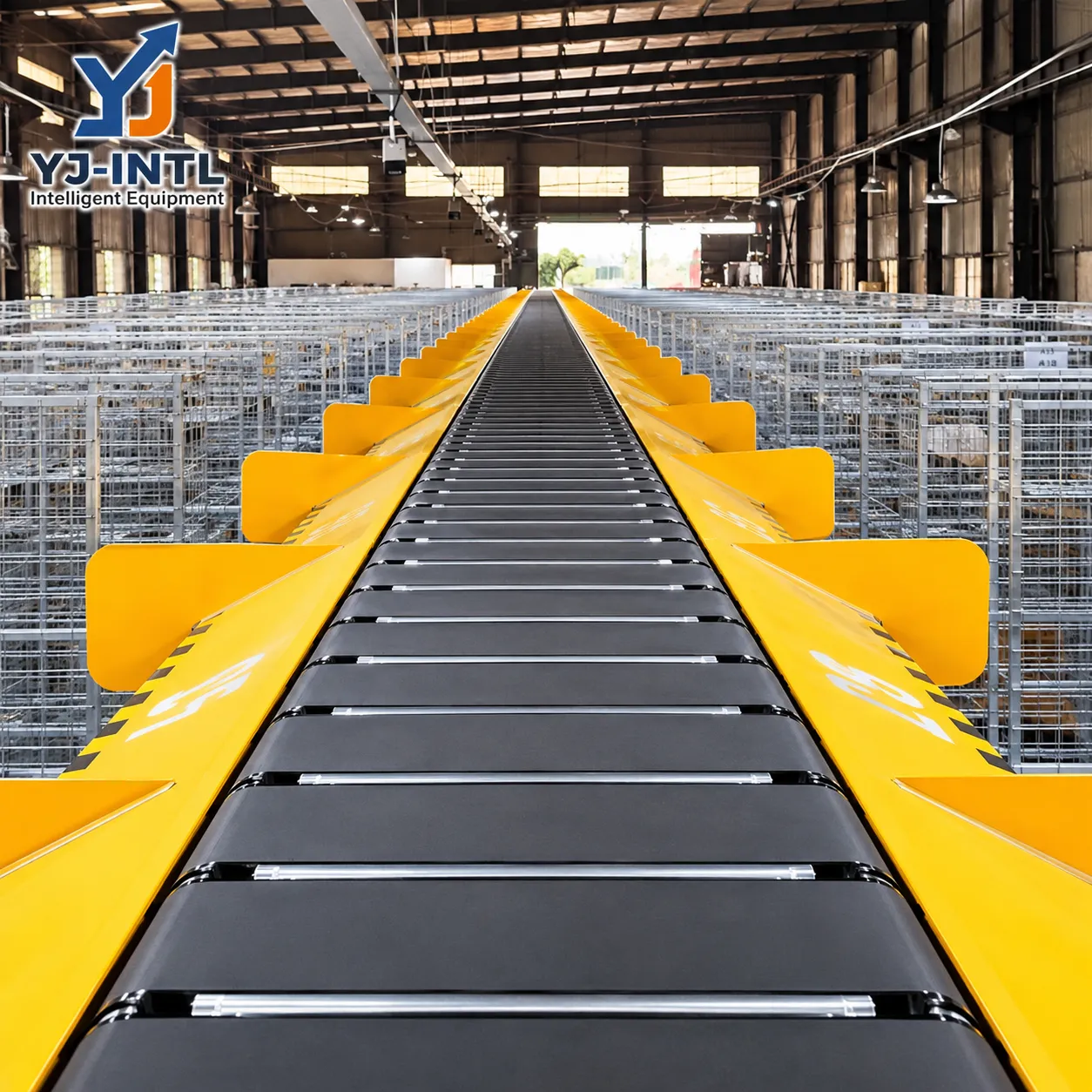
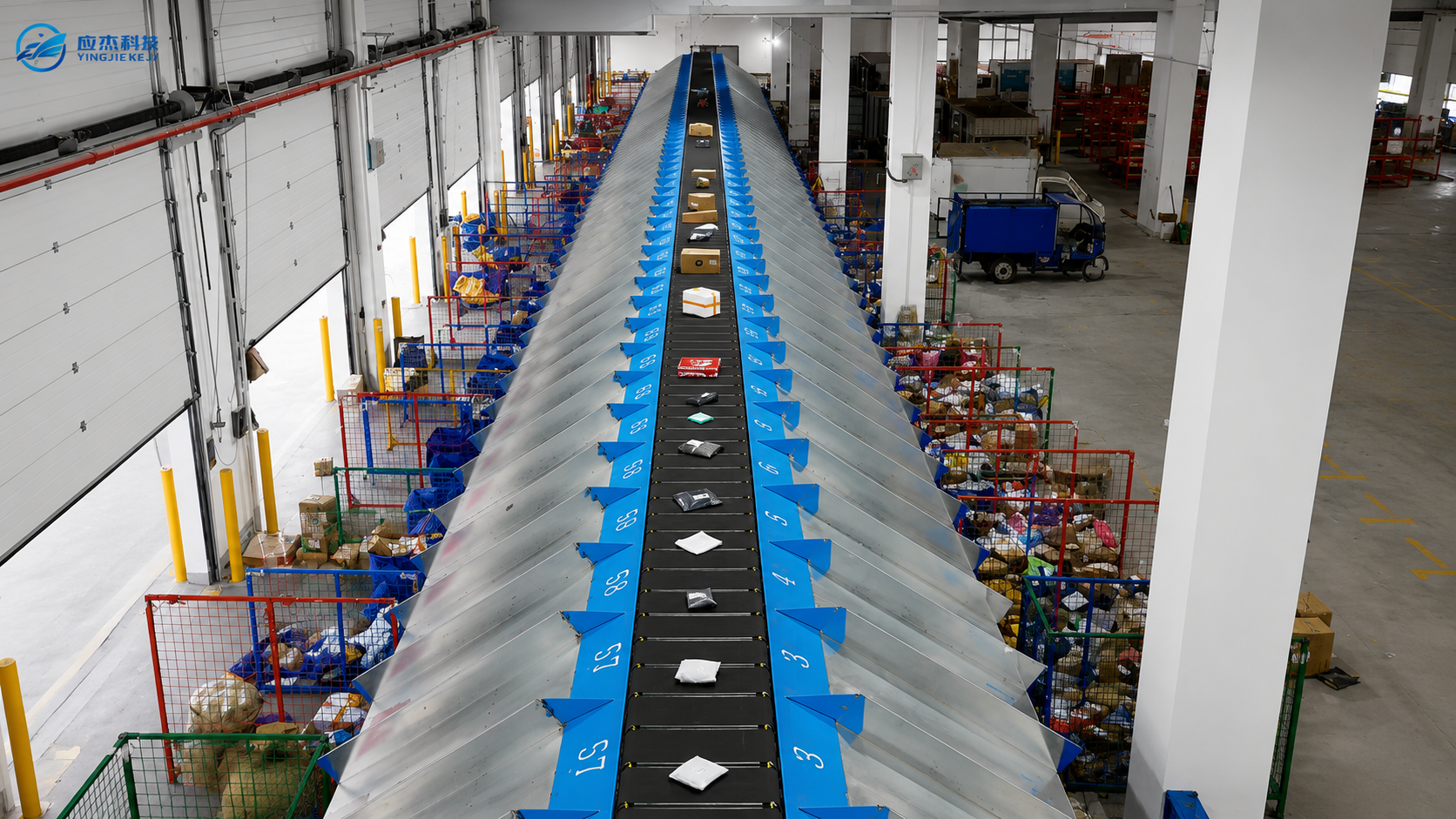
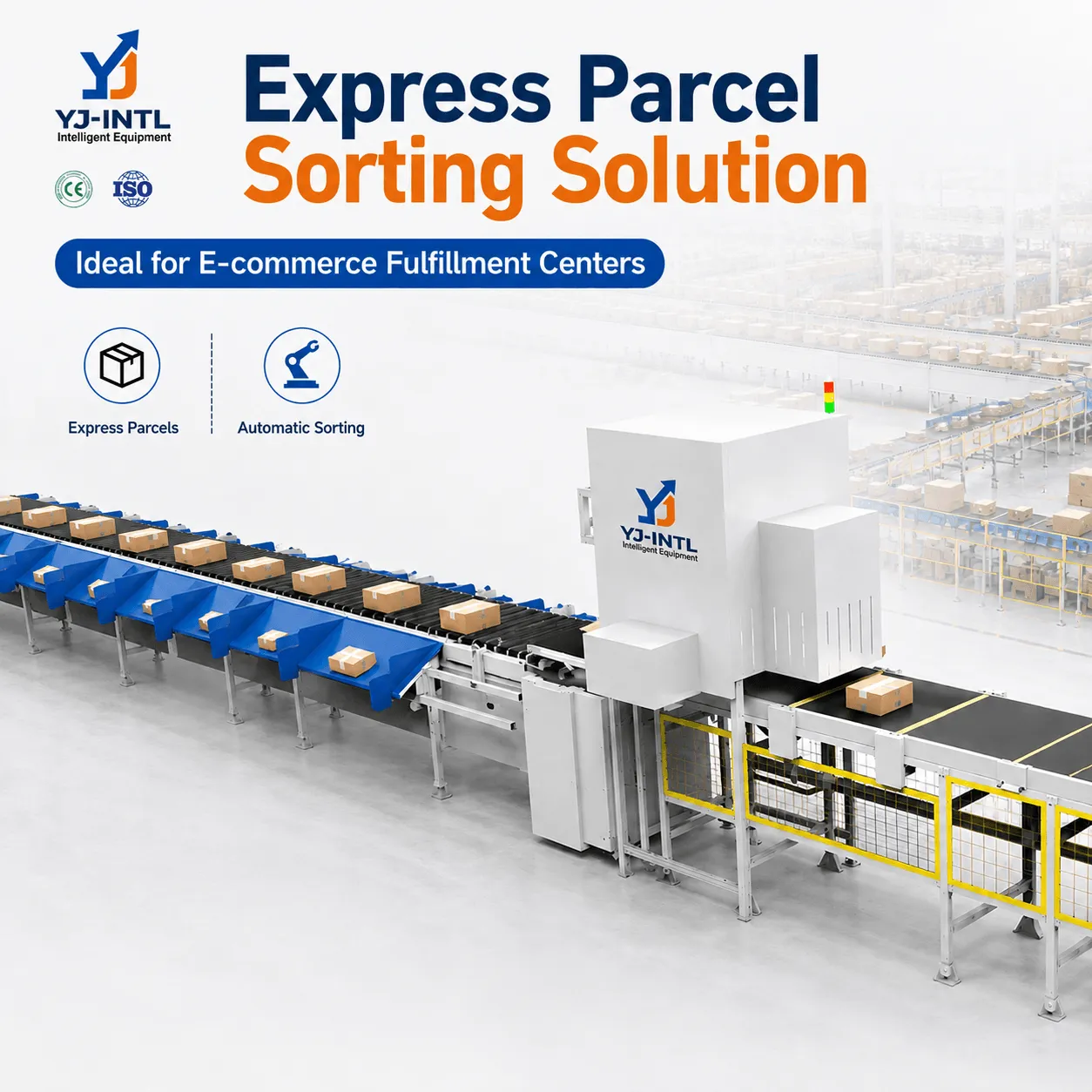
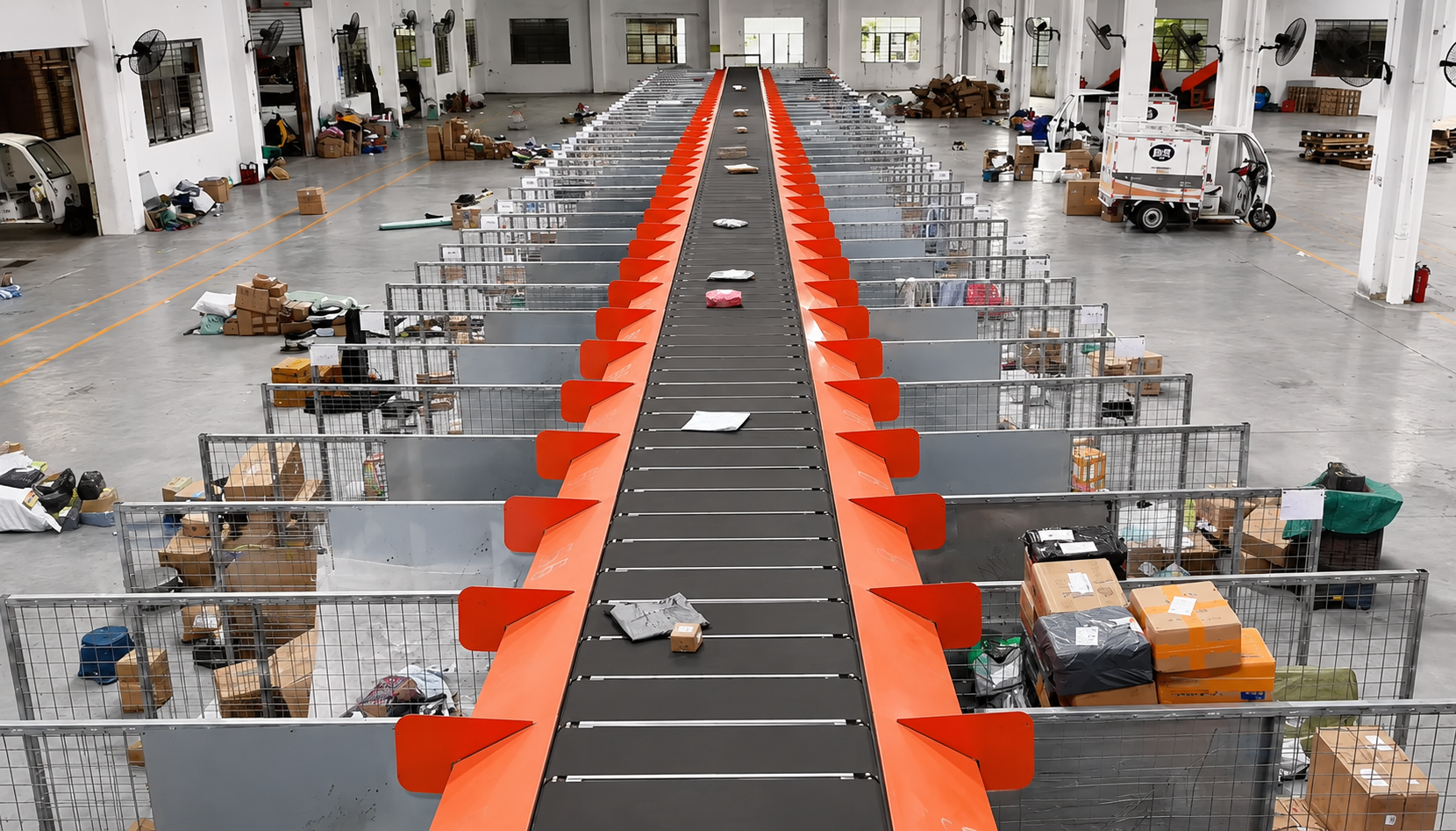
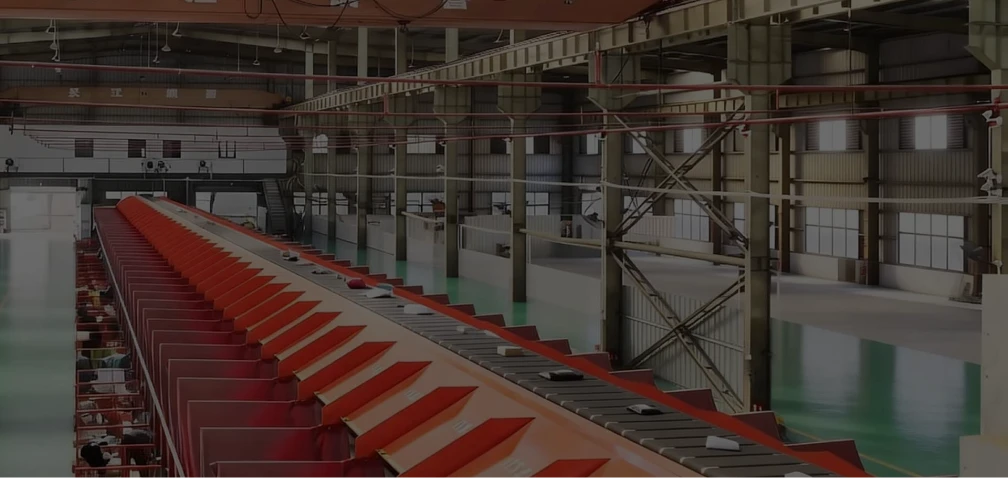
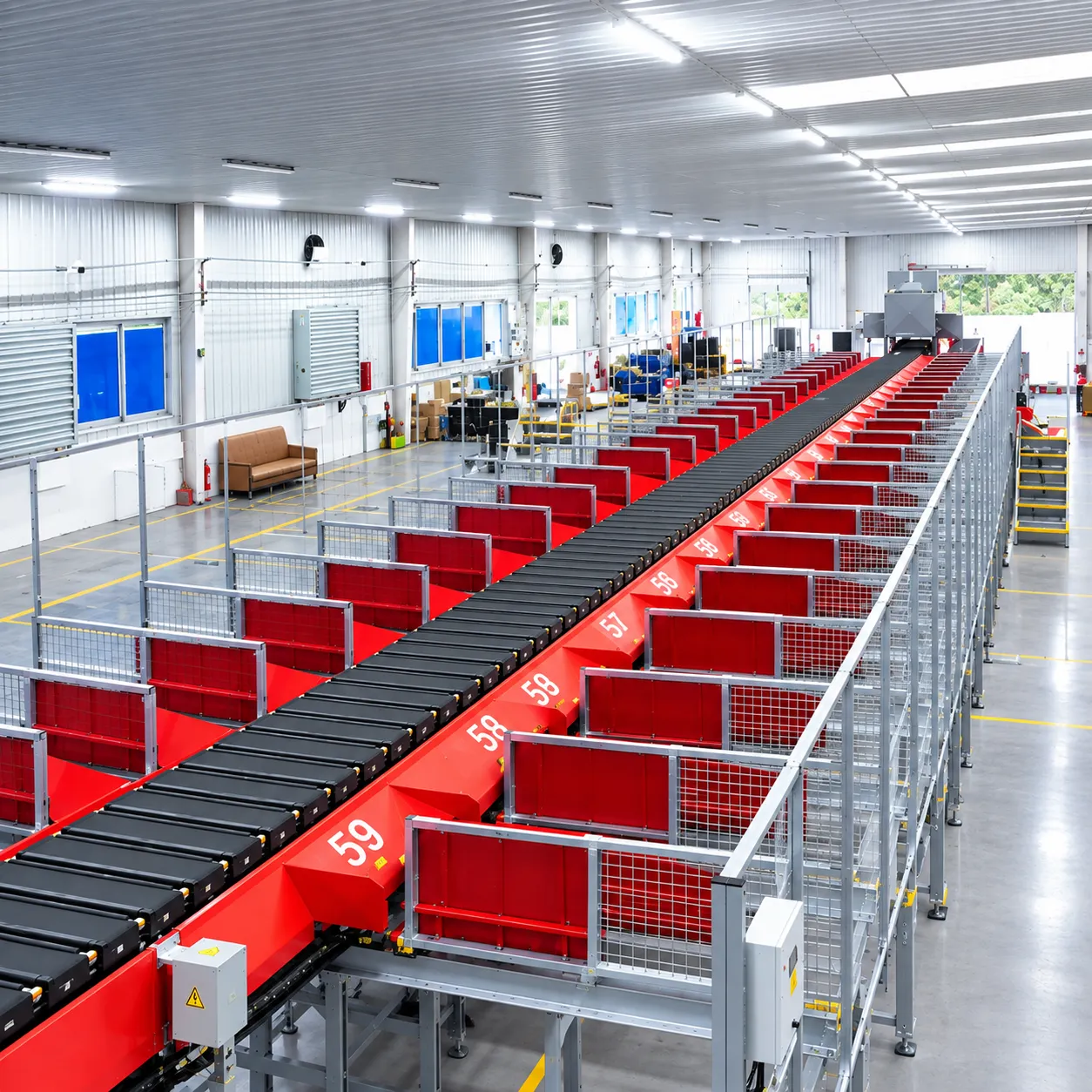
The YJ-INTL Narrow Belt Sorter for E-commerce Fulfillment is designed for high-volume parcel sorting in e-commerce fulfillment centers, courier hubs, 3PL warehouses and distribution facilities. It automates the movement of mixed-size parcels from induction to identification, tracking, sorting and final destination discharge, reducing manual sorting work and improving outbound processing efficiency.
With a reference throughput of 8,000–12,000 parcels per hour, support for parcels up to 50 kg, and configurable 200 mm or 300 mm carrier pitch, the system can be engineered around your order volume, parcel profile, destination count and warehouse layout. Integration with barcode scanning, DWS, WCS and WMS allows the sorter to operate as part of a complete fulfillment automation system.
- 8,000–12,000 PPH Reference Throughput
- Up to 50 kg Parcel Load
- 200 / 300 mm Carrier Pitch
- 800 / 1000 mm Belt Width
- 2–2.5 m/s Operating Speed
- ≤0.03% Reference Sorting Error Rate
- Manual or Automatic Induction
Narrow Belt Sortation System Technical Specifications
| Specification | Reference Parameter | Specification | Reference Parameter |
|---|---|---|---|
| Sorting Capacity | 8,000–12,000 parcels/hour | Operating Speed | 2–2.5 m/s |
| Sorting Error Rate | ≤0.03% | Barcode Recognition | 99.99% |
| Maximum Parcel Size | ≤1200 × 900 × 700 mm | Rated Parcel Load | 0.05–50 kg |
| Carrier Pitch | 200 / 300 mm | Belt Width | 800 / 1000 mm |
| Induction | Manual / Automatic | Sorting Configuration | Customized |
| Floor Space | Approx. 100–500 m² | Labor Reference | Approx. 4–5 operators |
| Identification | Barcode / DWS / OCR integration | Control & Integration | PLC / WCS / WMS |
| Application | Express / E-commerce / 3PL / Distribution | System Layout | Linear / Customized |
Engineering note: Actual performance depends on parcel profile, induction rate, spacing, destination distribution, system layout and downstream capacity. Final specifications are confirmed during project engineering.
Details
Built for E-Commerce Fulfillment Operations
E-commerce fulfillment centers face a different sorting challenge from traditional distribution facilities. Parcel volumes fluctuate significantly, product orders are highly fragmented, and a single outbound operation may need to handle cartons, polybags, soft packages and mixed-size parcels at the same time.
A narrow belt sorter provides a continuous sorting process that can connect multiple outbound destinations within a relatively compact warehouse footprint.
Instead of relying on operators to manually identify and route every parcel, the automated sorting line can coordinate:
Parcel Induction → Barcode Identification → Tracking → Sorting Decision → Automatic Diversion → Destination Collection
This makes the system suitable for fulfillment operations where high parcel volume and multiple shipping destinations create pressure on manual labor.
Product Advantages
01. High-Volume Outbound Parcel Sorting:Up to 8,000–12,000 Parcels per Hour
The YJ-INTL narrow belt sorter is designed for continuous parcel processing in high-volume fulfillment and distribution environments.
A reference throughput of 8,000–12,000 parcels/hour provides a starting point for projects handling large outbound volumes.
Actual throughput is determined by the complete material-flow system, including:
- Parcel dimensions
- Parcel weight
- Induction rate
- Parcel spacing
- Carrier pitch
- Destination distribution
- Identification performance
- Downstream handling capacity
For this reason, YJ-INTL recommends calculating sorter capacity from actual peak operating conditions rather than selecting equipment based only on nominal conveyor speed.
02. Designed for Mixed E-Commerce Parcels
E-commerce fulfillment operations rarely process parcels of exactly the same size and shape.
The narrow belt sorting system can be configured for:
- Cartons
- E-commerce parcels
- Polybags
- Soft packages
- Flat parcels
- Sacks
- Large parcels
- Mixed-size packages
- Suitable irregular parcels
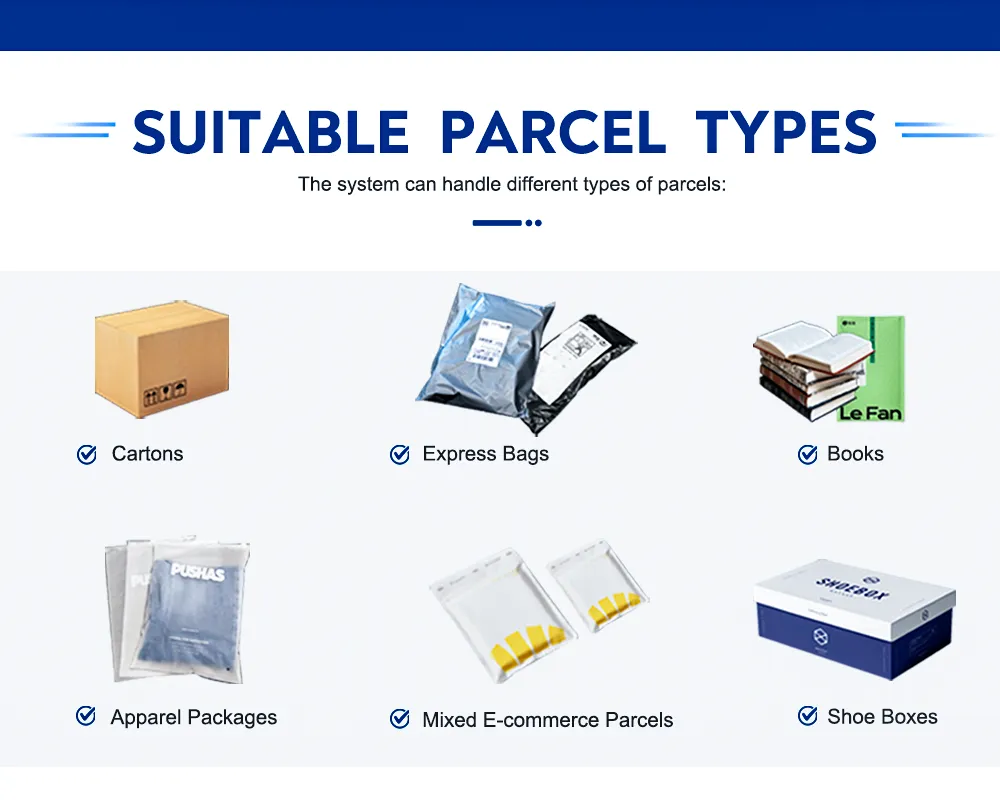
For highly deformable or unstable parcels, application testing is recommended before final equipment selection. Parcel center of gravity, bottom surface, dimensions and weight distribution can influence conveying and diverting stability.
03. Up to 50 kg Parcel Load: Suitable for Lightweight Orders and Heavier Cartons
The applicable reference configuration supports parcel loads from 0.05 to 50 kg.
This allows the sorter to handle more than small e-commerce packages and provides flexibility for fulfillment centers processing heavier cartons and mixed outbound shipments.
The final load capability should be confirmed according to parcel dimensions, weight distribution, carrier configuration and operating conditions.
04. Flexible 200 / 300 mm Carrier Pitch
The system provides 200 mm and 300 mm carrier pitch options.
The appropriate pitch should be selected according to:
- Minimum parcel dimensions
- Average parcel dimensions
- Maximum parcel dimensions
- Required parcel spacing
- Target throughput
- Destination density
A properly selected pitch helps balance sorting capacity with stable parcel handling.
05. Manual or Automatic Induction
Different fulfillment centers have different upstream processes.
The narrow belt sorter can support manual or automatic induction. For facilities with relatively simple upstream handling, operators can manually introduce parcels into the sorting line. For higher-volume operations, automatic induction can be connected with upstream conveyors and parcel-processing equipment to reduce manual handling and create a more continuous material flow.
06. Integration with WMS, WCS and DWS
For e-commerce fulfillment projects, the sorter is usually only one part of the overall automation system.
YJ-INTL can configure the sorting system for integration with:
- WMS — Warehouse Management System
- WCS — Warehouse Control System
- DWS — Dimensioning, Weighing and Scanning
- Barcode scanners
- PLC control systems
- Upstream conveyors
- Downstream takeaway conveyors
This enables parcel information, sorting instructions and equipment status to work together within the warehouse automation architecture.
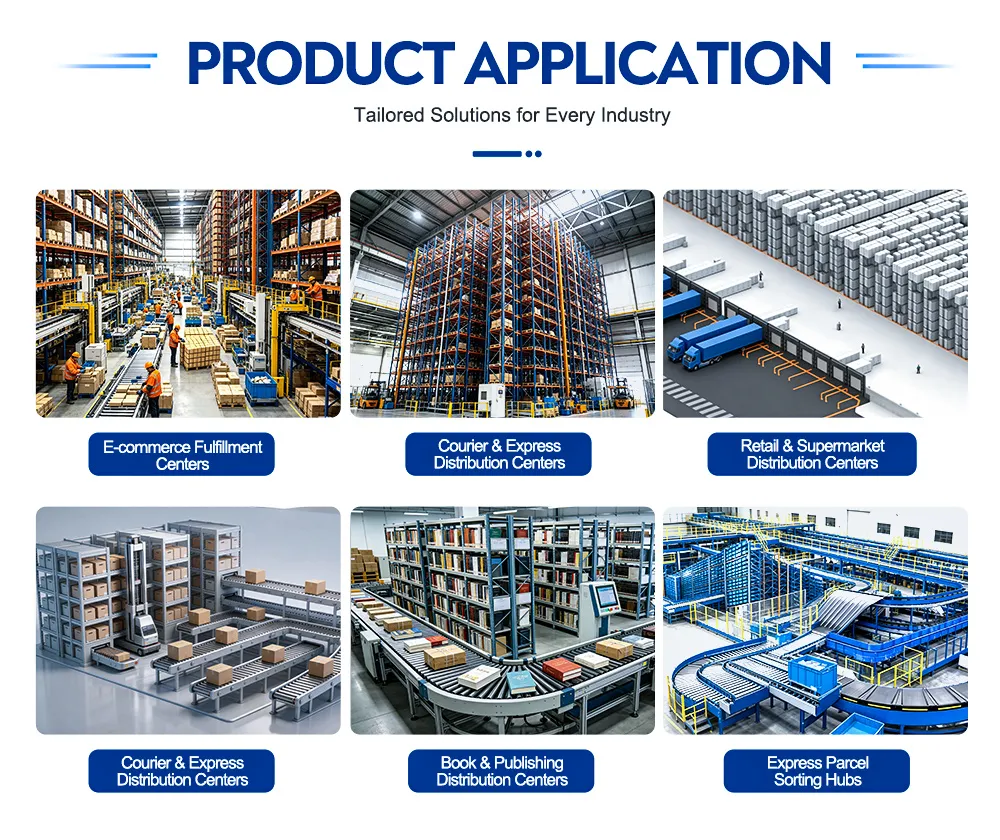
Applications
E-Commerce Fulfillment Centers
Sort high-volume outbound orders according to carrier, destination, shipping service or consolidation requirements.
The system is particularly suitable for fulfillment centers handling mixed parcel sizes and multiple outbound lanes.
Courier & Express Hubs
Automate parcel distribution by delivery region, service station, route or destination.
The continuous sorting process helps reduce dependence on manual parcel routing in high-volume hubs.
3PL Fulfillment Warehouses
Support multiple customers and changing outbound requirements with a configurable sorting layout.
Destination quantities, induction methods and downstream connections can be designed according to the operational requirements of different clients.
Retail Distribution Centers
Sort cartons and parcels for store replenishment, outbound distribution and regional consolidation.
Parcel Distribution Hubs
Use automated sorting to organize parcels before regional transportation or last-mile delivery.
FAQ
A narrow belt sortation system is an automated parcel sorting solution that combines continuous conveying with controlled lateral diversion. Parcels are identified, tracked and routed to designated destinations through a configurable sorting line. YJ-INTL positions the system for express logistics, e-commerce, 3PL and distribution operations.
YJ-INTL reference configurations provide approximately 8,000–12,000 parcels per hour. Actual throughput depends on parcel dimensions, weight, spacing, induction rate, destination distribution, sorting configuration and downstream capacity.
The system can be configured for cartons, e-commerce parcels, polybags, soft packages, flat pieces, sacks, large parcels, mixed-size packages and suitable irregular parcels. Unstable or unusually shaped packages should be evaluated through application testing before final design.
The reference rated load is up to 50 kg per parcel, with a stated range of 0.05–50 kg for the applicable configuration. Final load capability should be confirmed against parcel dimensions, center of gravity, bottom surface and operating conditions.
The reference maximum sortable parcel size is up to 1200 × 900 × 700 mm. Actual compatibility also depends on parcel shape, weight distribution, orientation and conveying stability.
The system supports 200 mm and 300 mm carrier pitch configurations. Pitch selection should be based on parcel dimensions, required throughput, spacing and sorting density.
Reference belt-width options are 800 mm and 1000 mm. The final width should be selected according to parcel dimensions, required capacity and the warehouse layout.
The reference operating speed is approximately 2–2.5 m/s. The final operating speed depends on the selected equipment configuration, parcel characteristics, induction rate and required sorting performance.
Yes. The system can be configured with manual or automatic induction. Automatic induction can be combined with upstream conveyors or parcel-processing equipment where a higher level of automation is required.
Yes. The sorting line can be integrated with barcode identification, DWS, PLC, WCS and WMS according to project requirements. A typical workflow is Induction → Identification → Tracking → Sorting Decision → Diversion → Destination.
The number of destinations is project-specific. It is determined by the required outbound lanes, parcel volume distribution, available floor space, chute arrangement and overall sorting layout.
A reference installation footprint is approximately 100–500 m² for applicable configurations. Actual floor-space requirements depend on line length, destination quantity, induction and discharge areas, operator space and upstream/downstream equipment.
A reference labor requirement is approximately 4–5 operators for the applicable configuration. Actual staffing depends on induction automation, destination handling, exception handling and the level of upstream and downstream automation.
Yes. YJ-INTL can engineer the line around throughput, parcel dimensions, parcel weight, carrier pitch, belt width, induction method, destination quantity, chute arrangement, warehouse layout and system-integration requirements.
For preliminary engineering, provide average and peak parcel volume, parcel dimensions and weight range, parcel types, number of destinations, warehouse layout or CAD drawing, induction method, barcode information, existing conveyors and DWS/WMS/WCS requirements.
Actual throughput is determined by the complete material-flow system rather than the sorter speed alone. Parcel dimensions, weight, spacing, induction rate, destination distribution, identification performance, carrier pitch and downstream capacity all affect the achievable throughput. The 8,000–12,000 PPH figure should therefore be treated as a reference range rather than a universal guarantee.