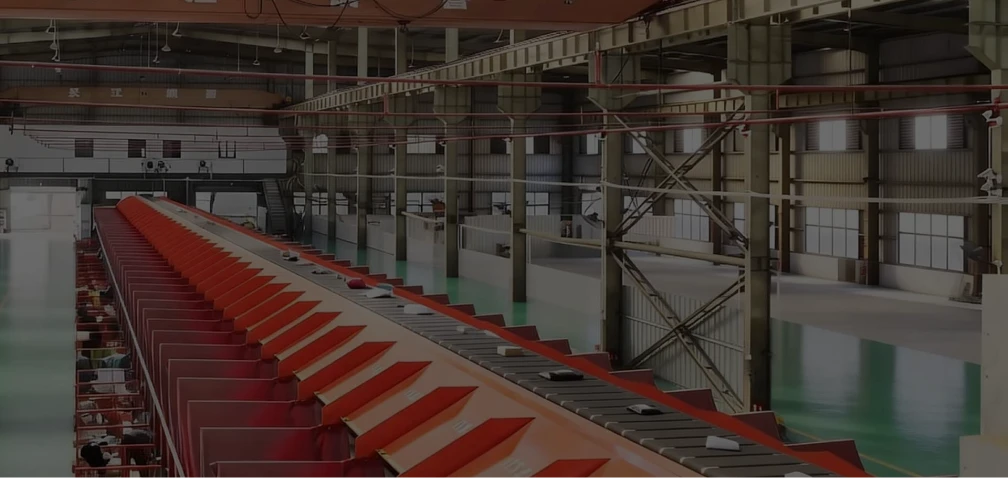
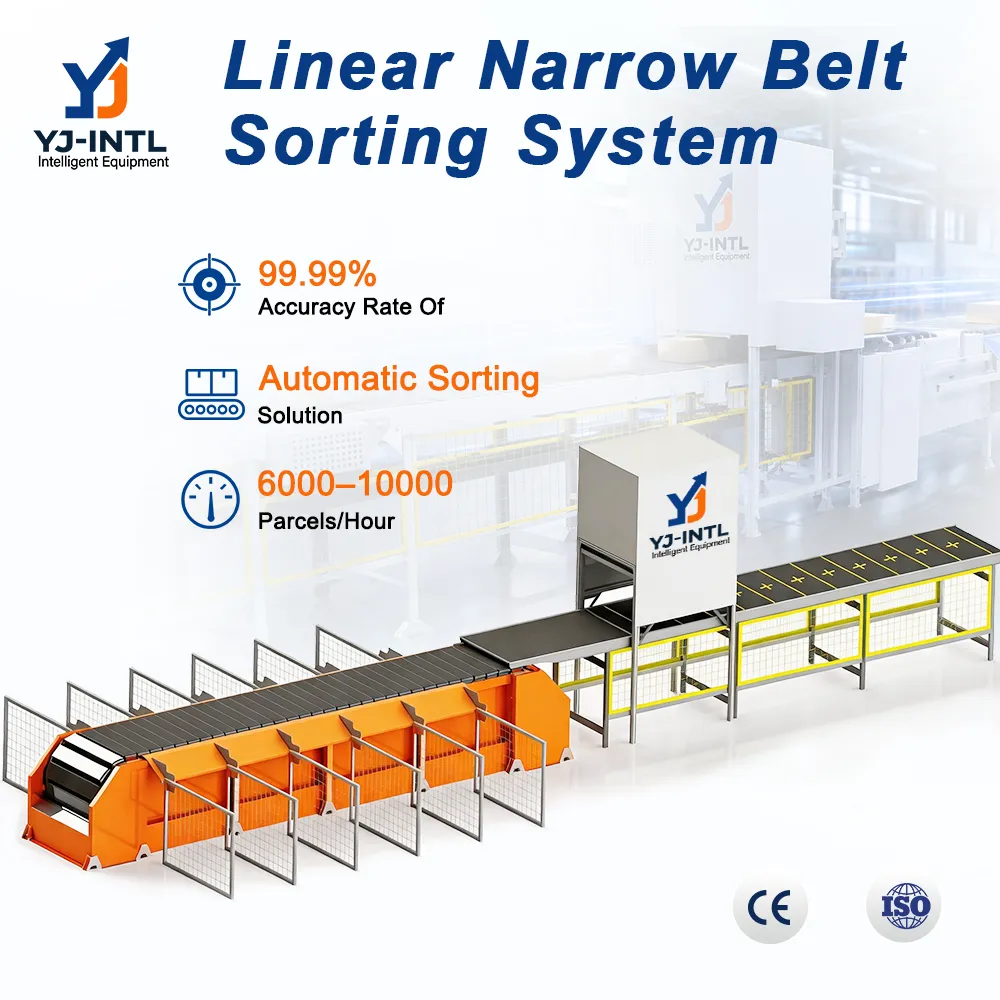
Modular-design narrow-belt sorting system
Dual-Side Narrow Belt Sorter for Express Hubs
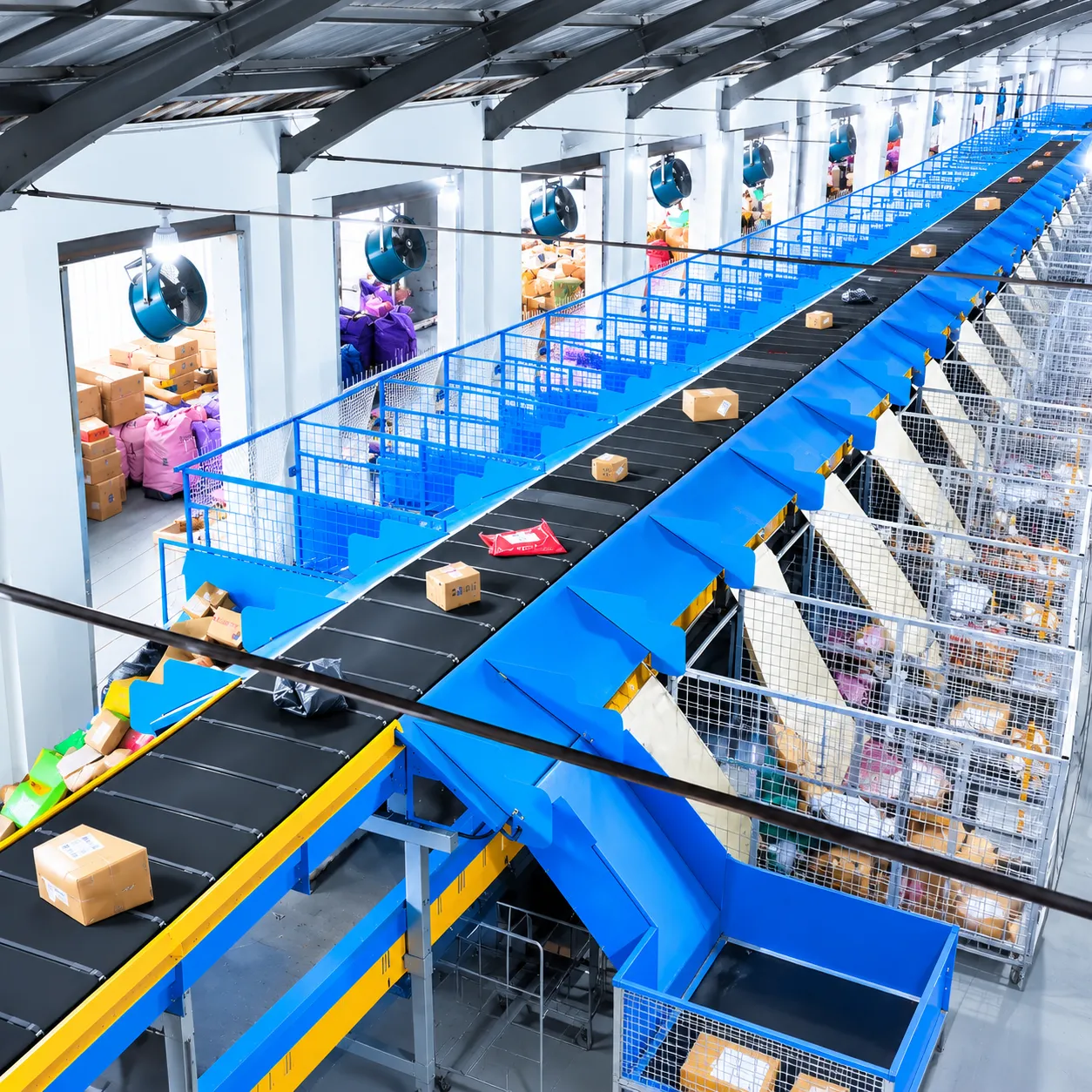
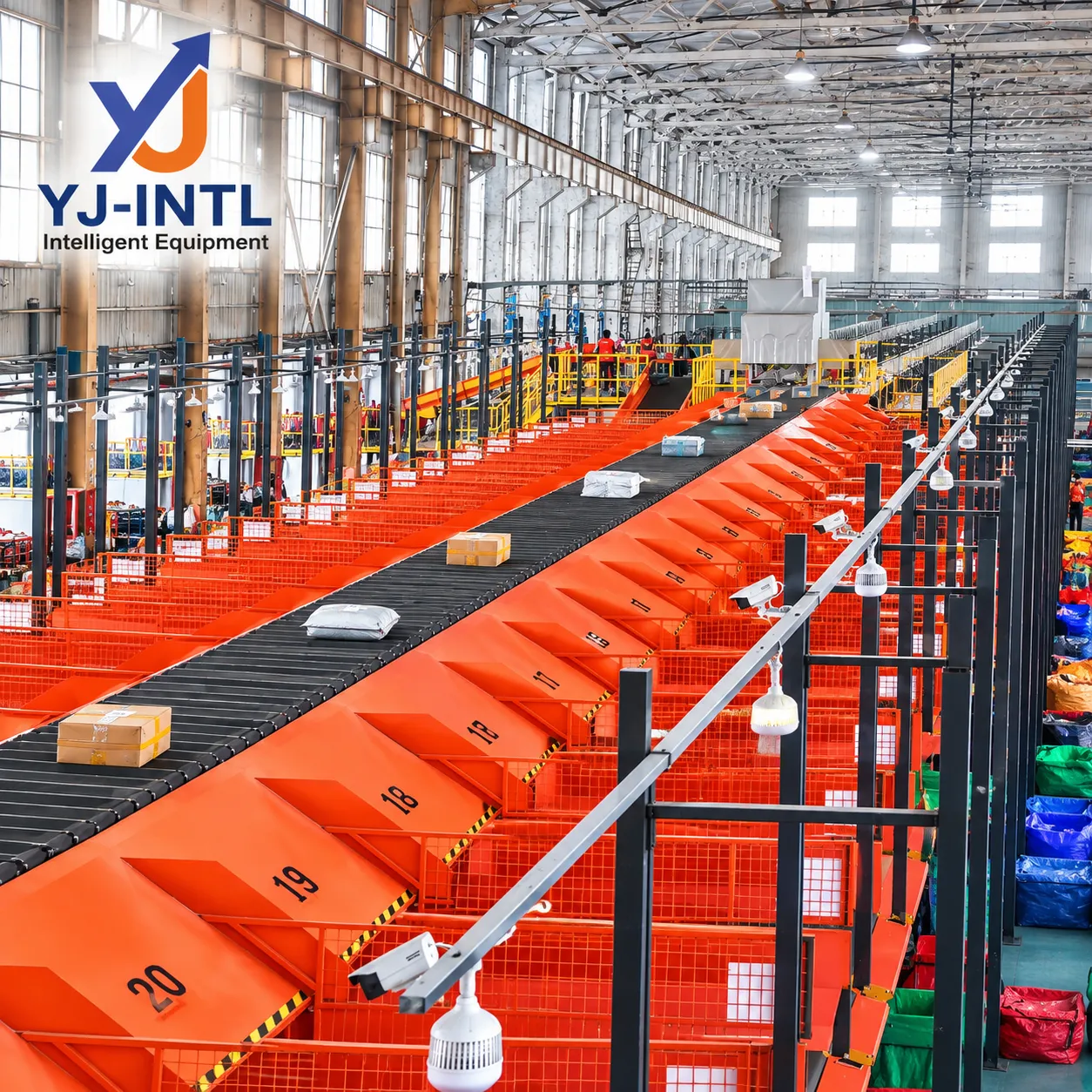
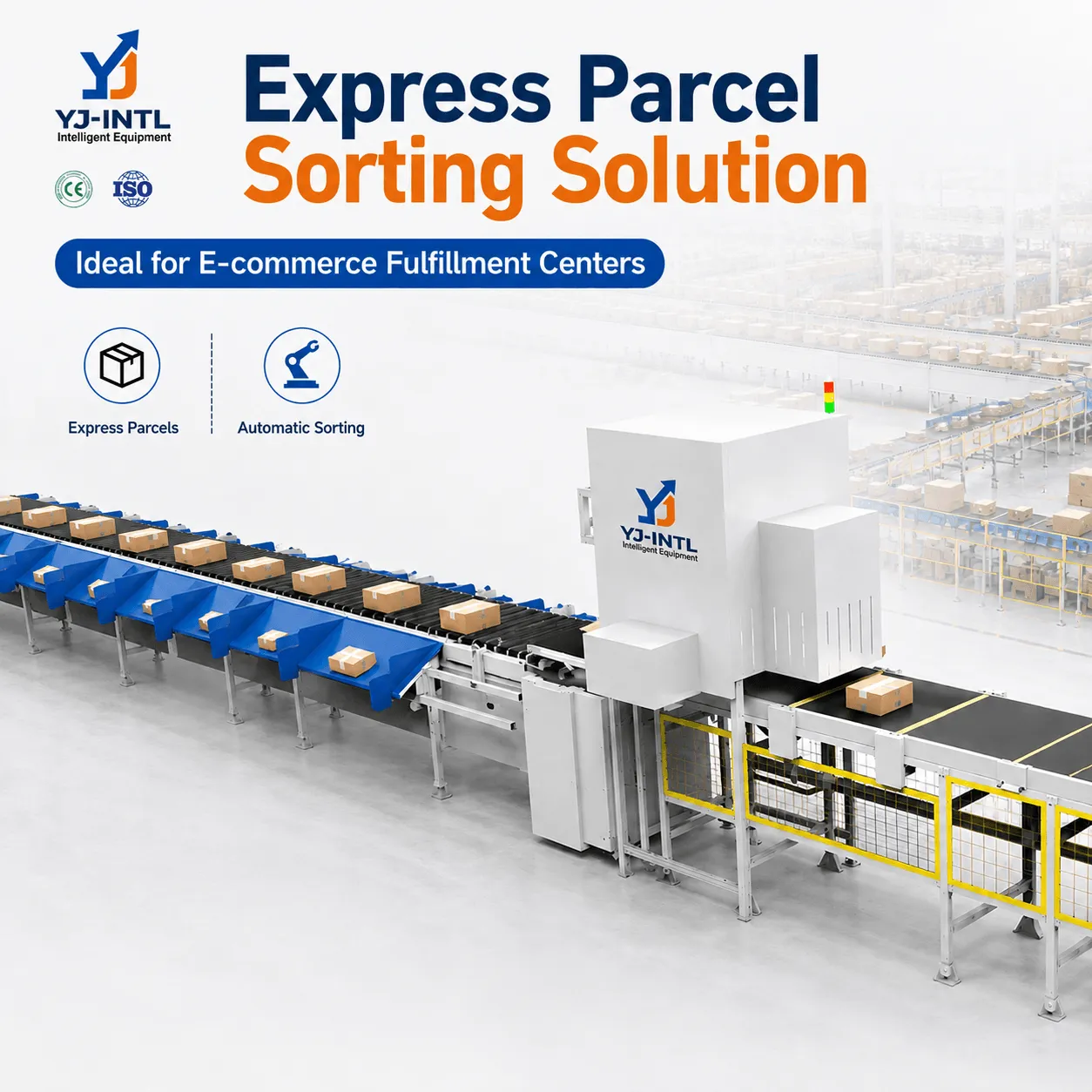
The YJ-INTL Dual-Side Narrow Belt Sorter is designed for parcel distribution environments where a large number of destinations must be arranged along a single continuous sorting line.
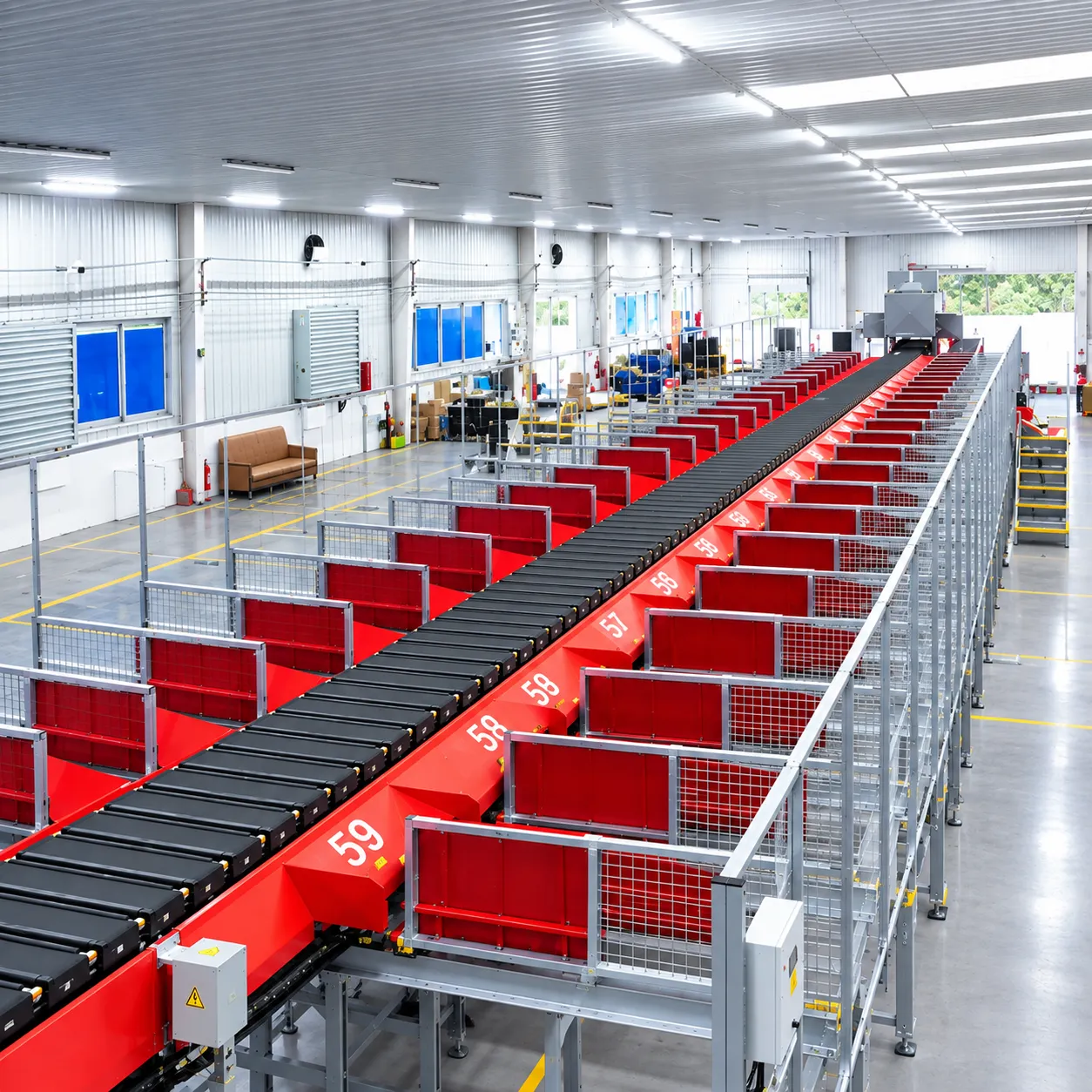
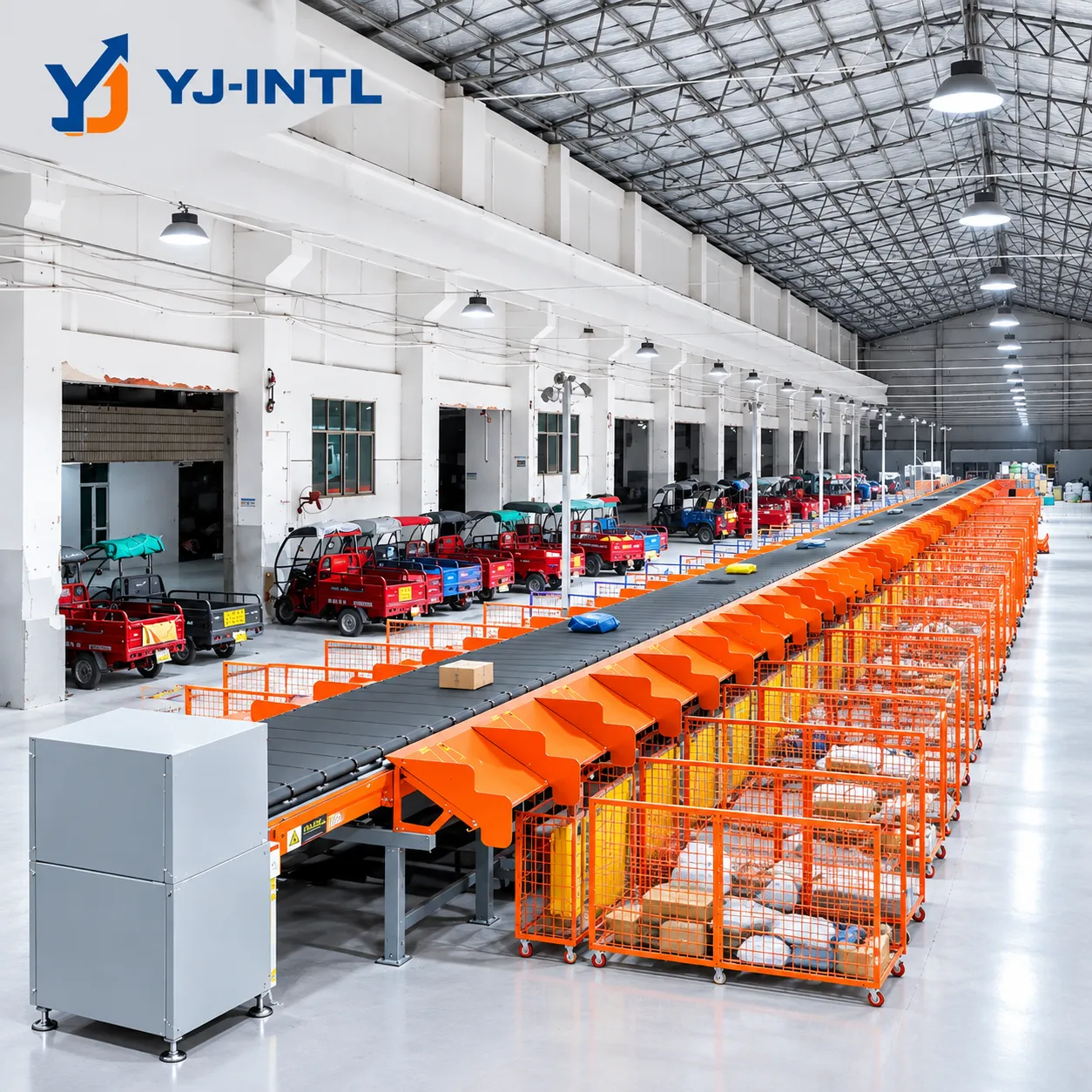
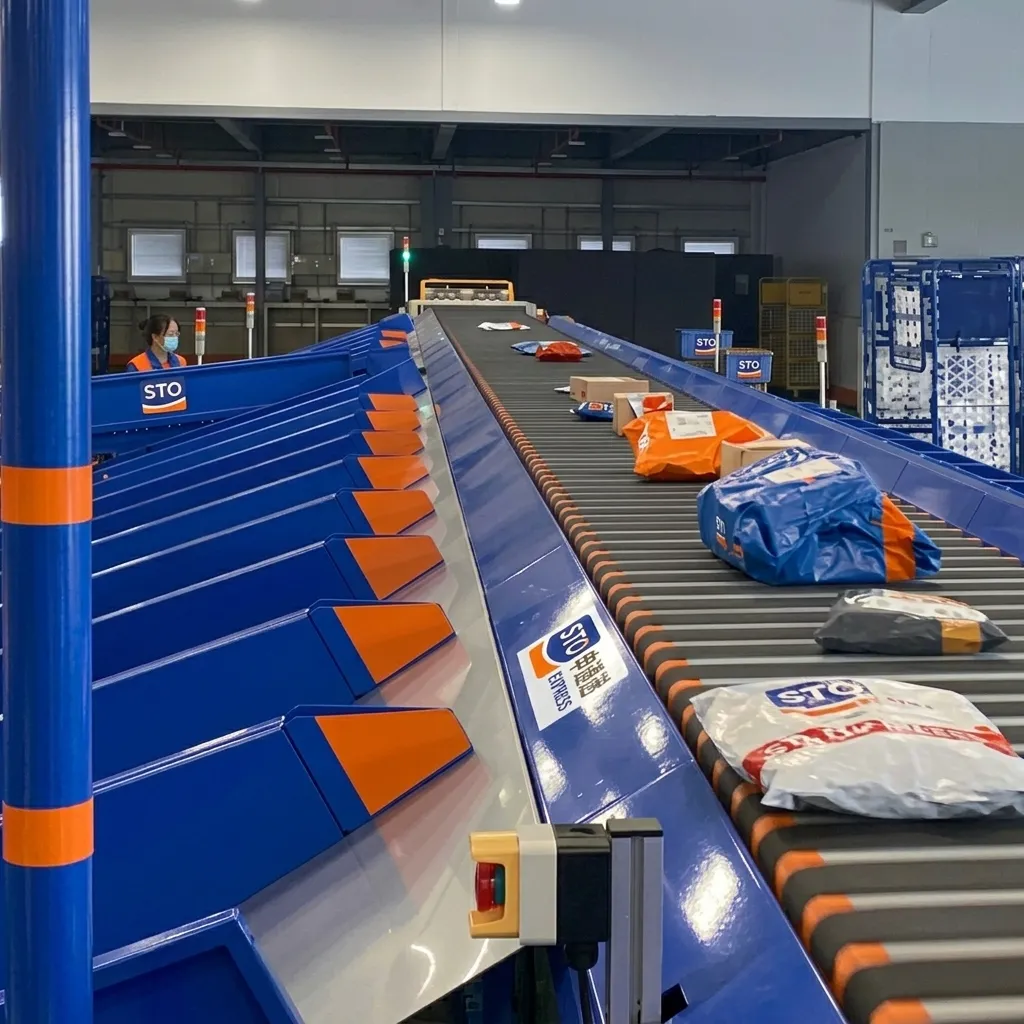
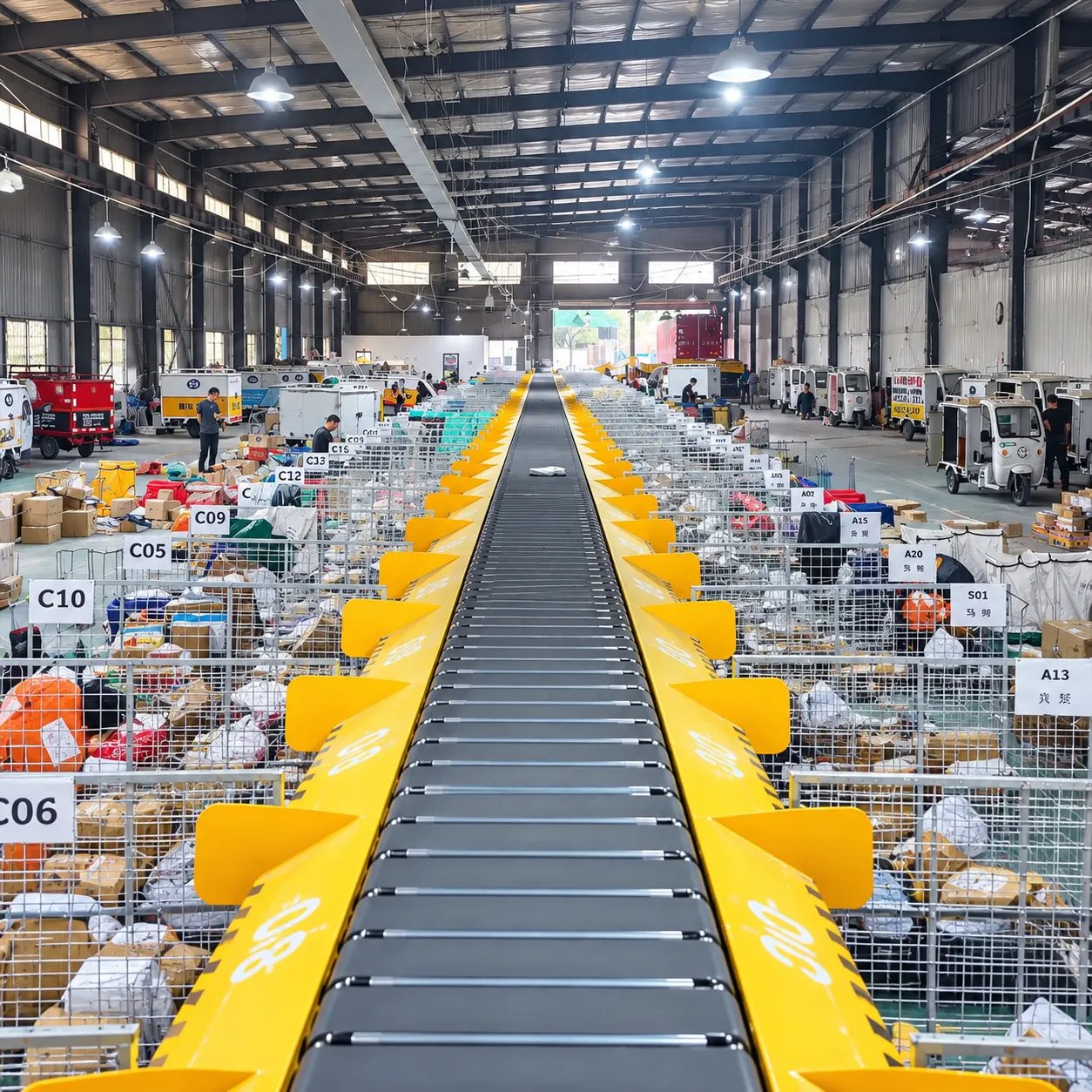
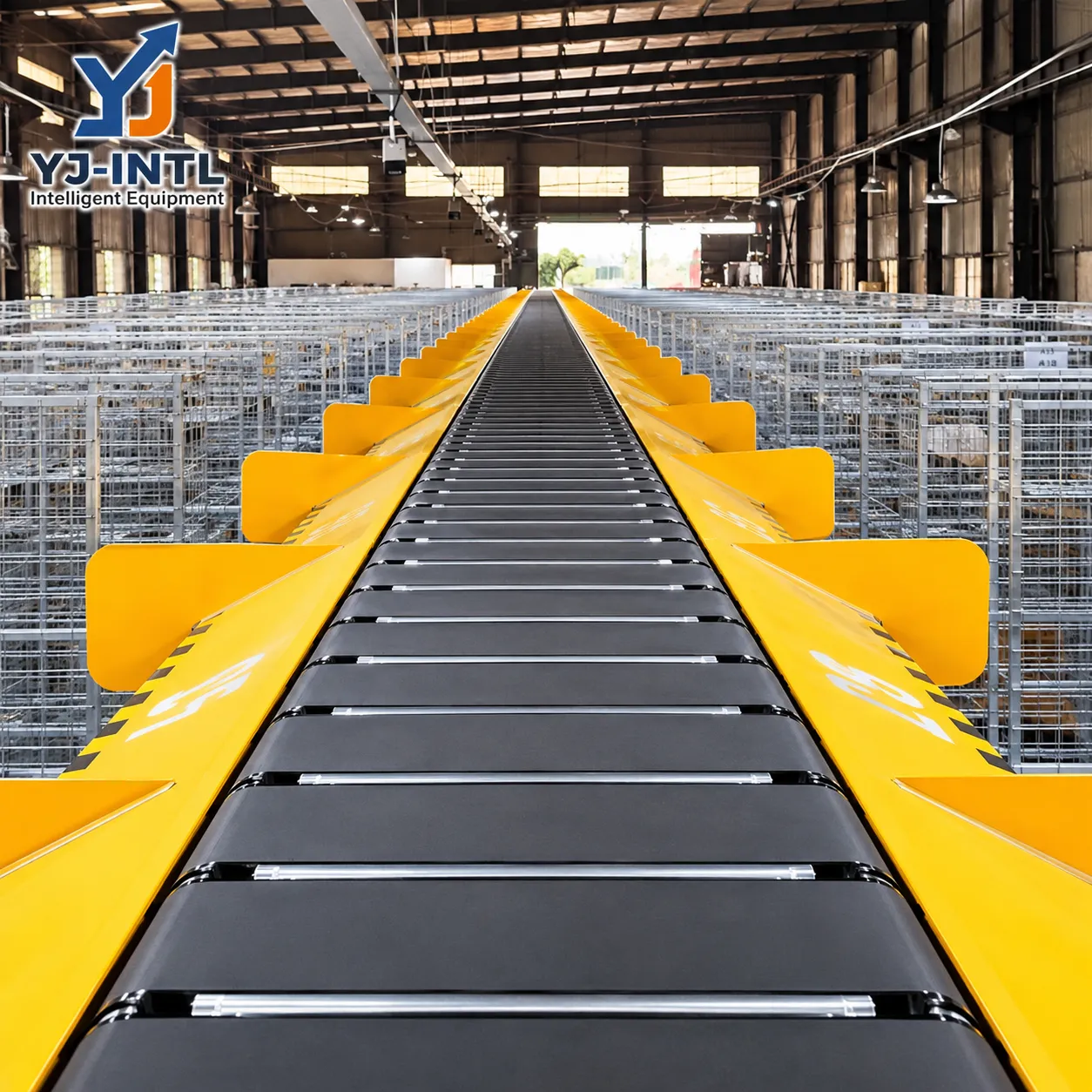
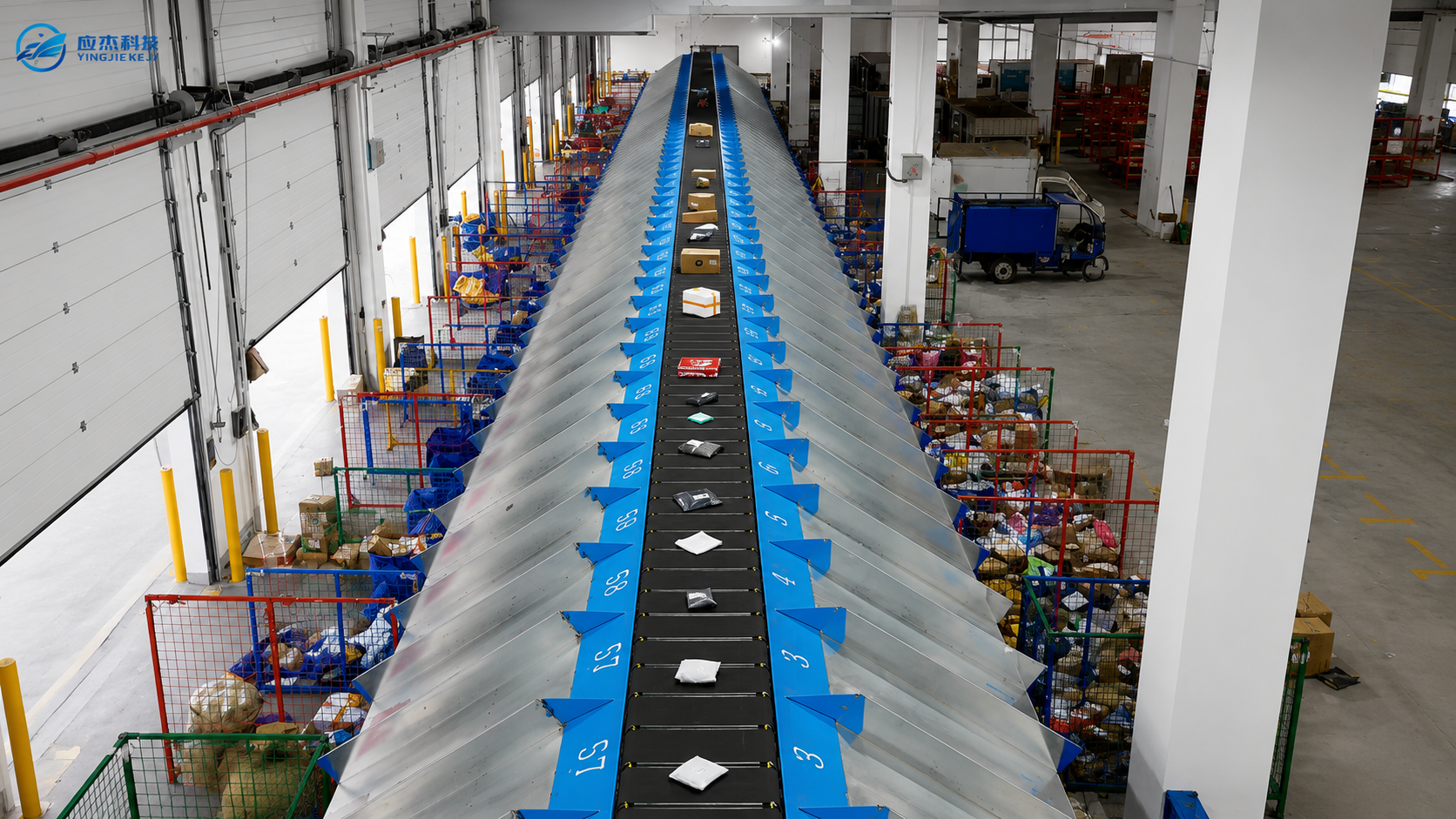
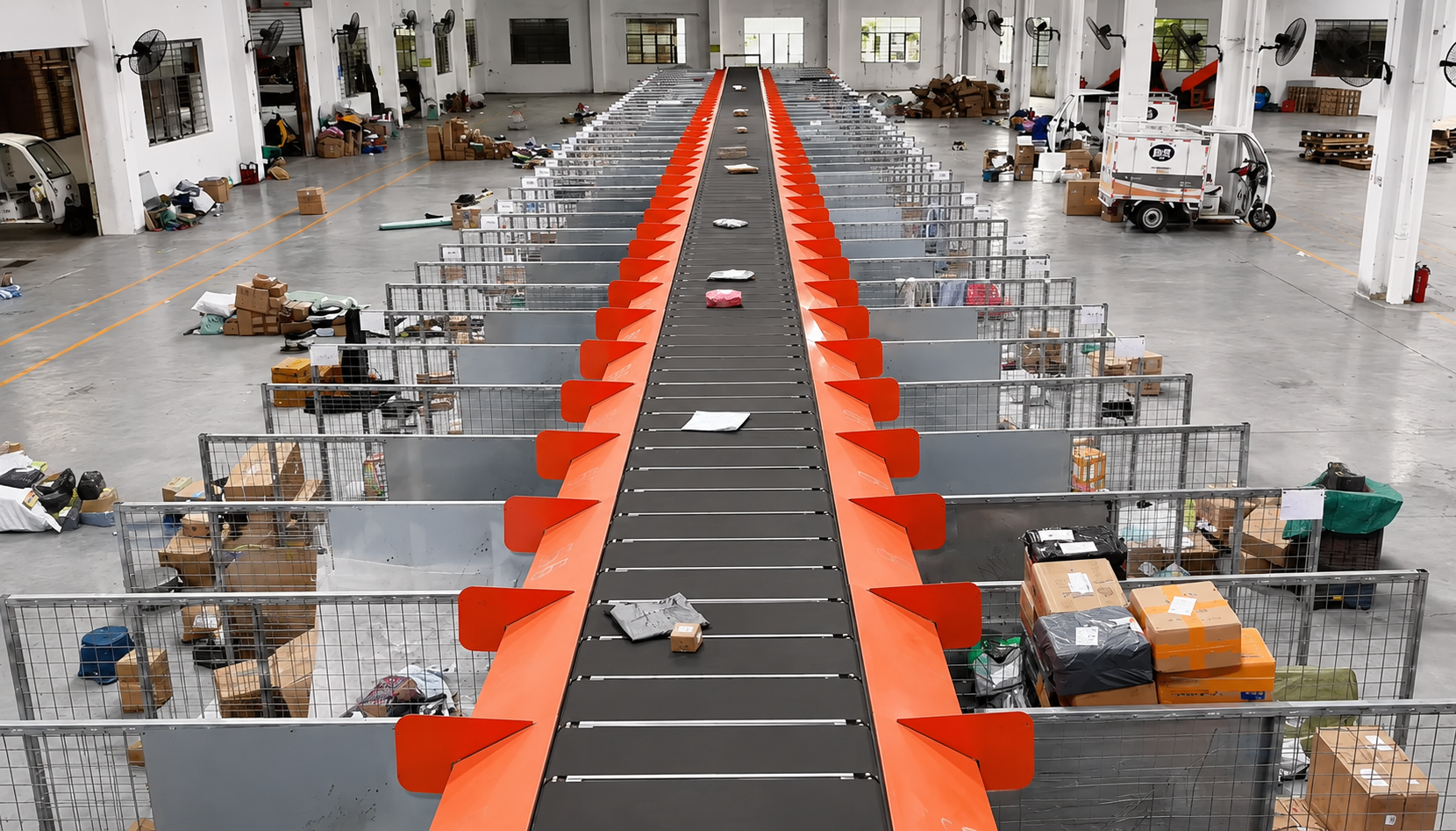
The system uses a central narrow-belt conveying line with sorting destinations positioned on both sides. As parcels move through the sorting section, the control system identifies each item and directs it toward the assigned destination, allowing one main line to serve a high number of outbound lanes.
- Dual-Side Parcel Discharge
- High-Density Destination Layout
- 7,000–10,000 Parcels/Hour Reference
- 2.0–2.5 m/s Operating Speed
- 200 / 300 mm Carrier Pitch
- Up to 50 kg per Parcel
- Express Hub-Oriented Configuration
Technical Parameters
| Category | Parameter | Reference Value |
|---|---|---|
| Equipment | Product Type | Dual-Side Narrow Belt Sorter |
| Equipment | Sorting Capacity | 7,000–10,000 parcels/hour |
| Equipment | Operating Speed | 2.0–2.5 m/s |
| Equipment | Carrier Pitch | 200 / 300 mm |
| Parcel | Parcel Weight | 0.05–50 kg |
| Parcel | Maximum Parcel Size | Up to 1,200 × 900 × 700 mm |
| Identification | Barcode Recognition | Up to 99.99% reference |
| Identification | Identification Options | Barcode / DWS / OCR |
| Sorting | Discharge Direction | Left / Right |
| Sorting | Sorting Method | Automated Lateral Diversion |
| Sorting | Destination Layout | Dual-Side / Customized |
| Induction | Feeding Method | Manual / Automatic |
| Control | Controller | PLC / Sorting Controller |
| Integration | Warehouse System | WMS / WCS |
| Layout | Reference Floor Space | Approx. 100–500 m² |
| Operation | Labor Reference | Approx. 4–5 operators |
| Application | Main Industries | Express / E-Commerce / 3PL / Distribution |
Details
Product Overview
The YJ-INTL Dual-Sided Narrow-Belt Sorter is specifically designed for parcel distribution scenarios, making it ideal for operations requiring a large number of sortation exits (destinations) along a single continuous sortation line.
The system features a central narrow-belt conveyor line with sortation exits arranged on both sides. As parcels pass through the sortation zone, the control system identifies each item and directs it to the designated exit, enabling a single main line to serve numerous outbound lanes.
This configuration is particularly well-suited for express delivery hubs, regional parcel distribution centers, transit stations, and high-volume third-party logistics (3PL) facilities—environments where space utilization, exit density, and continuous parcel throughput are critical design considerations. The equipment can be integrated into a comprehensive sortation system, encompassing induction, barcode identification, DWS (Dynamic Weighing and Scanning), sortation control, discharge chutes, and downstream consolidation equipment. The YJ-INTL narrow-belt sorter product line supports automatic lateral diversion, barcode/DWS identification, and integration with WMS/WCS systems.
Product Advantages
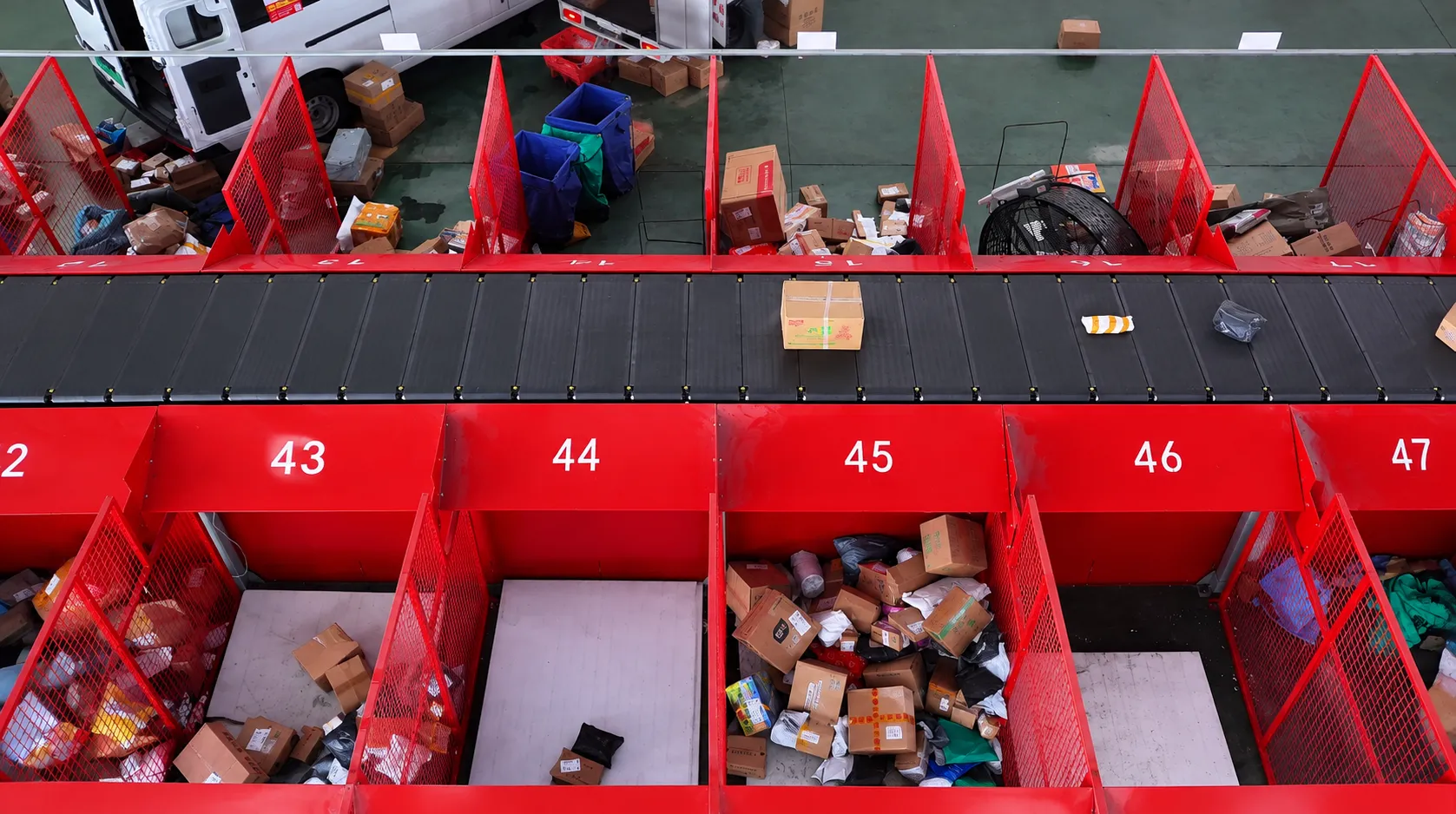
01. Two-Sided Destination Access
Sorting destinations can be positioned on both sides of the central conveyor, making the system suitable for dense destination layouts.
02. Better Use of Linear Space
Destinations are distributed along the length of the sorting line instead of concentrating all discharge equipment at one location.
03. Continuous Automated Routing
Parcels remain in a controlled automated flow from identification through final destination discharge.
04. Adaptable Destination Layout
The number and position of destinations can be engineered according to the customer's routing structure and available warehouse space.
05. Suitable for High-Volume Parcel Operations
The reference configuration supports up to 7,000–10,000 parcels/hour, depending on parcel profile and system configuration.
Application Scenarios
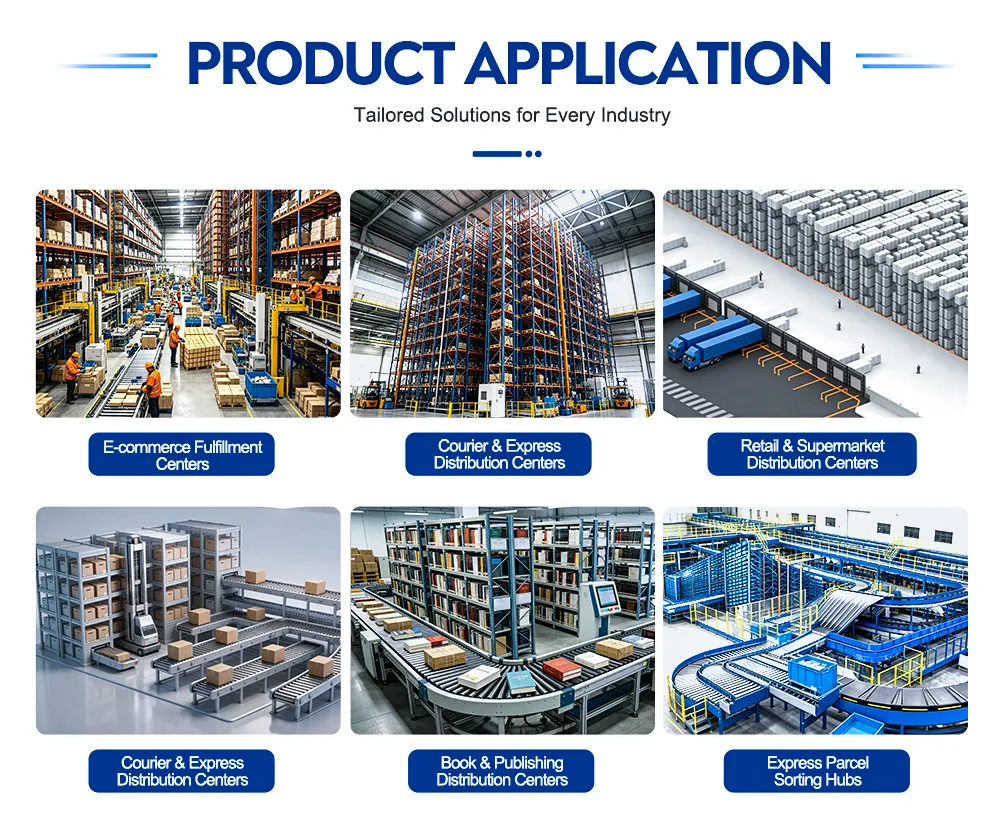
Express Sorting Hubs
High-density destination sorting for regional and national courier networks.
Parcel Transfer Centers
Separate inbound parcels into different outbound routes or distribution stations.
E-Commerce Distribution Centers
Sort orders by carrier, region, service level or dispatch destination.
3PL Distribution Facilities
Create different destination groups for multiple customers or shipping networks.
Retail Distribution
Sort store replenishment cartons into different stores or regional distribution routes.
FAQ
A dual-side narrow belt sorter is an automated parcel sorting system in which destination discharge points are arranged on both sides of a central narrow-belt sorting line. Parcels are identified and automatically diverted toward their assigned destination.
Two-sided discharge allows more destination points to be arranged along one main sorting line. This configuration can increase destination density and make more efficient use of the available floor area.
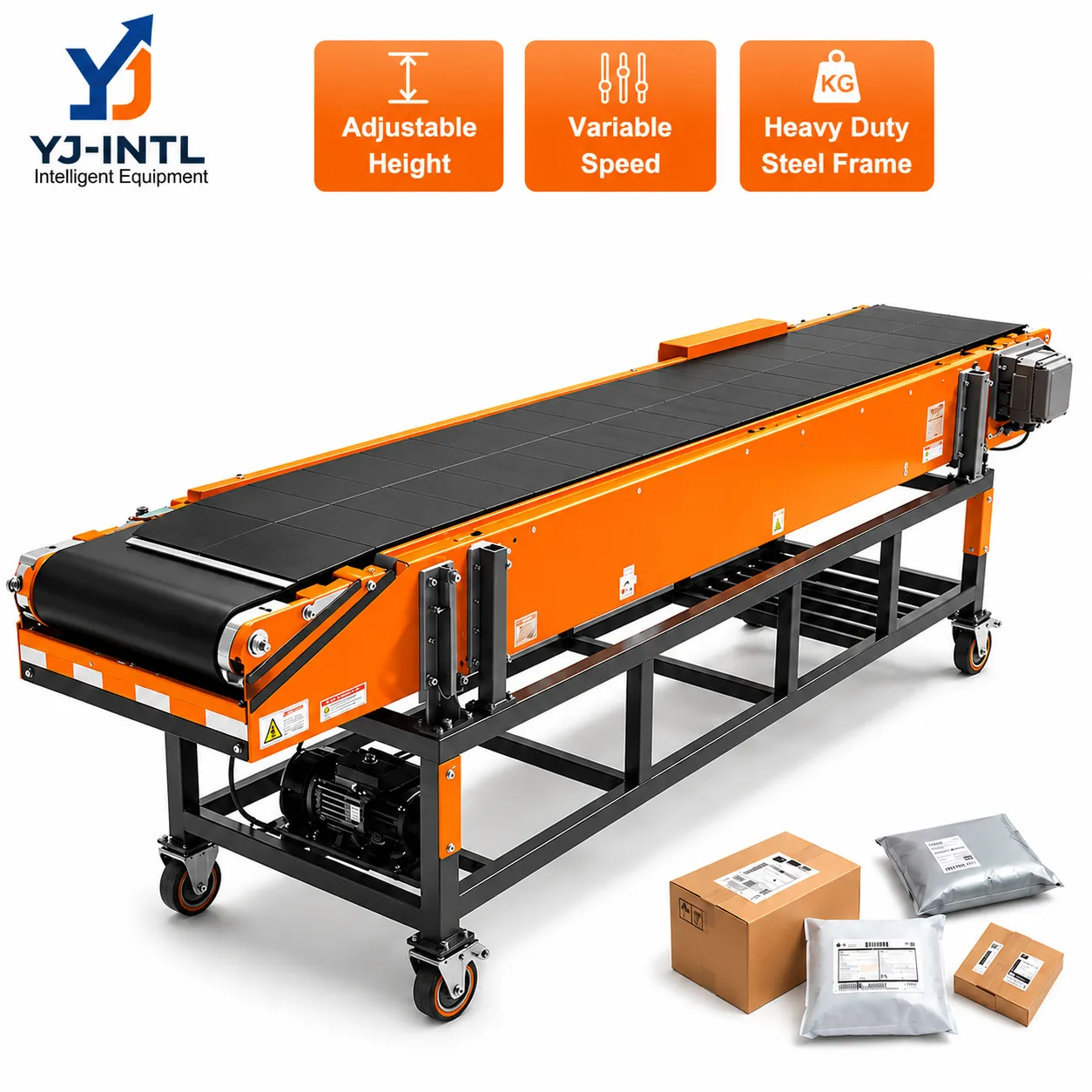
The system can be configured for cartons, polybags, soft parcels, flat packages and mixed e-commerce or express parcels within the specified operating envelope. Irregular or unstable parcels should be tested before final equipment selection.
The reference configuration provides approximately 7,000–10,000 parcels per hour. Actual throughput depends on parcel dimensions, spacing, induction performance, destination distribution and downstream handling capacity.
The destination quantity is project-dependent. It is determined by parcel volume, sorting destinations, available line length, chute spacing and the customer's warehouse layout.
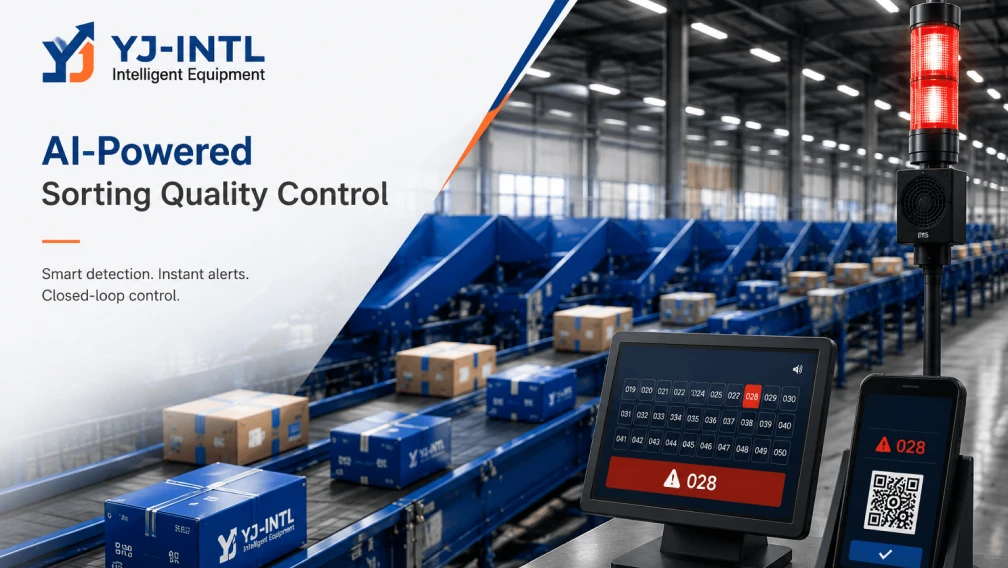
Yes. Barcode scanners and DWS equipment can be integrated into the upstream identification process so that parcel information can be used by the sorting control system.
Yes. The system can be integrated with WMS, WCS and other warehouse control or enterprise systems according to the project's communication and data-interface requirements.
Yes. Its dual-side discharge layout is particularly suitable for express hubs and parcel distribution centers that need to route large numbers of parcels into multiple outbound destinations.
Yes. The sorter length, carrier configuration, destination positions, chute arrangement, induction system and upstream/downstream conveyors can be engineered according to the project.
For preliminary engineering, provide parcel size and weight ranges, average and peak throughput, number of destinations, warehouse layout, inbound/outbound locations, barcode information, DWS requirements and WMS/WCS interface requirements.