Narrow Belt Sorter
Narrow Belt Sorter | High-Speed Automated Parcel Sorting System
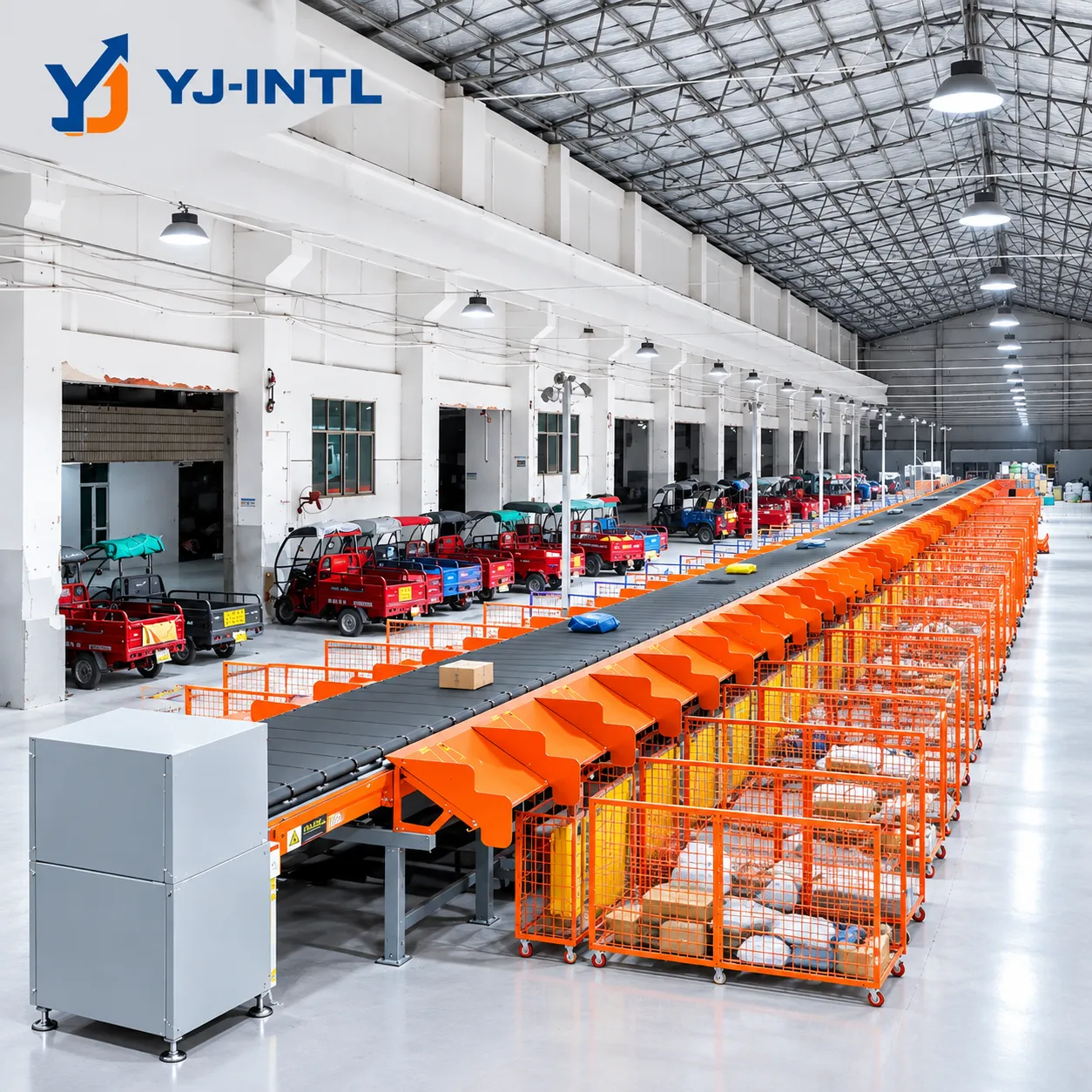
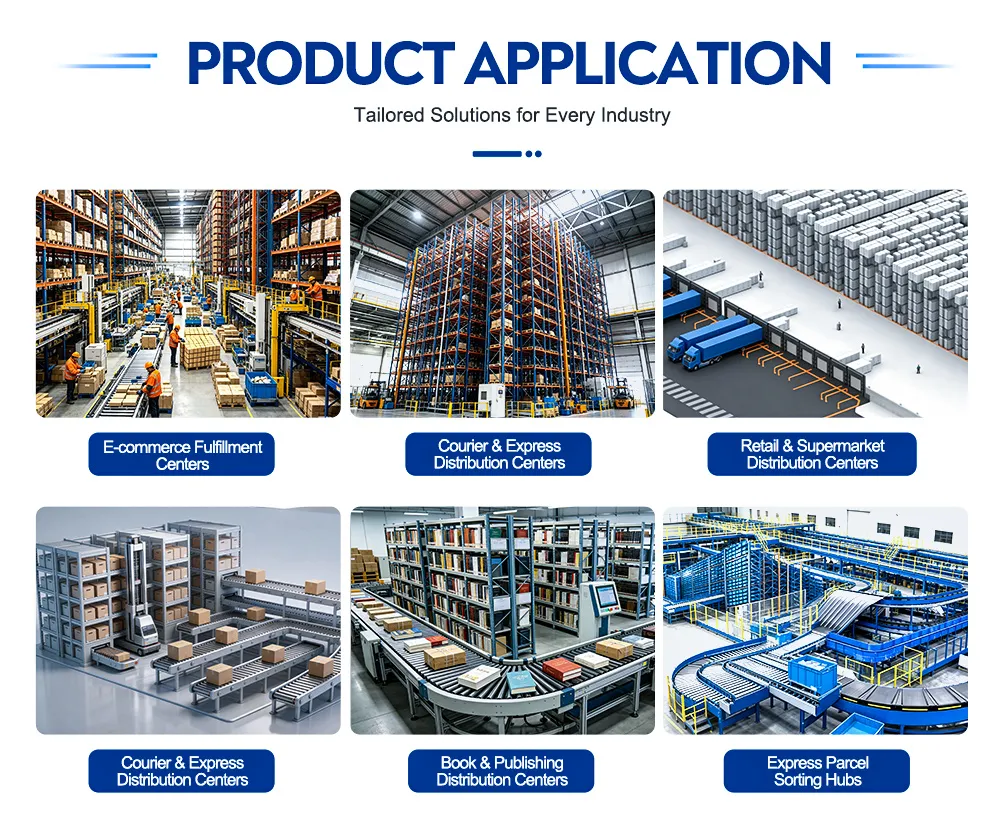
YJ-INTL Narrow Belt Sorter is an automated parcel sortation system designed for logistics hubs, e-commerce fulfillment centers, courier networks, 3PL warehouses and distribution operations. The system combines continuous conveying, parcel identification, intelligent control and automated destination sorting to reduce manual handling and create a more consistent parcel flow.
- 6,000–12,000 Parcels/Hour
- Up to 50 kg per Parcel
- Up to 99.99% Sorting Accuracy
- 800 / 1000 mm Belt Width
- 200 / 300 mm Carrier Pitch
- Manual or Automatic Induction
- WMS / WCS / DWS Integration
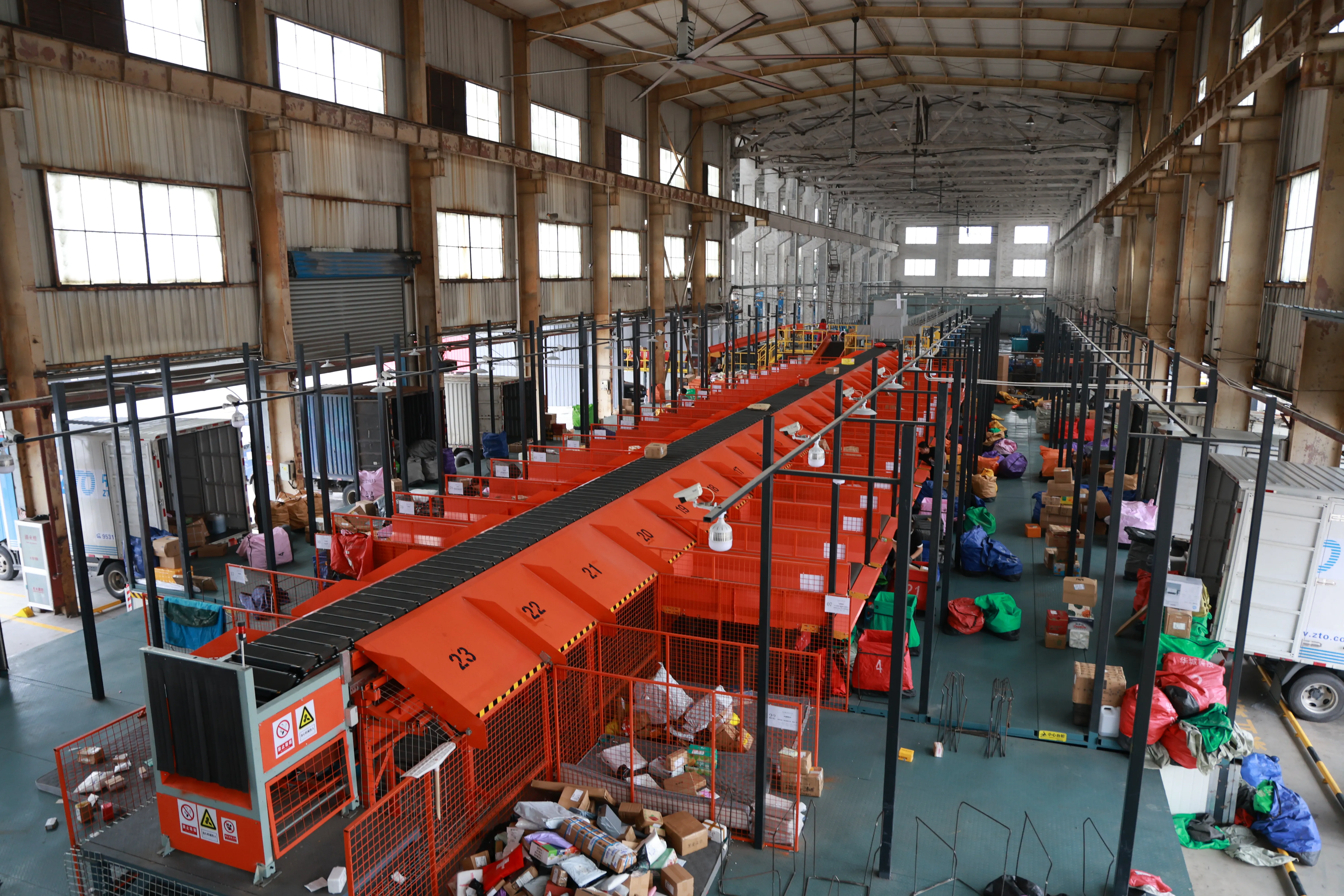
YJ-INTL Narrow Belt Sorter Technical Specifications
| Parameter | Specification | Parameter | Specification |
|---|---|---|---|
| Product Name | Narrow Belt Sorter | Brand | YJ-INTL |
| Sorting Capacity | 6,000–12,000 parcels/hour | Sorting Accuracy | ≥99.99% |
| Operating Speed | 2–2.5 m/s | Carrier Pitch | 200 / 300 mm |
| Belt Width | 800 / 1000 mm* | Maximum Load | Up to 50 kg |
| Package Size | Up to 1200 × 1000 × 1000 mm | Belt Material | Carbon Steel |
| Standard Height | 200 / 300 / 400 / 500 / 600 mm | Voltage | 110V / 220V / 380V |
| Induction | Manual / Automatic | Operation Mode | Automatic Sorting |
| Identification | Barcode / OCR / DWS | Control | PLC / WCS |
| System Integration | WMS / WCS / ERP / MES | Application | Logistics / E-commerce / Retail / Manufacturing |
| Floor Space | Approx. 100–500 m² | Labor | Approx. 2–5 operators |
| Warranty | 1 Year | Origin | China |
Details
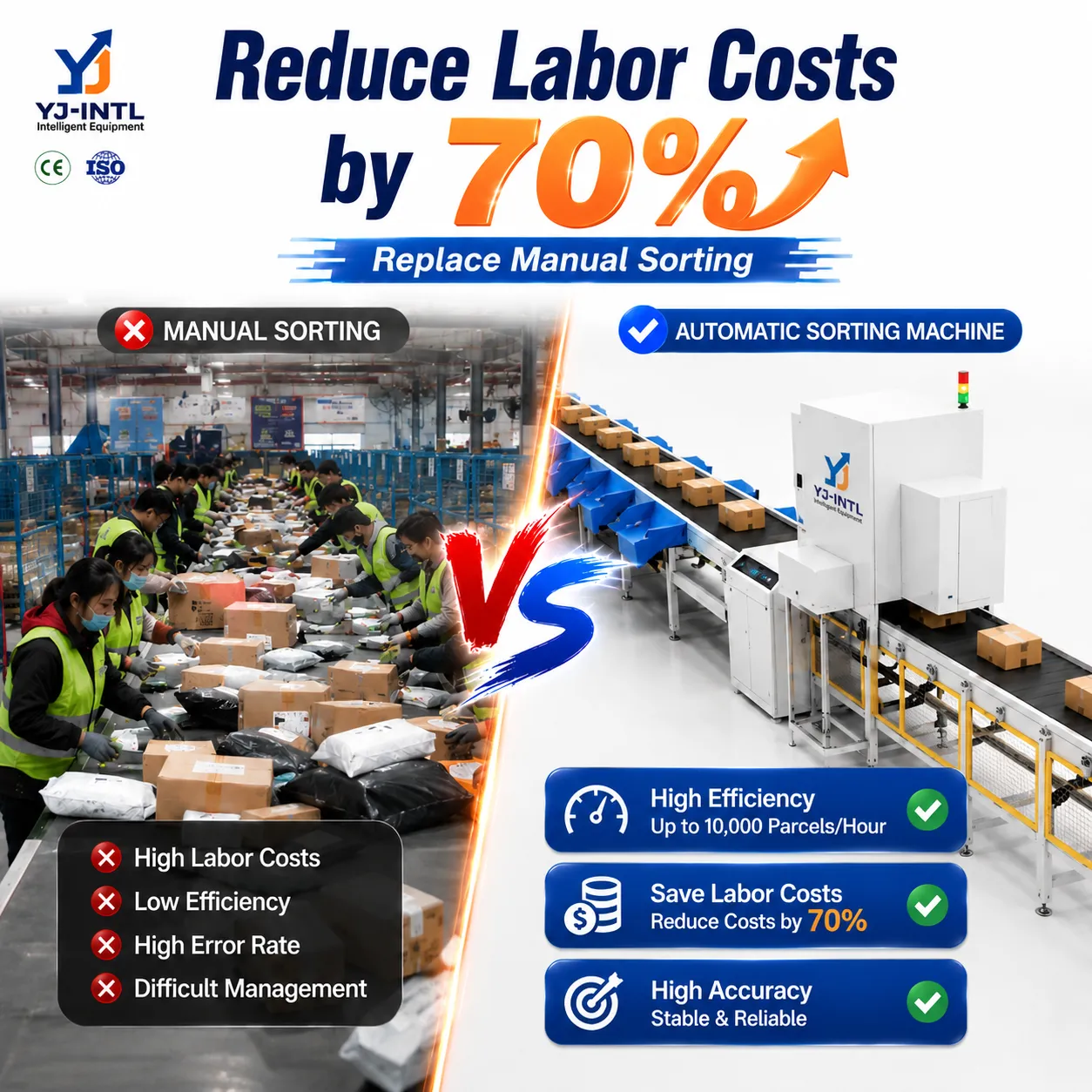
High-Speed Sorting Built Around Your Operation
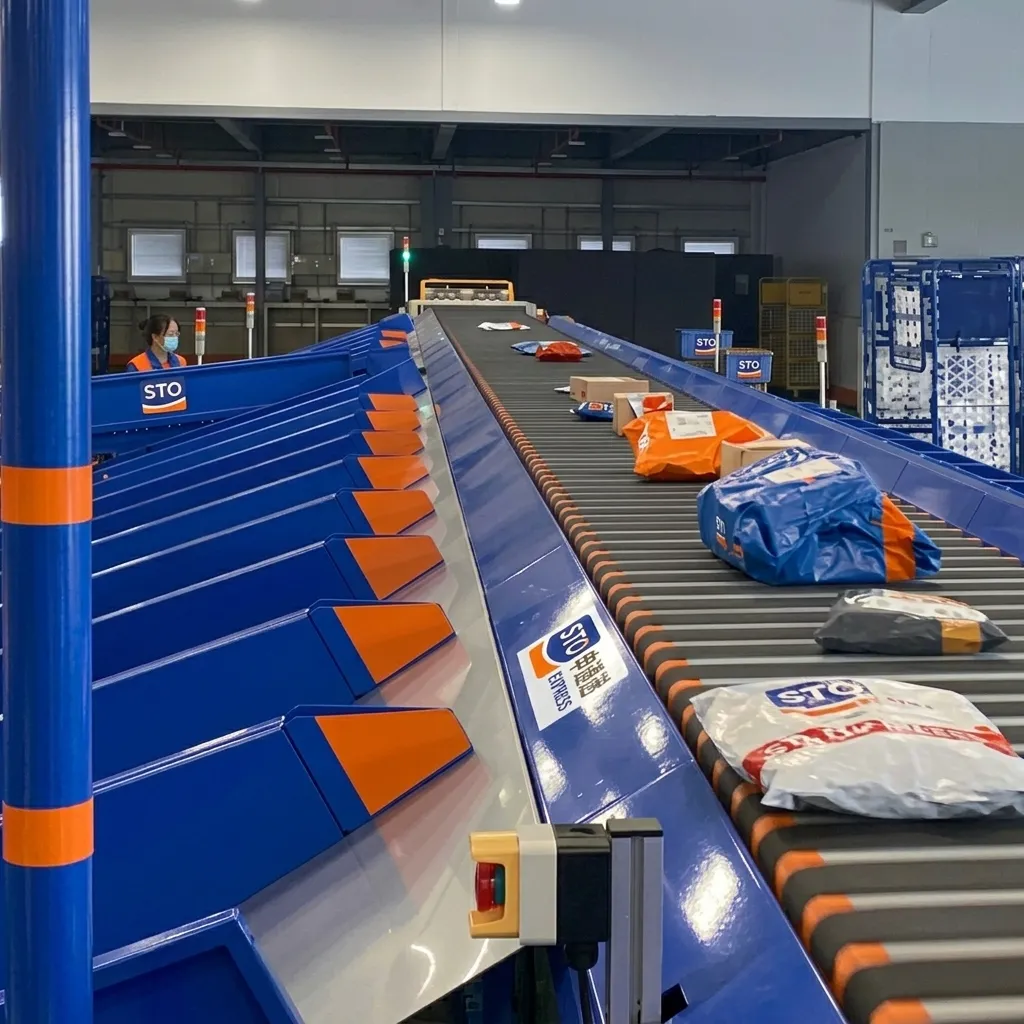
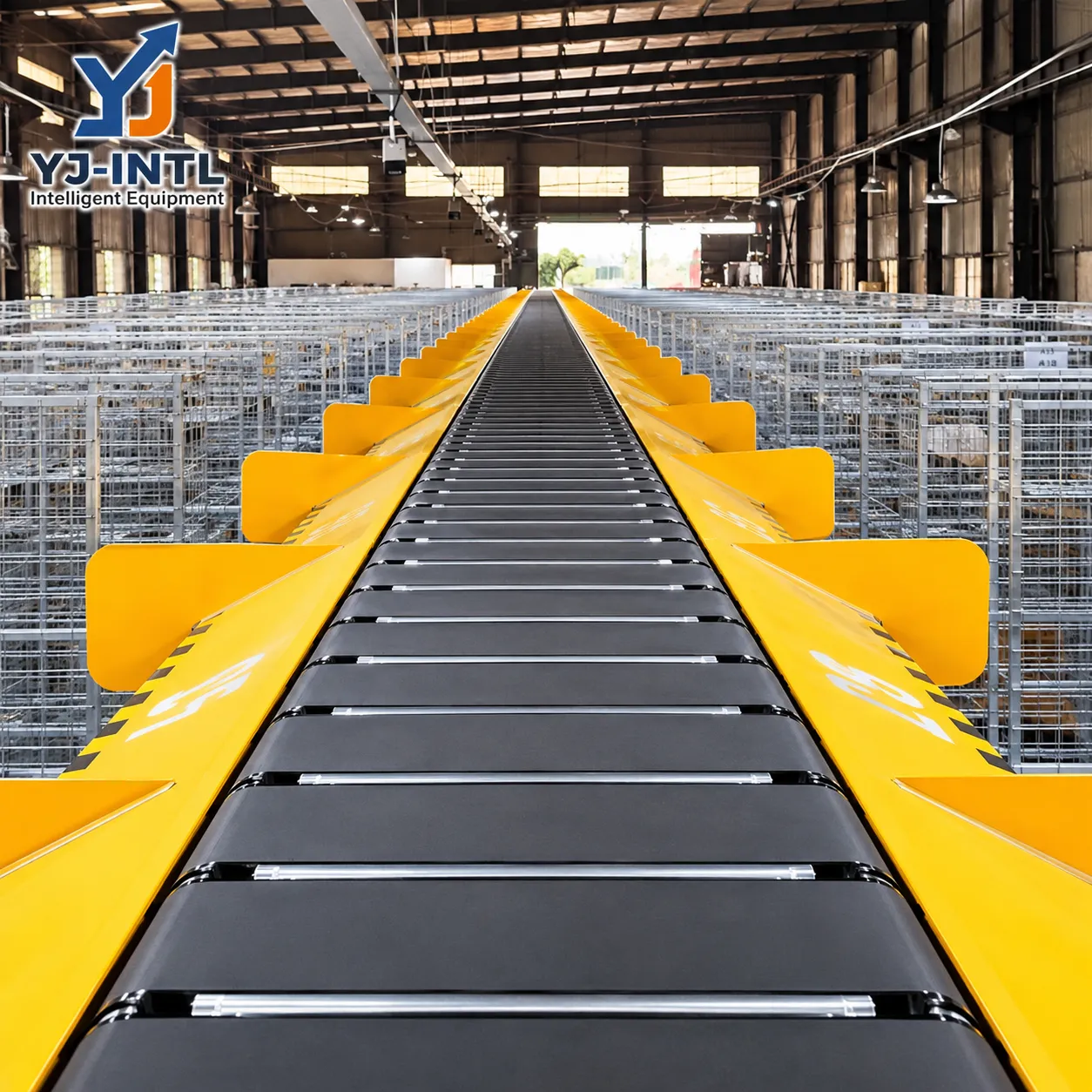
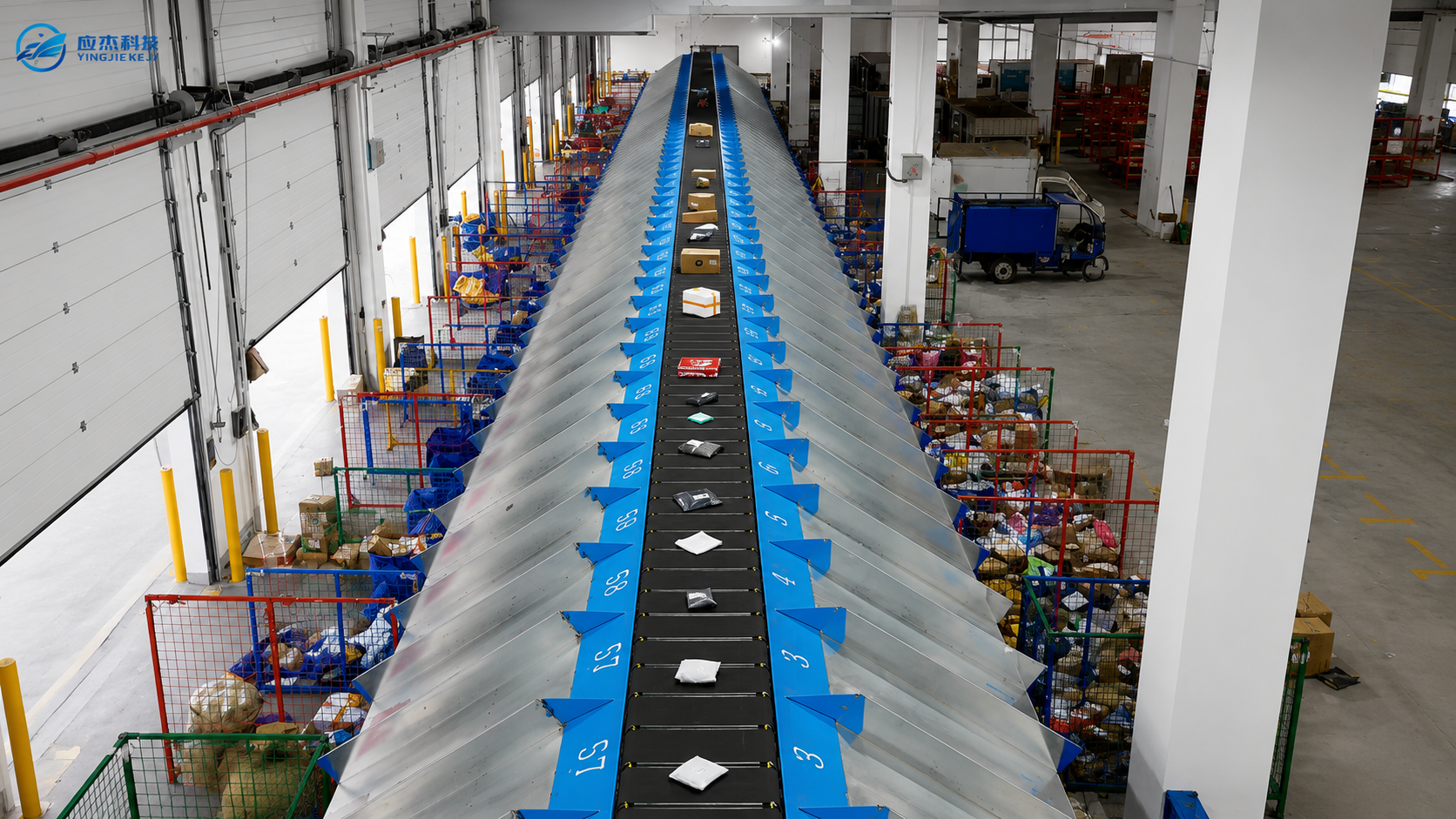
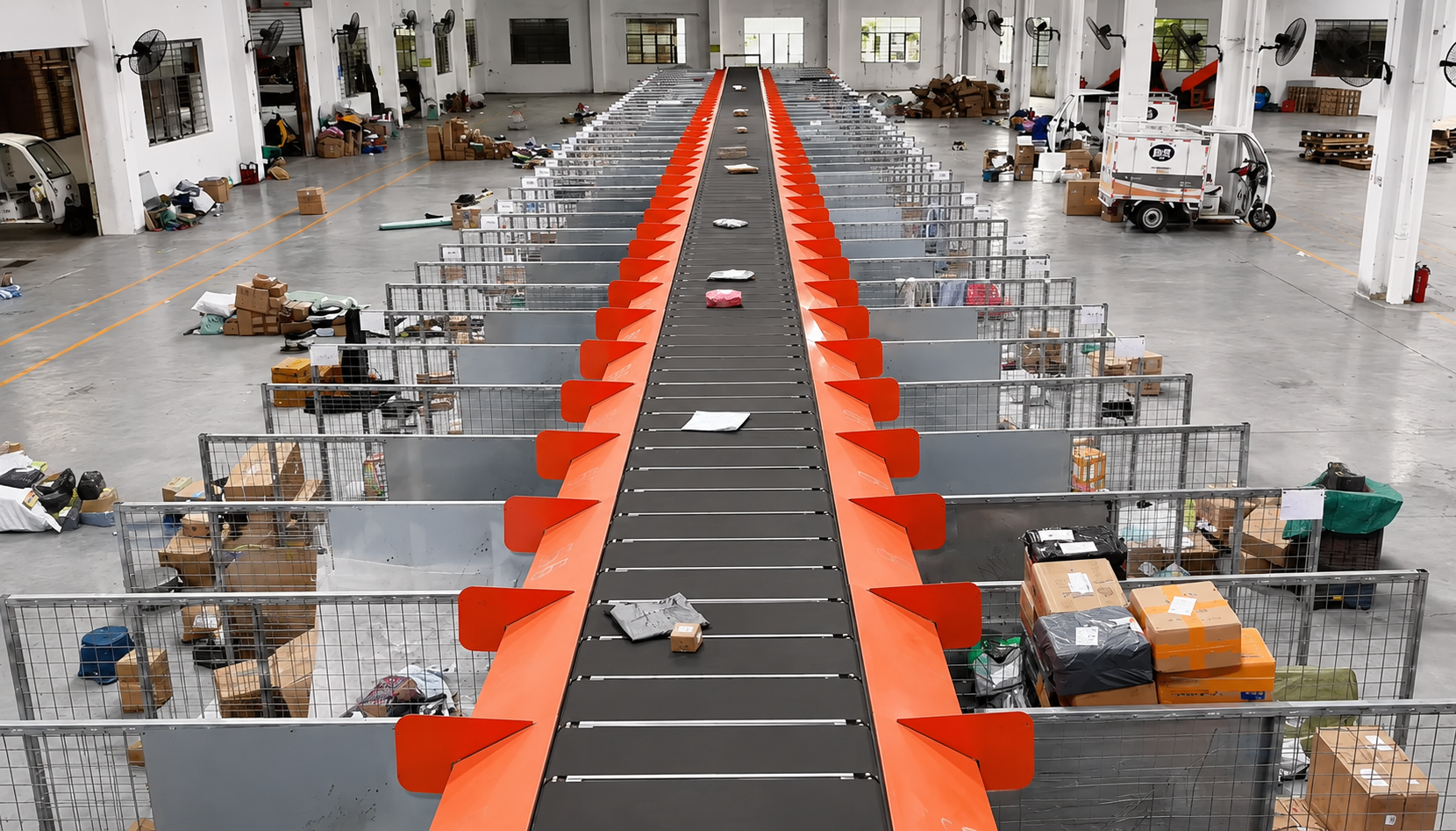
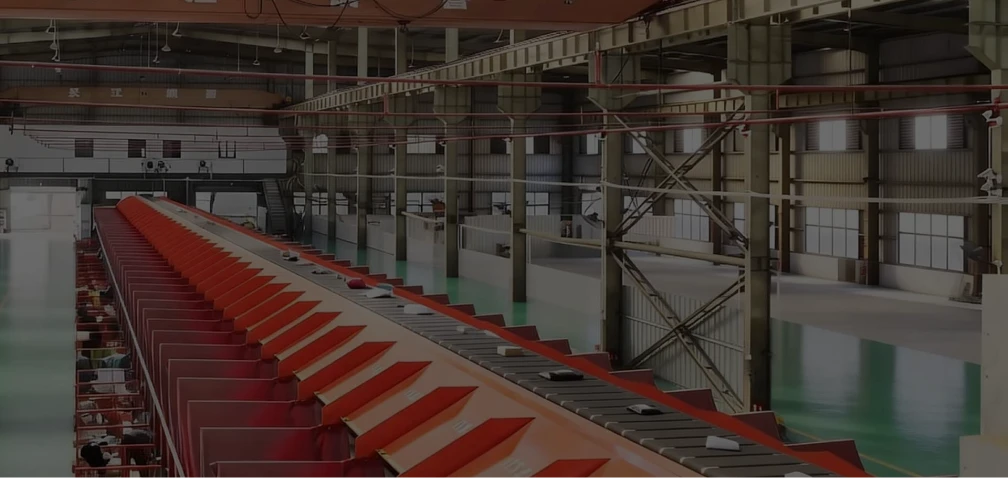
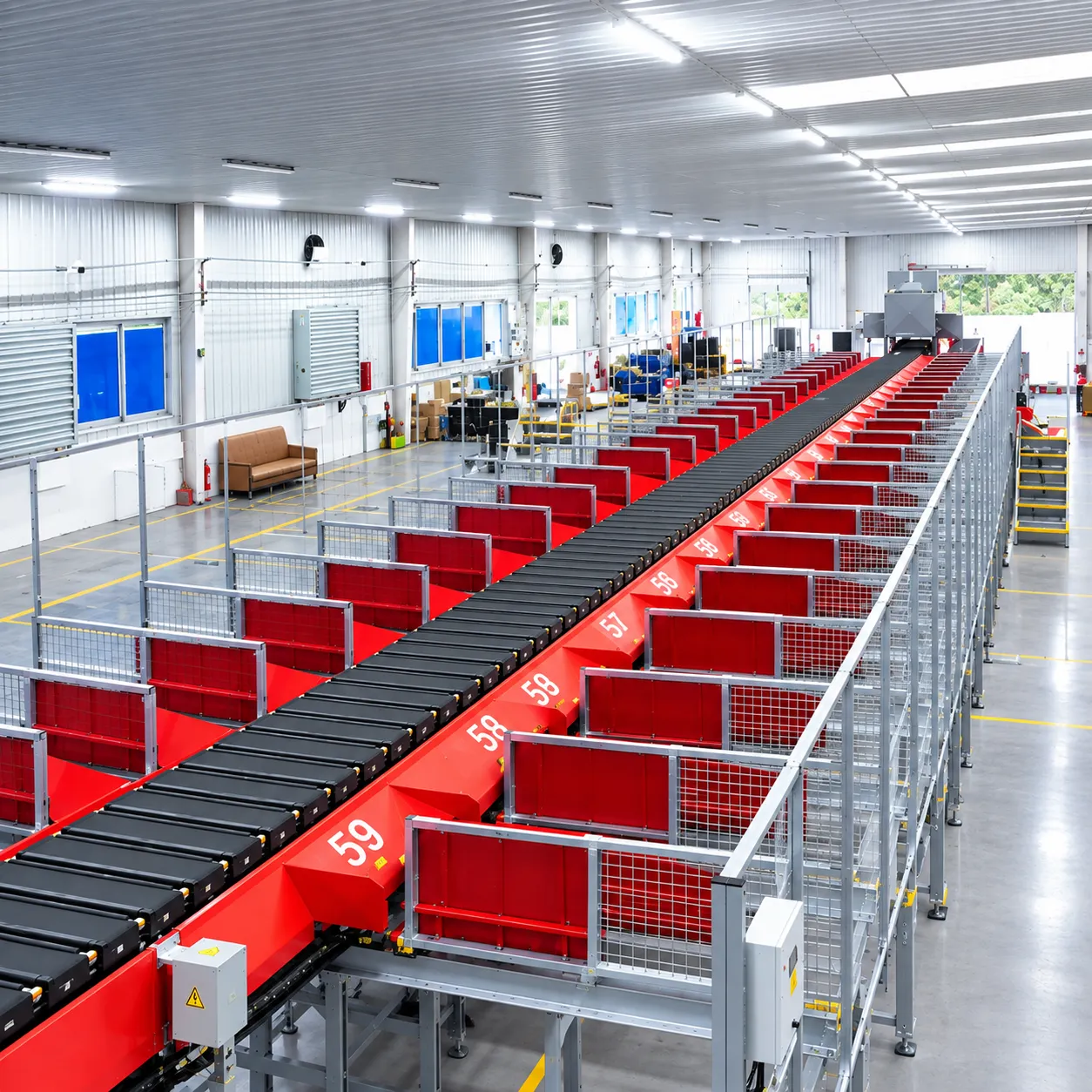
Unlike a conventional conveyor that simply transports goods from one point to another, a narrow belt sorter combines transportation and destination sorting within the same automated process.
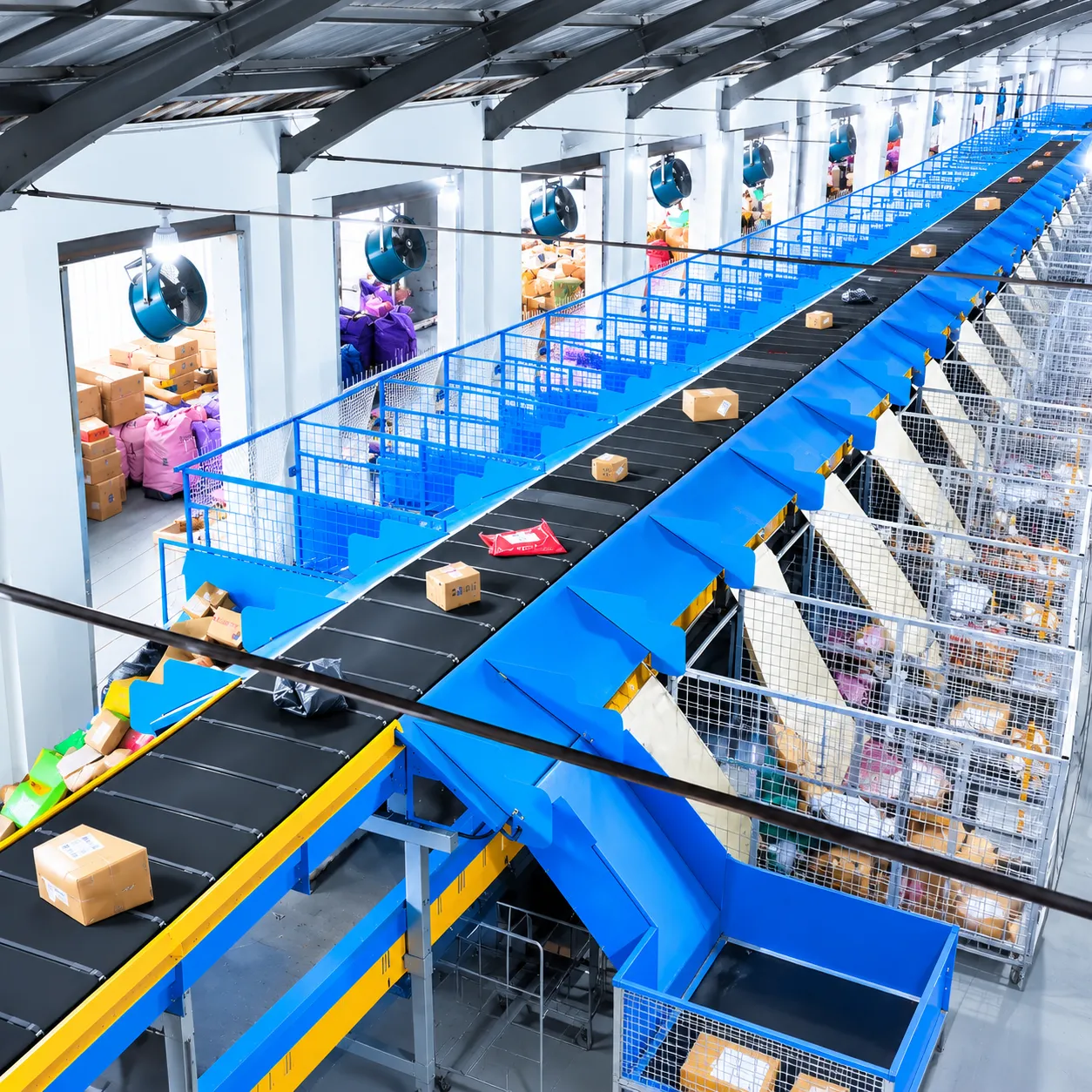
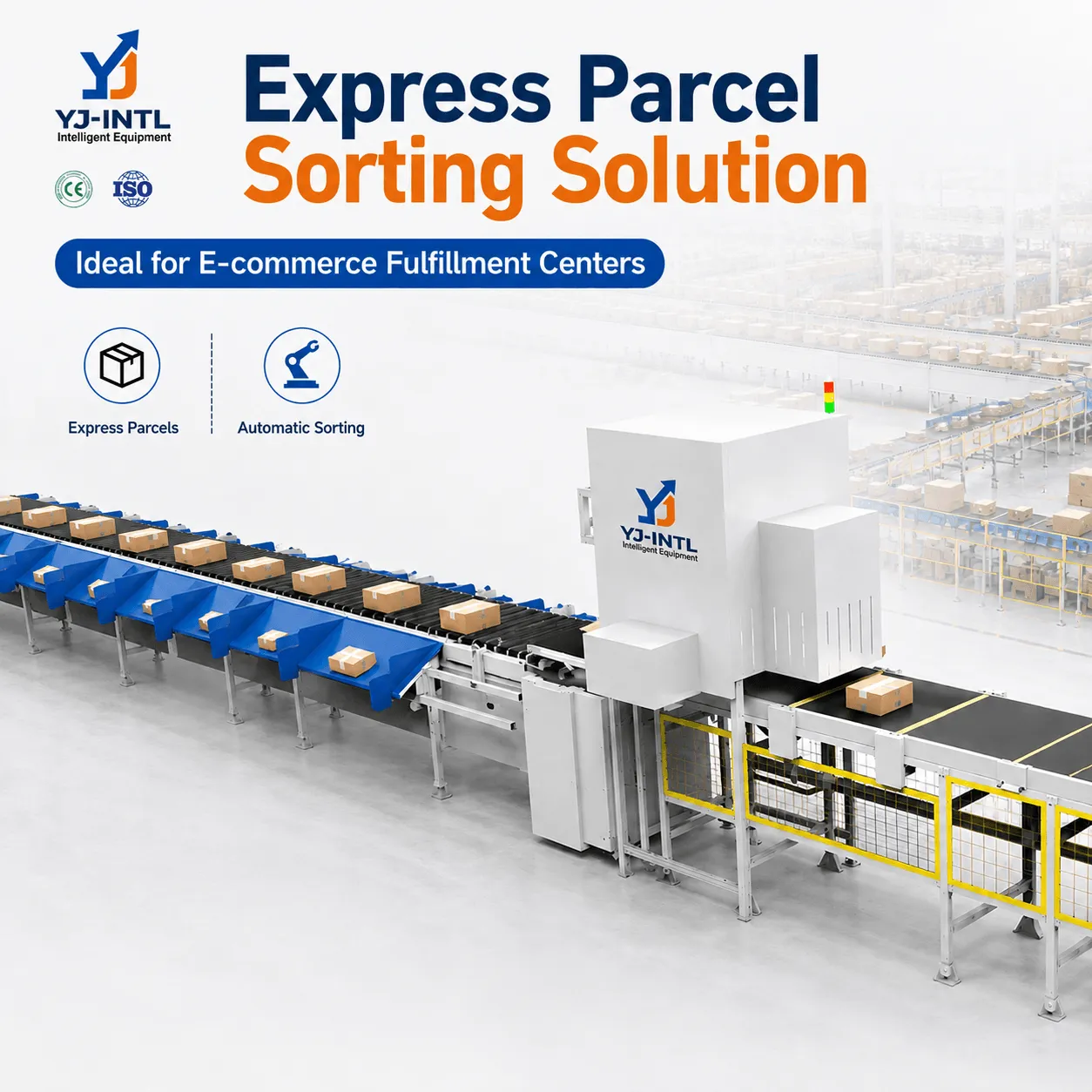
Parcels enter the system through an induction point, are identified by scanning or DWS equipment, and are then routed to their assigned destination according to the sorting logic.
This architecture allows the sorting line to connect: Induction → Identification → Tracking → Sorting → Chute → Outbound
YJ-INTL approaches the narrow belt sorter as part of a complete material-flow system rather than an isolated machine.
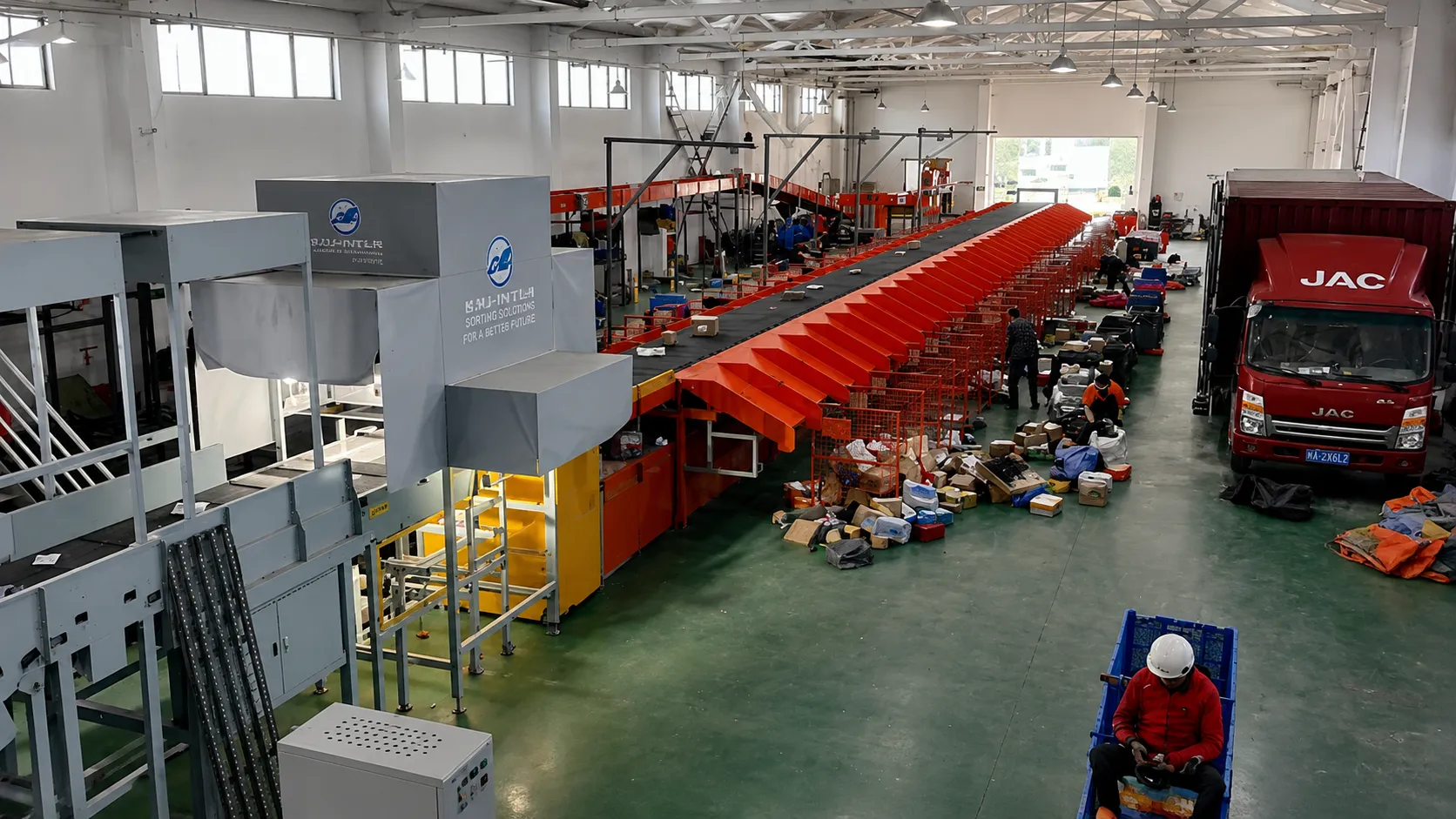
Technical Advantages
Flexible Belt Configuration
Different belt widths and carrier pitches can be selected according to parcel size, required throughput and sorting density.
Compact Material Flow
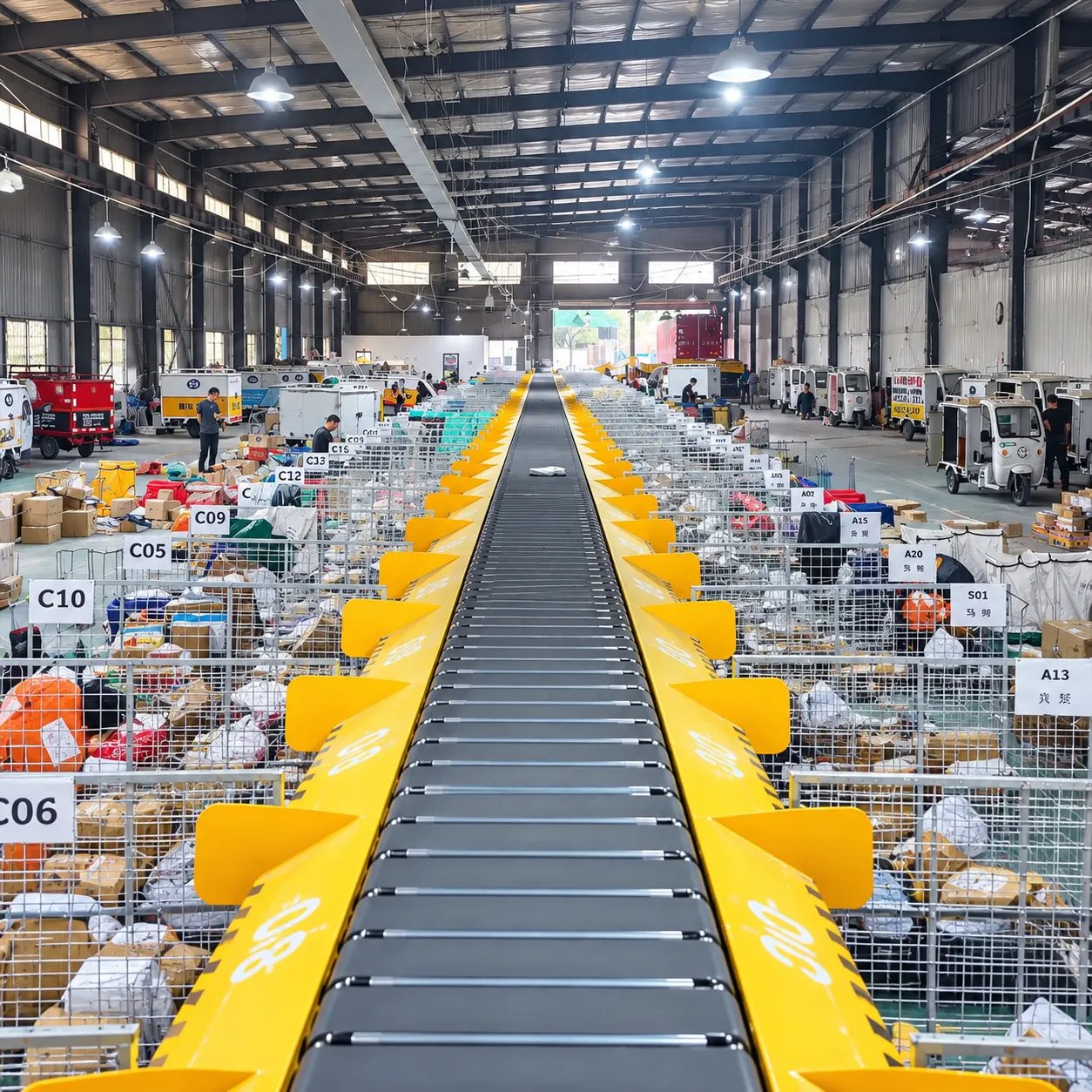
A linear sorting architecture can provide multiple destination points without requiring each destination to have an independent conveyor.
Controlled Parcel Movement
The conveying and diversion process is designed to maintain stable parcel movement throughout the sorting line.
Expandable System Architecture
Sorting destinations, induction points and downstream conveying can be planned around current requirements and future expansion.
Integrated Automation
The sorter can work together with upstream identification equipment and downstream warehouse systems to form a complete automated sorting process.
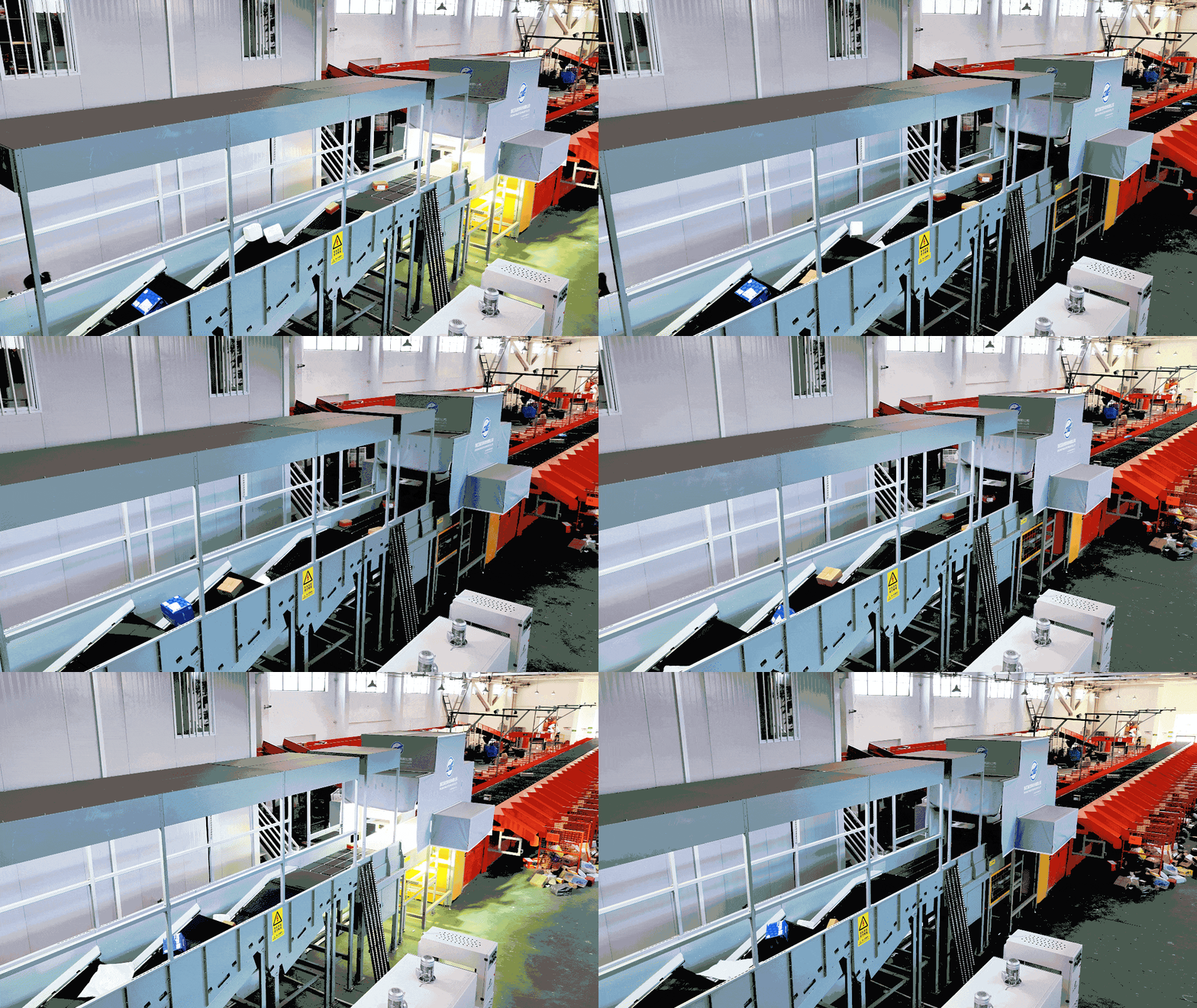
How to Choose a Narrow Belt Sorter?
The most important mistake when purchasing a sorter is selecting equipment based only on the advertised pieces per hour.
A better selection process considers:
1. Peak Throughput
Size the system around peak hourly volume rather than average daily volume.
2. Parcel Profile
Measure the minimum, average and maximum dimensions and weights.
3. Destination Count
The number and distribution of sorting destinations directly affect line length and system layout.
4. Induction Method
Determine whether parcels will be manually inducted, automatically inducted or processed through a hybrid feeding system.
5. Downstream Process
Sorting chutes, cages, bags, conveyors and packing stations should be considered during system design.
6. Software Integration
Confirm the required connection with WMS, WCS, ERP, MES and parcel identification systems.
7. Future Expansion
Reserve sufficient capacity and layout flexibility for future parcel volume growth
Narrow Belt Sorter Application
FAQ
YJ-INTL's current Narrow Belt Sorter specifications indicate a reference sorting capacity of 6,000–12,000 parcels per hour, while its Linear Narrow Belt Sorter is specified at 8,000–12,000 pieces per hour. Actual throughput depends on parcel dimensions, weight, spacing, induction rate, destination distribution and the final system configuration.
The current published specification indicates a rated load of up to 50 kg per parcel. Final load capability should be confirmed according to parcel dimensions, center of gravity, conveying conditions and the selected system configuration.
The sorter can be configured for cartons, e-commerce parcels, polybags, soft packages, flat parcels, sacks, large parcels and suitable irregular packages. The final parcel range should be evaluated based on actual parcel characteristics and operating requirements.
Yes. YJ-INTL provides configurations suitable for large and irregular parcels. However, unusually shaped, unstable or highly deformable parcels should be tested before final equipment selection to confirm reliable conveying and diversion performance.
The current Linear Narrow Belt Sorter configuration supports 800 mm and 1000 mm belt widths with 200 mm or 300 mm carrier pitch. Other parameters can be engineered according to parcel characteristics, throughput requirements and the warehouse layout.
Yes. Barcode scanners, OCR, DWS and other parcel identification technologies can be integrated into the sorting workflow. Identification data can be used by the control system to determine the required sorting destination.
Yes. The system can integrate with WMS, WCS, ERP, MES and other warehouse software according to project requirements. The communication method and interface architecture are determined during system integration.
Yes. The system can support manual, automatic or hybrid induction depending on the selected configuration. Automatic induction can be used when the project requires higher feeding consistency and reduced manual handling.
The required labor depends on the induction method, degree of automation, destination handling and downstream process. YJ-INTL's published general specification indicates approximately 2–5 operators for certain configurations, but final staffing should be determined from the complete process design.
The correct sorter should be selected according to peak hourly volume, parcel dimensions, parcel weight, parcel type, destination count, induction rate, warehouse space and downstream process requirements. Throughput alone should not be used as the only selection criterion.
Yes. YJ-INTL can customize the sorting layout, destination configuration, induction arrangement, conveyor connections, belt configuration and system integration according to the customer's project requirements.
For preliminary engineering, provide parcel dimensions and weight range, average and peak volumes, number of destinations, warehouse layout, induction method, barcode information, downstream process and WMS/WCS requirements. These inputs allow the sorter and complete material-flow system to be evaluated together.
Yes. YJ-INTL provides project-based engineering support covering system design, equipment integration, installation, commissioning and related technical services. The exact service scope depends on the project location, configuration and contract requirements.