Conveyor
Curved Belt Conveyor for Flexible Material Routing
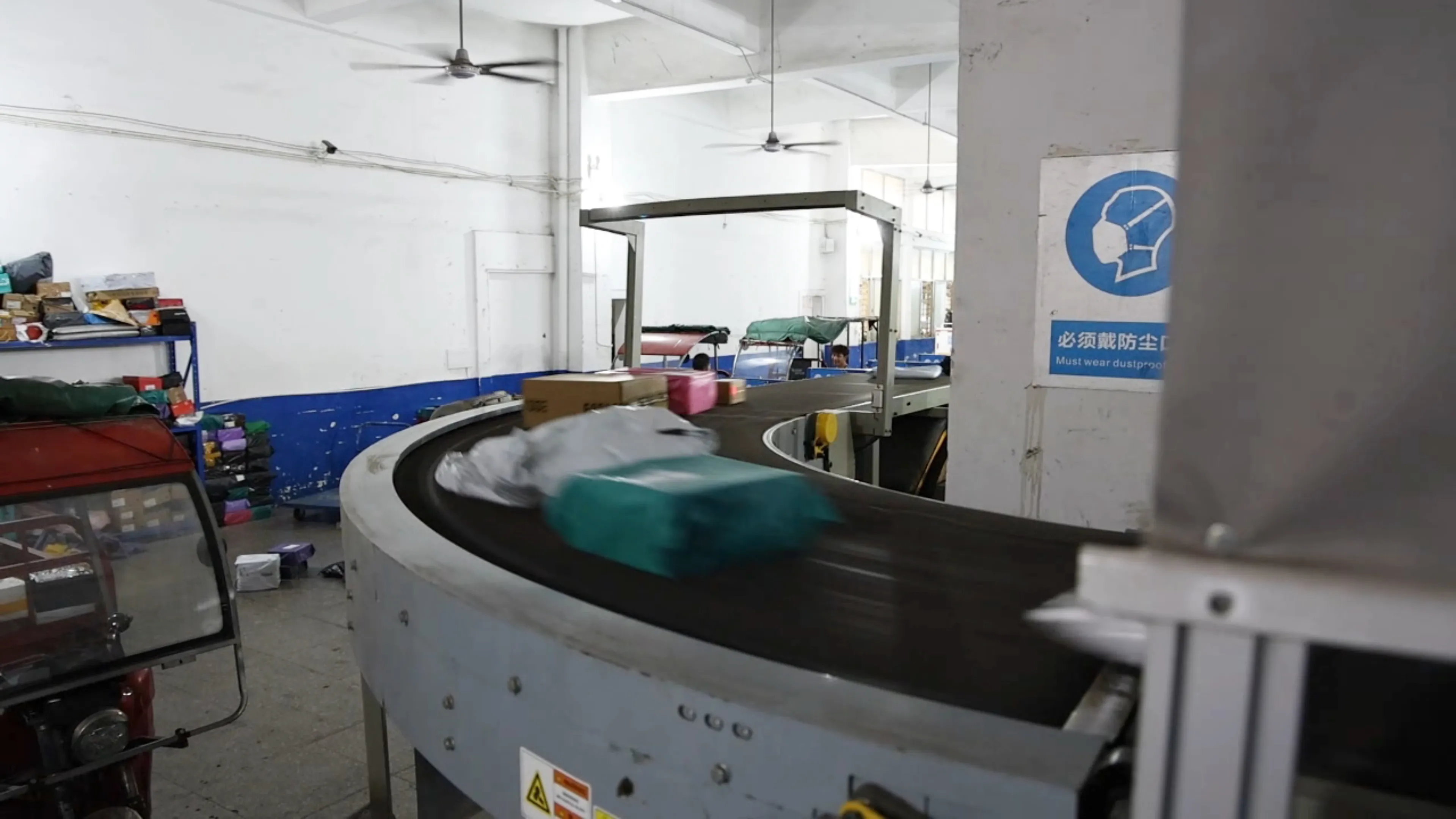
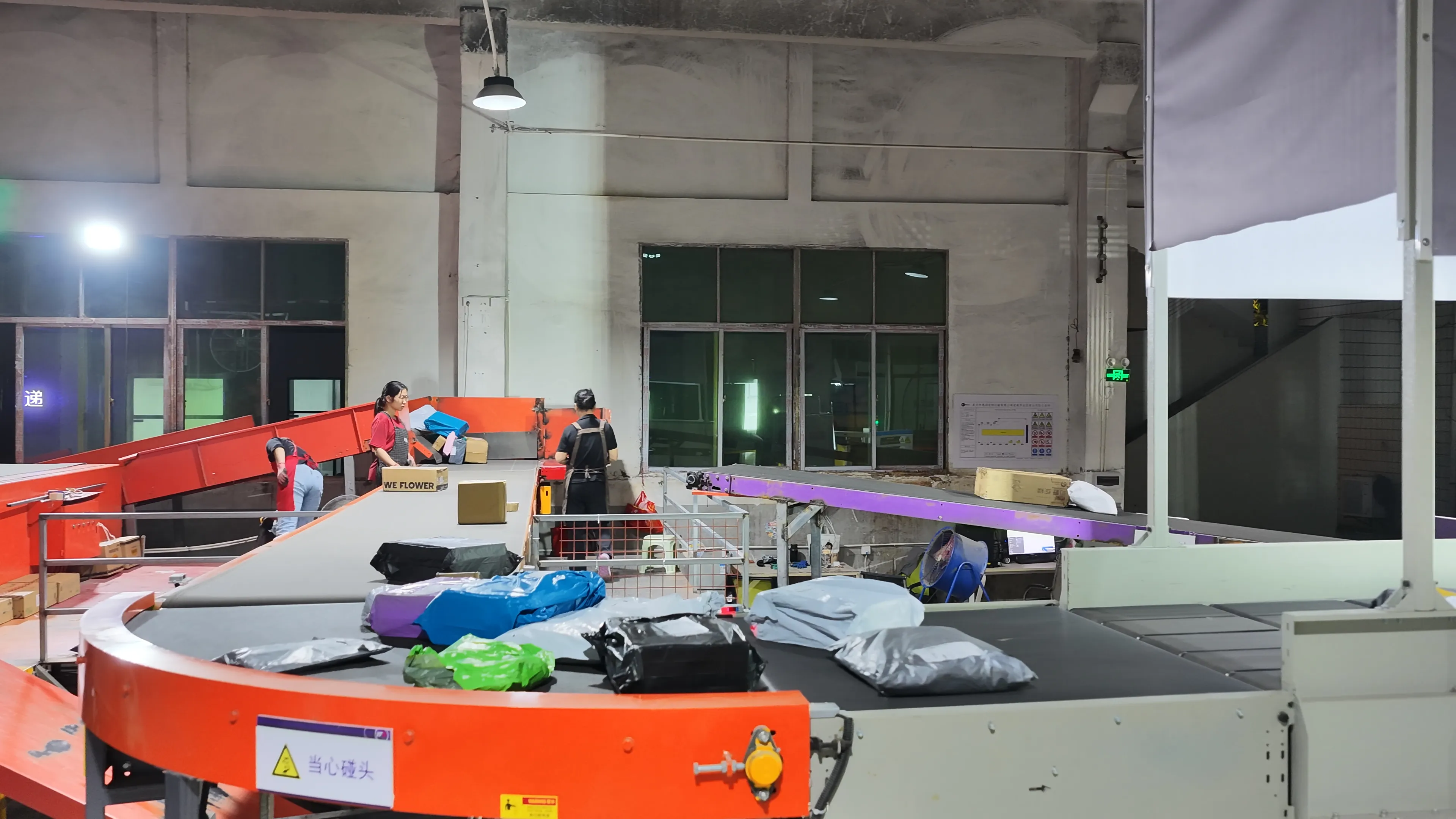
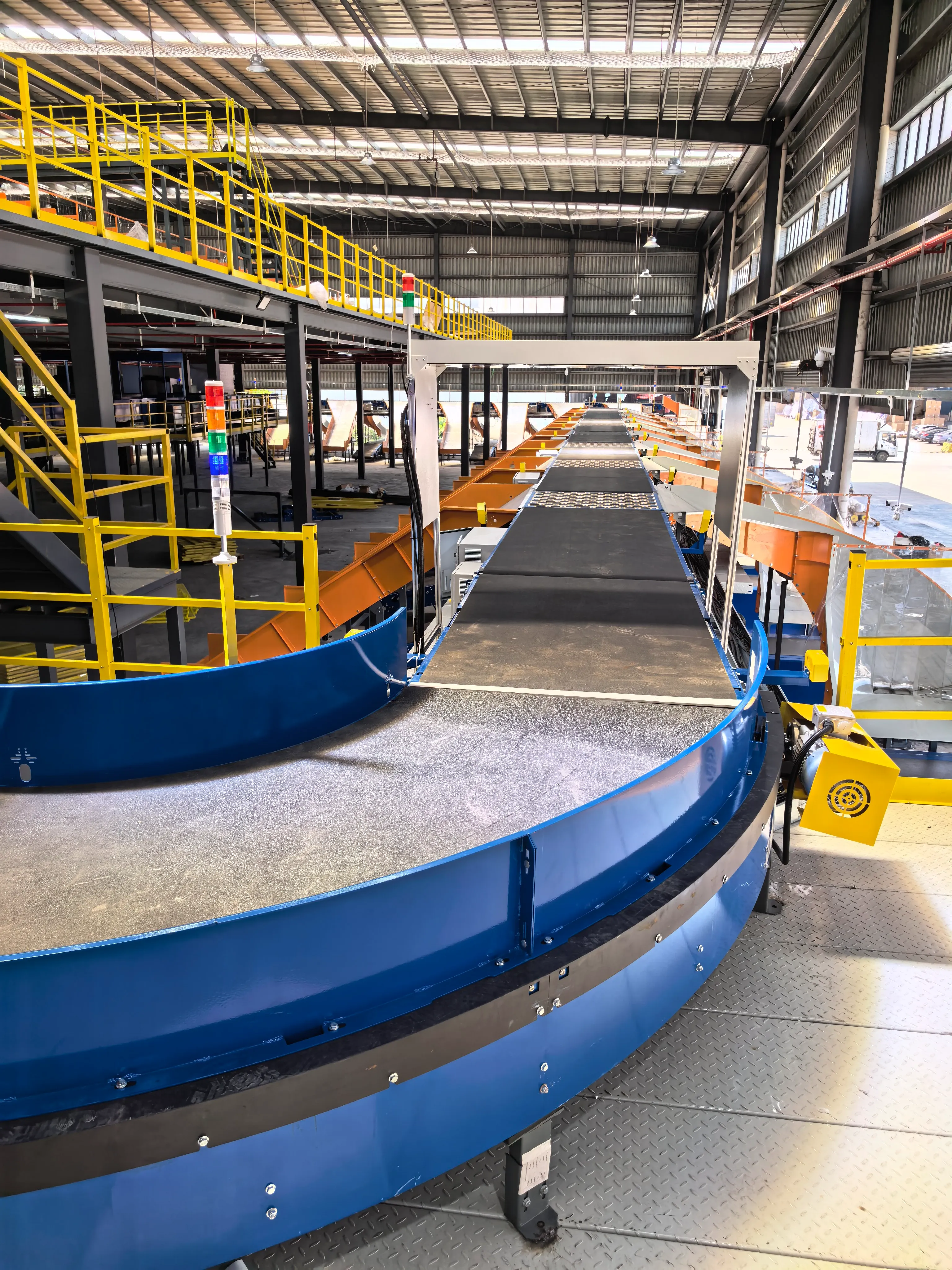
The Curved Belt Conveyor is designed to change the direction of product flow while maintaining continuous belt conveying. It provides a practical way to route cartons, packages and other unit loads around corners, equipment or working areas without breaking the material flow into separate conveyor sections.
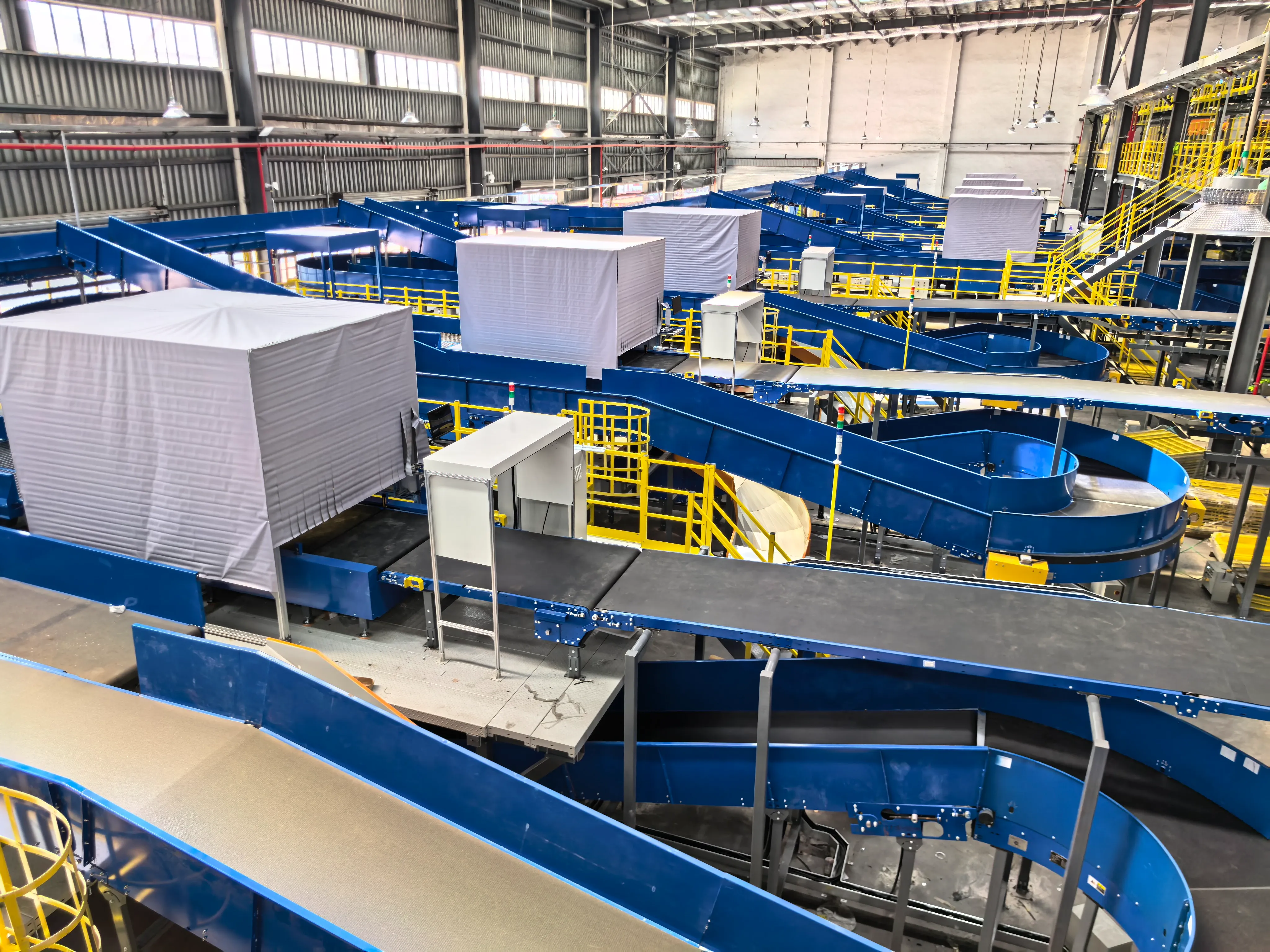
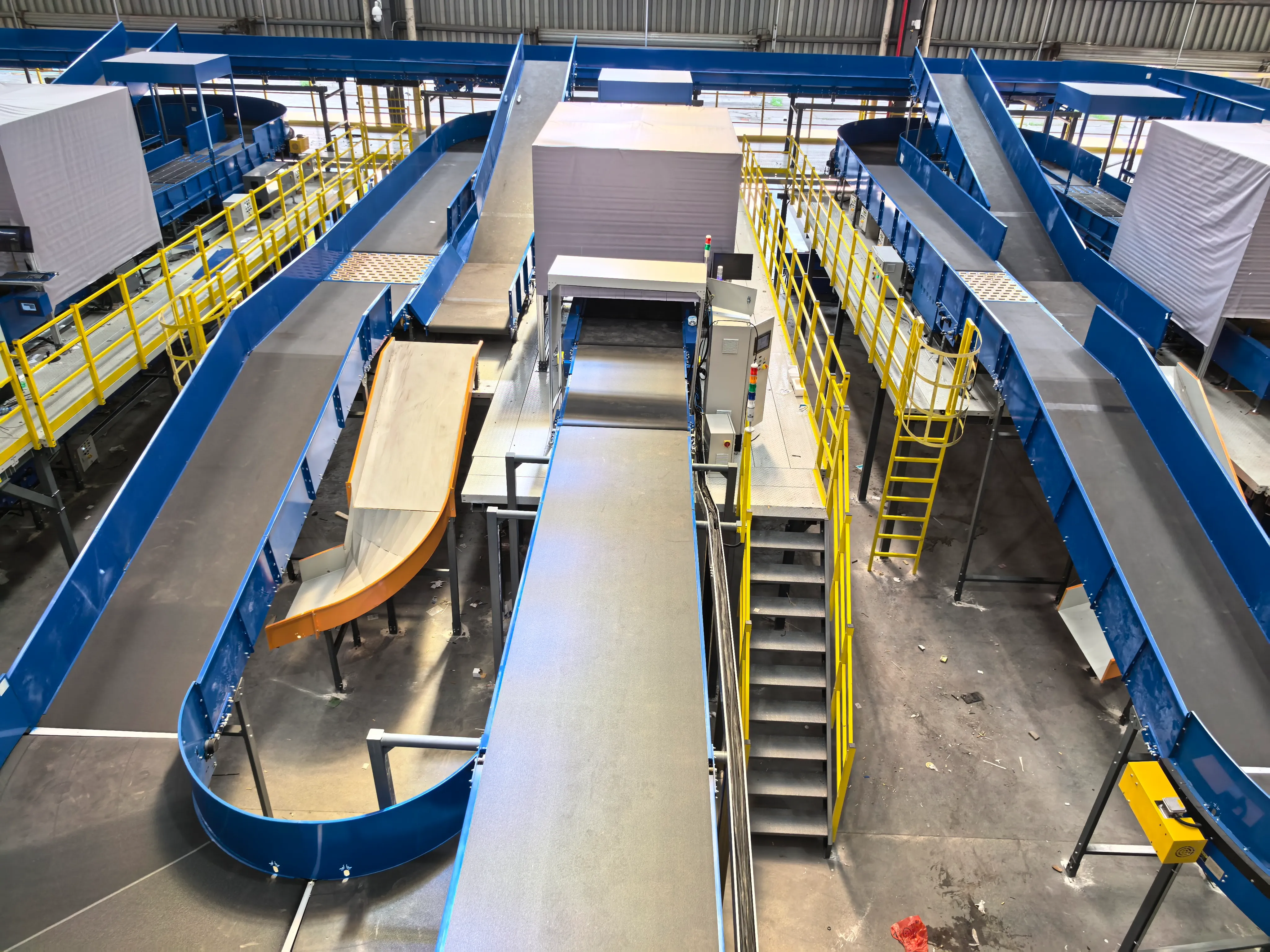
Its modular curved structure allows conveyor layouts to be adapted to available floor space and ongoing production or warehouse processes. Depending on the required layout, curved sections can be combined to create different turning directions and conveyor routes, including turns of up to 180°.
- Modular Curved Conveyor Structure
- Continuous Belt Conveying
- Flexible Routing Around Obstacles
- Curves Up to 180°
- Space-Efficient Conveyor Layout
- Customized Conveyor Geometry
- Suitable for Warehouse & Production Lines
- Easy Integration with Straight Conveyors
Technical Specifications
| Parameter | Specification |
|---|---|
| Product Type | Curved Belt Conveyor |
| Conveyor Structure | Modular Curved Belt |
| Turning Direction | Configurable |
| Turning Angle | Up to 180° |
| Conveyor Width | Customized |
| Curve Radius | Project Based |
| Conveyor Length | Customized |
| Conveyor Speed | Project Based |
| Belt Type | Project Based |
| Drive | Motorized |
| Load Capacity | Project Based |
| Material Flow | Continuous |
| Installation | Fixed / Integrated |
| Application | Warehouse / Production / Material Handling |
| Straight Conveyor Connection | Supported |
| Overall Layout | Customized |
Technical Note
Final curve radius, belt width, speed and load capacity should be selected according to the product size, conveyor layout, turning requirement and operating environment.
Details
Change Direction Without Breaking the Material Flow
A straight conveyor works well when products move from one point to another along a direct route. But warehouse and production layouts rarely remain completely straight.
Conveyor lines often need to:
- Turn around columns
- Avoid machinery
- Connect different production areas
- Change the direction of material flow
- Use available floor space more efficiently
The Curved Belt Conveyor is designed for these situations. Instead of stopping the product flow at a transfer point and restarting it on another conveyor, the curved section changes the conveying direction while keeping the product on a continuous belt surface. This creates a smoother material route with fewer transfer points.
 |  |
|---|
Product Applications
Warehouse Automation
Curved sections can redirect cartons or parcels around warehouse structures and connect different conveyor routes.
E-commerce Fulfillment
Useful for linking packing, sorting, staging and outbound conveyor sections.
Production Lines
Can connect different workstations where the material path changes direction.
Packaging Lines
Useful for changing the direction of products between packaging and downstream operations.
Distribution Centers
Can create more compact conveyor layouts around sorting, packing and dispatch zones.
Material Handling
Suitable for general unit-load conveying where products need to change direction while remaining on a continuous belt.
 |  |
|---|
Product Advantages
01. Direction Change Without a Transfer Point
The curved section allows the product to remain on the conveyor while its travel direction changes.
This can simplify the material flow compared with using multiple independent straight conveyors connected by transfer equipment.
Practical Benefits
- Continuous conveying
- Fewer transfer interfaces
- Reduced manual intervention
- More streamlined conveyor layouts
02. Flexible Conveyor Routing
The modular curve design allows conveyor routes to be adapted around the actual facility.
The conveyor can be designed to:
- Turn around equipment
- Follow a building structure
- Connect parallel conveyor lines
- Redirect materials toward another processing area
This makes the curved conveyor useful for both warehouse and production environments.
03. Curves Up to 180°
The source page specifically describes curved conveyor belts that can turn by up to 180°.
This makes the product suitable not only for a standard 90° turn, but also for more complex routing arrangements where the conveyor needs to reverse or redirect the material flow significantly.
04. Better Use of Available Space
A straight conveyor route often requires additional floor space to create a change in direction.
A curved section can package that turning movement into a more compact footprint.
This is particularly useful in:
- Warehouses
- Production lines
- Packing areas
- Distribution centers
- Equipment connection zones
05. Modular Conveyor Design
The source page highlights the ability to use modular curved sections to build the transport system according to the process.
This means the product should be considered as part of a conveyor system rather than as a standalone standard machine.
The curve geometry can be selected according to the required route and available space.
06. Continuous Belt Surface
Unlike roller-based turning solutions, the belt provides a continuous conveying surface through the curved section.
This can be beneficial for products that need continuous support while changing direction.
Typical examples include:
- Cartons
- Packed goods
- Totes
- Parcels
- Flat-bottom products
07. Easy Integration with Straight Conveyors
A curved conveyor is rarely installed by itself.
It normally works between straight conveyor sections: Straight Conveyor → Curved Belt Conveyor → Straight Conveyor
This makes it possible to combine straight and curved modules into one complete conveying route.
Why Choose YJ-INTL Curved Belt Conveyor?
Layout-Based Engineering
The conveyor is designed around the actual facility rather than a fixed standard route.
Modular Configuration
Straight and curved sections can be combined into one complete system.
Continuous Product Support
The belt provides continuous product support through the turning section.
Integration-Friendly
The curved section can connect with existing conveyors and other warehouse automation equipment.
Custom Conveyor Geometry
Turning angle, width, length, height and connection points can be configured for the application.
FAQ
A curved belt conveyor is a powered conveyor designed to change the travel direction of cartons, packages or other suitable products while maintaining continuous belt conveying.
Its main purpose is to redirect material flow around corners, equipment or working areas without requiring separate transfer points between multiple straight conveyors.
The turning angle depends on the selected conveyor configuration. The supplied product material describes curved conveyor belts that can be configured for turning applications of up to 180 degrees.
Yes. A 90-degree curved section is a common configuration for changing the direction of a conveyor route.
Yes. The supplied product material specifically describes curved conveyor belts that can turn up to 180 degrees.
Suitable products include cartons, parcels, totes, packaged goods and other unit loads that can remain stable on a continuous belt surface. Final suitability depends on product dimensions, weight and conveyor configuration.
Yes. Curved belt sections are commonly used between straight conveyor sections to create a complete material-handling route.
The curved section changes direction within the conveyor itself, which can reduce the need for separate transfers and make the overall layout more compact and continuous.
Yes. It can be integrated into warehouse conveying, e-commerce fulfillment, packaging, sorting and other automated material-handling systems.
Yes. Curve radius, conveyor width, conveyor height, turning angle and connection dimensions can be configured according to the project.
Important design information includes product size and weight, conveying speed, required turning angle, available space, upstream and downstream conveyor dimensions and required installation height.
Yes. Curved belt conveyors can be used to connect production stations when products need to change direction between different process areas.