Conveyor
No-radius turning machine
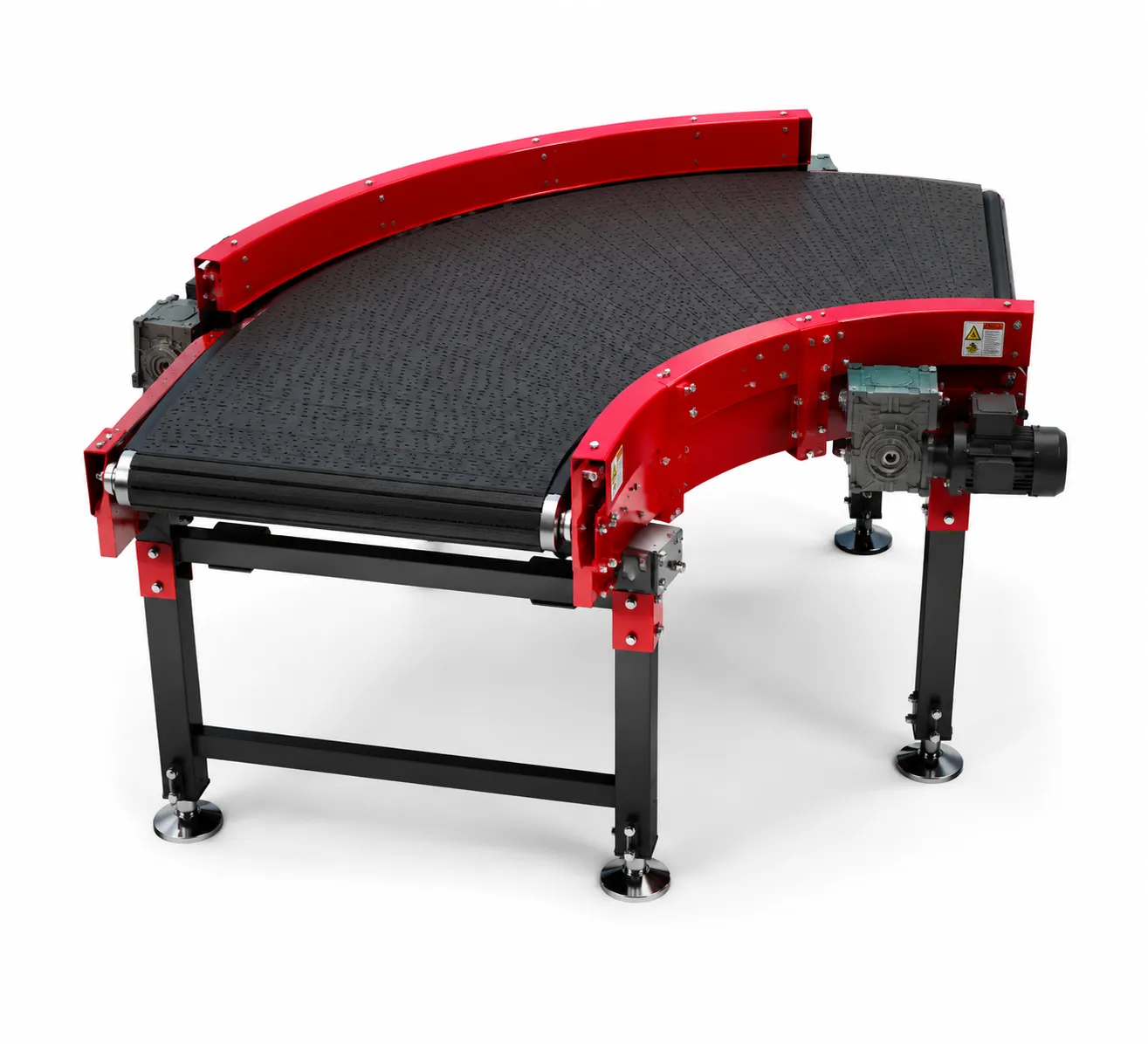
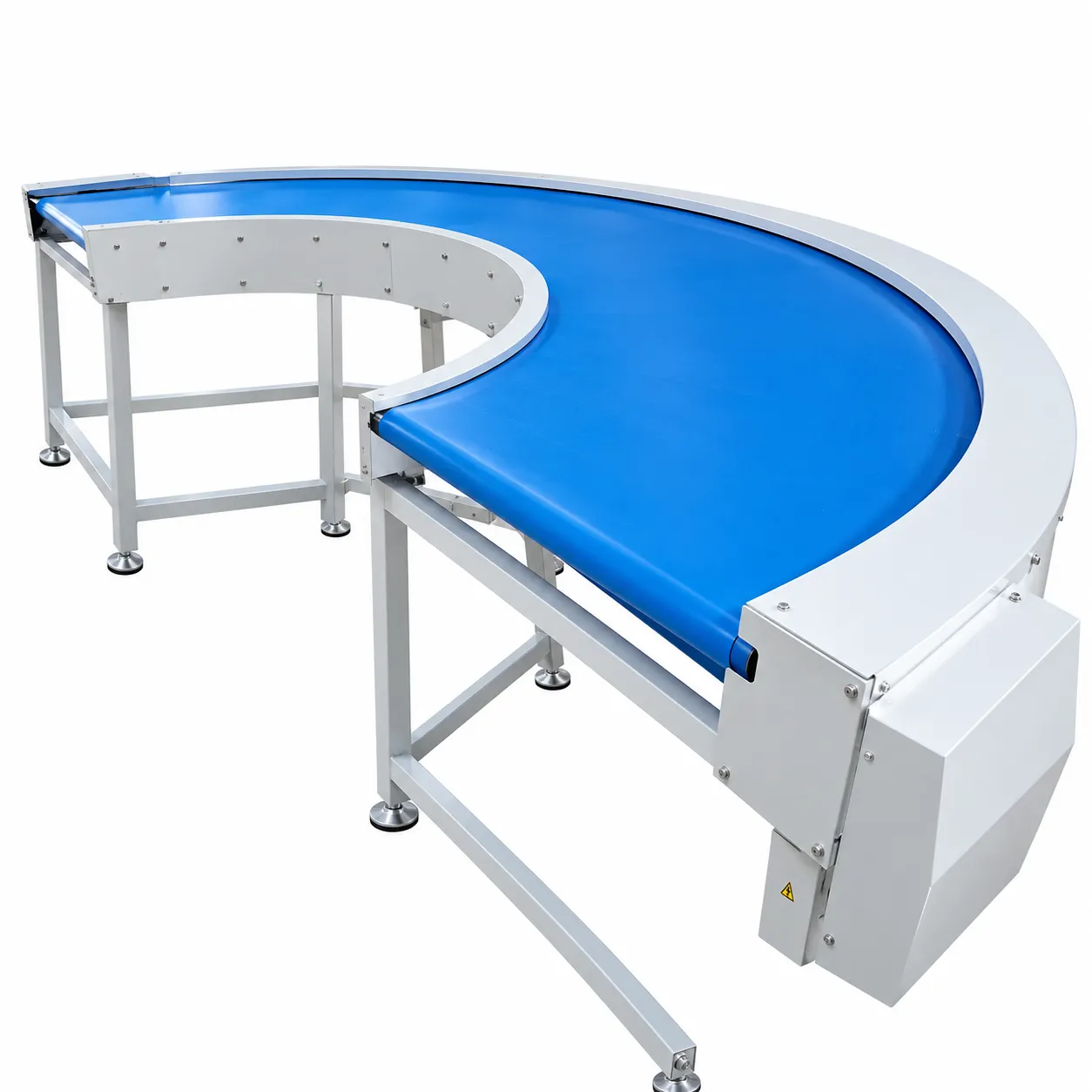
The Inner-Radius-Free Curved Belt Conveyor is designed for conveyor layouts where a conventional curved conveyor would require too much inner turning space. Its special conveying structure uses two independently driven belt layers that are nested and connected through spiral hook elements, creating an interlocking guide path for the turning section.
- Inner-Radius-Free Turning Structure
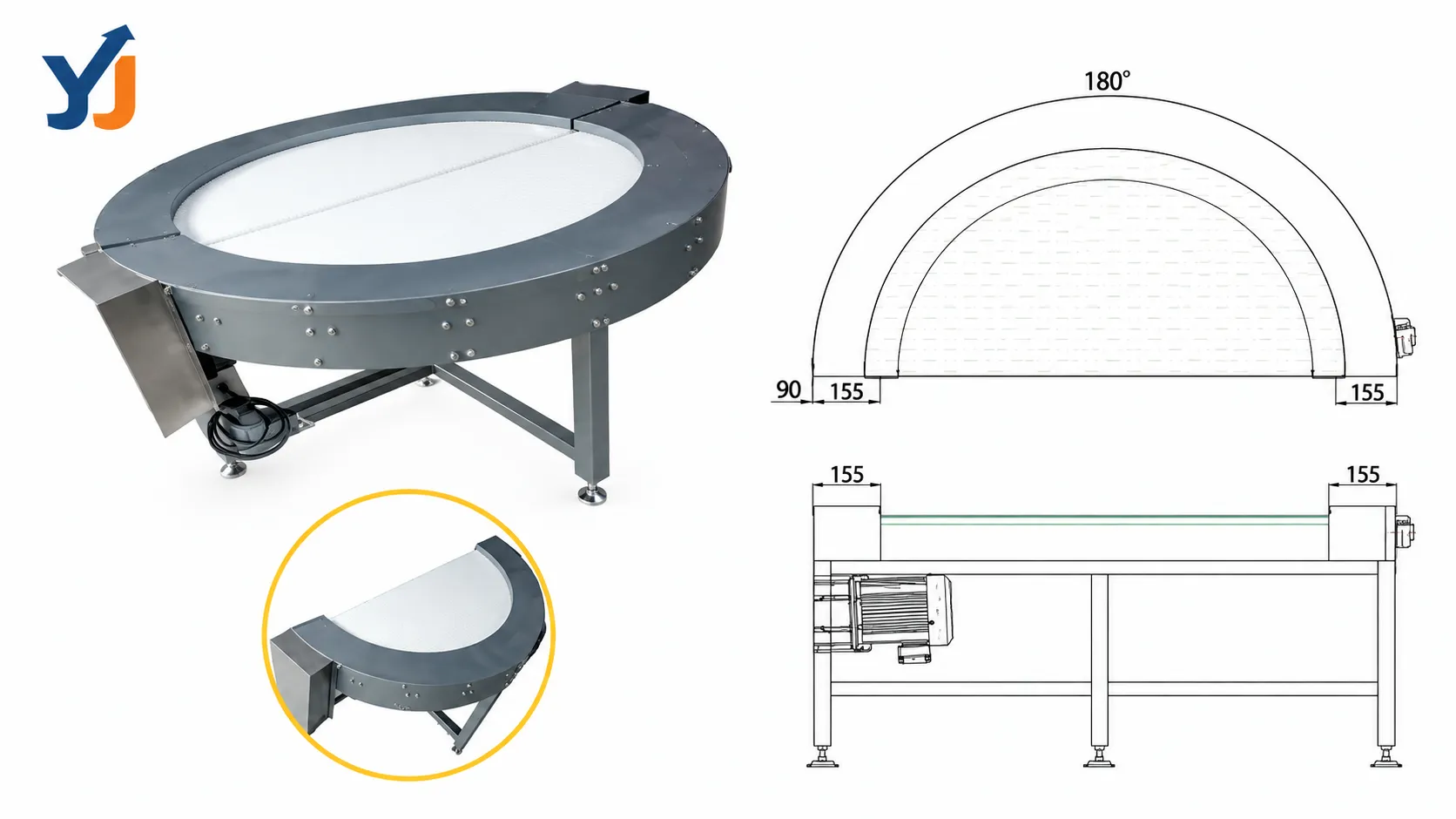
- Compact 180° Return Configuration
- 500–2000 mm Outer Radius
- Up to 40 m/min Conveying Speed
- 1–16 kg Standard Load Range
- 200 mm Minimum Installation Height
- Chain-Driven Dual-Belt Mechanism
Technical Specifications
| Specification | Details | Specification | Details |
|---|---|---|---|
| Standard Rack Inner Radius | 0 mm | Outer Radius | 500–2000 mm |
| Minimum Installation Height | H200 mm | Conveying Speed | ≤40 m/min |
| Standard Turning Angle | 30°–90° | Return Configuration | 180° |
| Drive Type | Chain | Conveying Direction | Unidirectional |
| Maximum Load | 1–16 kg | Load Capacity | Customizable |
| Voltage | 220 V / 380 V | Working Temperature | -10°C to 45°C |
| Motor Power | 0.4 kW / 0.75 kW | Frequency Converter | Kewo / Delta, customizable |
| Belt Material | PVC / PU / Canvas | Belt Thickness | 1.50 mm / 2.0 mm |
| Belt Color | White / Green / Black / Blue | Motor Brands | Zhengming / Yongkun / Taibang / SEW / NuoDe |
| Operating Condition | No condensation | Operating Mode | Continuous conveying |
| Product Type | Inner-radius-free curved belt conveyor | Turning Structure | Dual-belt interlocking structure |
Details
Product Overview
The Inner-Radius-Free Curved Belt Conveyor is designed for conveyor layouts where a conventional curved conveyor would require too much inner turning space. Its special conveying structure uses two independently driven belt layers that are nested and connected through spiral hook elements, creating an interlocking guide path for the turning section.
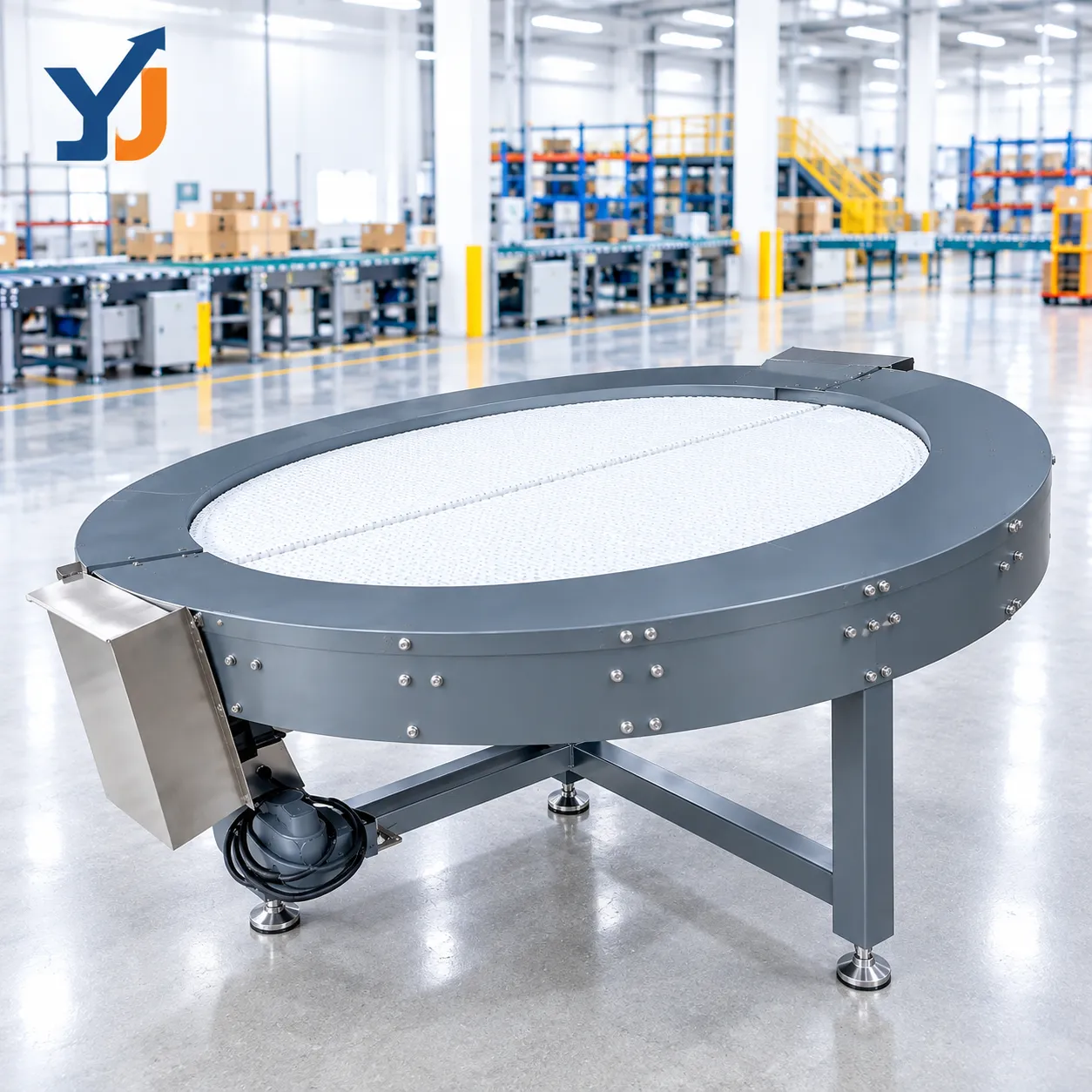
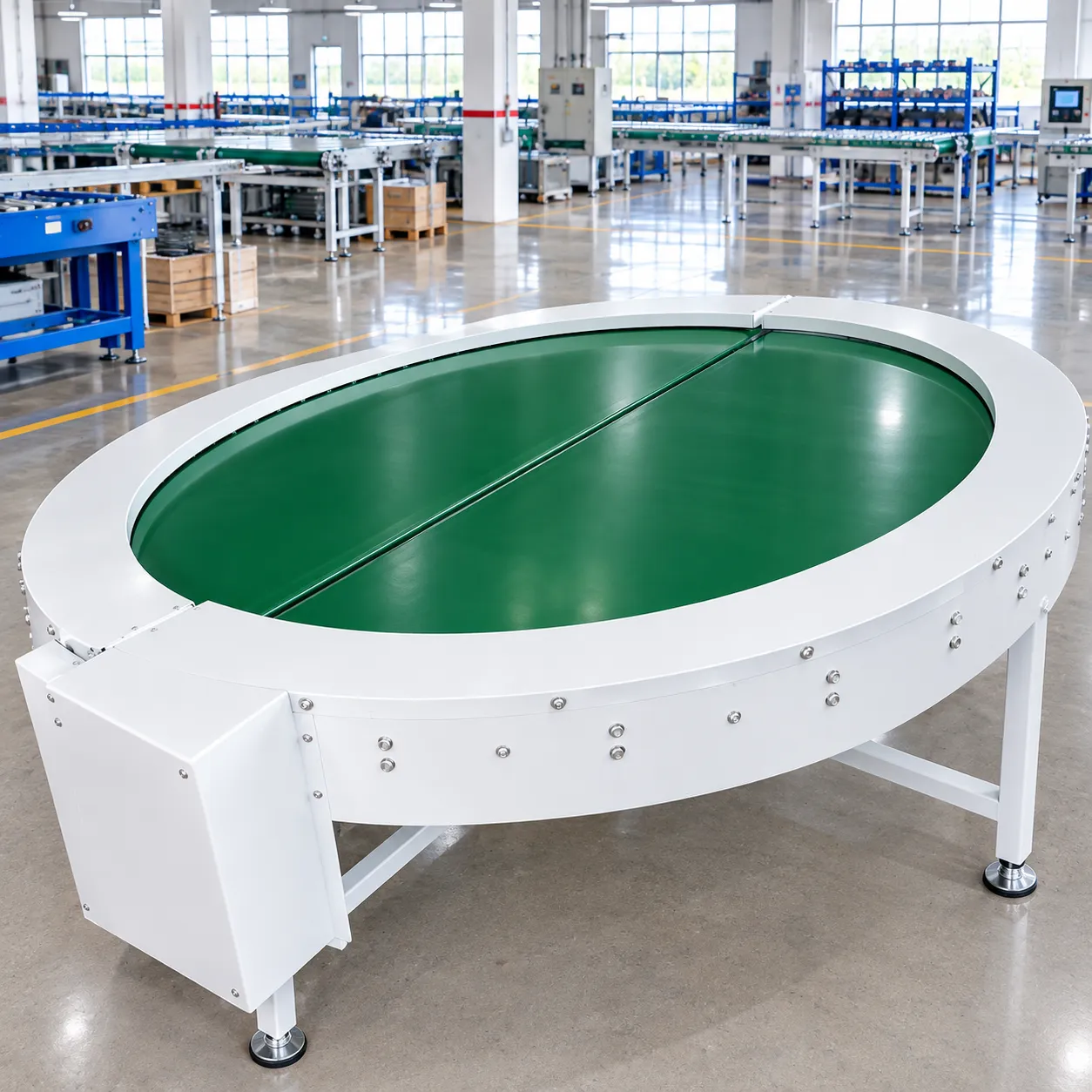
By eliminating the conventional inner-radius requirement, the conveyor can create a much tighter turning path while maintaining continuous product transport. The design supports turning configurations from 30° to 90°, with the structure also suitable for compact 180° return layouts shown in the product configuration.
It is particularly suitable for compact production lines, electronics handling, packaging operations and material-transfer sections where equipment footprint and routing flexibility are important.
How the Inner-Radius-Free Structure Works
1. Dual-Belt Configuration
Two independent belt layers form the basic conveying mechanism. Their relative positioning creates the special geometry required for compact turning.
2. Interlocking Connection
The belts are connected through spiral hook elements, forming an integrated guiding structure rather than relying only on a conventional curved belt arrangement.
3. Synchronized Movement
During operation, the upper and lower belt sections move simultaneously. Their interlocking configuration maintains the conveying path as products travel through the curve.
4. Compact Turning Path
Because the design does not require a conventional inner turning radius, the conveyor can be positioned closer to the center of the turning area, helping reduce the footprint of the overall conveyor route.
 |  |
|---|
Key Product Characteristics
The technical material identifies the following characteristics of the no-radius turning structure:
Small Turning Radius
The zero inner rack radius allows the machine to create a compact turning section compared with a conventional structure requiring a defined inner radius.
High Conveying Capacity
The structure is designed for continuous material transfer through the curved section.
Continuous Operation
The machine is designed for continuous conveying rather than requiring products to be manually repositioned at the turning point.
Smooth Conveying
The interlocking belt configuration provides a continuous conveying path through the curve.
Low Noise
The technical description identifies low-noise operation as one of the product characteristics.
Reduced Risk of Blockage
The product structure is designed to reduce the risk of material blockage during the turning process.
Applications
Electronics Product Handling
Manufacturing Conveying Lines
Packaging & Material Transfer
FAQ
An inner-radius-free curved belt conveyor is a compact turning conveyor designed without the conventional inner turning radius normally required by standard curved belt conveyors. Its special dual-belt structure creates the turning path while reducing the space occupied at the inside of the curve.
The system uses two independently arranged belt layers that are nested and connected through spiral hook elements. During operation, the two belts move together and their interlocking configuration guides products through the turning section.
The main difference is the turning structure. A conventional curved conveyor has a defined inner radius, while this design removes the conventional inner-radius requirement and is intended for tighter conveyor layouts where floor space is limited.
Yes. The supplied technical drawing shows a compact 180° return configuration. The standard turning specification is listed as 30°–90°, while the 180° configuration can be used for compact return layouts. Final dimensions should be confirmed according to the application.
The reference conveying speed is up to 40 m/min. The appropriate operating speed depends on product weight, dimensions, belt configuration, turning geometry and the requirements of the connected conveyor system.
The reference maximum load range is 1–16 kg, with load capacity customizable according to the application. Product dimensions, belt width and turning configuration should be considered when determining the final capacity.
The supplied specification lists PVC, PU and canvas belt options, with white, green, black and blue belt colors available. Standard belt thicknesses include 1.5 mm and 2.0 mm.
The reference minimum installation height is H200 mm. The actual installation dimension should be confirmed after considering the conveyor support structure, motor arrangement, maintenance clearance and connection height.
Yes. The standard specification covers 30°–90° turning, while customized configurations can be designed according to the required conveyor route and available installation space. The 180° arrangement shown in the drawing is intended for compact return applications.
Yes. The conveyor can be engineered as part of a complete material-handling line and connected with straight conveyors or other conveying equipment. The infeed height, discharge height, product characteristics and control requirements should be provided during the design stage.