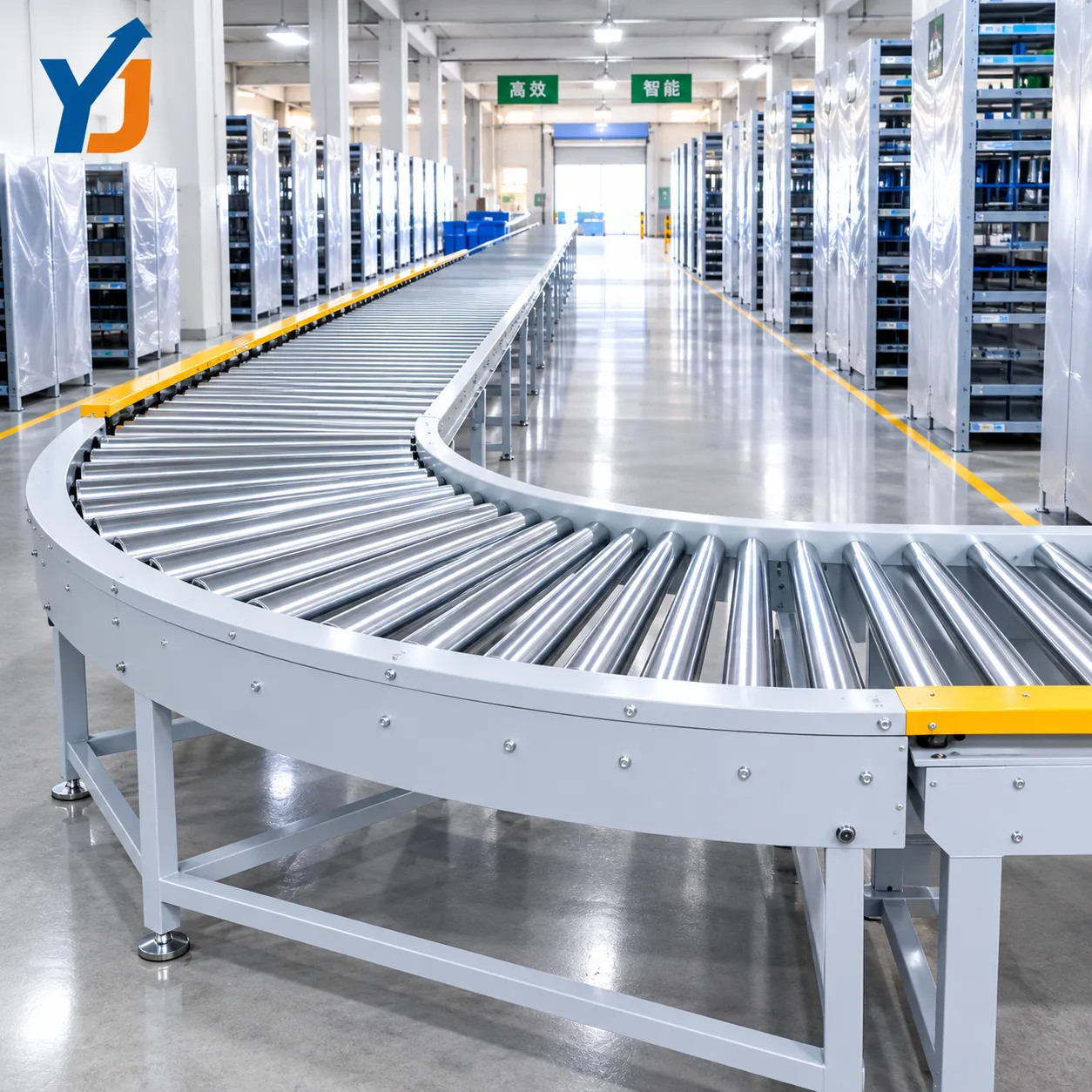
Conveyor
Cutting Edge Turning Machine
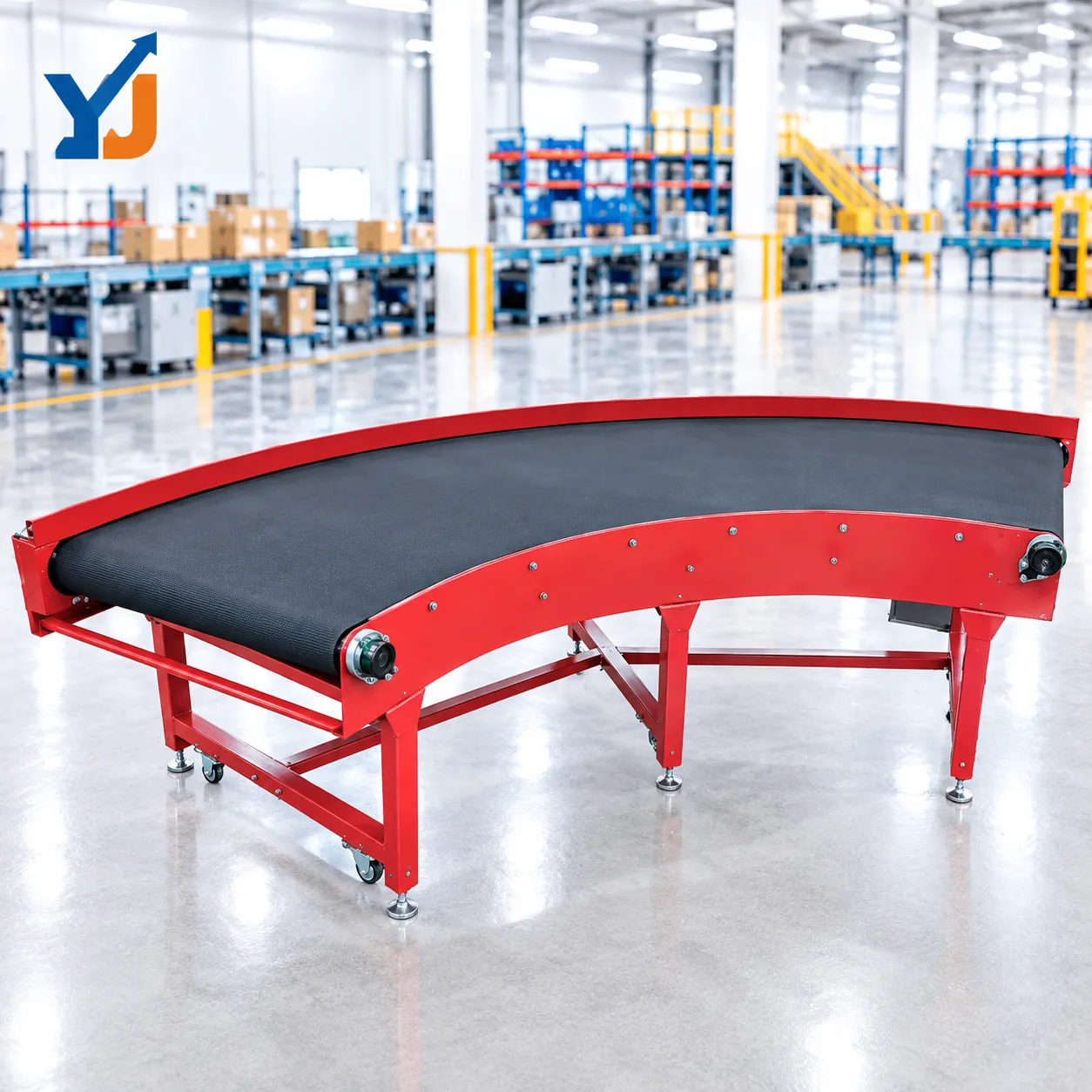
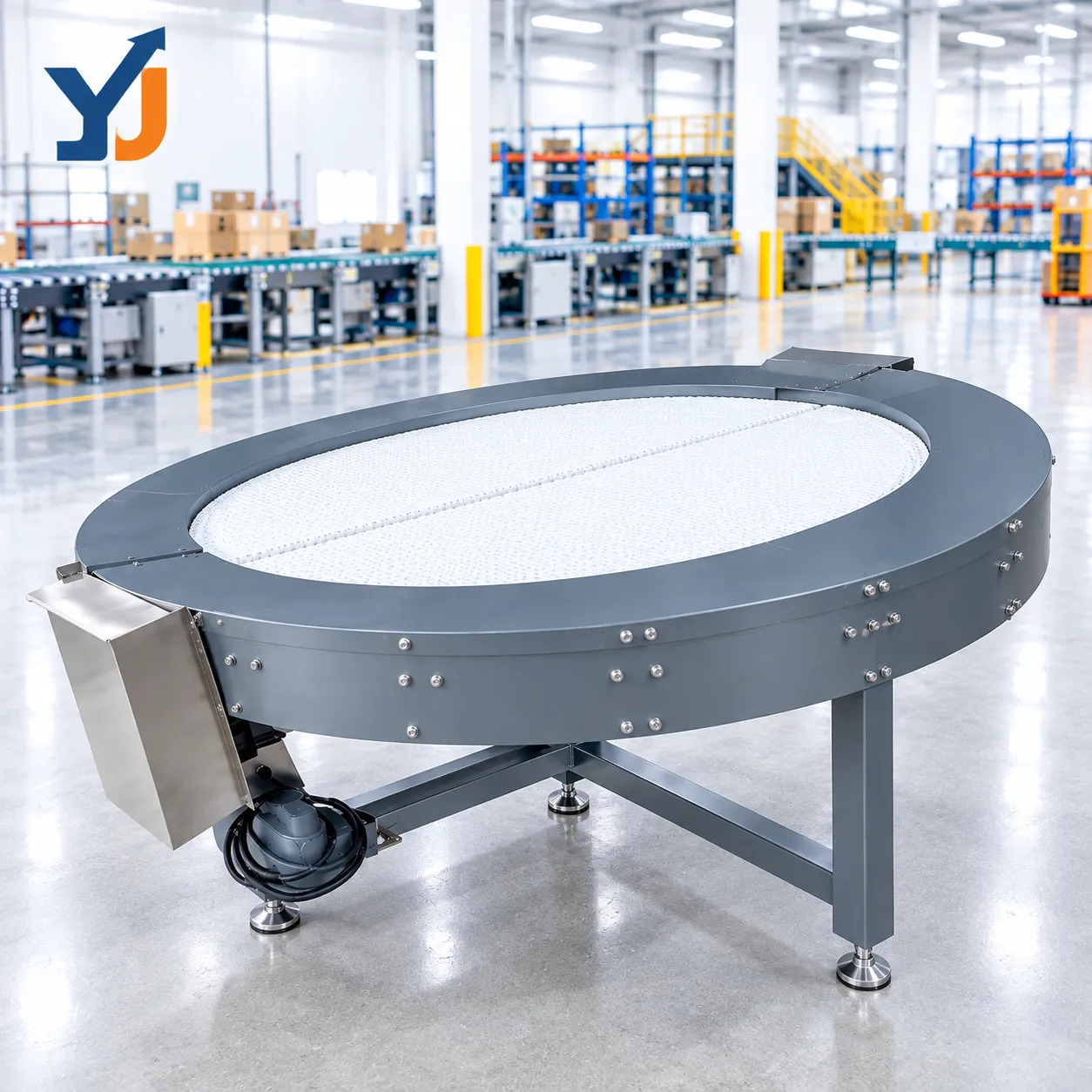
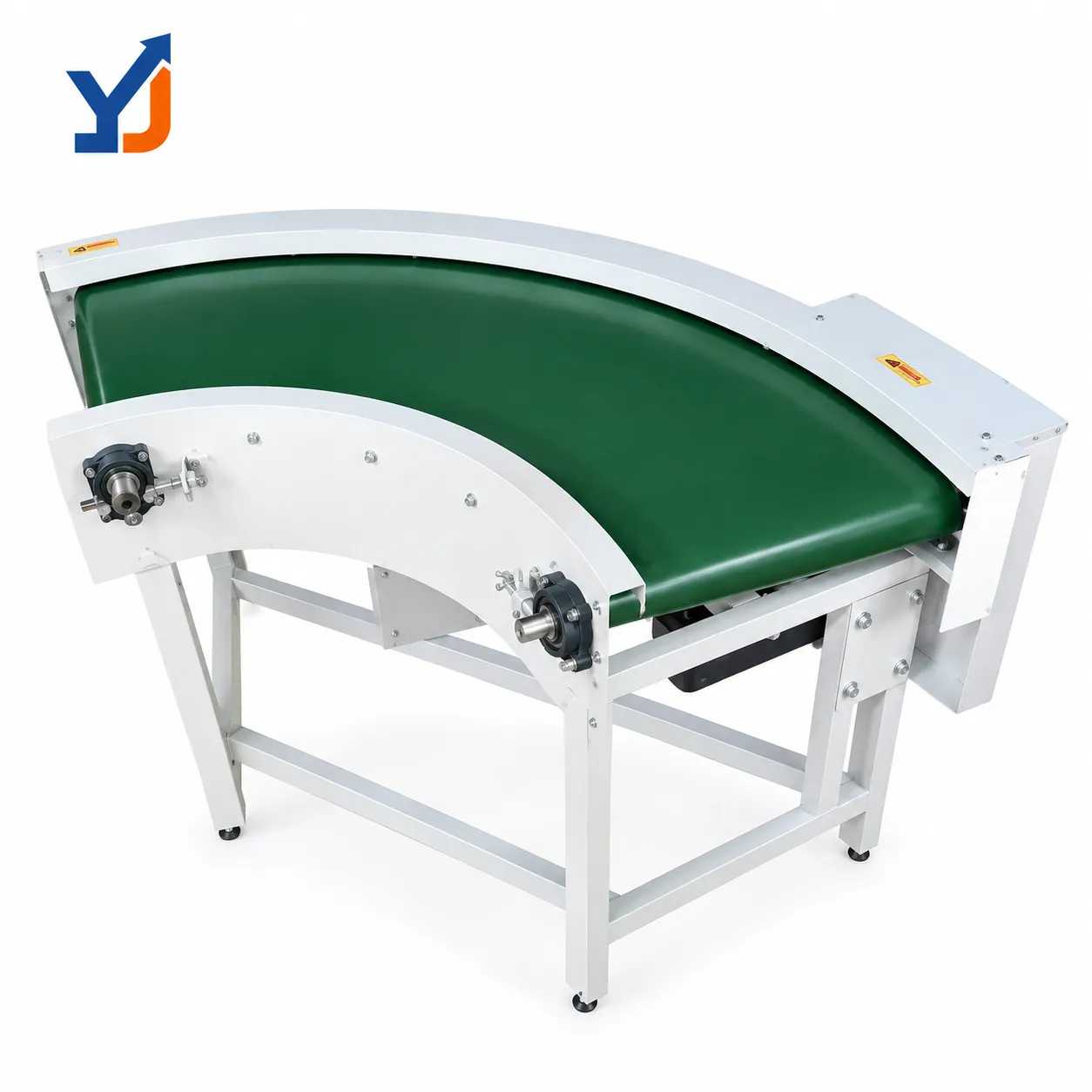
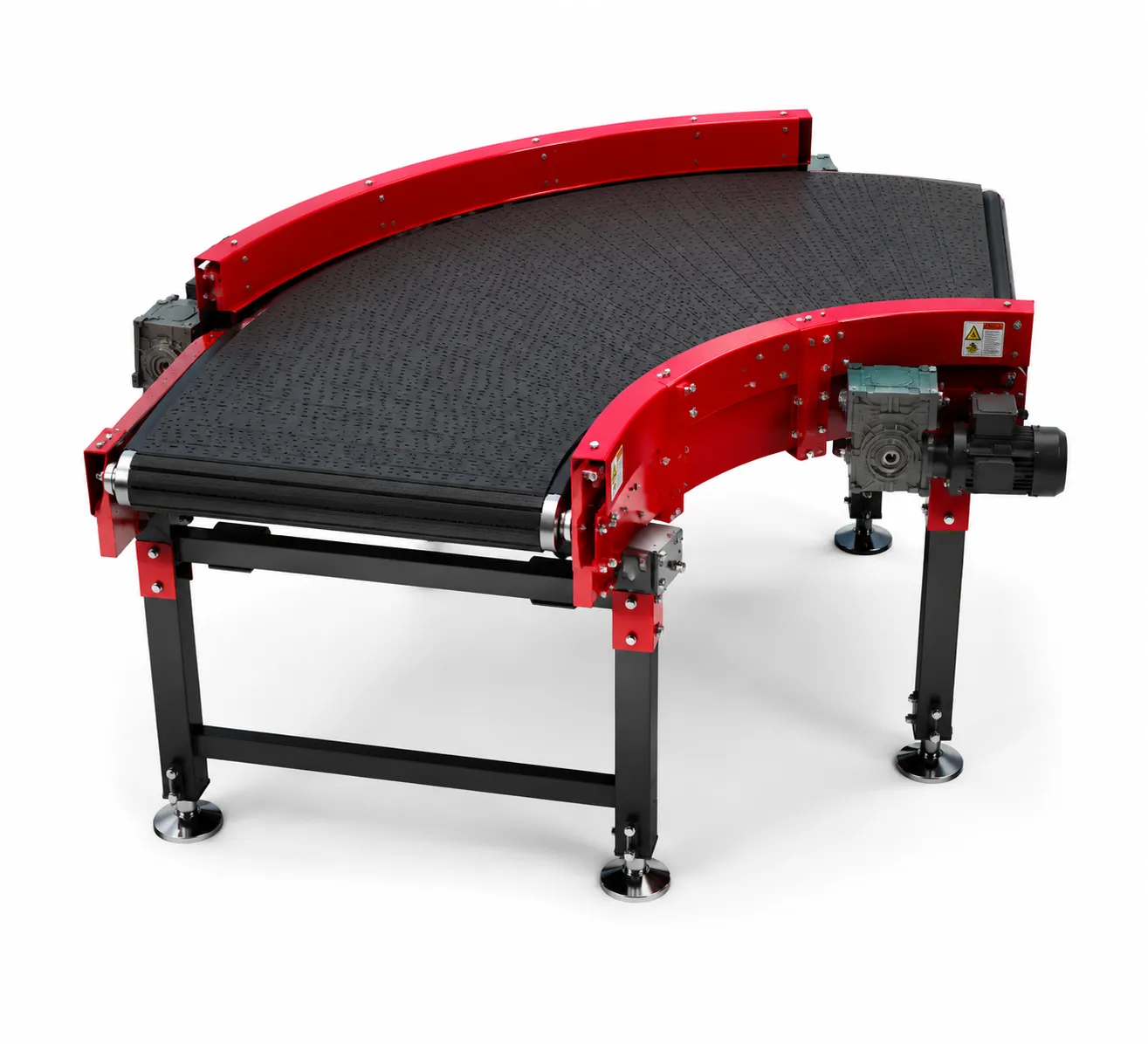
The Cutting Edge Turning Machine is used for the transitional conveying of smal-sized products, preventing products from getting stuck during the transition between two conveyors. The knife -type turner is suitable as auxiliary equl pment for conveying lines handling smal-sized products with dimensions 220x20 mm, such as food, electronics, pharmaceuticals, and chemical products.
- Knife-Edge Close Transfer
- 250 mm Minimum Inner Radius
- 30°–180° Turning Angles
- 200–2,000 mm Custom Belt Width
- Up to 10 kg Dynamic Load
- ≤40 m/min Conveying Speed
- Designed for Small-Product Handling
Technical Specifications
| Specification | Details | Specification | Details |
|---|---|---|---|
| Product Type | Cutting-Edge Turning Conveyor | Application | Small Product Handling |
| Belt Material | PVC / PU / Canvas | Belt Width | 200–2,000 mm, customizable |
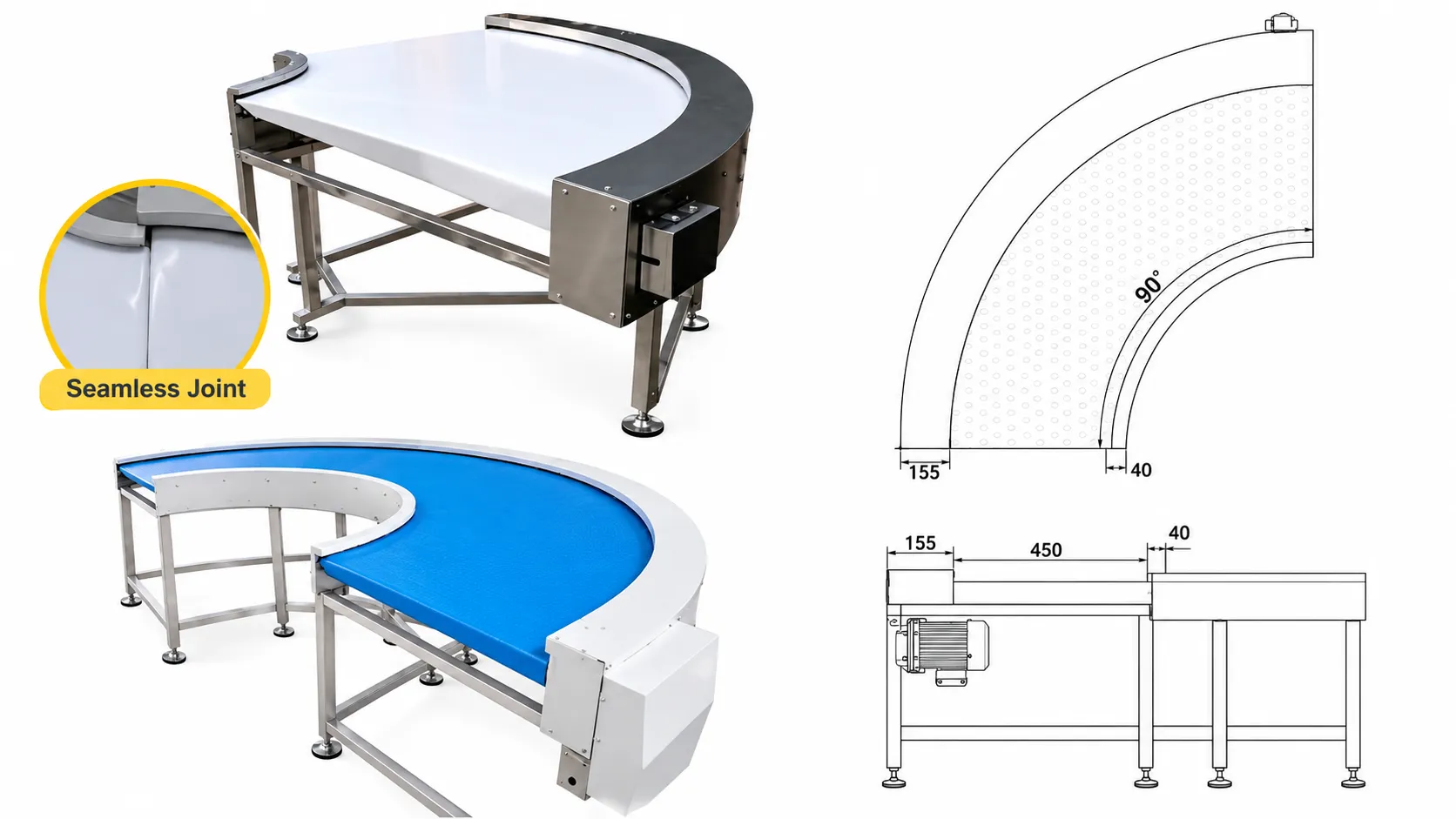
| Rack External Width | 155 mm | Rack Internal Width | 40 mm |
| Minimum Installation Height | 250 mm | Minimum Inner Radius | 250 mm |
| Turning Angle | 30°–180°, customizable | Conveying Speed | ≤40 m/min |
| Dynamic Load Capacity | ≤10 kg | Noise Level | 30–40 dB |
| Driving Structure | Internal chain-driven curved belt structure | Conveyor Type | Curved Belt Conveyor |
| Motor Brands | Zhengming / Taibang / Yongkun | Inverter | Kewo |
| Electrical Components | Chint | Drive Configuration | Motor + inverter control |
| Product Application | Food / Electronics / Pharmaceutical / Chemical | Product Size Reference | ≥20 × 20 mm |
| Customization | Belt width, turning angle and configuration | Working Mode | Continuous conveying |
Details
The Cutting Edge Turning Machine is designed for transferring small products between conveyors while minimizing the gap and dead zone commonly found at conventional conveyor transitions. Its compact curved structure and close-transfer belt design help reduce the risk of small items becoming stuck, misaligned or falling during directional changes.
With a 250 mm minimum inner radius, adjustable 30°–180° turning angles and belt widths from 200 to 2,000 mm, the conveyor can be configured for different production and material-handling layouts. It is particularly suitable for small products such as food packages, electronic components, pharmaceutical products and chemical products with dimensions of approximately 20 × 20 mm or larger, subject to product testing.
Product Structure & Working Principle
Knife-Edge Transfer for Small Products
The key design feature is the close-transfer structure at the conveyor interface. Compared with conventional turning conveyors that may leave a relatively large transition gap, the knife-edge structure is intended to create a smoother product handover between conveying sections.
This is especially useful when handling small products that may otherwise become trapped or unstable at a conventional transfer point. Knife-edge transfer technology is commonly used in curved conveyors specifically to improve the handling of small products.
Compact Curved Conveyor Structure
The conveyor uses a curved belt configuration to change the direction of product flow without requiring a separate 90° transfer mechanism. The source configuration supports turning angles from 30° to 180°, allowing the equipment to be matched to different conveyor layouts and available floor space.
Tight-Radius Layout
The specified minimum inner radius is 250 mm, allowing the conveyor to be installed where a conventional large-radius curve would consume excessive floor space.
This makes the machine suitable for compact production lines and material-handling systems where the distance between upstream and downstream equipment needs to be minimized.
Smooth Handling of Small Products
The conveyor is intended for products where maintaining continuous belt support through the curve is more important than achieving very high load capacity.
Typical examples include:
- Small food packages
- Electronic components
- Pharmaceutical packages
- Chemical products
- Small cartons
- Pouches and packaged goods
- Small industrial components
The source material specifically identifies products around 20 × 20 mm and above as the intended small-product range. Actual minimum product size should be validated according to product geometry, belt configuration and transfer conditions.
Application Scenarios
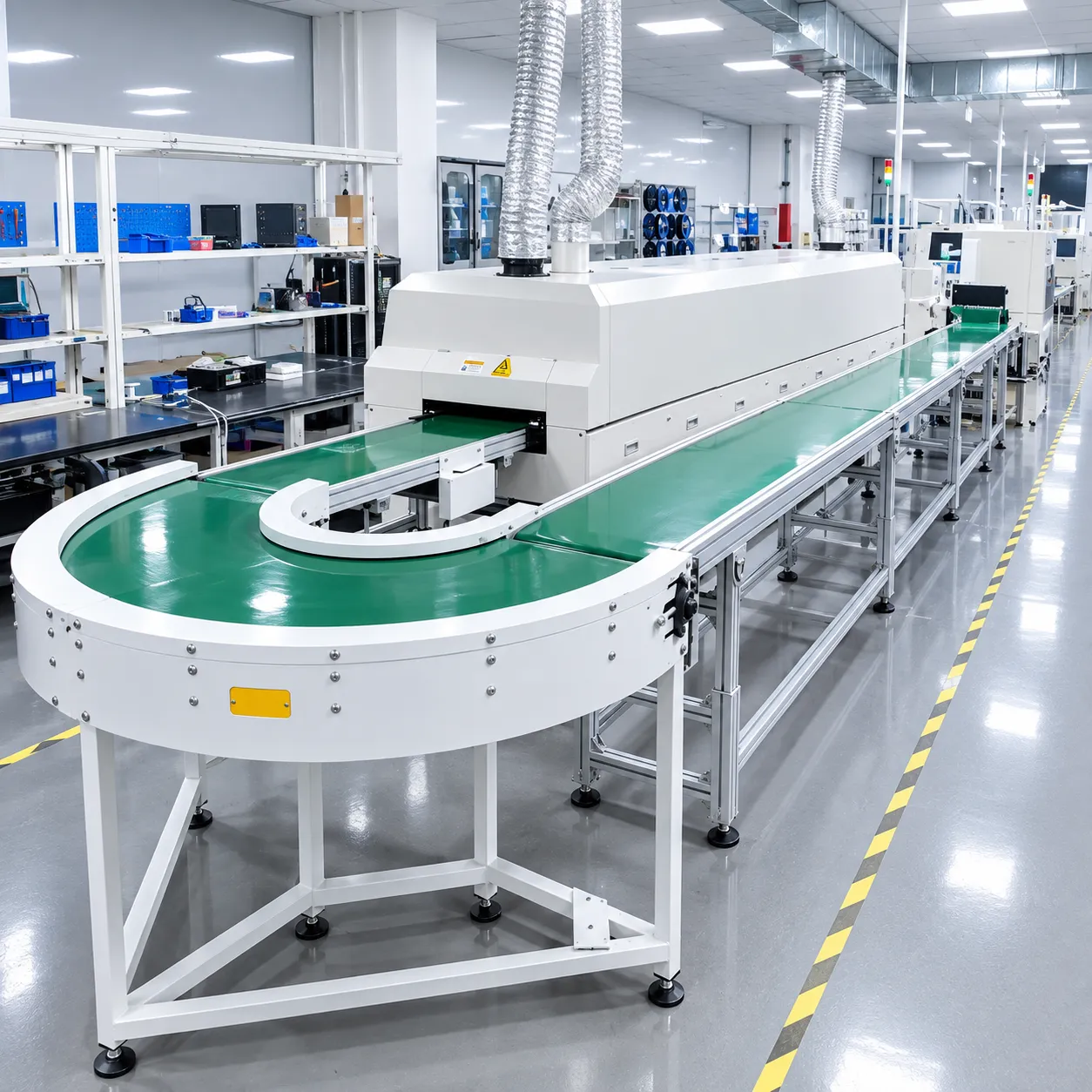
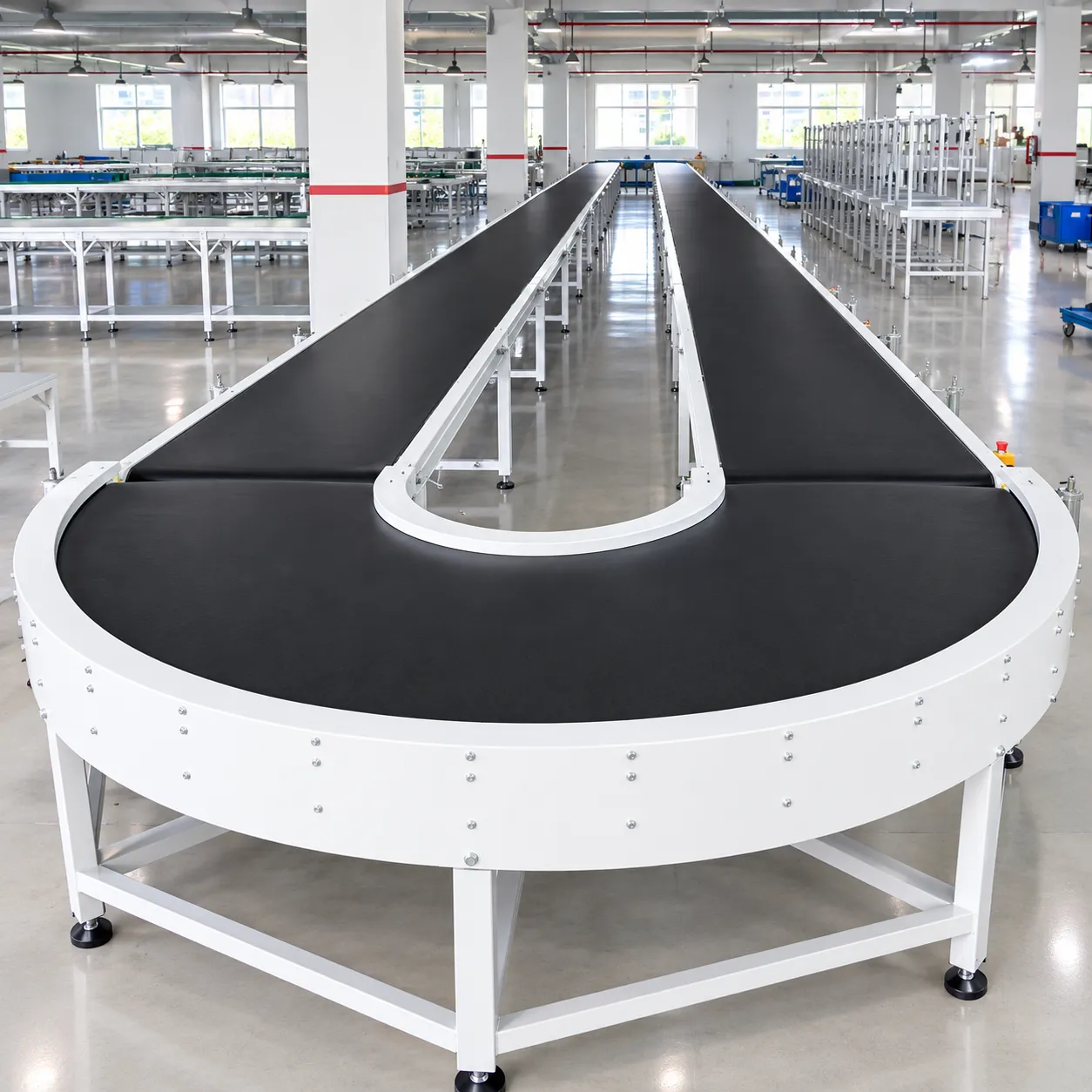
Food & Packaging: Suitable for transferring small packaged food products between processing, packaging and inspection equipment.
Electronics: The close-transfer structure can help reduce the risk of small electronic components becoming trapped at conveyor transitions.
Pharmaceutical Packaging: Suitable for conveying small packaged pharmaceutical products through changes in conveyor direction.
Chemical Products: Can be integrated into material-handling lines for packaged chemical products where controlled transfer is required.
Small-Part Material Handling: The compact turning structure can connect straight conveyors, inspection machines, packaging machines and other automated equipment.
 |  |
|---|
Small-Product Transfer Advantage
Traditional conveyor turns may create a transfer gap that is acceptable for large cartons but problematic for small products.
For small packages, the gap can result in:
- Product trapping
- Product tipping
- Product deviation
- Interrupted conveying
- Reduced line stability
The knife-edge design addresses the transition point by reducing the effective transfer gap, making it more suitable for small products. This type of close-transfer approach is also used commercially in curved conveyors designed specifically for small and lightweight products.
FAQ
A knife-edge turning conveyor is a curved belt conveyor designed to change product direction while providing a close transfer interface for small products. It is particularly useful where conventional conveyor gaps may cause small products to become stuck or unstable.
The conveyor is designed for small products used in food, electronics, pharmaceutical, chemical, packaging and small-part handling applications. The source specification references products with dimensions of approximately 20 × 20 mm and above, but the actual minimum product size should be confirmed through application testing.
The specified minimum inner radius is 250 mm. The actual turning radius can be configured according to the conveyor width, turning angle and installation requirements.
The standard configuration supports turning angles from 30° to 180°, with the angle customizable according to the required conveyor layout.
The specified conveying speed is up to 40 m/min. Actual operating speed should be selected according to product characteristics, belt configuration and required transfer stability.
The specified dynamic load capacity is up to 10 kg. For products exceeding this range, YJ-INTL should evaluate the product weight, dimensions and conveyor configuration before recommending a suitable model.
Yes. The source specification provides belt widths from 200 mm to 2,000 mm and allows customization according to the application and line layout.
The knife-edge structure reduces the transfer gap between conveying sections, helping small products pass from one conveyor section to another with less risk of becoming trapped or falling into the transfer area.
Typical applications include food packaging, electronics, pharmaceutical packaging, chemical products, packaging lines and small-part material handling.
Yes. The conveyor can be configured as part of a larger material-handling line and connected with straight conveyors, packaging equipment, inspection systems and other conveying equipment. Interface dimensions and operating conditions should be confirmed during project design.