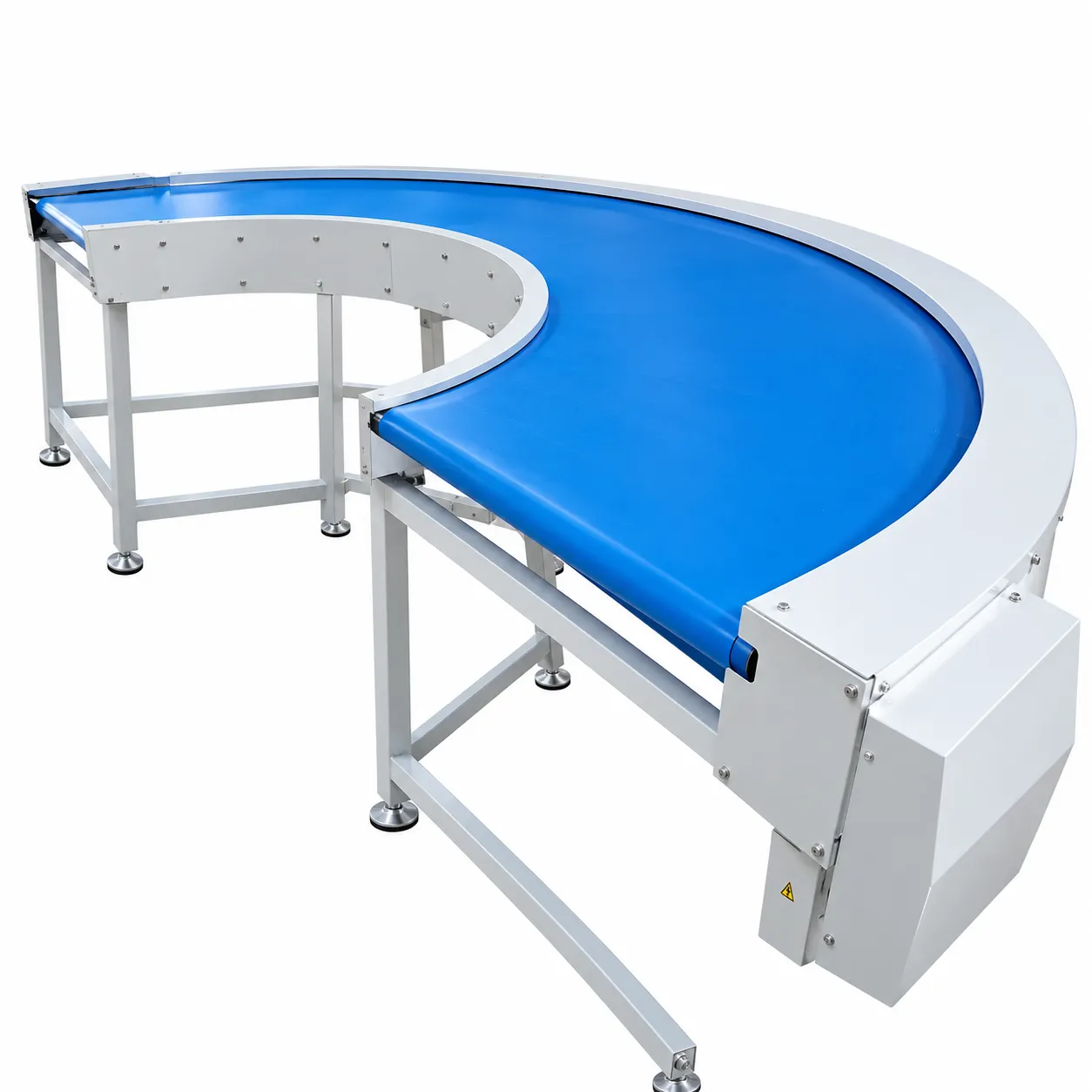
Conveyor
Guide-Wheel Turning Machine
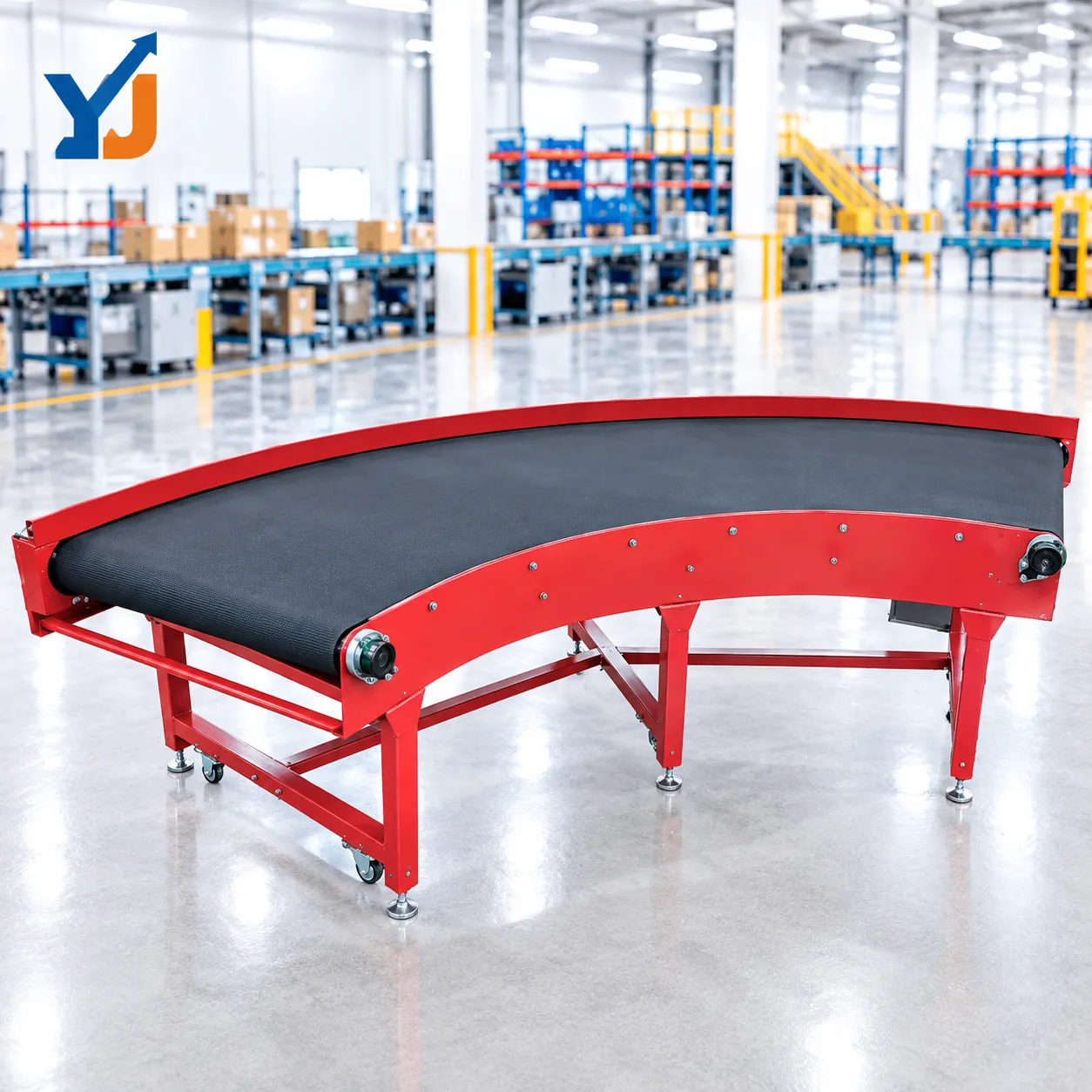
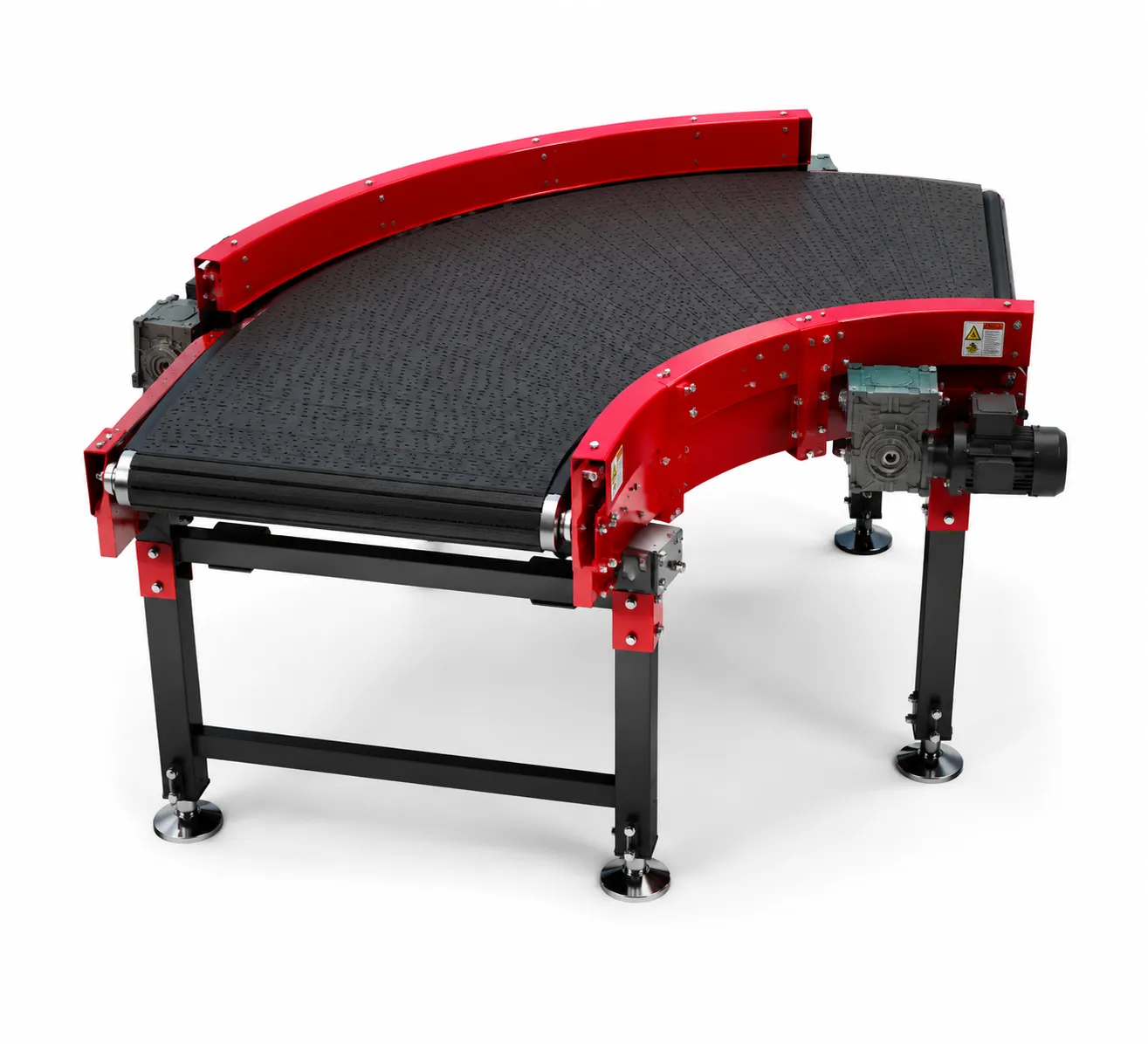
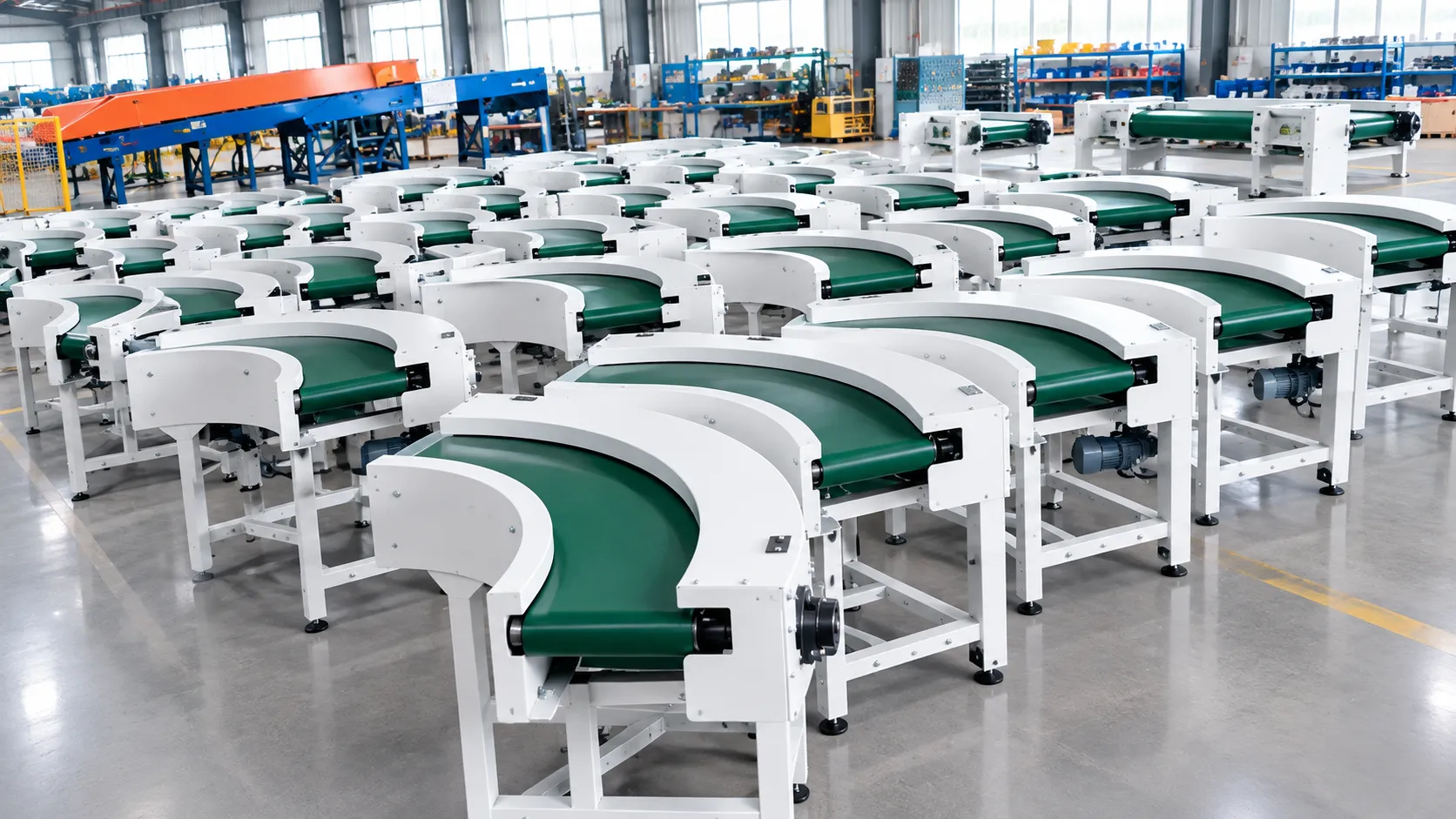
The YJ-INTL Guide Roller Belt Curve Conveyor is designed to change the conveying direction of cartons, packages and other unit loads while maintaining continuous belt transport.
Unlike a straight belt conveyor, the curved configuration allows materials to follow a controlled turning path without requiring a separate transfer between two straight conveyor sections. Guide rollers are arranged along the belt edge to provide lateral guidance and help maintain belt alignment during operation.
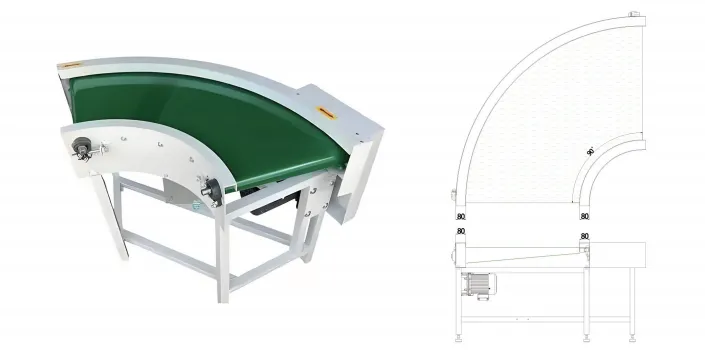
The conveyor can be configured with 30°, 45°, 60°, 90° or 180° turning angles, with custom angles available from approximately 30° to 180°. Belt widths from 200 to 1,200 mm are available, with wider configurations up to approximately 2,000 mm possible according to the supplied specification.
- 30°–180° Custom Turning Angle
- 200–1,200 mm Standard Belt Widths
- Up to 60 kg Dynamic Load
- ≤30 m/min Conveying Speed
- PVC / PU / PVK Belt Options
- Guide-Roller Anti-Deviation Structure
- 0.2–1.5 kW Drive Configuration
Technical Specifications
| Specification | Details |
|---|---|
| Product Type | Guide-Wheel Turning Machine |
| Conveyor Function | Directional / Curved Material Conveying |
| Turning Angle | 30°, 45°, 60°, 90°, 180° |
| Custom Turning Angle | Approx. 30°–180° |
| Belt Material | PVC / PU / PVK / High-Temperature Fabric |
| Belt Width | 200 / 300 / 400 / 500 / 600 / 800 / 900 / 1,000 / 1,200 mm |
| Maximum Customized Belt Width | Approx. 2,000 mm |
| Frame Outer Width | 80 mm |
| Frame Inner Width | 80 mm |
| Minimum Installation Height | 300 mm |
| Curve Radius | Approx. R250–R2,000 mm, project dependent |
| Drive Type | Guide Roller Transmission |
| Motor Power | 0.2–1.5 kW |
| Frequency Converter | Kewo / customizable |
| Electrical Components | Chint / customizable |
| Conveying Speed | ≤30 m/min |
| Maximum Dynamic Load | ≤60 kg |
| Working Direction | Bidirectional |
| Noise Level | ≤50 dB reference |
| Working Temperature | -5°C to 40°C |
| Guide Roller Material | Environmentally Friendly Nylon |
| Drive Configuration | Motorized |
| Installation | Fixed conveyor system |
| Customization | Available |
Engineering Note: Final belt width, radius, motor power, turning angle, load capacity and speed should be confirmed according to the actual conveyed material and conveyor layout.
Details
Product Structure
The defining feature of this conveyor is the guide-roller arrangement installed along the edge of the conveying belt.
The guide rollers are made from environmentally friendly nylon according to the supplied product specification. During conveying, they help guide the belt and provide lateral support, helping reduce belt deviation during curved movement.
This structure is particularly important for curved conveyors because the belt experiences different lateral forces while changing direction compared with a straight conveyor.
Belt Material Options
The conveyor supports multiple belt materials according to the application.
PVC Belt
Suitable for general packaged goods and standard material-handling applications.
PU Belt
Suitable where a different belt surface or material characteristic is required.
PVK Belt
Can be selected for applications requiring a more durable conveyor belt configuration.
High-Temperature Fabric Belt
Available for applications where the conveying environment requires a higher temperature-resistant belt material.
The final belt selection should be based on the conveyed material, temperature, surface condition, friction requirements and operating environment.
Product Advantages
01. Direction Change Without a Separate Transfer
The curved belt allows products to remain on the conveyor while changing direction.
This can reduce the need for an additional transfer section between two straight conveyors and can simplify the overall material-flow path.
02. Guide Rollers Help Maintain Belt Alignment
The guide-roller structure is one of the main characteristics of this product.
Guide rollers installed along the belt edge provide lateral guidance during curved operation, helping control belt movement and reduce the risk of belt deviation.
This is particularly relevant to curved conveyor applications where lateral forces are greater than in straight conveying sections.
03. Multiple Turning Angles
The conveyor is not limited to a standard 90° configuration.
Depending on the project, it can be configured for: 30° → 45° → 60° → 90° → 180°
or a customized angle within the applicable range.
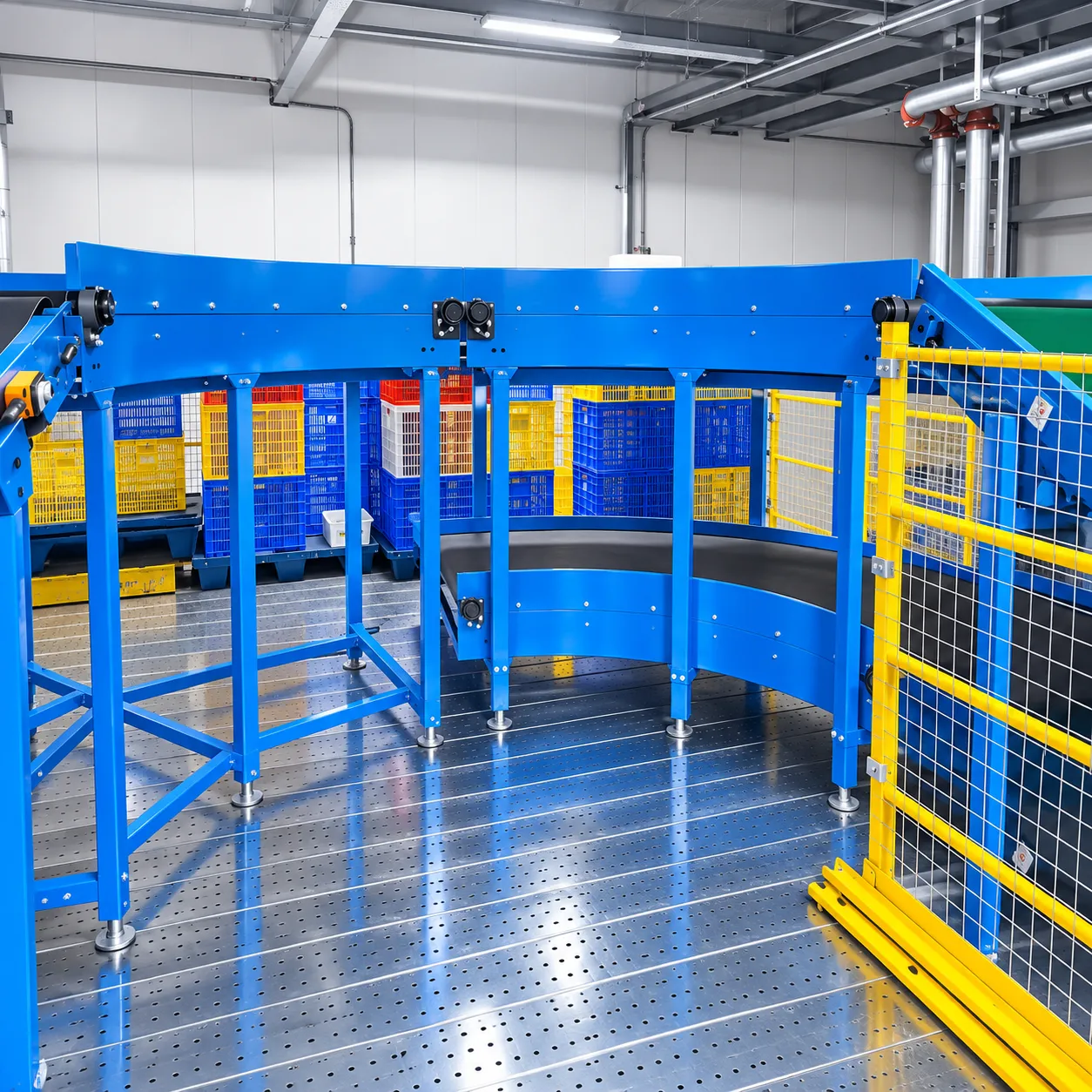
This allows the conveyor route to be adapted to different warehouse and production layouts.
04. Multiple Belt Material Choices
PVC, PU, PVK and high-temperature fabric belt options allow the conveyor to be matched to different material-handling requirements. This is more practical than using one fixed belt material across every application.
05. Economical Configuration for Controlled Conveying
According to the supplied product material, the equipment emphasizes smooth conveying and relatively economical configuration. It is particularly suitable for applications where the material flow does not require extremely high conveying speed.
 |  |
|---|
Why Choose YJ-INTL?
Application-Based Conveyor Design
YJ-INTL can configure the conveyor around the actual product dimensions, weight, speed and site layout rather than treating the curved conveyor as a fixed-size commodity product.
Mechanical Configuration
Turning angle, belt width, curve radius, motor power and guide-roller arrangement can be selected according to project requirements.
Belt Material Selection
PVC, PU, PVK and high-temperature fabric options provide flexibility for different conveying environments.
Integration With Complete Conveyor Lines
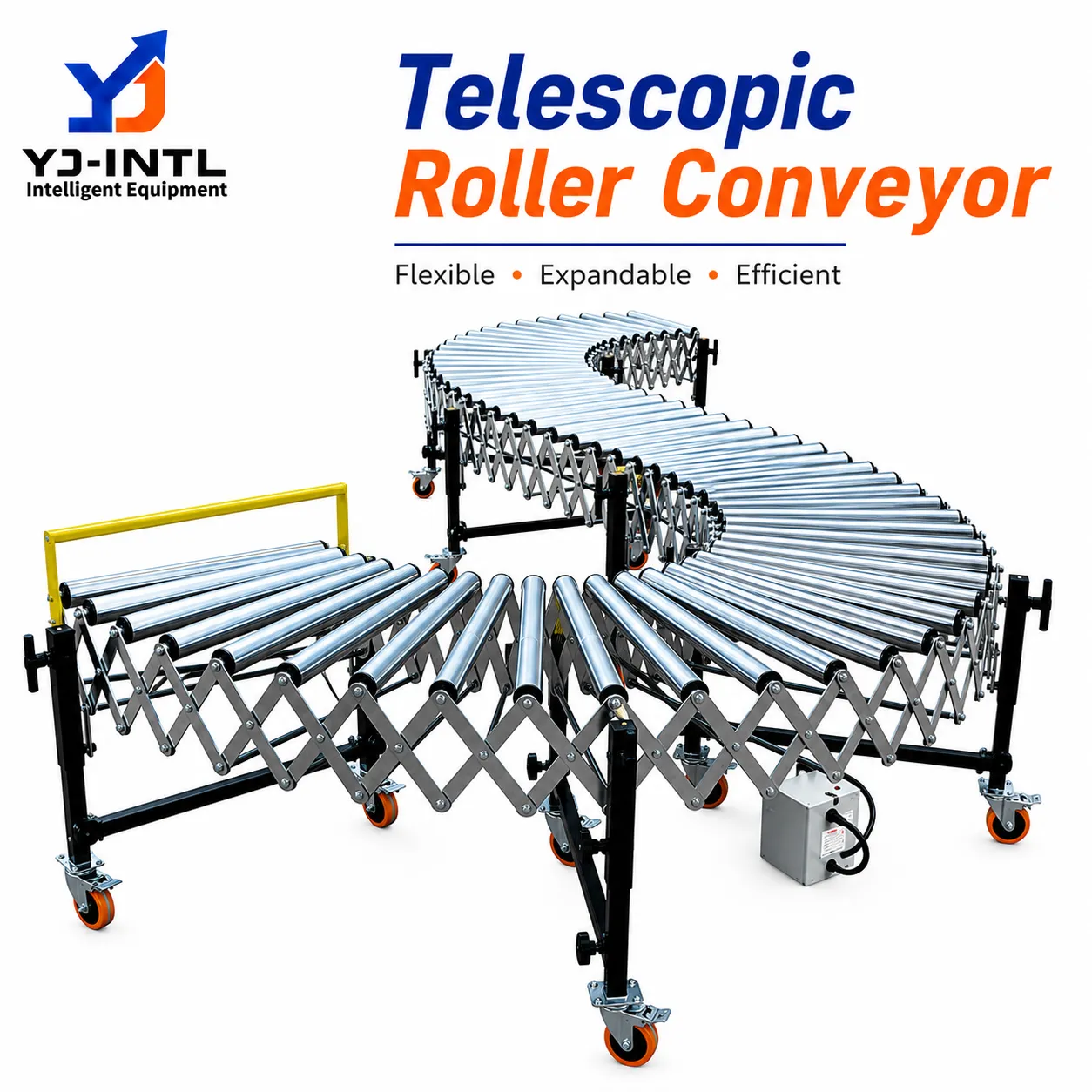
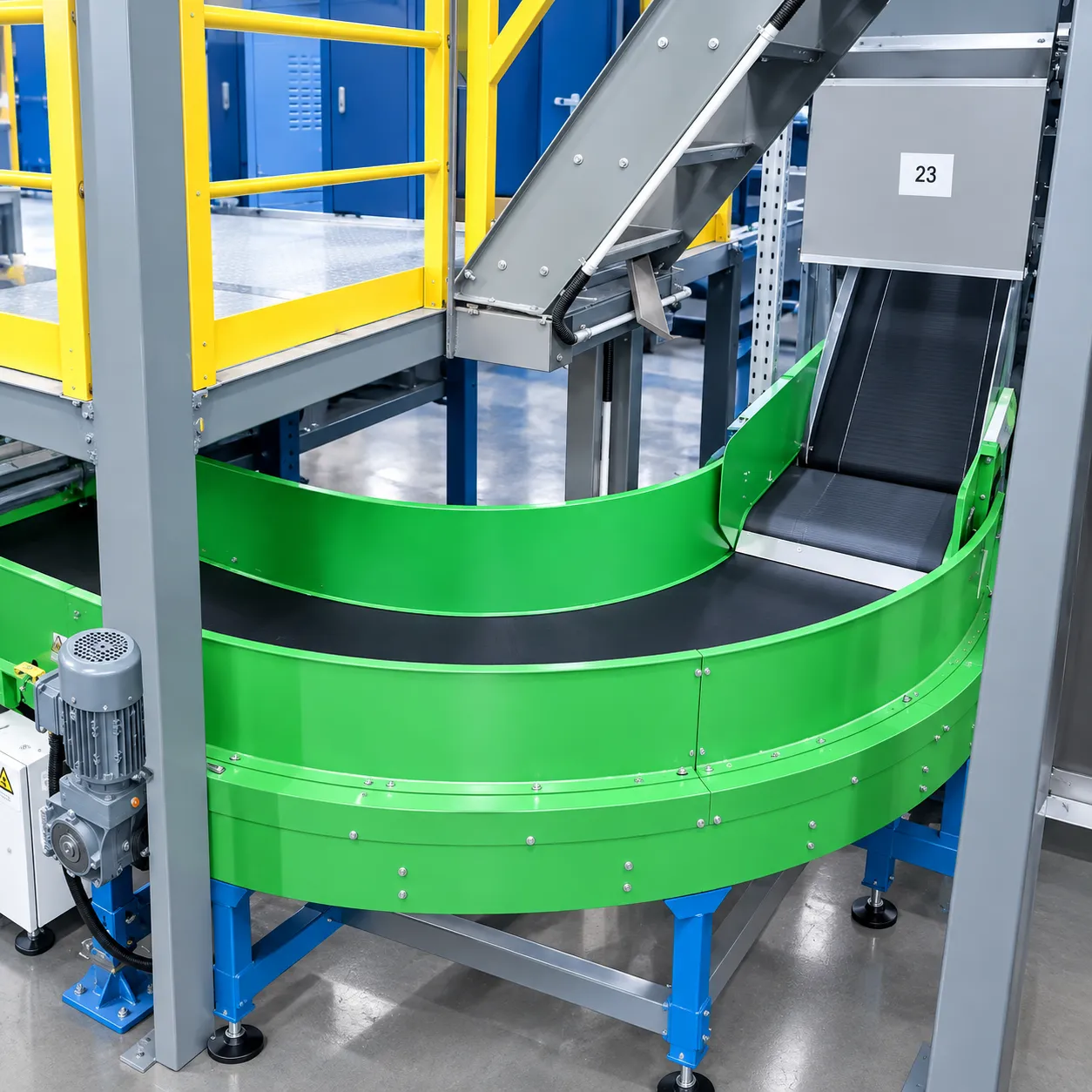
The curve conveyor can be designed together with straight conveyors, telescopic conveyors, sorting systems and other warehouse automation equipment.
Project Engineering Support
For customized projects, the required mechanical dimensions, connection points and drive configuration can be reviewed before production.
FAQ
A Guide Roller Belt Curve Conveyor is a powered curved belt conveyor designed to change the direction of material flow while continuously supporting the conveyed products on the belt.
Its main function is to redirect cartons, packages, components or other suitable materials between different conveying directions without requiring a separate transfer between two straight conveyor sections.
The supplied product specification lists 30°, 45°, 60°, 90° and 180° as standard turning-angle options.
Yes. The supplied specification indicates that turning angles from approximately 30° to 180° can be customized according to the project layout.
Standard belt widths listed in the supplied specification include 200, 300, 400, 500, 600, 800, 900, 1,000 and 1,200 mm. Wider configurations up to approximately 2,000 mm can be customized according to project requirements.
The available belt materials include PVC, PU, PVK and high-temperature fabric belts. Final belt selection depends on the conveyed material and working environment.
The reference conveying speed is up to 30 m/min. This conveyor is intended primarily for controlled directional conveying rather than extremely high-speed material transport.
The supplied specification indicates a maximum dynamic load of 60 kg. Actual load capability should be confirmed according to product dimensions, belt width, curve radius and operating conditions.
The reference motor power range is 0.2–1.5 kW. Final motor selection depends on belt width, load, curve configuration, speed and operating duty.
The guide rollers are installed along the edge of the belt. According to the supplied product description, they are made from environmentally friendly nylon and help provide belt guidance, anti-deviation control and lateral support during curved conveying.
Yes. The supplied specification identifies the working direction as bidirectional. The final drive and control configuration should be confirmed for the specific application.
The supplied technical specification lists a minimum installation height of 300 mm.
The reference dimensional information indicates curve configurations from approximately R250 to R2,000 mm, with the final radius depending on belt width, turning angle and project layout.
Yes. The supplied product material specifically identifies electronics-related applications as a suitable use case. The conveyor can be used to redirect products between different processing or assembly areas.
Yes. A curved section can be connected between straight conveyors to create a continuous material-handling route. Connection dimensions and conveying height should be matched during engineering.
Important information includes product dimensions, product weight, required conveying speed, turning angle, belt width, available installation space, upstream and downstream conveyor dimensions, working environment and required belt material.