Conveyor
Parcel Anti-overlapping System
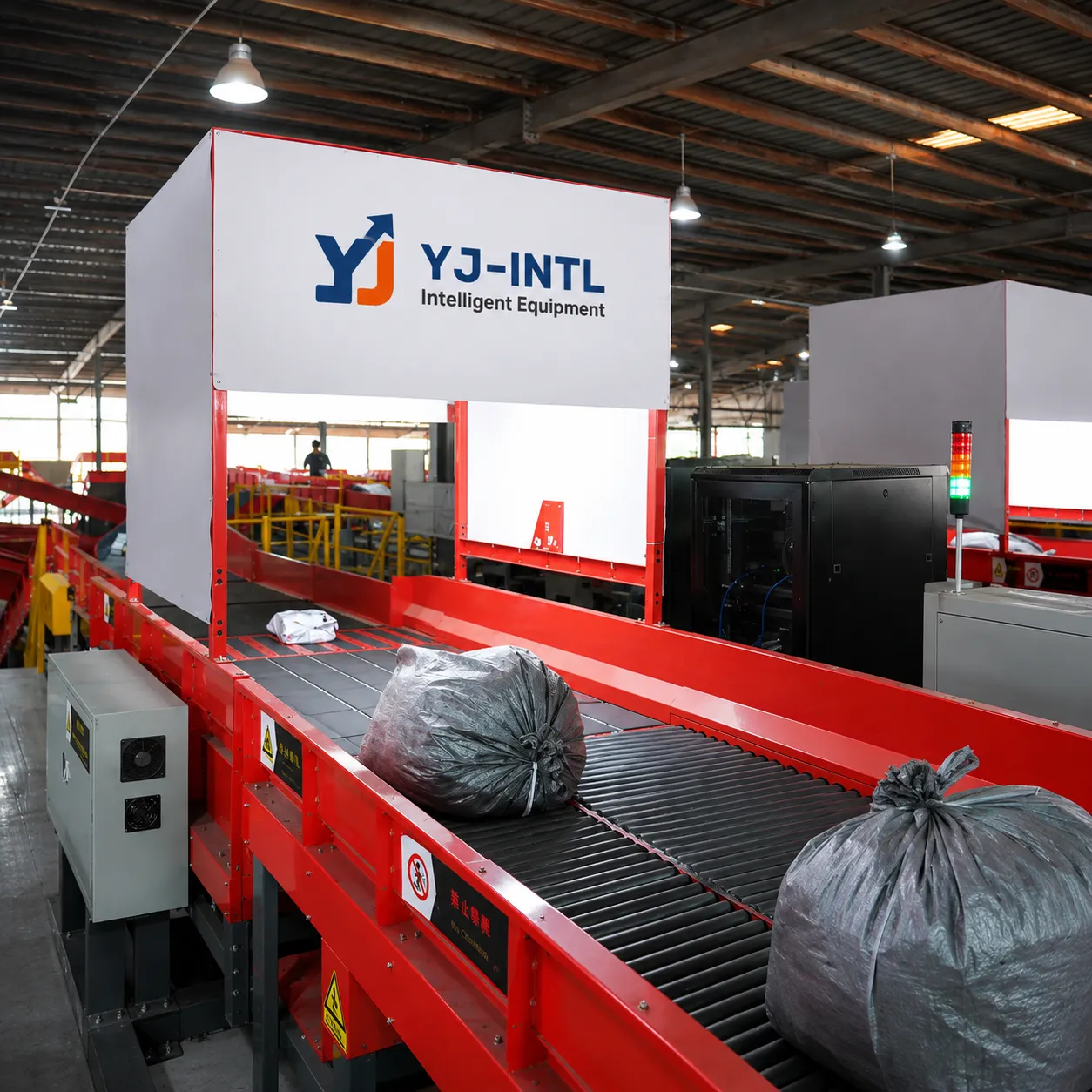
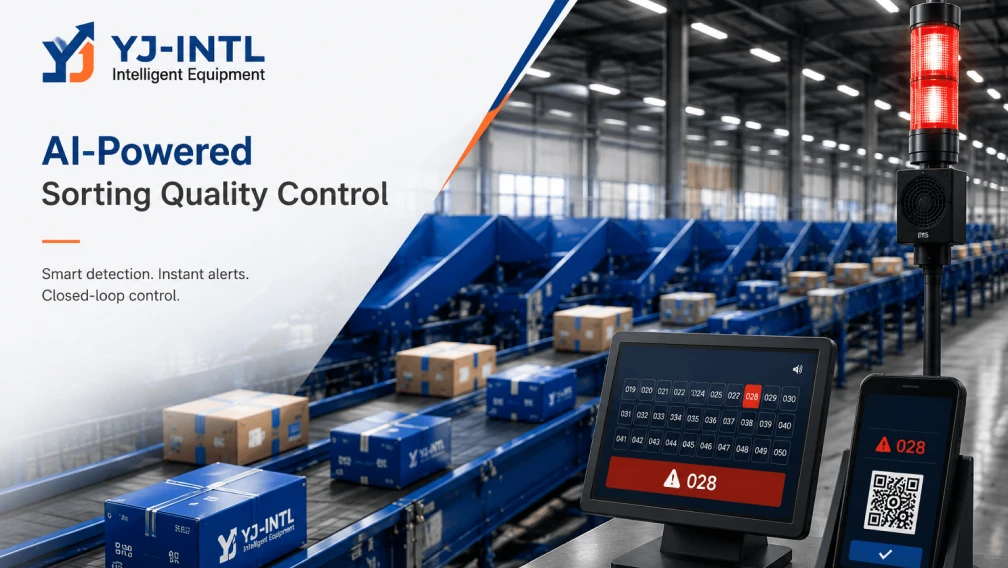
Centered on an intelligent integrated camera system and powered by proprietary control algorithms, the solution identifies the status of parcels on the conveyor belt and controls their differential-speed movement and descent; this effectively de-stacks accumulated parcels and ensures their orderly delivery to downstream sorting systems.
- Parcel Anti-overlapping System
- Controlled Material Flow
- Height-Based Flow Separation
- Overlap Reduction
- Continuous Parcel Feeding
- Pre-Sorting Flow Conditioning
- Downstream Sorter Compatibility
Technical Specifications
| Parameter | Specification |
|---|---|
| Product Type | Incline Parcel De-Overlapping Conveyor |
| Main Function | De-Stacking + De-Overlapping |
| Conveyor Configuration | Inclined |
| Input Flow | Piled / Dense / Overlapping Parcels |
| Output Flow | More Separated Parcel Flow |
| Separation Method | Inclined Conveying + Controlled Speed / Spacing |
| Conveyor Width | Customized |
| Incline Angle | Project Based |
| Conveyor Speed | Project Based |
| Throughput | Project Based |
| Parcel Range | Project Based |
| Downstream Integration | DWS / Scanning / Sorting |
| Control | Automated |
| Layout | Customized |
Details
Parcel Anti-overlapping System
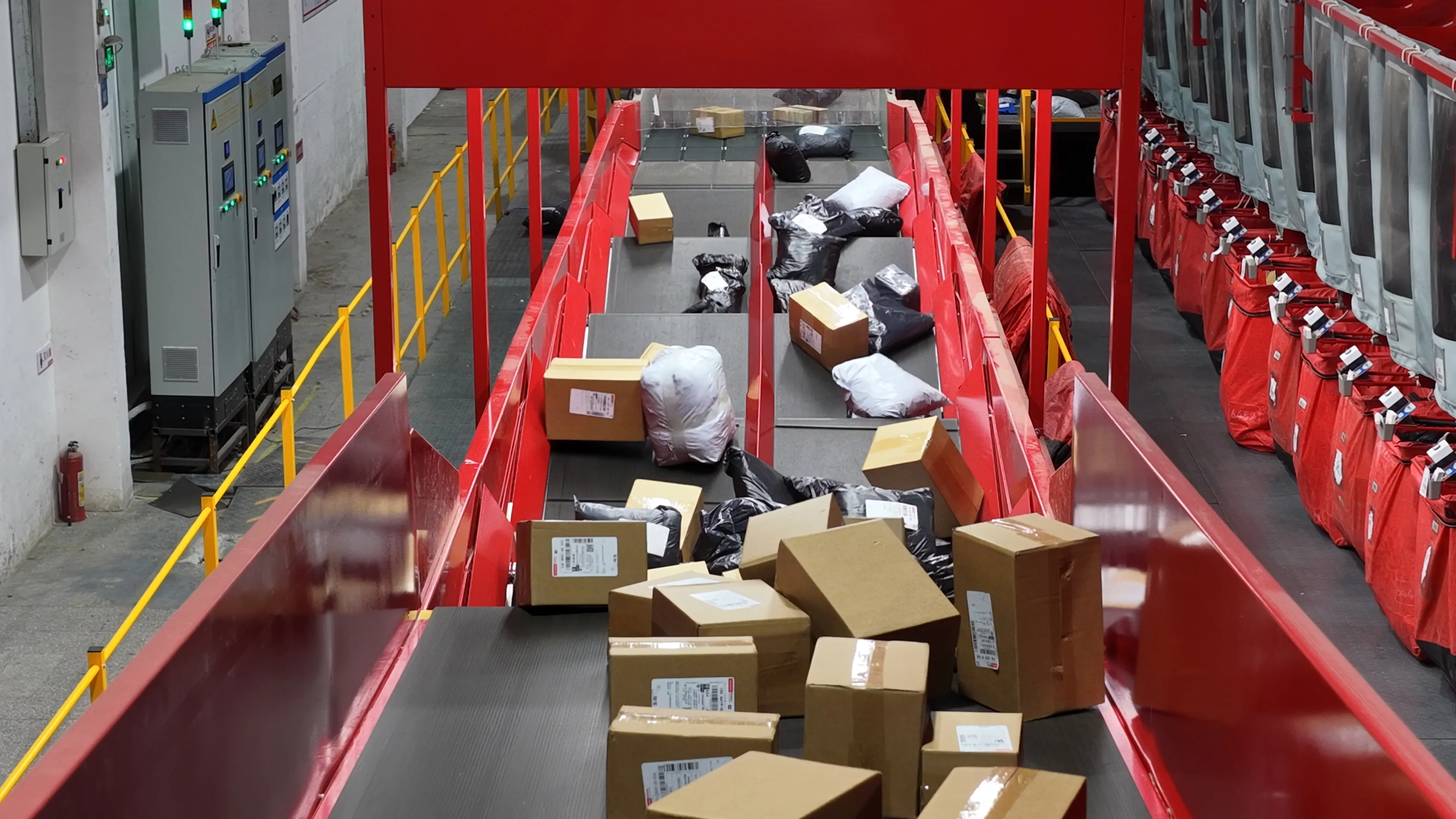
In parcel handling operations, packages may arrive in a highly compact state. Some may partially overlap, while others may be stacked or closely grouped because of upstream feeding conditions.
Simply increasing conveyor speed does not necessarily solve this problem.
An incline-based de-overlapping section introduces a change in conveyor elevation and material-flow behavior to help reorganize the incoming packages before they enter downstream identification and sorting.
Product Advantages
01. Designed for Piled Parcel Flow
This system is intended for a different input condition from a traditional singulator.
It is particularly useful when parcels arrive with a tendency to:
- Stack
- Overlap
- Ride on top of one another
- Enter the conveyor in dense groups
The incline section helps reorganize this flow before downstream processing.
02. Incline-Based Flow Separation
The change in conveyor elevation affects the relative movement of parcels and helps create more space between items.
This provides an additional mechanical method for controlling parcel accumulation before scanning or sorting.
03. Reduces Parcel Stacking
The system focuses on the vertical relationship between packages rather than simply separating side-by-side items.
This makes it useful where the upstream process can create partially stacked or layered parcel flow.
04. Improves Downstream Feeding Conditions
After de-overlapping, the parcels are better prepared for:
- Barcode scanning
- Dynamic DWS
- Dimension measurement
- Cross belt sorting
- Narrow belt sorting
- Wheel sorting
The objective is to deliver a cleaner input flow to the next machine.
05. Continuous Operation
The de-overlapping process occurs as parcels move through the conveyor system.
This makes it suitable for high-volume logistics operations where manual de-stacking would become a bottleneck.
06. Modular Upstream Conditioning
The incline de-overlap section can be installed before the main sorting line.
A typical system could be:
Feeding → Incline De-Overlapping → Singulation / Spacing → DWS → Sorter
This provides multiple stages of parcel-flow preparation.
07. Suitable for Variable Incoming Density
The system can be incorporated into parcel lines where incoming package density changes throughout the operation.
Final configuration should be determined through sample testing and parcel-flow analysis.
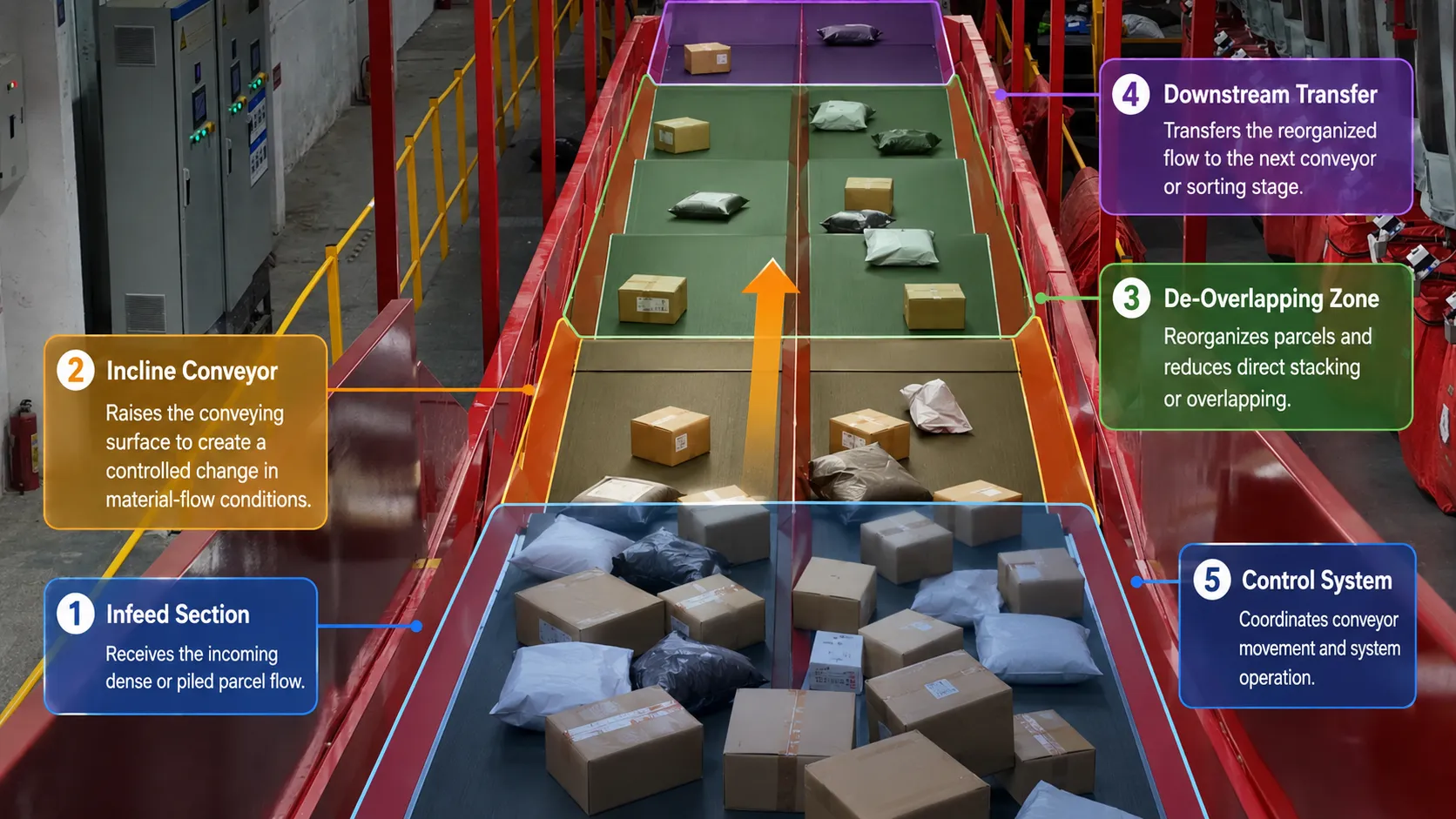
Incline De-Overlapping Conveyor Structure
Infeed Section
Receives the incoming dense or piled parcel flow.
Incline Conveyor
Raises the conveying surface to create a controlled change in material-flow conditions.
De-Overlapping Zone
Reorganizes parcels and reduces direct stacking or overlapping.
Downstream Transfer
Transfers the reorganized flow to the next conveyor or sorting stage.
Control System
Coordinates conveyor movement and system operation.
Customized Parcel Anti-overlapping System
The system can be engineered according to:
Parcel dimensions
Parcel weight
Parcel shape
Input density
Stack height
Conveyor speed
Incline angle
Conveyor width
Required output spacing
Downstream equipment
Sample Testing Recommended
Because parcel packaging varies significantly, sample testing is recommended before finalizing the incline angle, speed and mechanical configuration.
When Should You Use Parcel Anti-overlapping System?
This equipment is worth considering when your incoming flow has:
- Parcels riding on top of one another
- Partial stacking
- Heavy overlap
- High-density accumulation
- Unstable feeding from upstream equipment
For simple side-by-side close spacing, a standard singulator may be sufficient.
For vertical overlap or piled parcel conditions, an incline de-overlapping stage may provide more appropriate conditioning.
FAQ
Parcel anti overlapping systemis an upstream flow-conditioning system designed to reduce parcel stacking and overlap before packages enter scanning, DWS or automated sorting equipment.
De-overlapping focuses primarily on reducing stacked or overlapping parcel conditions, while singulation focuses on separating individual packages and establishing controlled spacing. They can be used together.
It is particularly useful when parcels arrive piled, partially stacked, riding on one another or densely grouped from an upstream feeding process.
The inclined conveying path changes the elevation and flow conditions of the parcels, helping reorganize their relative position and reduce direct overlap before downstream processing.
The system is designed to reduce stacking and overlap conditions, but the actual achievable result depends strongly on parcel size, weight, shape and packaging. Sample testing is recommended.
Yes. The two systems can be combined, with de-overlapping handling the initial stacked condition and the singulator creating a more controlled single-piece flow afterward.
Yes. The de-overlapping section can be installed upstream of a DWS to help individual parcels enter the scanning and measurement zone more consistently.
Yes. It can be used before cross belt, narrow belt, wheel and other automated parcel sorting systems.
Important parameters include parcel size, weight, shape, incoming density, stack height, conveyor width, speed, required output condition and the downstream equipment.
Yes. Incline angle, conveyor speed, width, length and overall configuration can be designed according to the actual application and verified through sample testing.