adjustable height + mobile + loading/unloading
Telescopic Roller Conveyor for Flexible Loading & Unloading
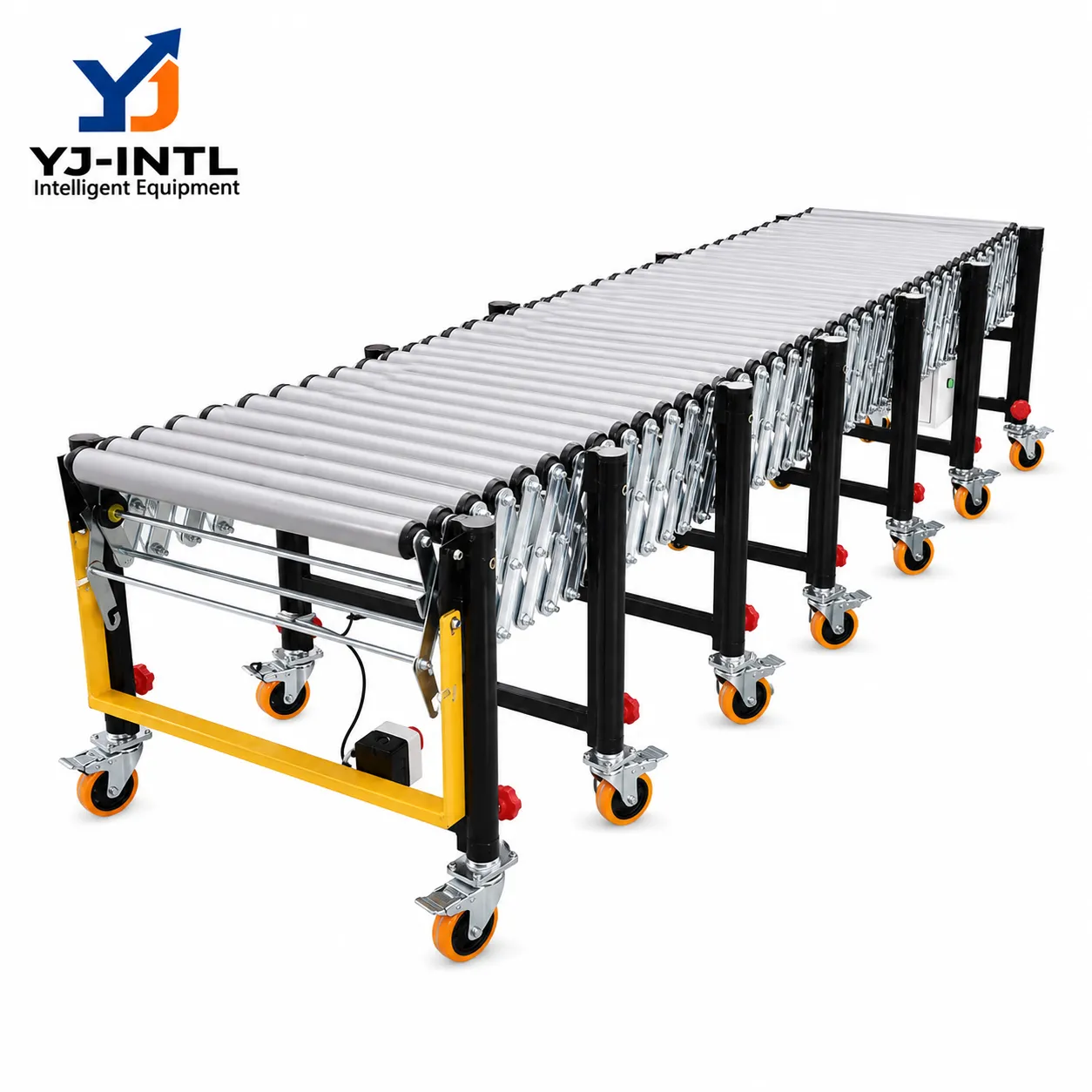
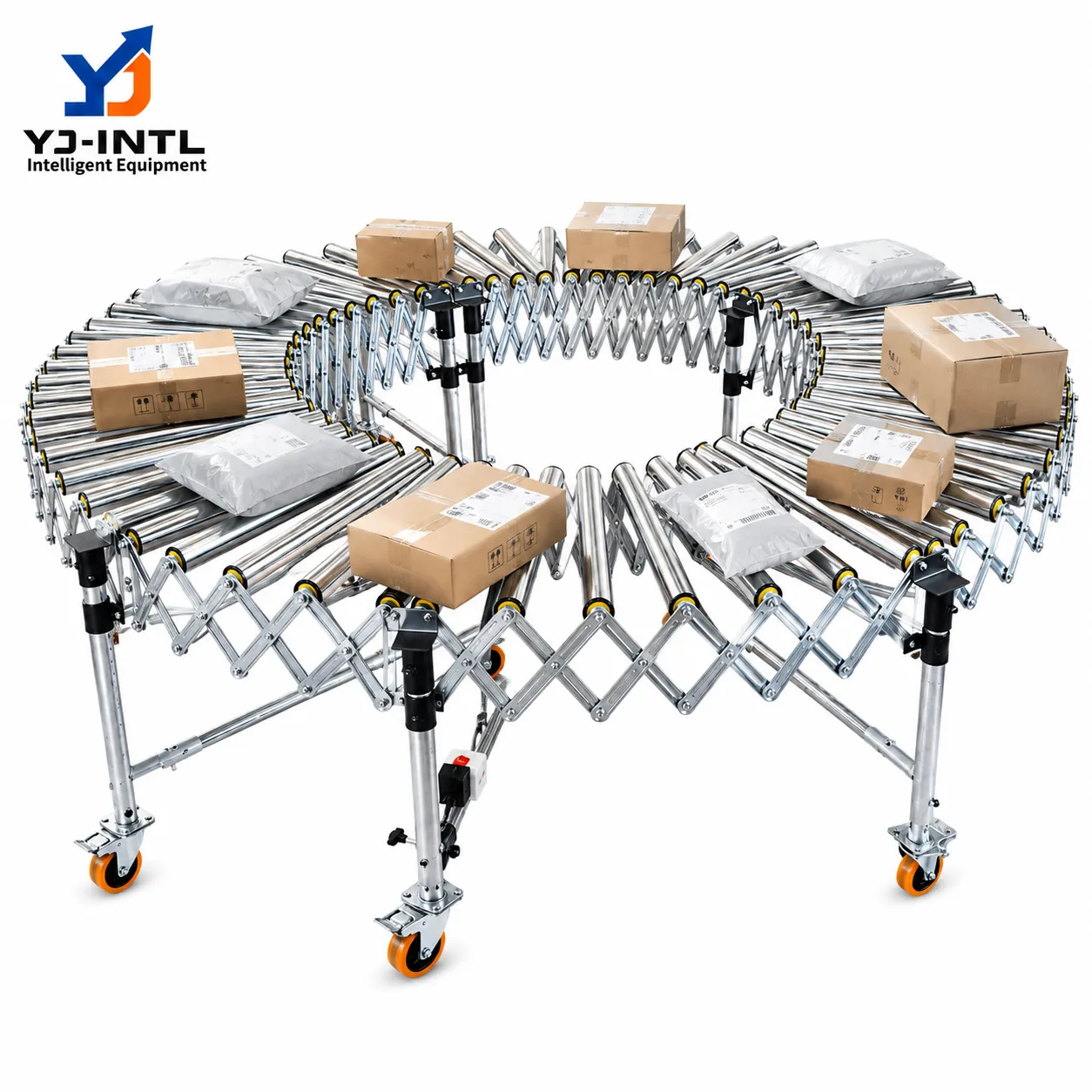
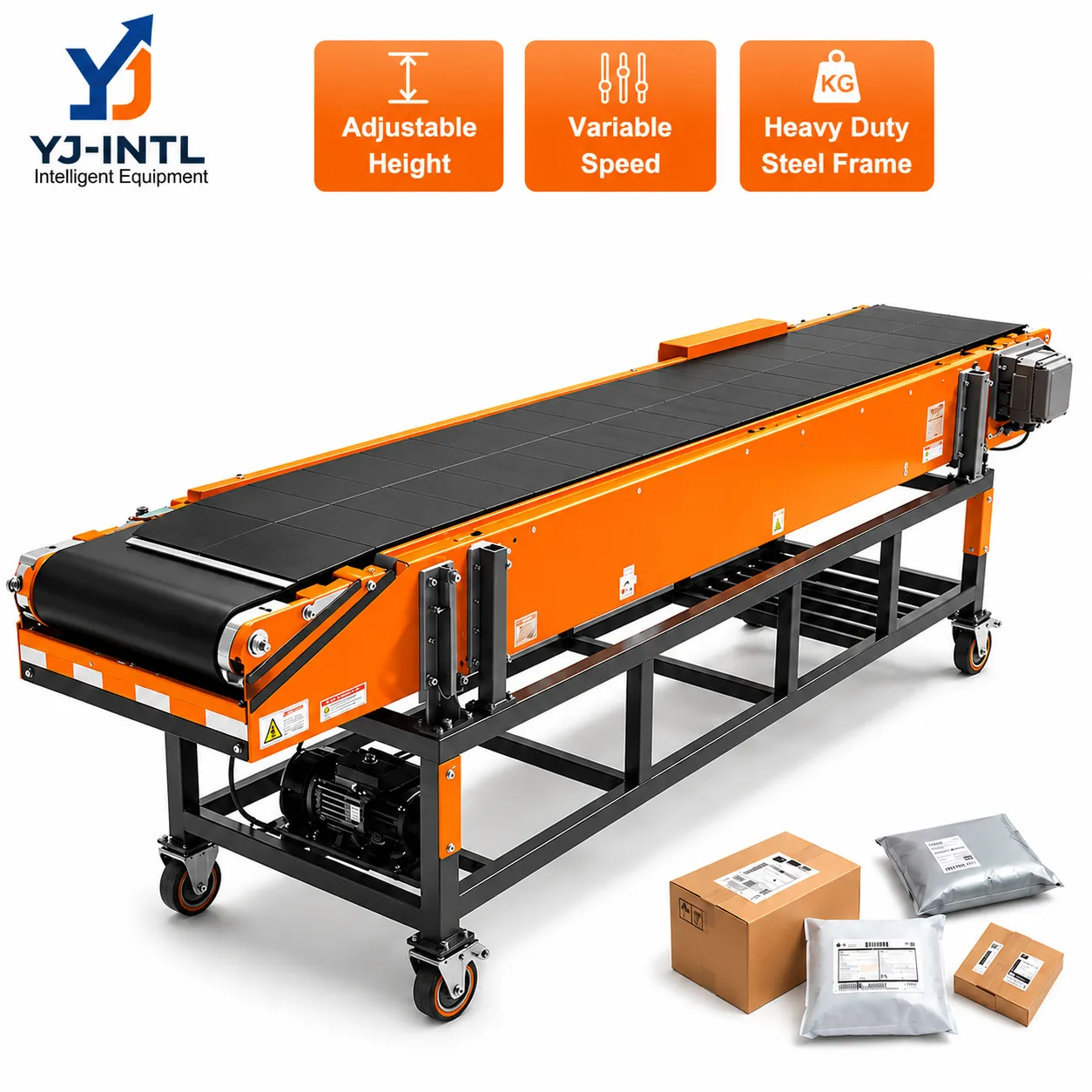
The Telescopic Roller Conveyor is a flexible material-handling solution designed for loading, unloading and short-distance transfer of cartons and packaged goods. Its extendable roller structure allows the conveyor to reach deeper into loading areas, while the mobile frame and adjustable height make it easier to position according to different working conditions.
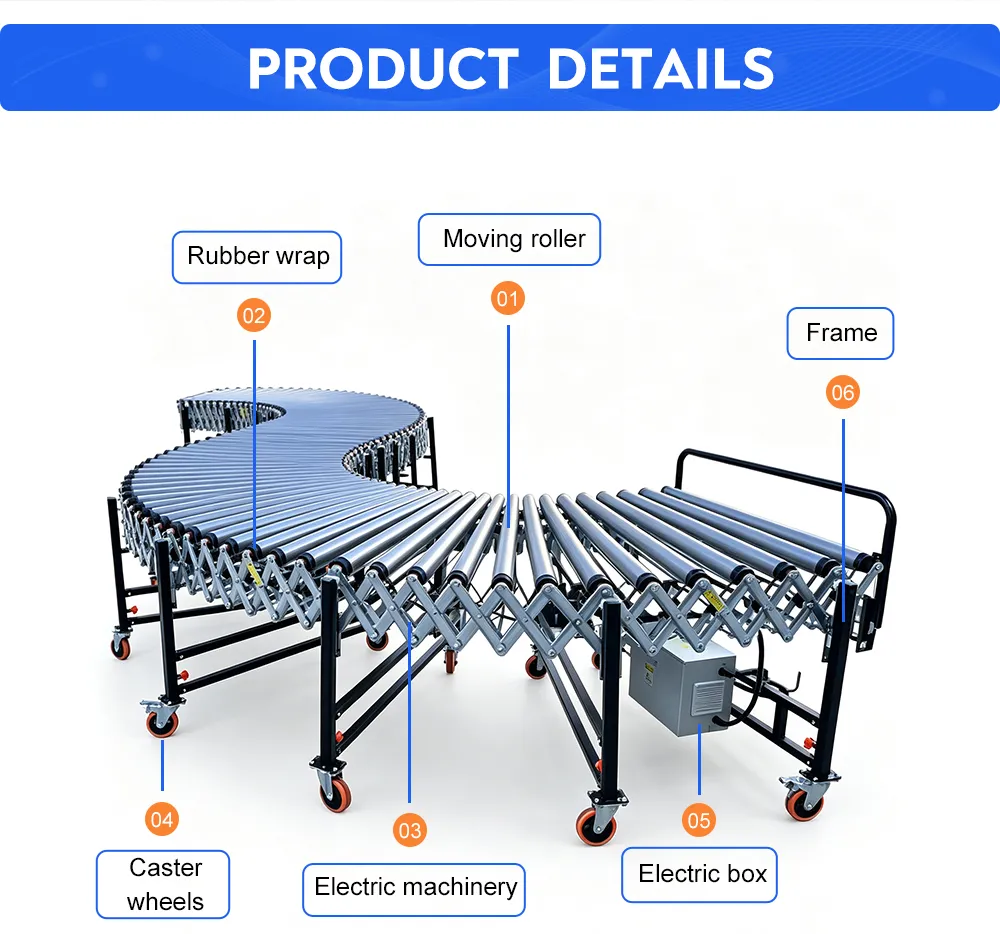
The configuration shown in the product material includes adjustable conveyor height, 500/600/700/800 mm conveyor width options, motor-driven rollers and four caster wheels with brakes, providing a practical solution for warehouses, distribution centers and loading areas where fixed conveyor lines are difficult to deploy.
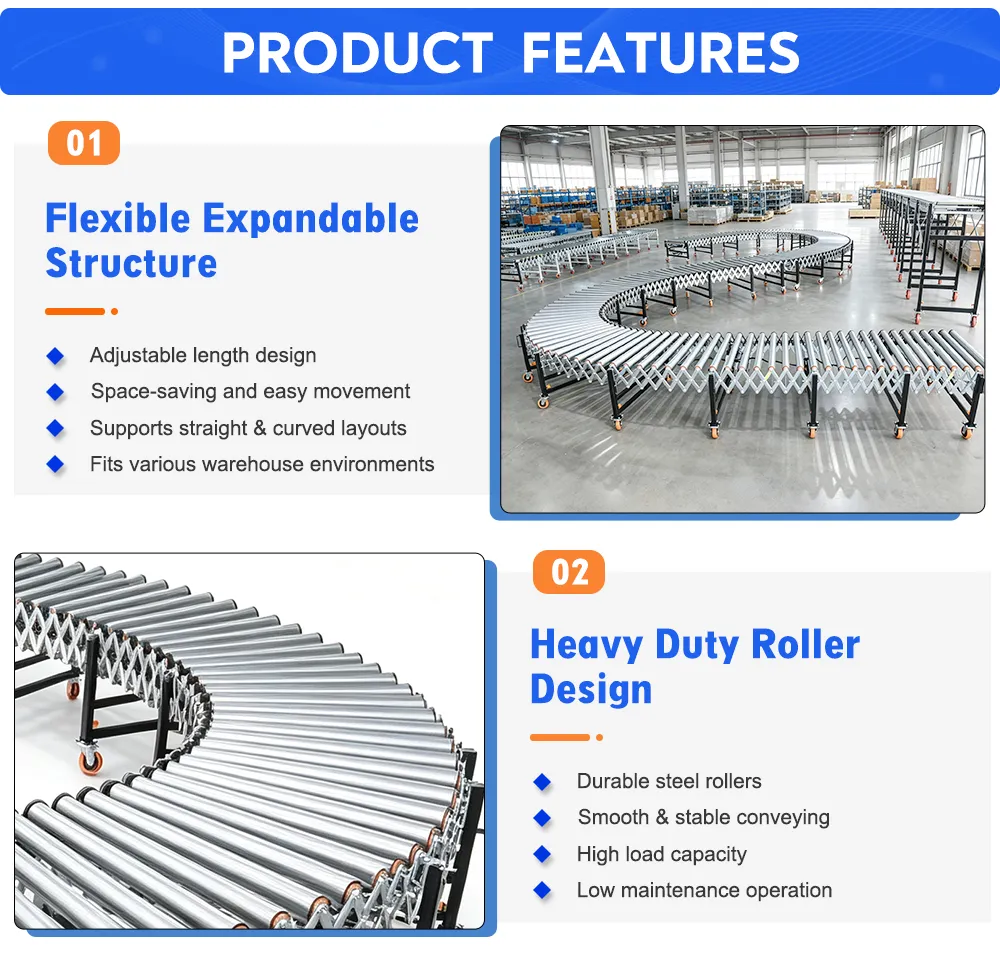
- Telescopic & Extendable Structure
- Adjustable Conveyor Height
- Mobile Frame with Locking Casters
- 500 / 600 / 700 / 800 mm Width Options
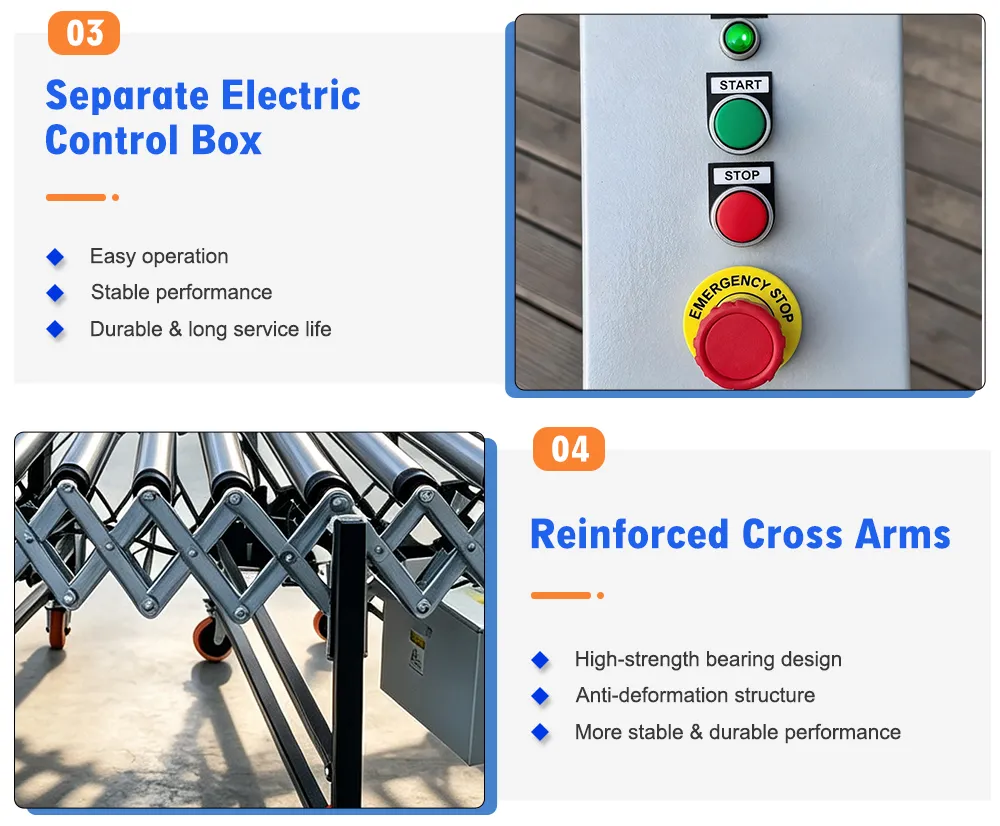
- Motor-Driven Roller Conveying
- Flexible Loading & Unloading
- Easy Warehouse Deployment
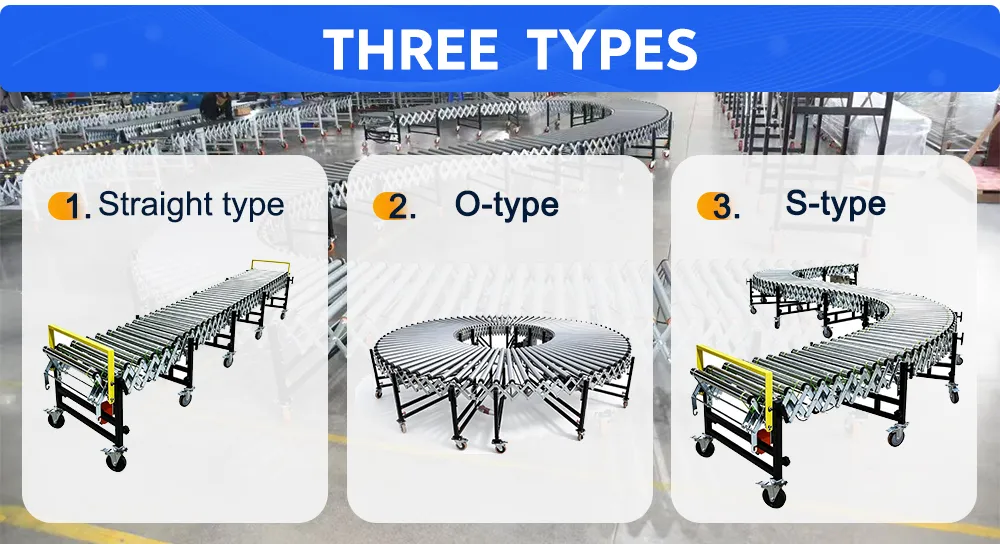
Technical Specifications
| Parameter | Specification |
|---|---|
| Product Type | Telescopic Roller Conveyor |
| Conveyor Structure | Roller Conveyor |
| Conveyor Height | 600–4000 mm |
| Conveyor Width | 500 / 600 / 700 / 800 mm |
| Drive | Motorized |
| Mobility | Mobile |
| Caster Wheels | 4 Caster Wheels with Brakes |
| Conveyor Speed | Adjustable |
| Installation | Mobile / Flexible Deployment |
| Application | Loading / Unloading / Material Transfer |
| Power Supply | Project Based |
| Conveyor Length | Customized |
| Roller Configuration | Customized |
| Overall Dimensions | Project Based |
Details
Flexible Material Handling Without a Fixed Conveyor Line
The Telescopic Roller Conveyor is designed for areas where material needs to move between a fixed warehouse conveyor and a truck, loading dock or temporary operating point.
A fixed conveyor can provide stable transportation, but it may not be practical when the loading position changes frequently. The telescopic structure solves this problem by allowing the conveyor to extend toward the working area rather than requiring workers to repeatedly move cartons over long distances.
This makes the system especially useful for truck loading, unloading, warehouse transfer and flexible dispatch areas.
Product Advantages
01. Telescopic Reach for Loading Areas
The extendable structure allows the conveyor to reach further into a truck, container or loading zone.
Instead of requiring operators to carry cartons repeatedly between the vehicle and the fixed conveyor, the conveyor can move closer to the actual loading position.
Practical Benefits
- Shorter manual carrying distance
- Easier truck loading and unloading
- Better use of loading-dock space
- More flexible conveyor positioning
02. Adjustable Working Height
The product configuration shown in the source material provides an adjustable conveyor height of approximately 600–4000 mm.
This enables the conveyor to adapt to different loading elevations and warehouse transfer conditions.
It can be useful when connecting:
- Dock areas
- Truck compartments
- Warehouse conveyors
- Temporary staging areas
- Different conveyor levels
03. Mobile Deployment
The conveyor is equipped with four caster wheels with brakes, allowing the equipment to be moved between working locations when required.
Once positioned, the caster brakes can lock the conveyor in place for safer operation.
This gives the equipment an important advantage over fixed conveyor lines in warehouses where loading points or operating areas change frequently.
04. Multiple Conveyor Width Options
The configuration shown supports: 500 / 600 / 700 / 800 mm
Different widths can therefore be selected according to carton dimensions, available space and expected material flow.
A wider conveyor can provide additional support for larger cartons, while narrower configurations can be considered where installation space is limited.
05. Motorized Roller Conveying
The conveyor uses a motor-driven roller structure to support powered movement of cartons and packaged goods.
This reduces reliance on operators manually pushing products along the conveying surface, particularly during continuous loading and unloading activities.
06. Adjustable Conveying Speed
The screenshot identifies the conveyor speed as adjustable.
This allows the operating speed to be coordinated with:
- Upstream conveyor
- Downstream conveyor
- Loading rate
- Unloading rate
- Operator workflow
- Product characteristics
The final speed range should be determined according to the project configuration.
07. Flexible Alternative to Permanent Conveyor Installation
A telescopic roller conveyor is especially useful in facilities where a permanent fixed conveyor cannot cover every loading position.
Instead of extending the permanent conveyor infrastructure, the mobile telescopic unit can be repositioned according to the current operating requirement.
This makes it suitable for warehouses with changing loading points or mixed manual/automated handling processes.
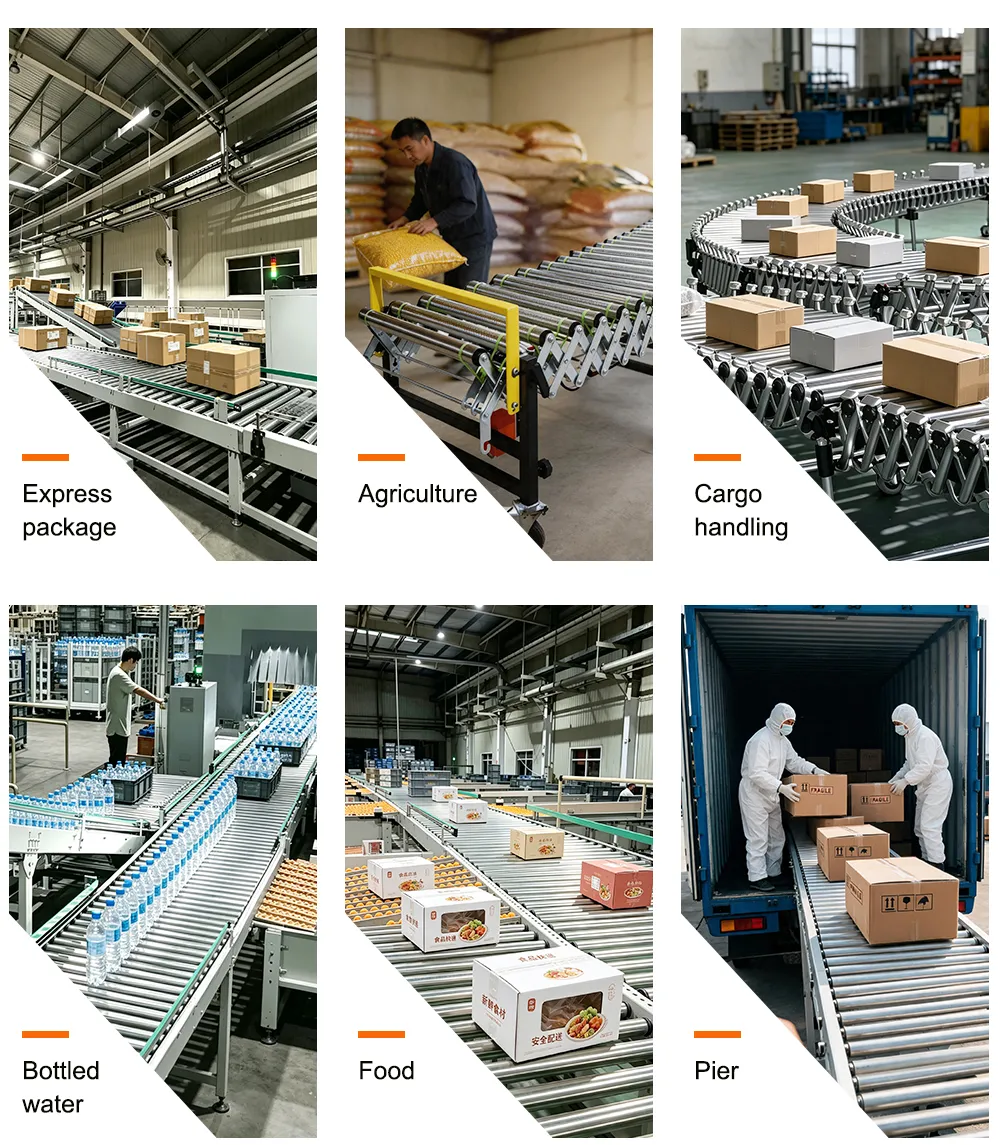
Applications
Truck Loading
The conveyor can extend toward the truck compartment to reduce manual carton carrying during outbound loading.
Truck Unloading
The system can reach into unloading areas and transfer cartons toward the warehouse conveyor or staging area.
Warehouse Transfer
Suitable for moving cartons between temporary workstations, staging areas and fixed conveyors.
Distribution Centers
Can support loading-dock operations where several loading points may share one flexible conveyor.
E-commerce Fulfillment
Suitable for connecting parcel handling areas with loading and dispatch operations.
Manufacturing Logistics
Can be used for moving packaged products between production, storage and dispatch areas.
How to Select the Right Telescopic Roller Conveyor?
For an accurate configuration, customers should consider:
1. Package Characteristics
- Package length
- Package width
- Package height
- Package weight
- Bottom condition
2. Loading Environment
- Truck type
- Container dimensions
- Dock height
- Available operating space
3. Conveying Requirements
- Required speed
- Required throughput
- Conveyor width
- Telescopic reach
4. Integration Requirements
- Upstream conveyor
- Downstream conveyor
- Control interface
- Manual / automated operation
Selecting the conveyor based only on width is not sufficient. The loading environment and actual material flow should determine the final configuration.
FAQ
A telescopic roller conveyor is a flexible powered conveyor designed to extend toward loading or unloading areas while transporting cartons and other suitable unit loads.
The conveyor is positioned at the required work area, adjusted to the appropriate height and extended toward the loading or unloading point. Motor-driven rollers then move packages along the conveyor.
Its main advantage is flexibility. The conveyor can reach temporary or changing loading positions without requiring a permanent fixed conveyor installation across the entire work area.
Yes. The product configuration shown in the source material provides an adjustable conveyor height of approximately 600–4000 mm.
Yes. The conveyor is equipped with four caster wheels with brakes, allowing it to be moved between working positions and secured after positioning.
The configuration shown supports conveyor widths of 500, 600, 700 and 800 mm. Final width selection should be based on package dimensions and installation requirements.
Yes. The product uses a motor-driven roller conveyor structure for powered package movement.
Typical applications include cartons, corrugated boxes, plastic totes, packaged goods and other unit loads with a suitable bottom surface.
Yes. The telescopic structure allows the conveyor to reach into truck loading areas and reduce manual carrying during outbound operations.
Yes. It can be extended toward a truck or unloading area and used to transfer packages from the vehicle toward a warehouse conveyor or staging area.
Yes. The source product specification identifies the conveyor speed as adjustable. The final speed range depends on the selected drive and project configuration.
Yes. The conveyor can be designed to connect with fixed conveyors and other material-handling equipment according to the required interface dimensions and layout.
Important information includes package dimensions and weight, truck or container size, loading dock height, conveyor width, required telescopic reach, throughput, speed and connection requirements.