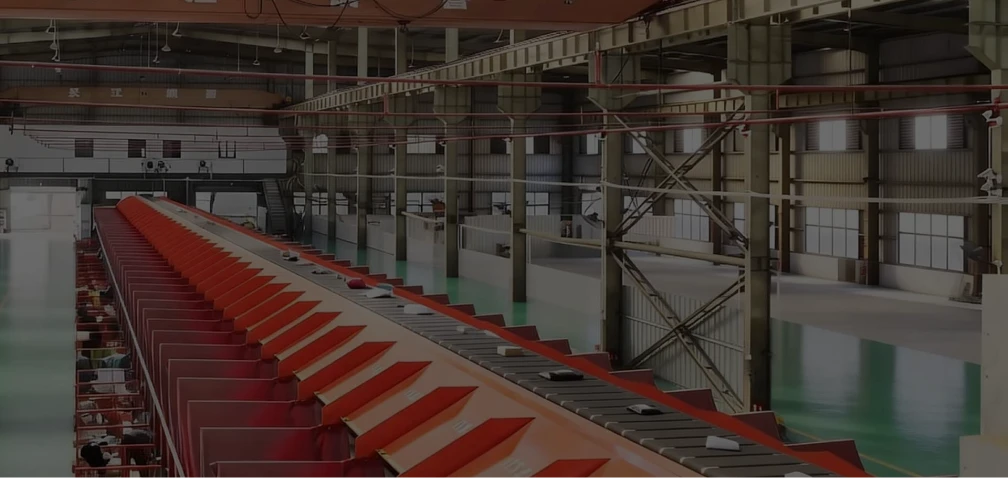
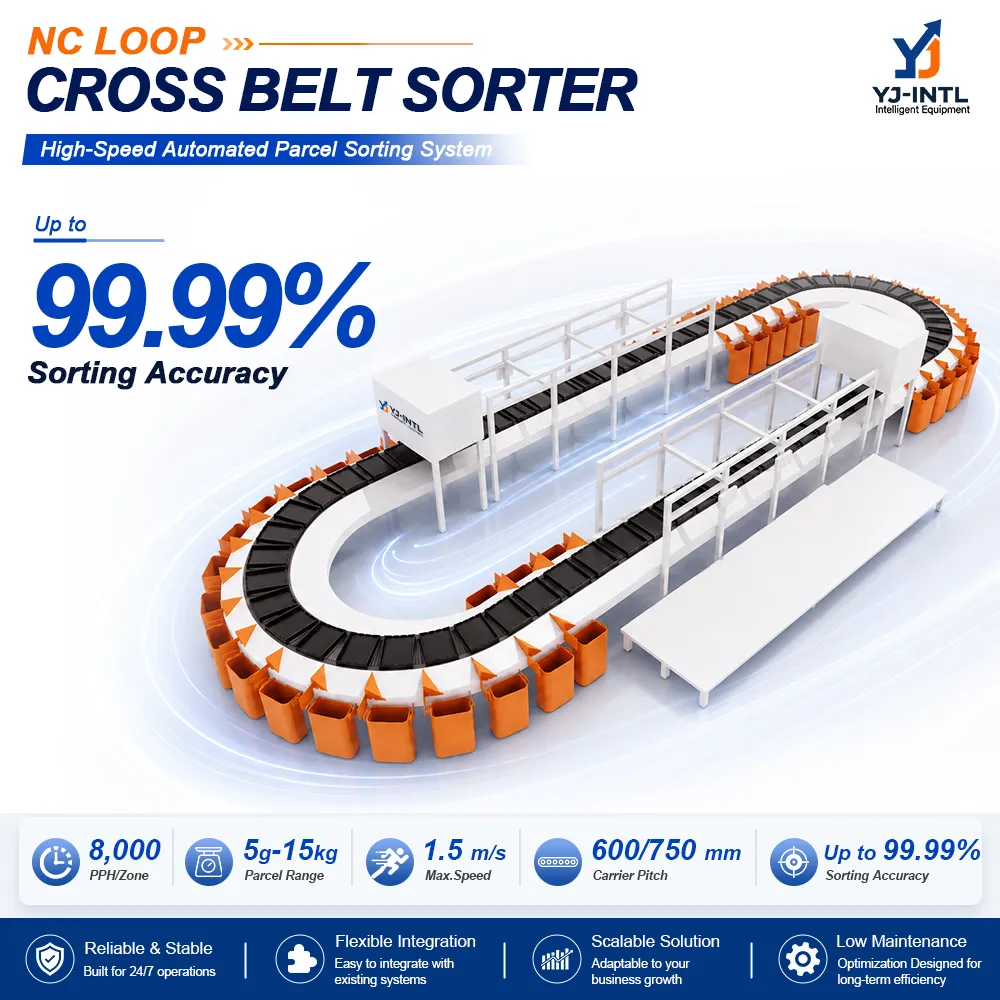
YJ-INTL Automated Linear Cross Belt Sortation System
Automated Linear Cross Belt Sortation System | Up to 12,000 PPH
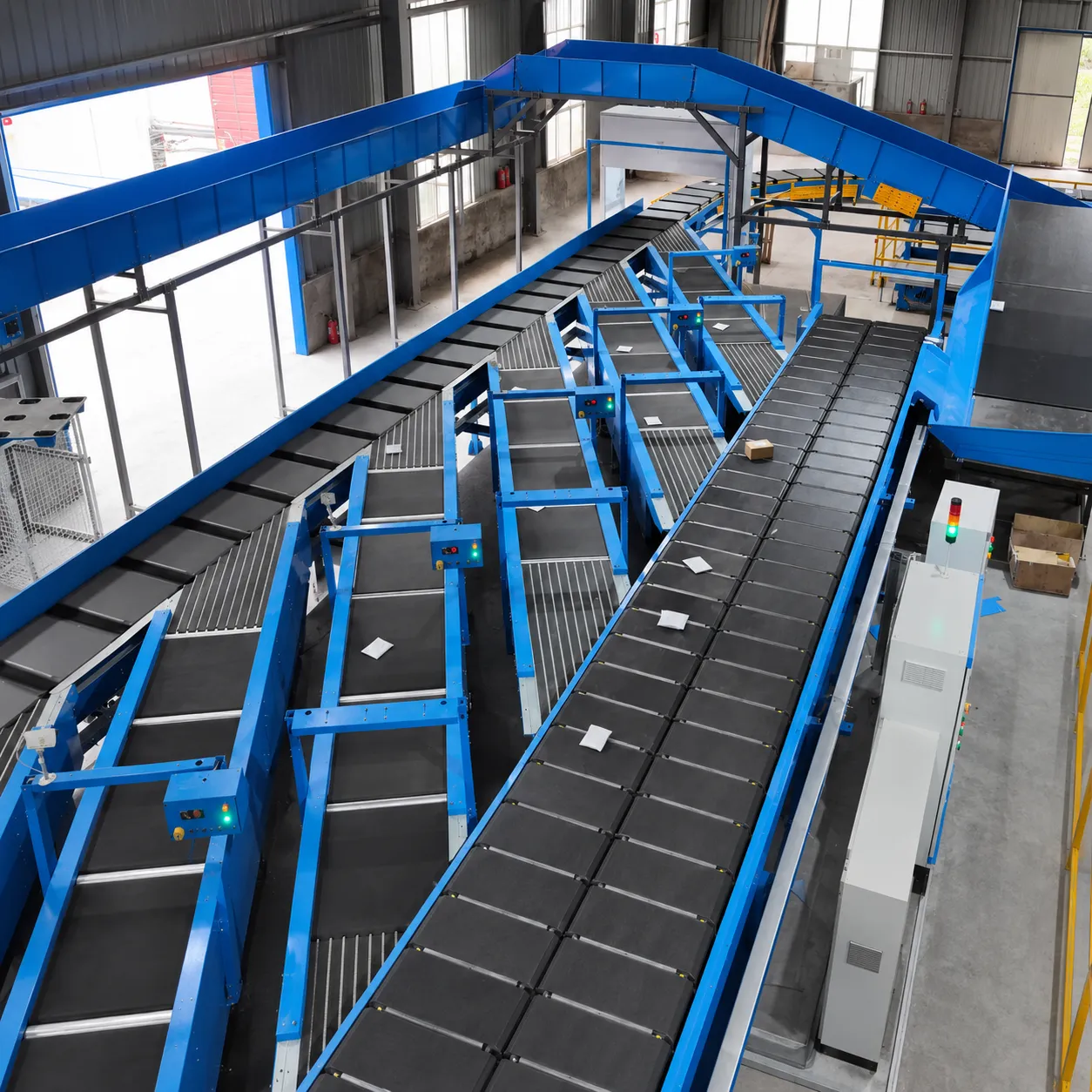
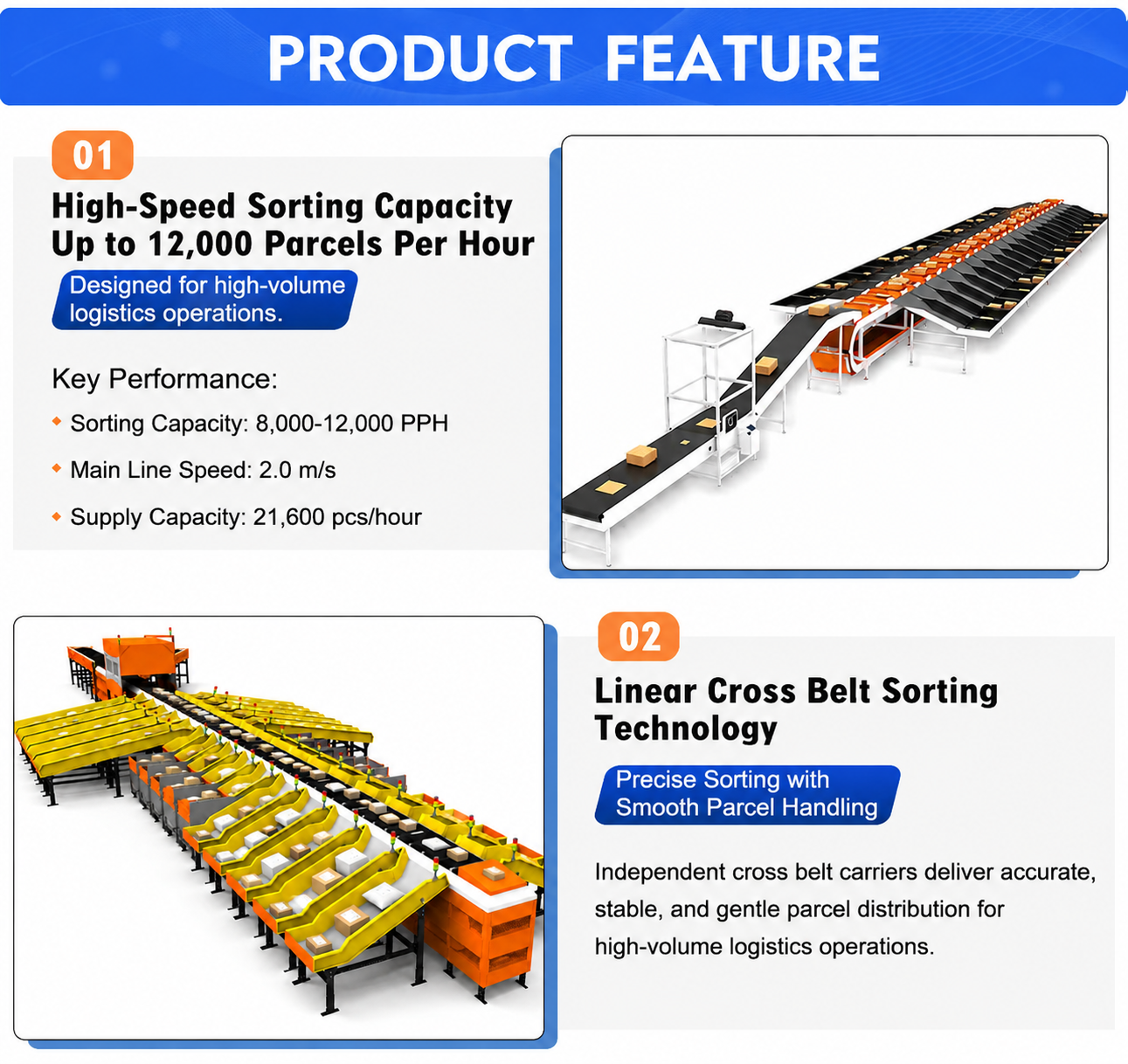
YJ-INTL Automated Linear Cross Belt Sortation System is an integrated parcel sorting solution designed for high-volume logistics, express, e-commerce and distribution operations. The system combines continuous cross-belt conveying, parcel identification, destination routing and controlled lateral discharge into one automated sorting process, with a stated capacity of up to 12,000 pieces per hour.
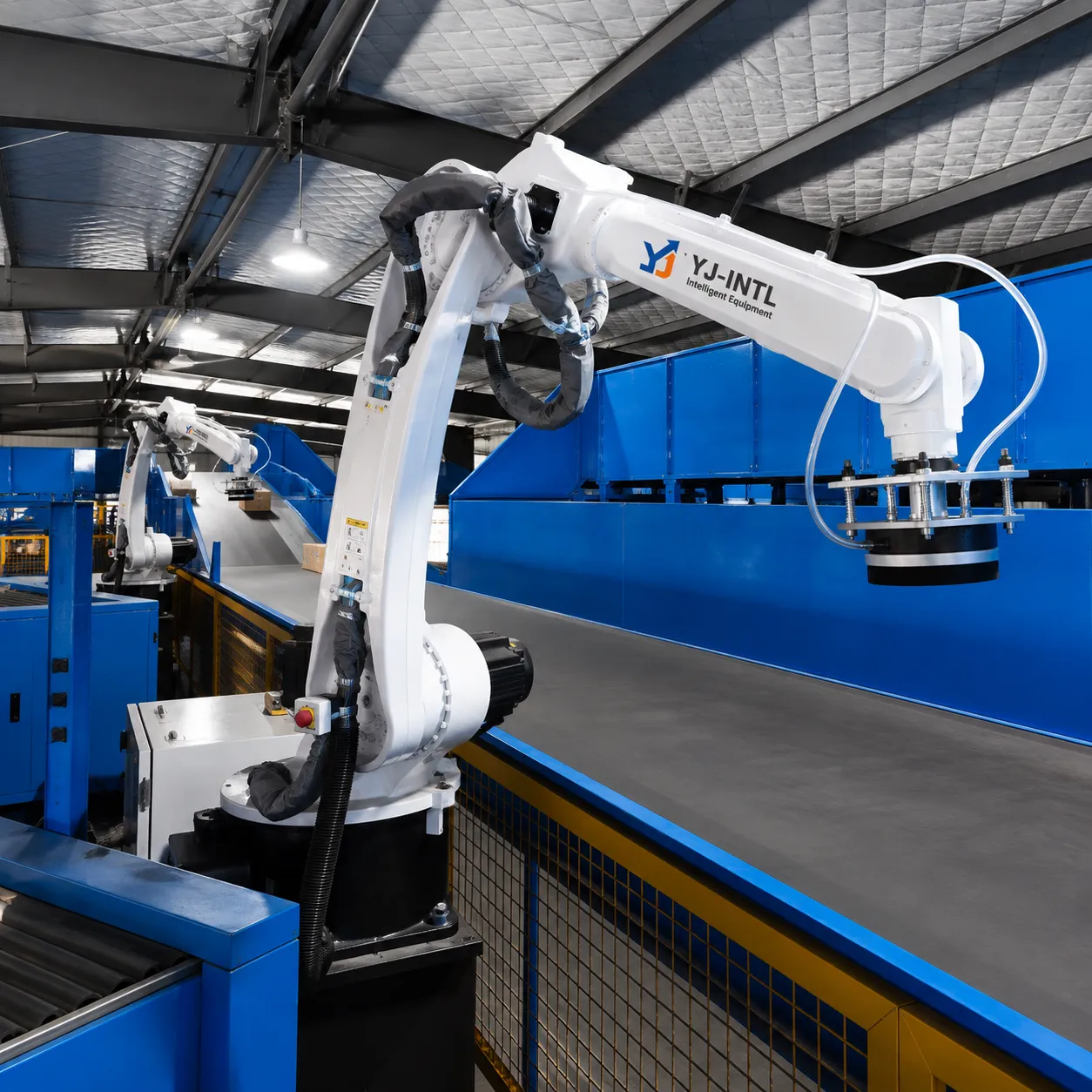
Unlike a standalone sorting machine, the system is engineered around the complete material flow, including induction, scanning, sorting destinations, takeaway conveyors, control logic and warehouse-system integration.
- Up to 12,000 PPH Sorting Capacity
- Automated Continuous Parcel Sorting
- High-Speed Cross-Belt Discharge
- Multiple Destination Sorting
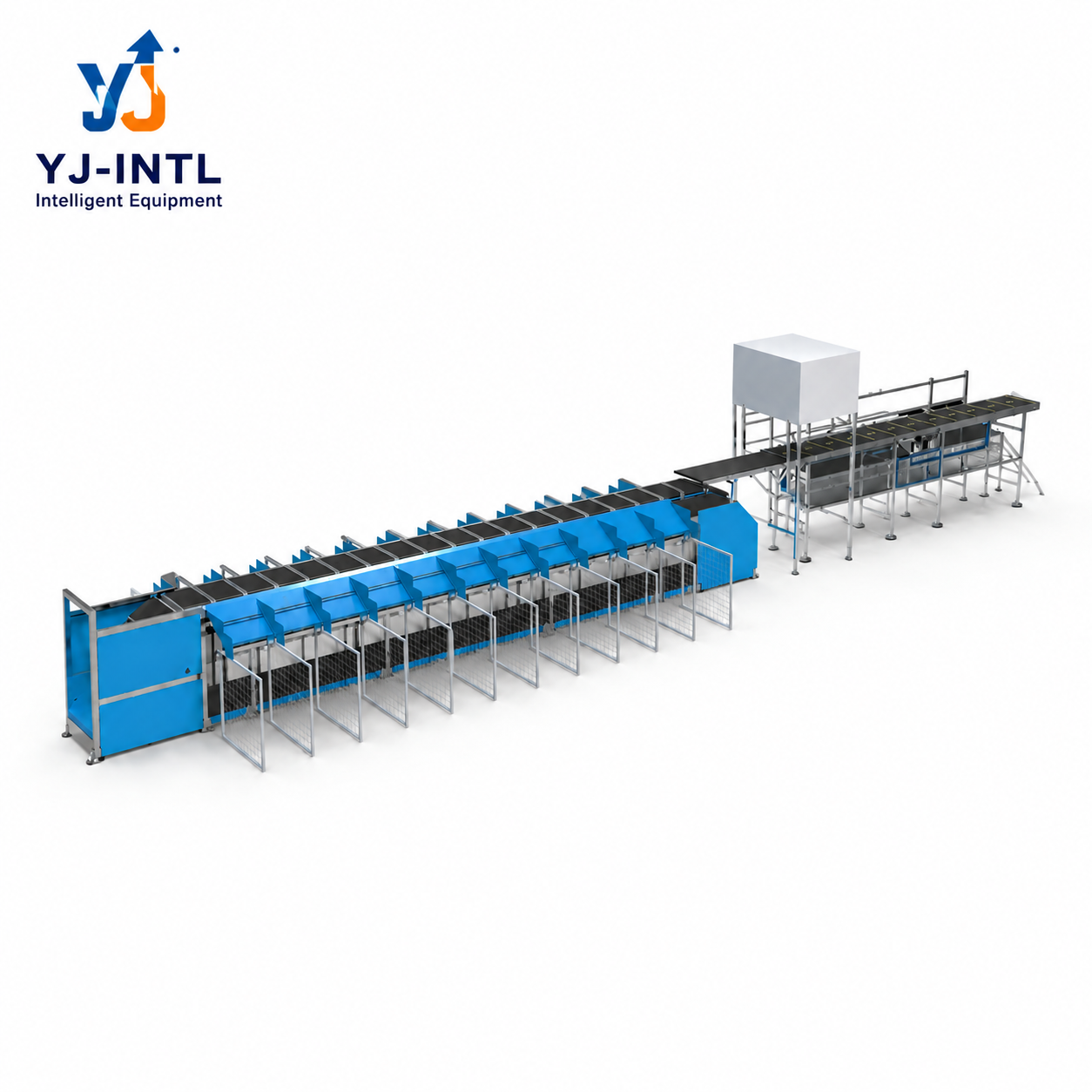
- Custom CAD-Based Layout
- Integrated Sorting Control
- WMS / WCS & DWS Integration
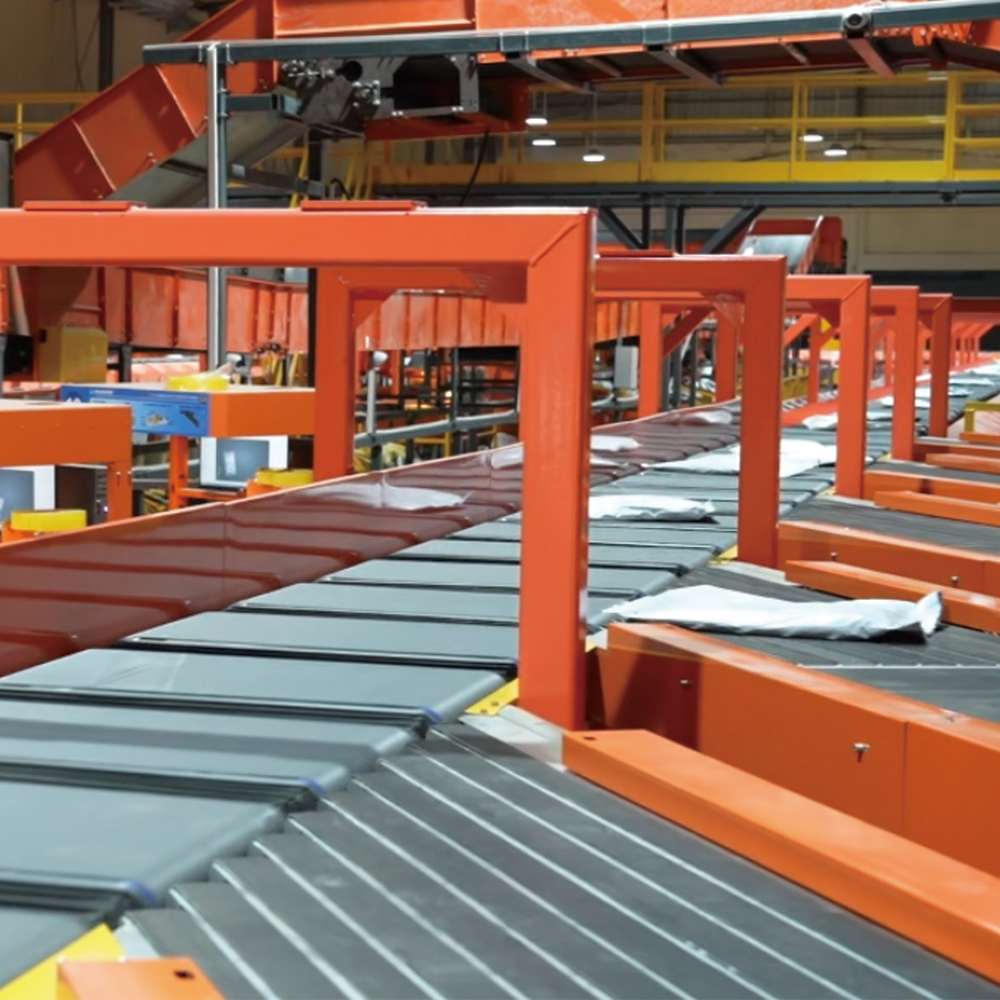
Automated Linear Cross Belt Sortation System Specifications
| Parameter | Specification |
|---|---|
| Product Type | Automated Linear Cross Belt Sortation System |
| Sortation Technology | Linear Cross Belt Sorting |
| Maximum Capacity | Up to 12,000 pieces/hour* |
| Sorting Method | Automated lateral cross-belt discharge |
| System Configuration | Linear |
| Sorting Destinations | Customized according to project requirements |
| Parcel Identification | Barcode scanning / identification system |
| DWS Integration | Available according to project requirements |
| Induction | Manual, automatic or hybrid |
| Control System | Integrated sorter control system |
| WMS/WCS Integration | Available |
| Takeaway | Sorting chutes and downstream conveyor integration |
| System Layout | Custom CAD-based design |
| Application | Express, logistics, e-commerce, 3PL and distribution |
| Engineering | Project-specific system configuration |
Capacity Note
Up to 12,000 pieces/hour is the capacity shown in the supplied product material. Actual system throughput depends on parcel dimensions, weight, induction spacing, carrier configuration, destination distribution, identification performance and downstream capacity.
Final capacity should be confirmed according to the customer's actual operating conditions and engineering requirements.
Details
Automated parcel sorting system must do more than move parcels quickly. It needs to identify each parcel, determine its destination, maintain accurate parcel tracking and discharge the parcel at the correct location without interrupting the main flow.
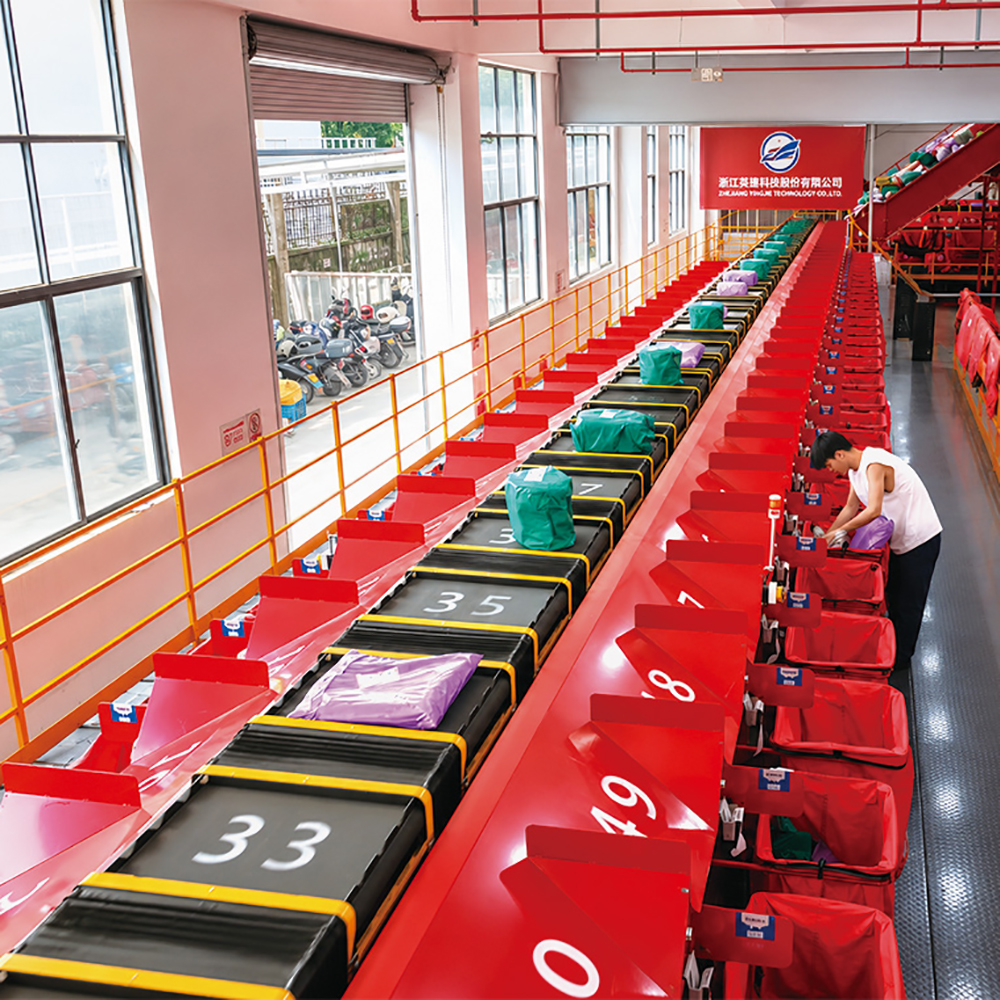
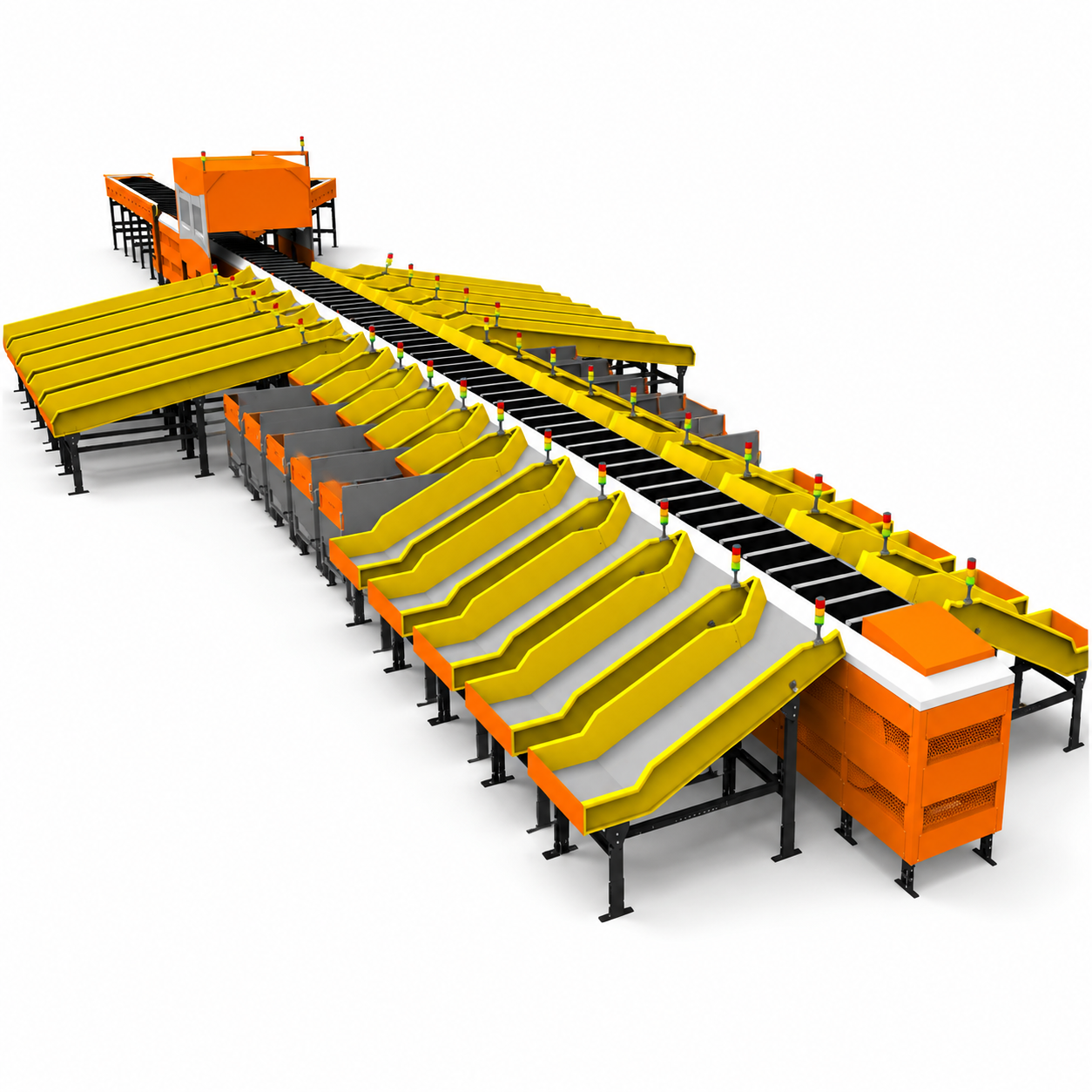
The YJ-INTL Automated Linear Cross Belt Sortation System is designed around this complete process. The system uses individual cross-belt carriers to transport parcels along a linear sorting line. After a parcel is identified and assigned to a destination, the control system tracks the carrier and triggers lateral belt movement at the designated sorting position.
The parcel is then transferred to the corresponding chute or takeaway conveyor, while other carriers continue moving through the sorting line. This continuous automated architecture is suitable for high-volume parcel operations where manual sorting becomes difficult to scale.
System-Level Automation Instead of a Standalone Sorter
The key difference between a sorting machine and a complete sorting system is the level of process integration.
A complete automated linear cross belt solution can include:
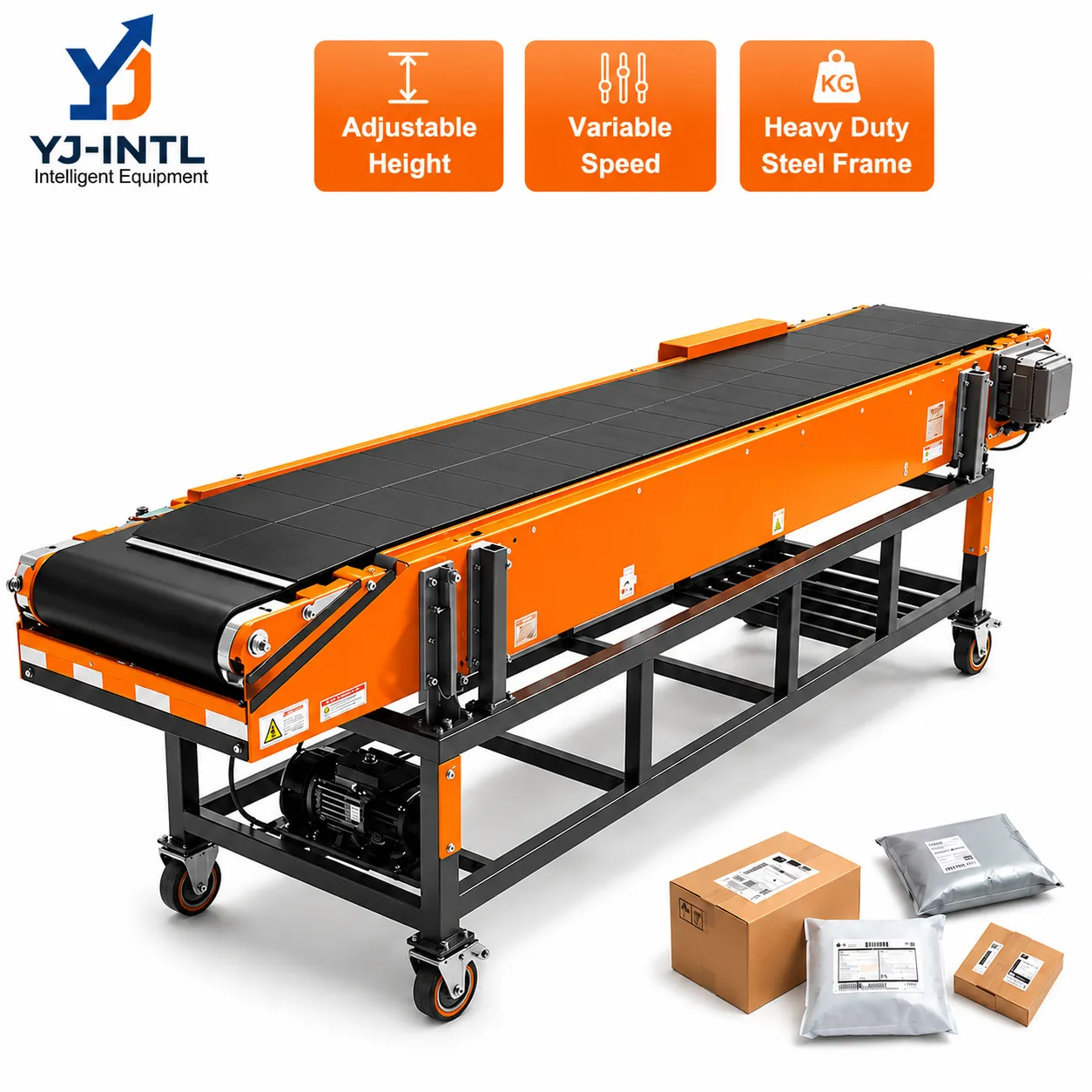
- Parcel induction
- Parcel singulation and spacing
- Barcode identification
- DWS
- Cross-belt sorting
- Sorting chutes
- Takeaway conveyors
- Control system
- WMS/WCS interface
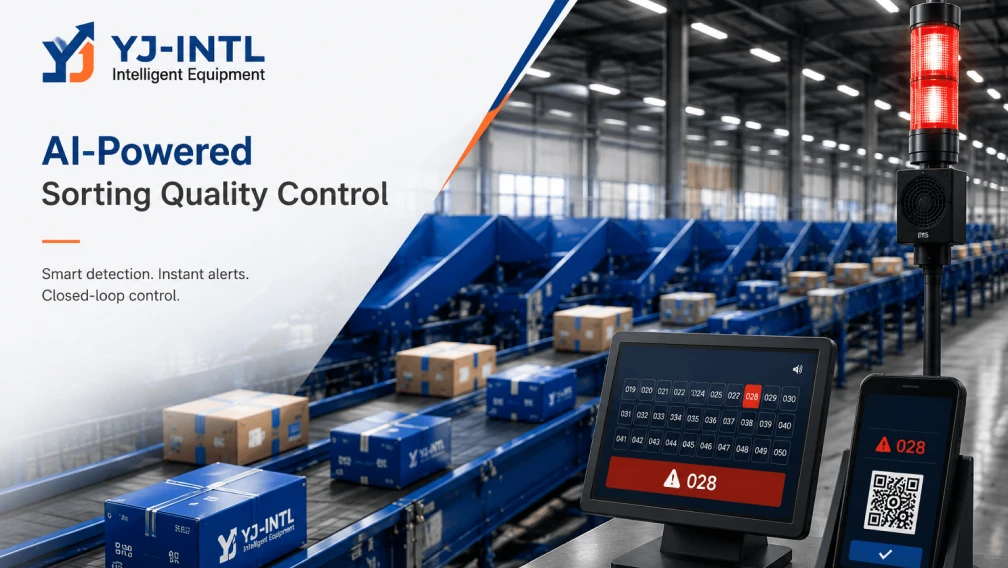
- Exception handling
- Downstream dispatch processes
The equipment is designed as a coordinated material-flow system rather than as independent machines.
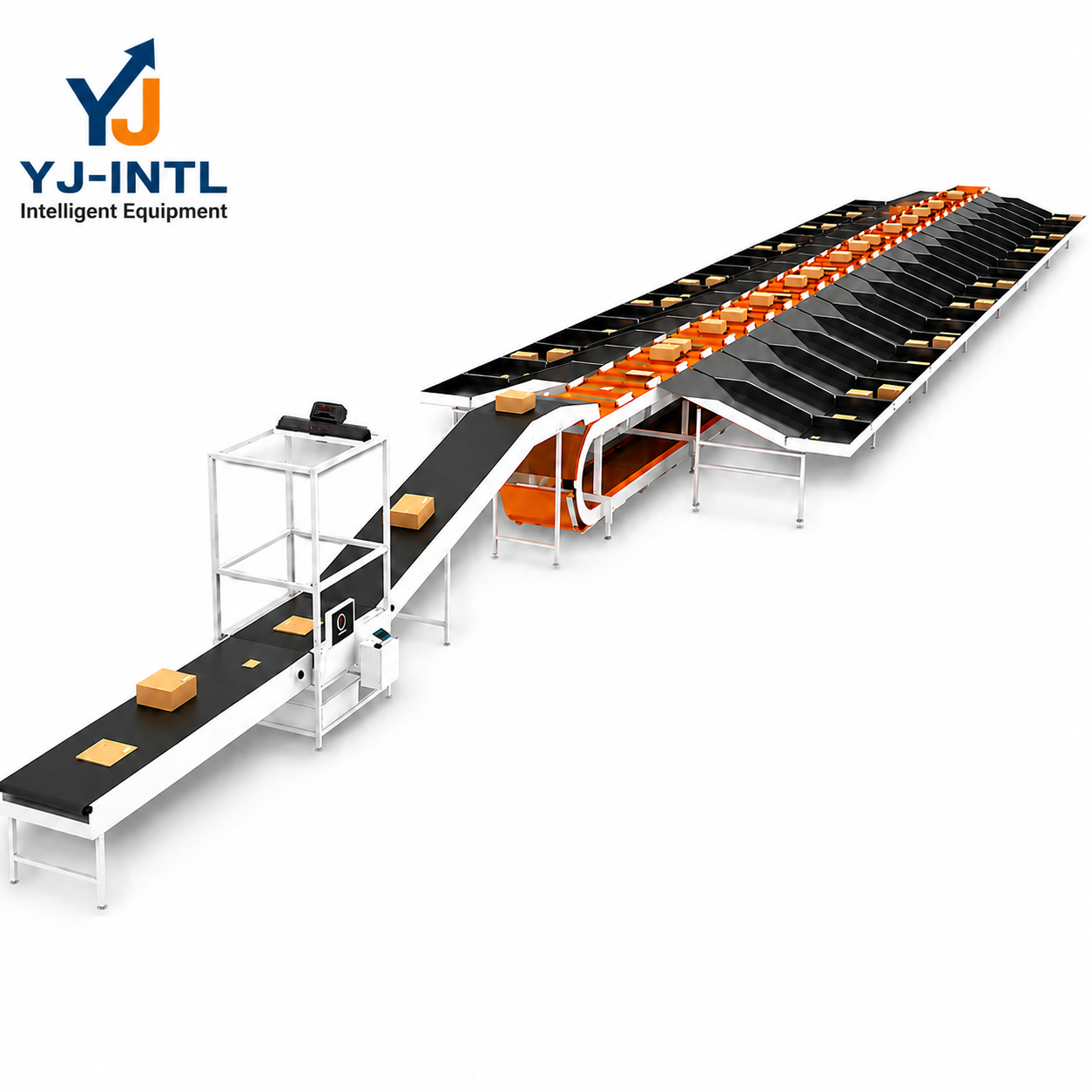
Key Features of the Automated Linear Cross Belt Sortation System
High-Speed Parcel Sorting
The supplied product material indicates a maximum capacity of 12,000 pieces/hour.
This makes the system suitable for high-volume parcel environments where continuous automated sorting is required.
Actual operating throughput should be evaluated against parcel mix, induction conditions and downstream capacity.
Continuous Sorting Process
The cross-belt carriers continuously transport parcels through the sorting section.
This allows multiple destinations to be served within one automated flow rather than relying on separate manual sorting stations.
Automated Destination Discharge
Each parcel is routed according to its assigned destination.
The cross belt provides controlled lateral discharge to the designated chute or takeaway conveyor.
This creates a repeatable sorting process and reduces dependence on manual destination decisions.
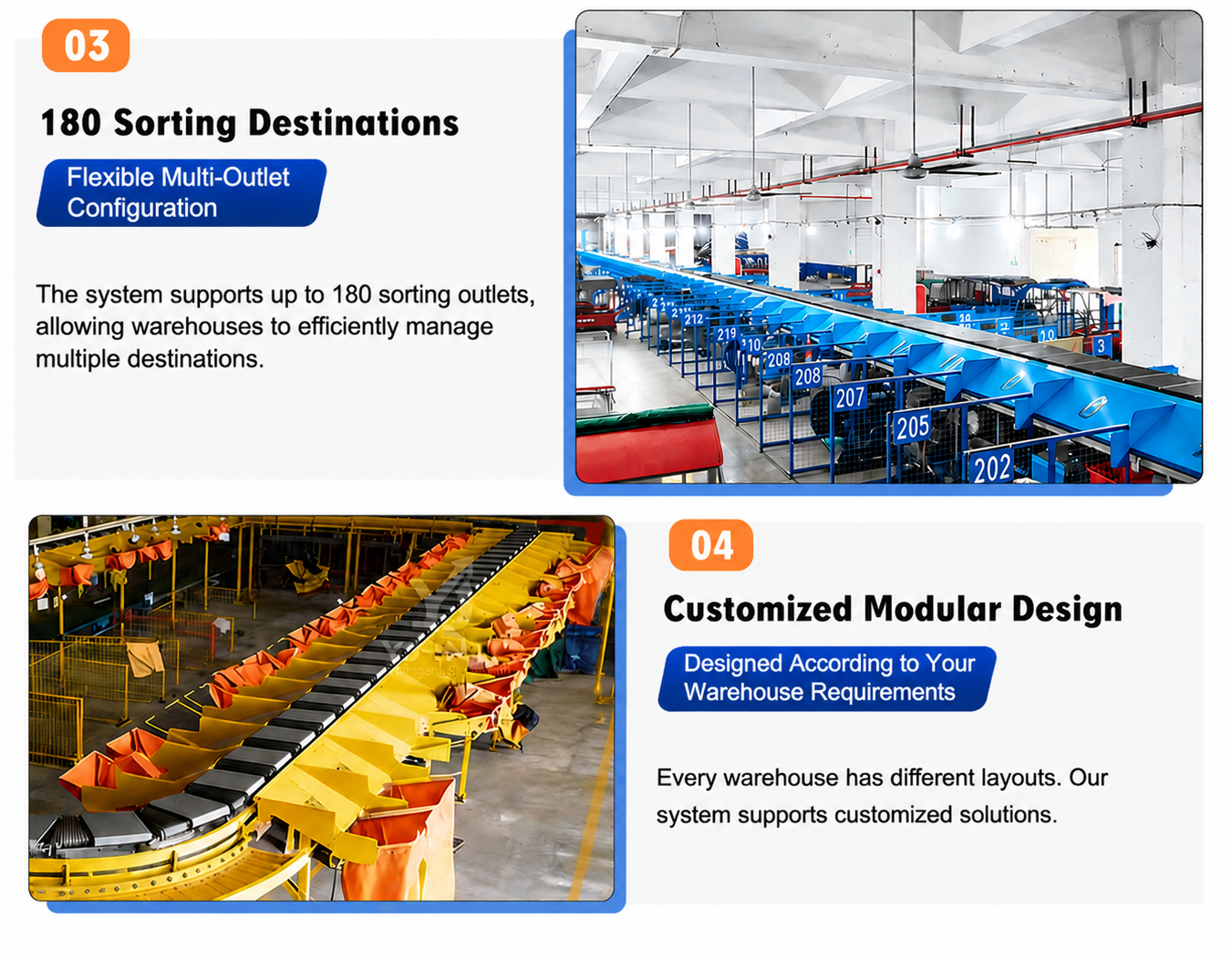
Flexible Destination Configuration
The number and position of sorting destinations can be designed according to the customer's operation.
Destination planning can take into account:
- Current destination count
- Peak volume by destination
- Outbound lanes
- Chute capacity
- Facility layout
- Future expansion
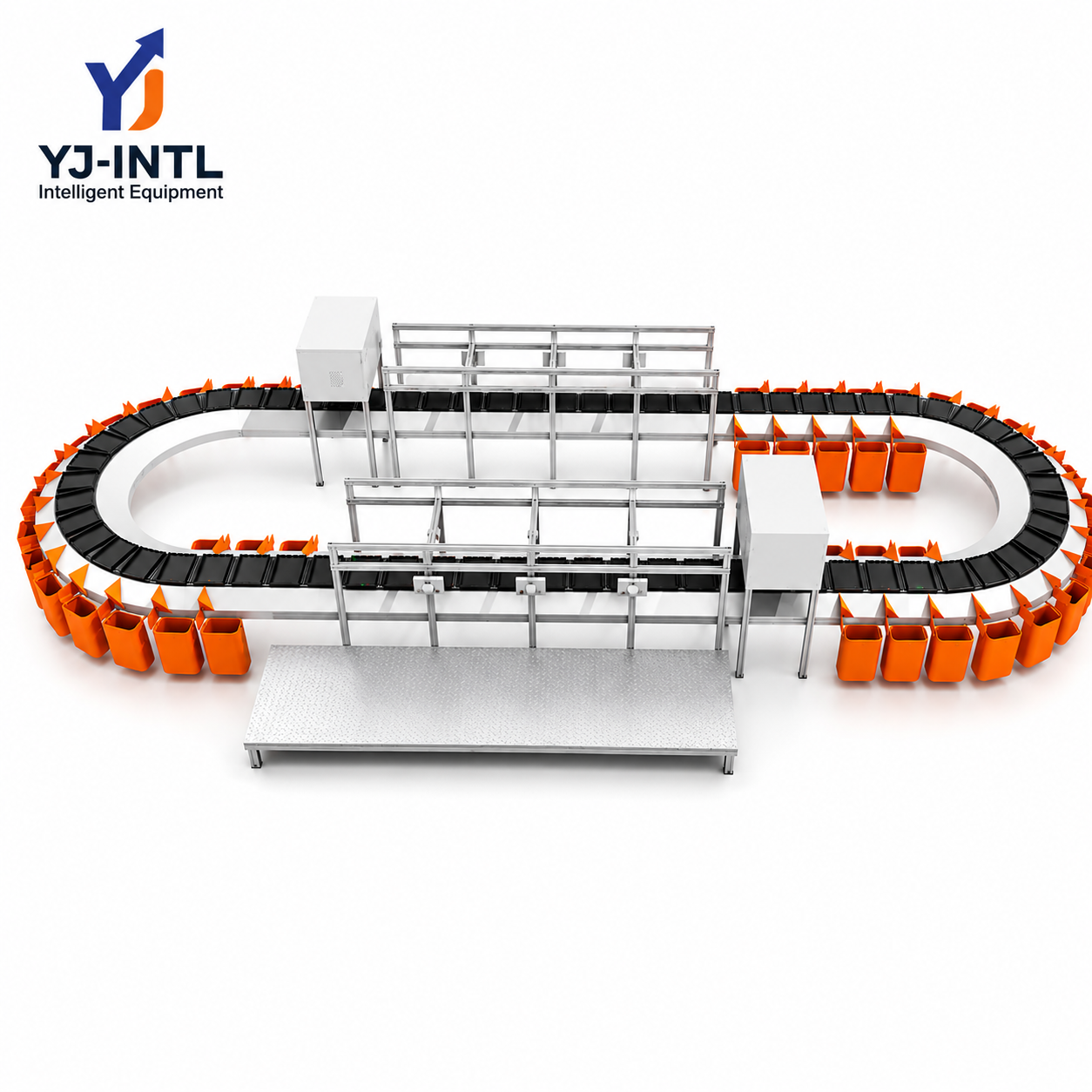
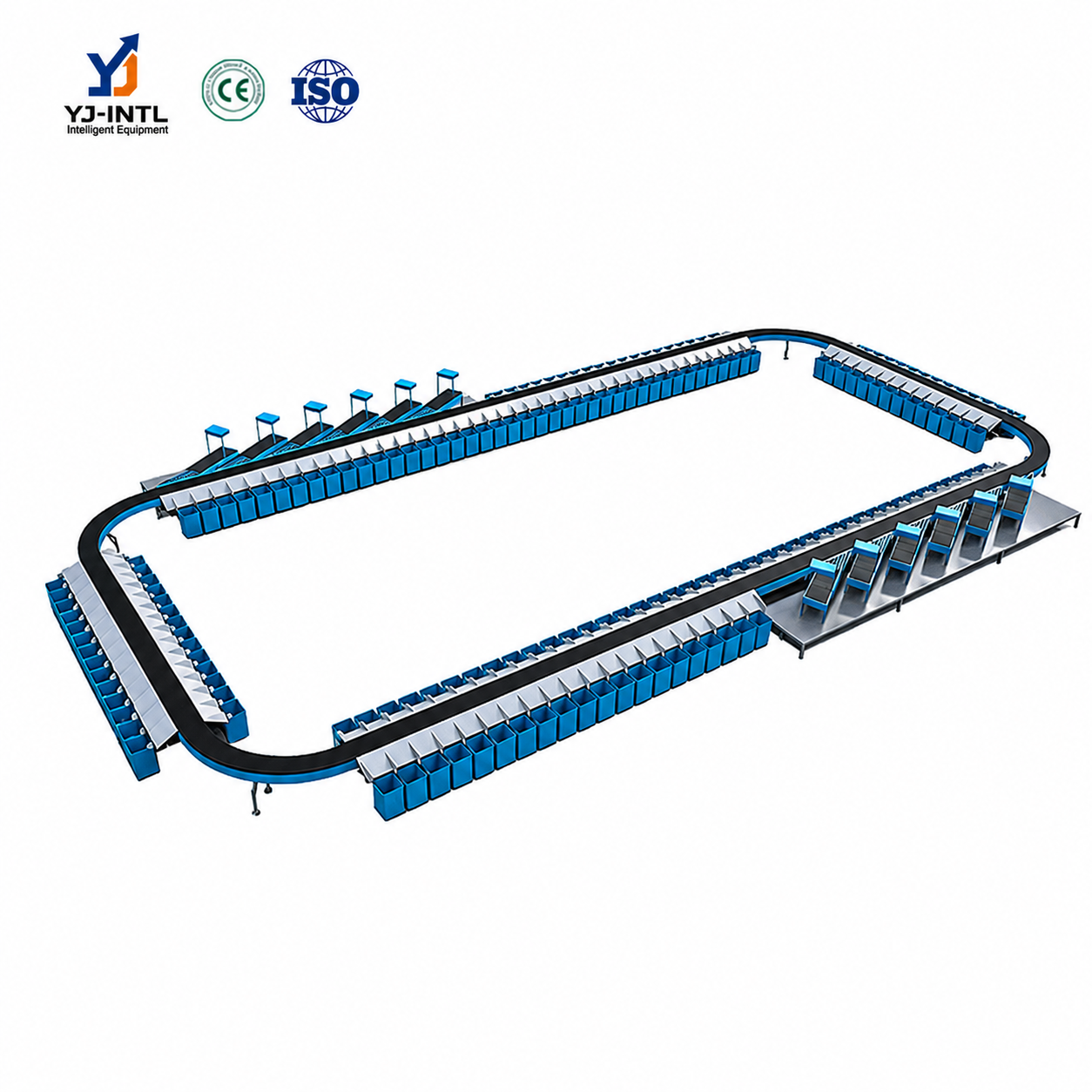
Custom CAD Layout
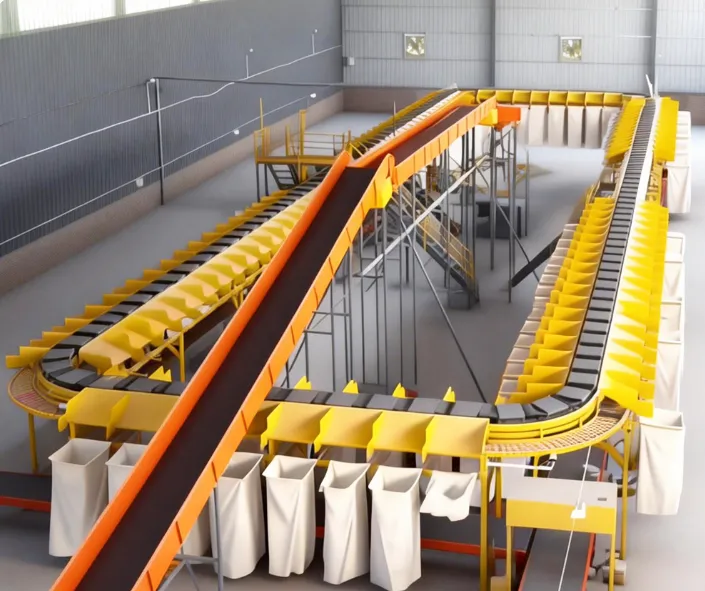
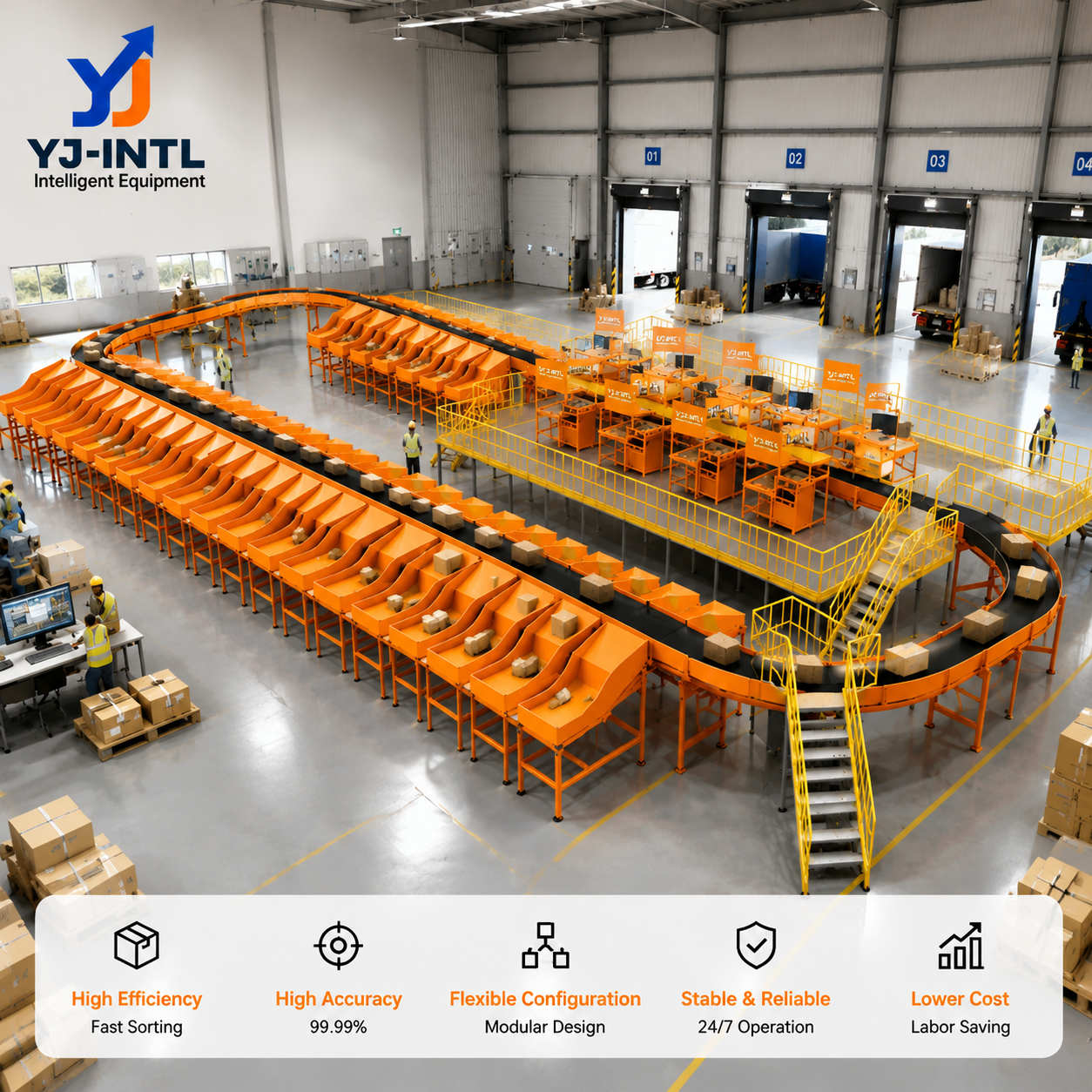
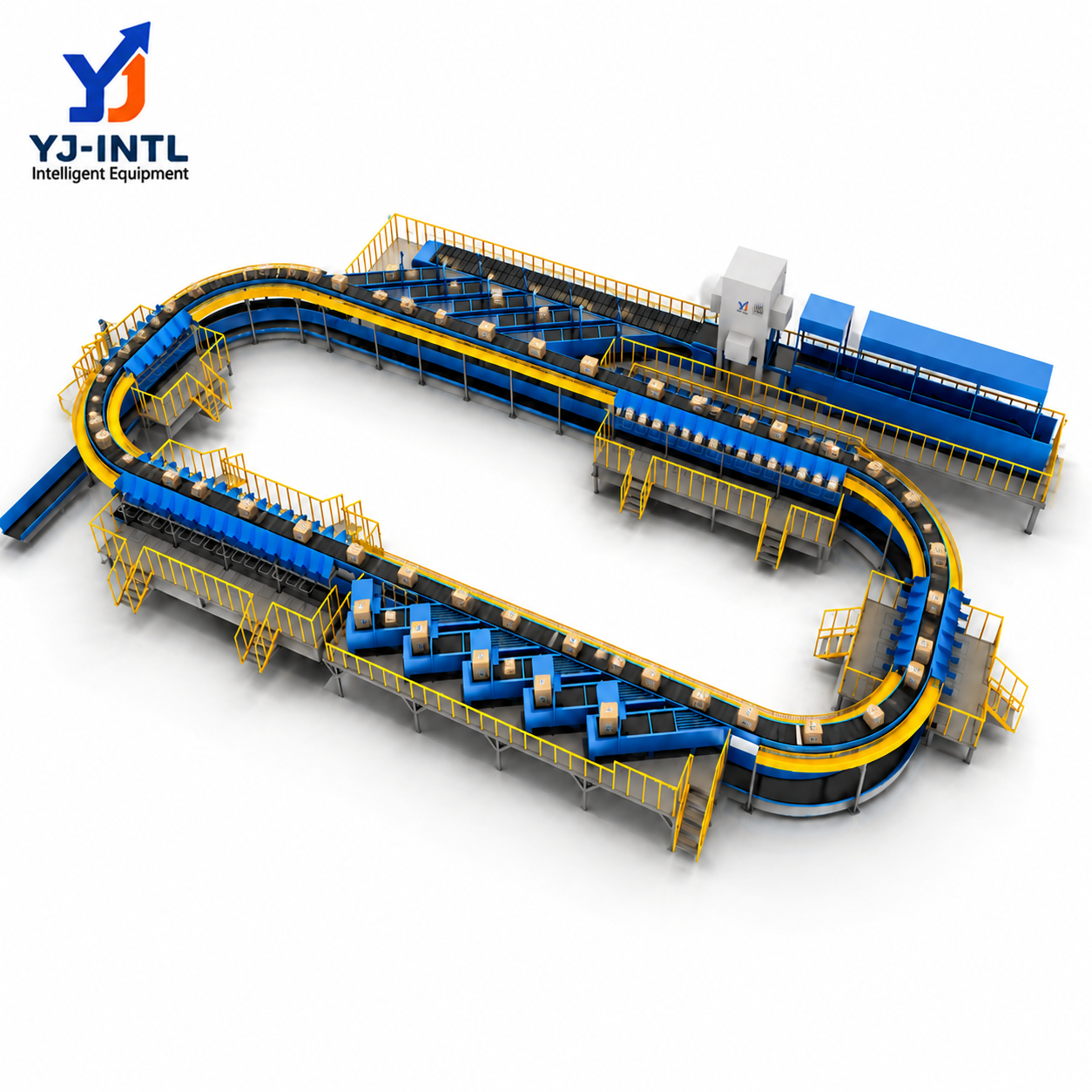
The screenshot provided shows the product solution emphasizing custom CAD and layout solutions.
For an automated sorting project, the physical layout is an important part of the engineering process.
YJ-INTL can consider:
- Available floor space
- Induction location
- Sorting line length
- Chute positions
- Operator areas
- Maintenance access
- Takeaway conveyor routes
- Downstream processes
Custom Solution Design
YJ-INTL approaches automated sorting projects from the perspective of complete material-flow engineering.
The solution design can consider:
Induction + Identification + DWS + Cross Belt Sortation + Chutes + Conveyors + Control + WMS/WCS
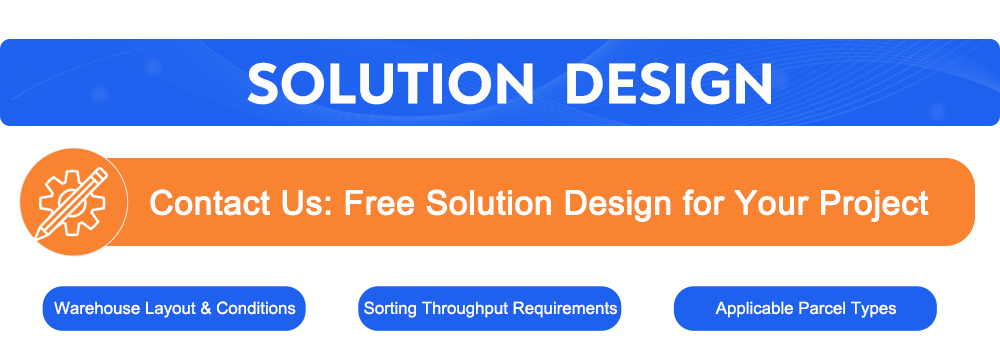
The screenshot provided also highlights 24/7 custom CAD & layout solutions, which is an important part of positioning this product as an engineered system rather than a standard standalone machine.
FAQ
The supplied product material specifies a maximum capacity of up to 12,000 pieces per hour. Actual throughput depends on parcel characteristics, induction spacing, carrier configuration, identification performance, destination distribution and downstream capacity.
Parcels are inducted and identified before being assigned to a carrier and destination. The control system tracks the carrier and activates the cross belt when it reaches the required destination, transferring the parcel to the corresponding chute or takeaway conveyor.
Typical applications include express logistics, e-commerce fulfillment, 3PL distribution, retail distribution, parcel hubs and other high-volume outbound sorting operations.
Yes. Barcode identification, DWS and WMS/WCS interfaces can be integrated according to project requirements. The exact system architecture and data interfaces are determined during engineering.
The number of destinations is project-specific. Sorting chutes and destination positions can be configured according to the customer's destination list, throughput requirements, facility layout and future expansion plans.
A preliminary design normally requires parcel dimensions and weight distribution, daily and peak volumes, destination count, facility layout, induction method, barcode information, downstream process and WMS/WCS requirements.
No. 12,000 pieces per hour is the maximum capacity stated in the supplied product material. It is not a guaranteed sustained throughput for every application. Final capacity must be validated according to the actual operating conditions.
Yes. The sorting line can be customized through CAD-based layout design, destination configuration, induction arrangement, takeaway conveyors, control architecture and system integration according to the project requirements.