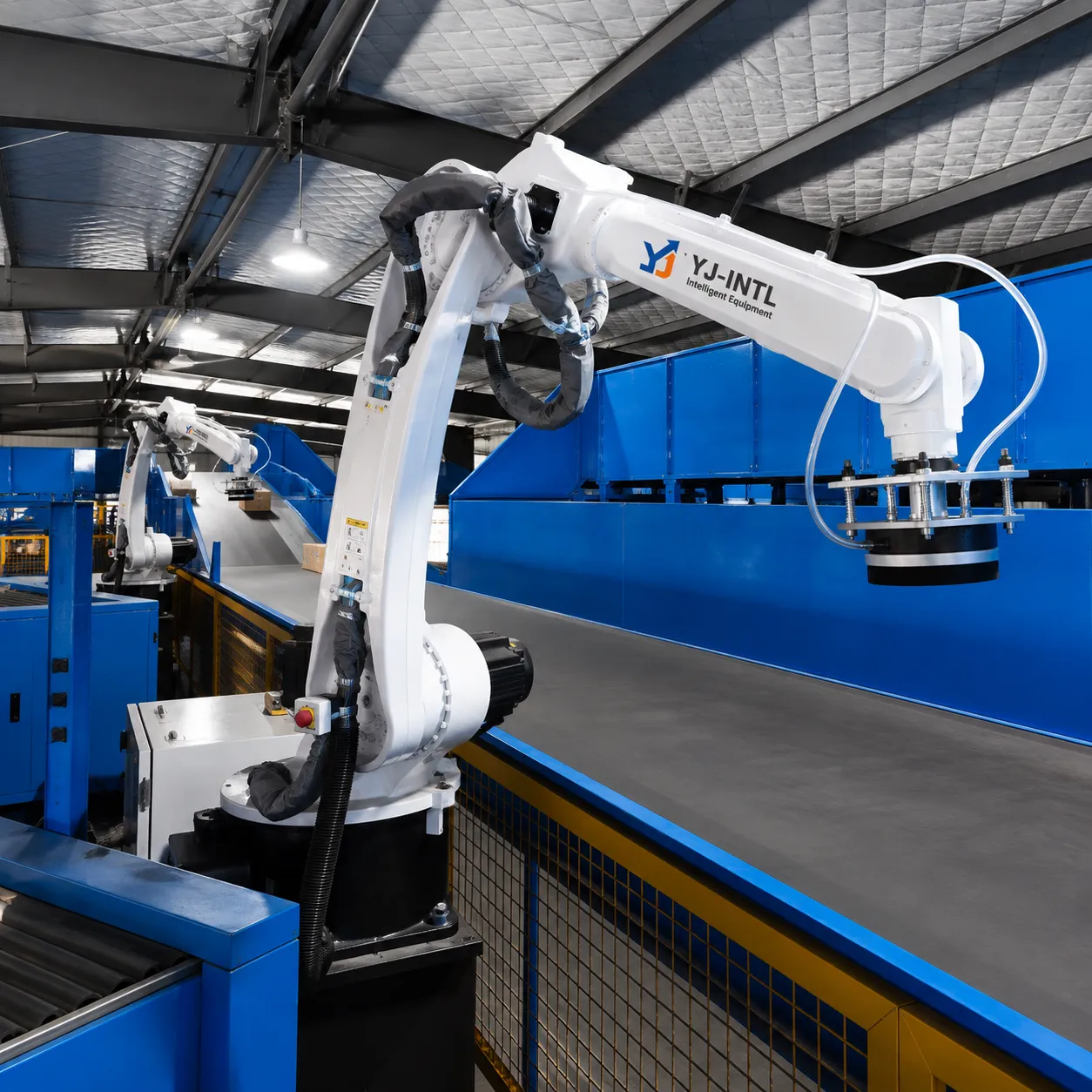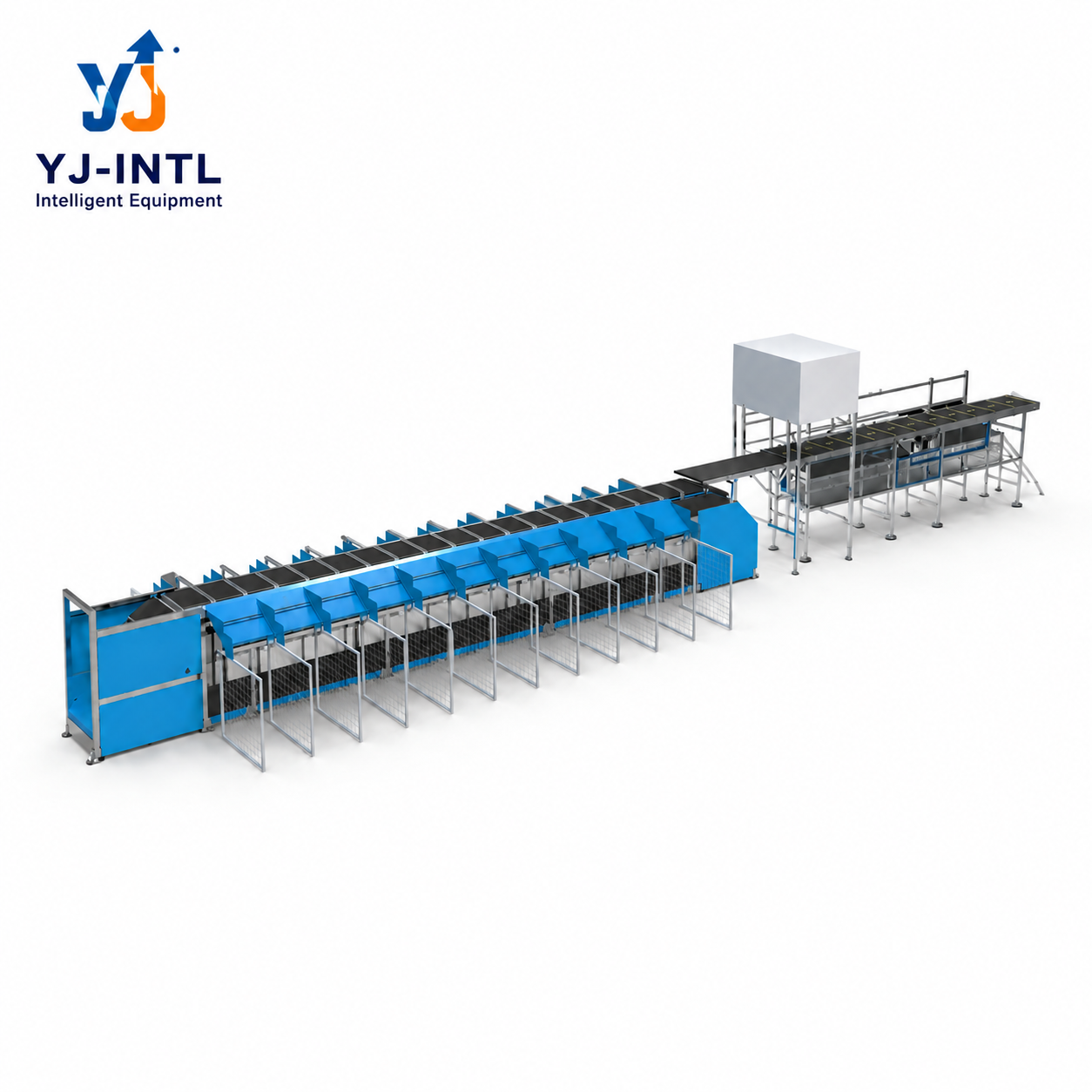
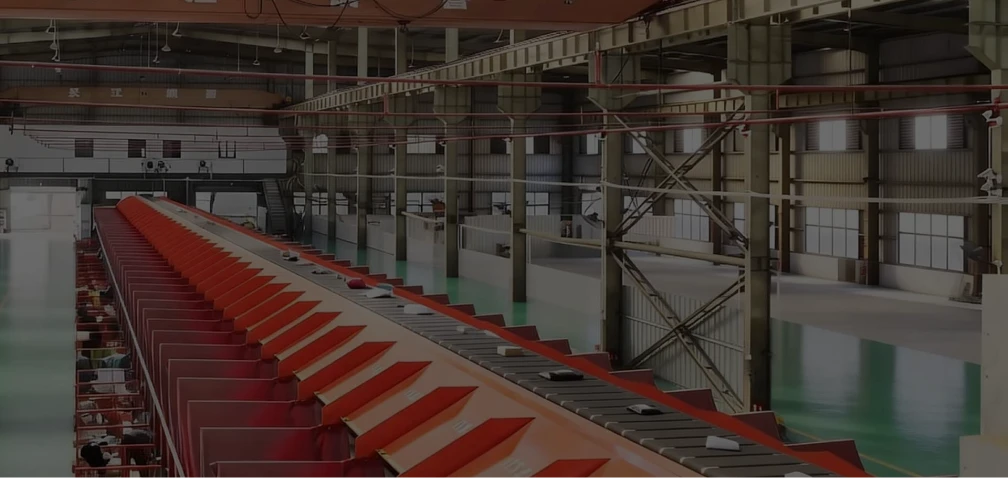
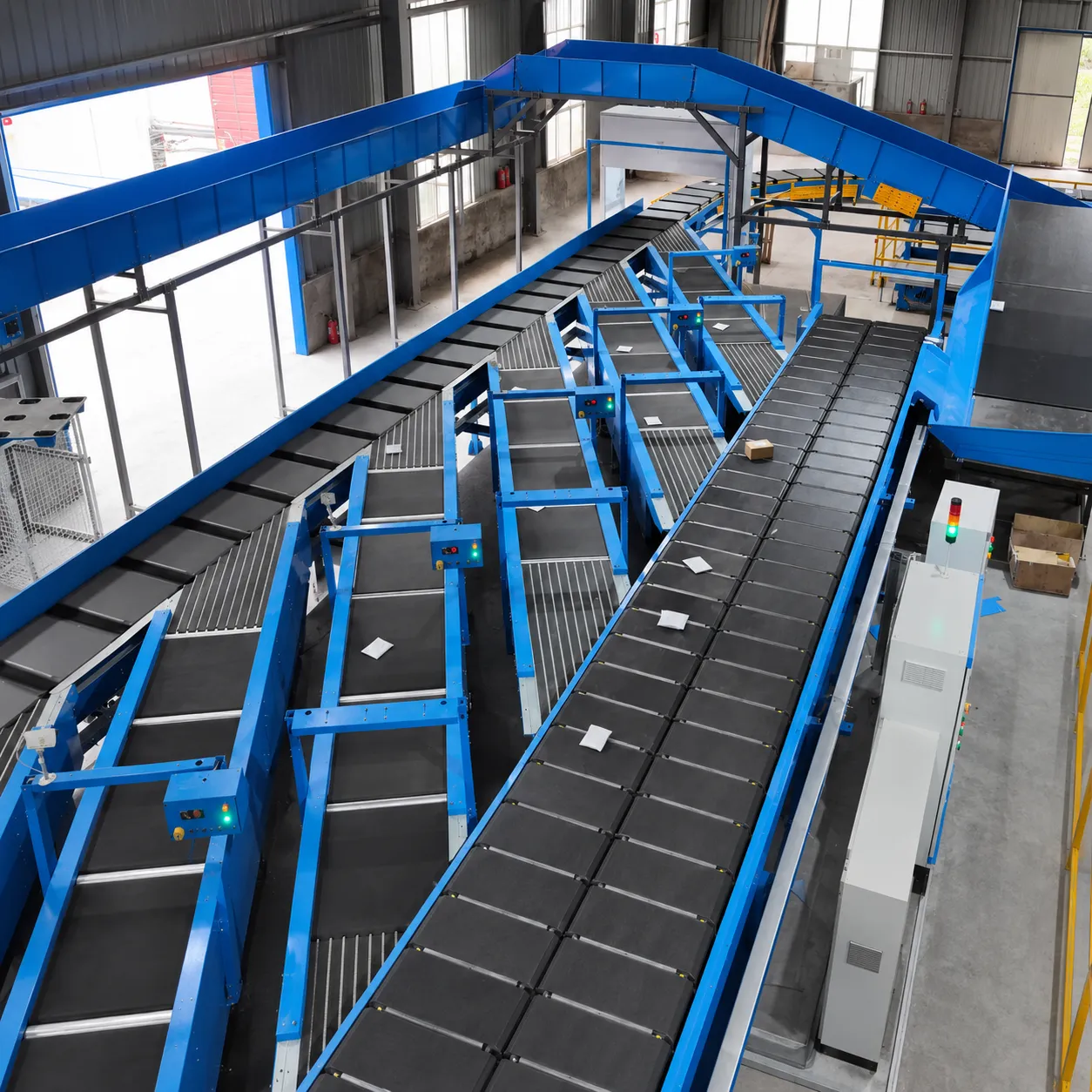
NC Loop Cross-Belt Sorter for Irregular & Mixed Parcel Sorting
NC Loop Cross-Belt Sorter for Irregular Parcels
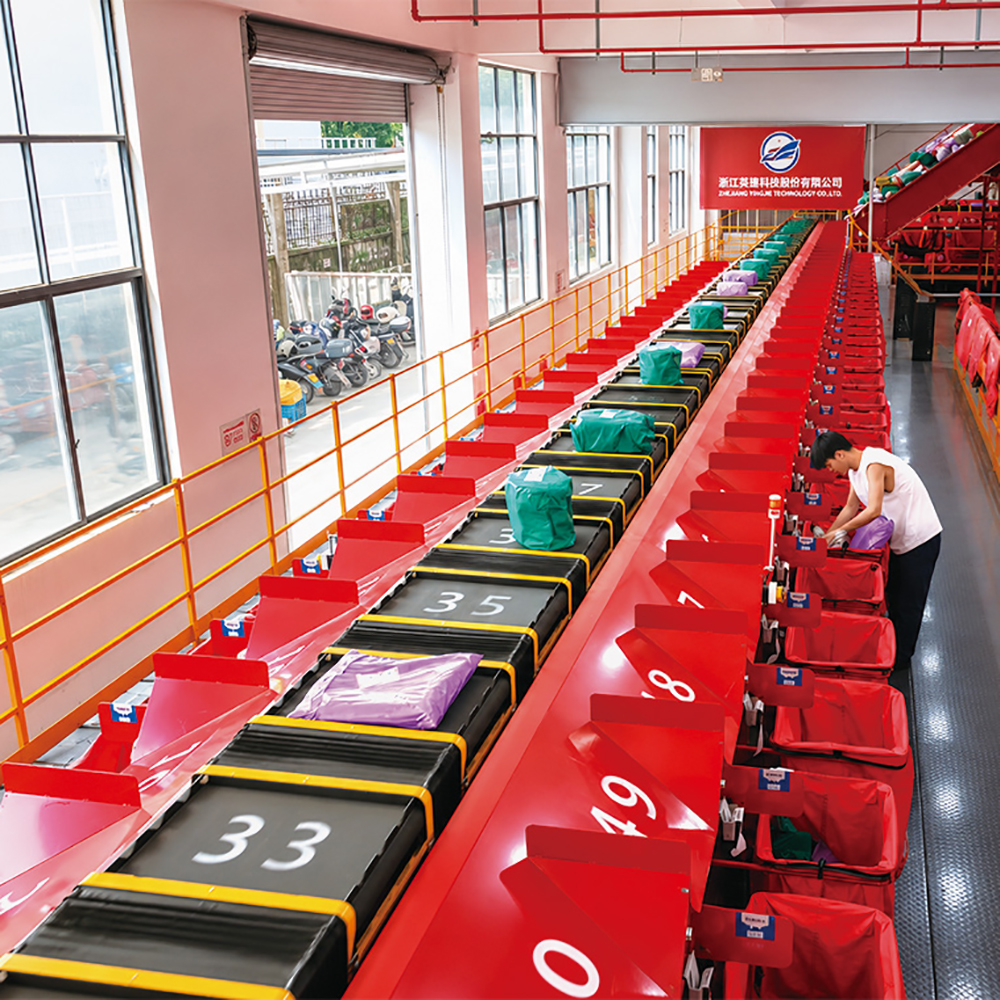
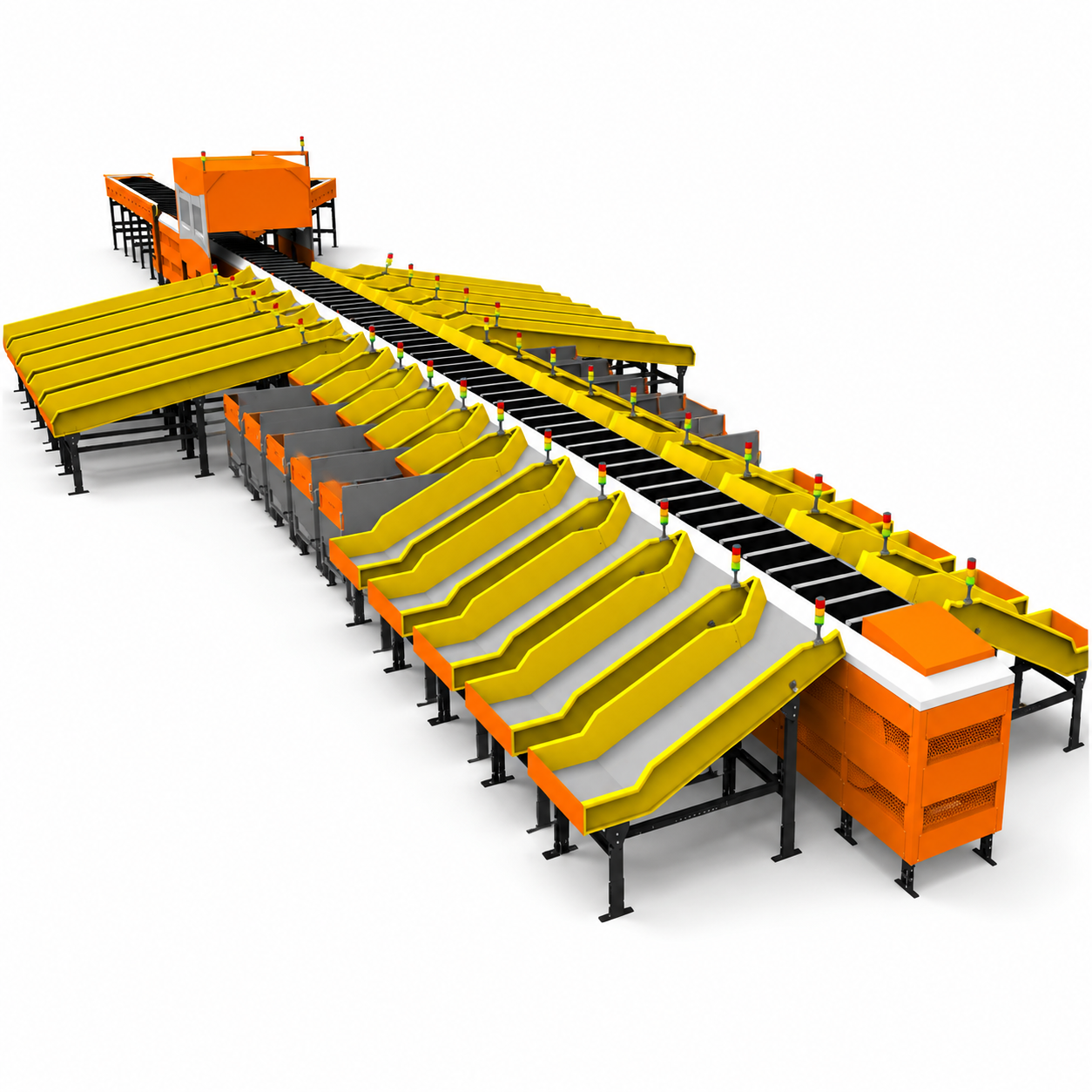
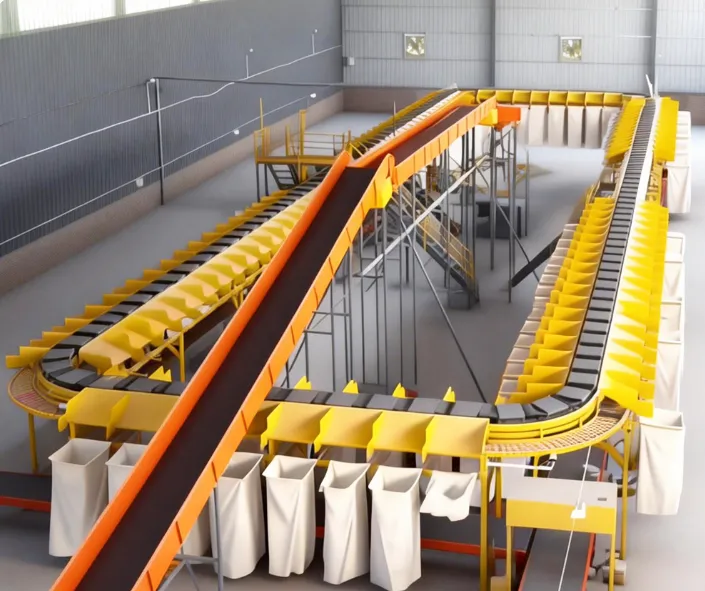
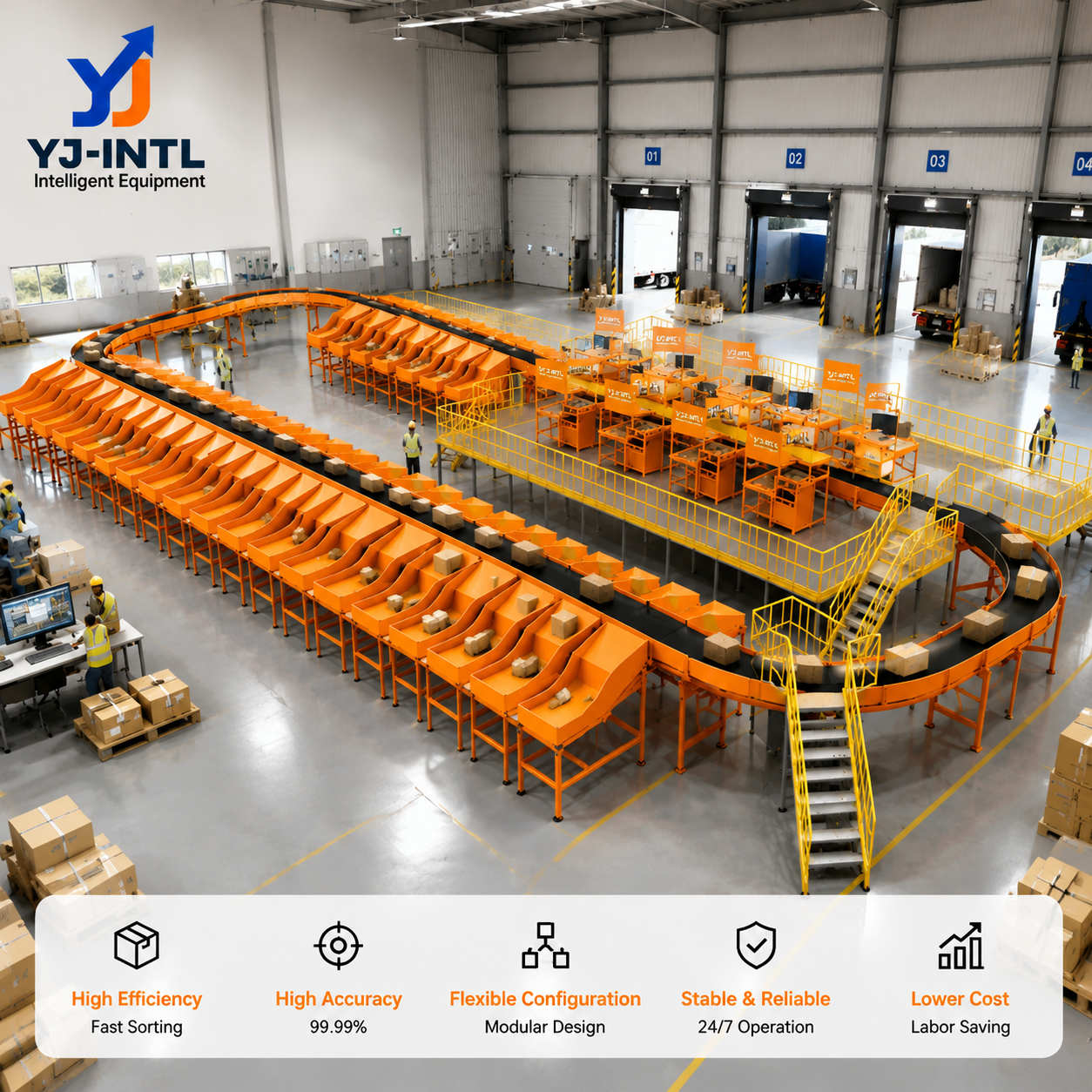
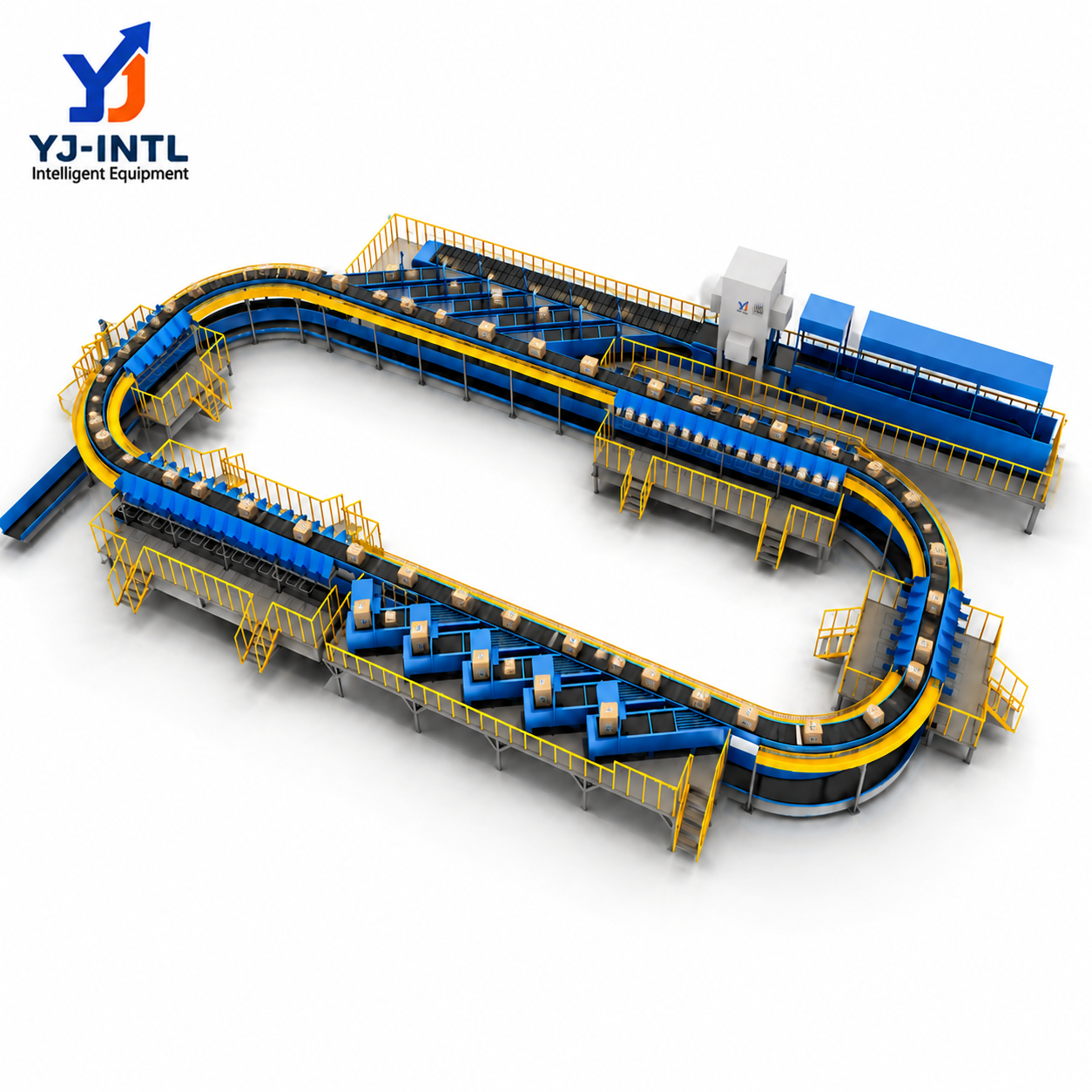
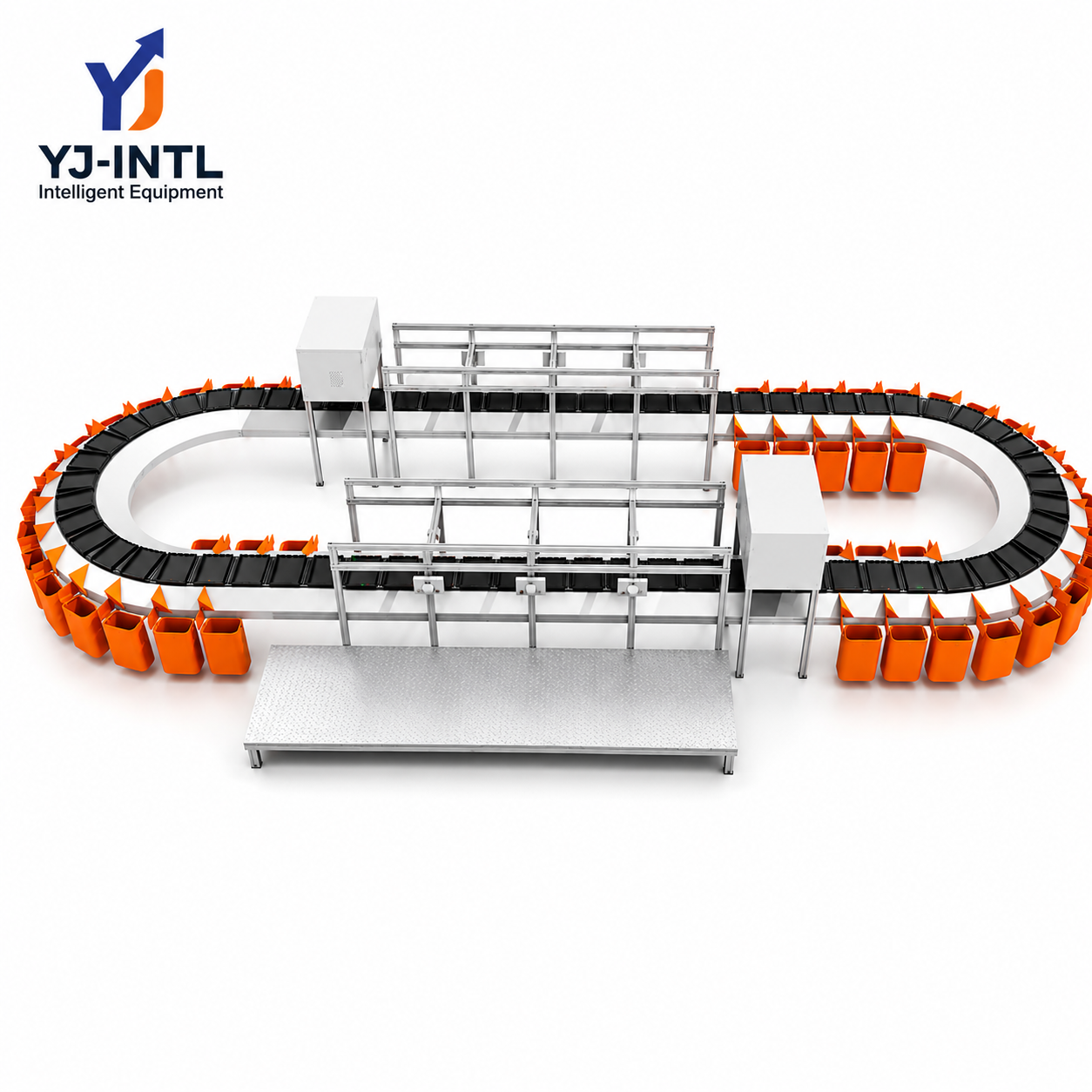
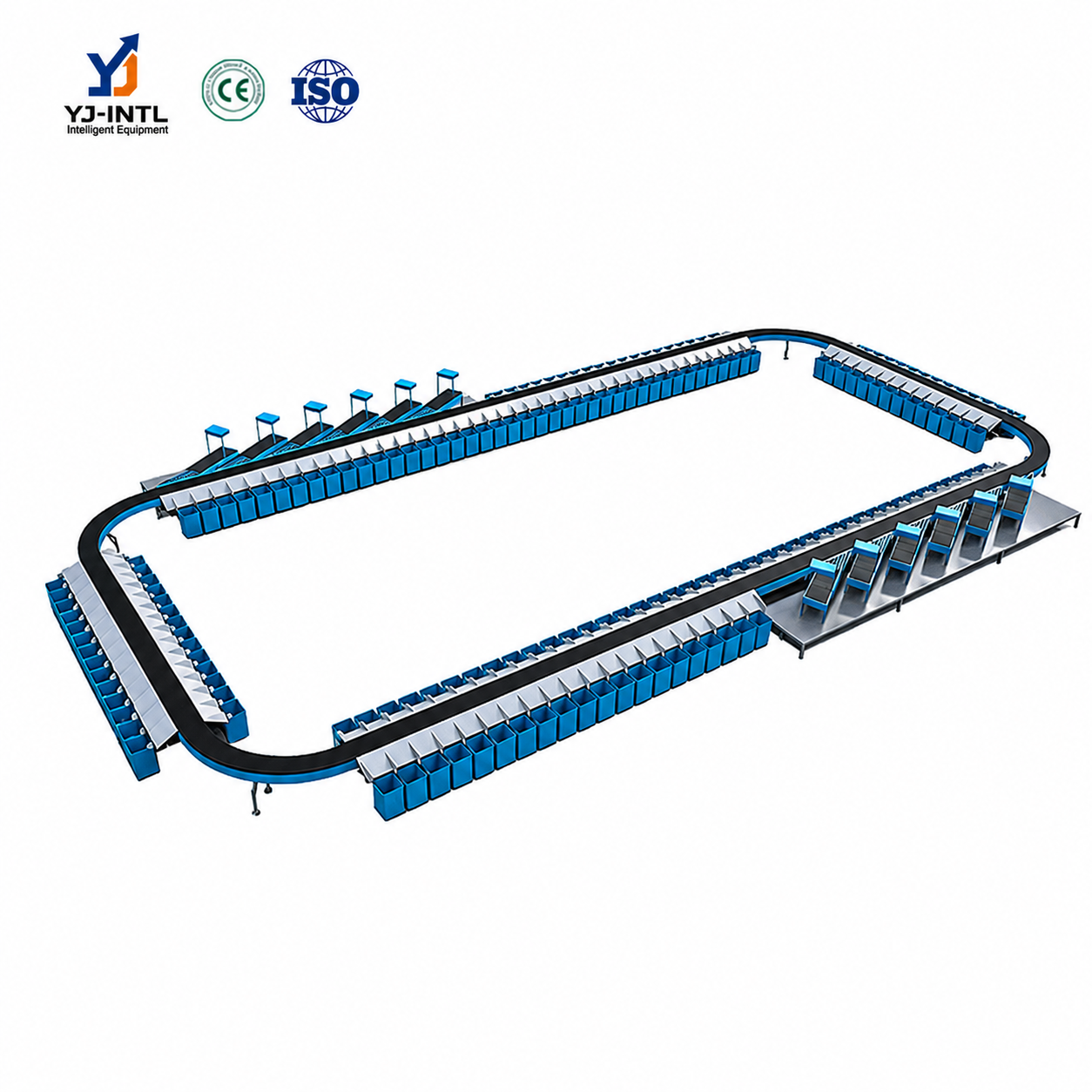
The NC Loop Cross-Belt Sorter uses a fixed NC tray-cart with a bi-directional short conveyor belt instead of a traditional tray-tilting mechanism. The result is a continuous closed-loop sorting platform designed to accommodate mixed parcel formats, including soft and stable irregular-shaped packages, while providing controlled lateral discharge to multiple destinations.
- NC Tray-Carrier for Irregular Parcels
- Up to 8,000 PPH per Zone*
- 5g–15kg Parcel Weight Range
- Up to 99.99% Sorting Accuracy*
- Bi-Directional Cross-Belt Discharge
- 600 / 750mm Carrier Pitch
- DWS & WMS/WCS Integration Ready
NC Loop Cross-Belt Sorter Technical Specifications
| Parameter | Specification |
|---|---|
| Product Type | NC Loop Cross-Belt Sorter |
| Sorting Structure | Closed-Loop / Continuous Circulation |
| Maximum Throughput | Up to 8,000 pieces/hour per zone* |
| Sorting Accuracy | Up to 99.99%* |
| Parcel Weight | 5g–15kg |
| Maximum Speed | 1.5 m/s |
| Carrier Pitch | 600 / 750 mm |
| Carrier Design | Fixed NC tray-cart with bi-directional short cross-belt and baffles |
| Belt Size | Customized according to project requirements |
| Drive System | Linear Motor / Electromagnetic Drive |
| Power Supply | Slip Ring / Non-Contact Inductive Power Supply |
| Operating Noise | ≤70 dB |
| Control System | Siemens control system |
| DWS Integration | Supported according to project requirements |
| Sorting Direction | Bi-directional lateral discharge |
| Sorting Ports | Customized according to destination and layout requirements |
| Parcel Types | Cartons, polybags, soft parcels, e-commerce parcels, express parcels and stable irregular-shaped packages |
| Application | Express logistics, e-commerce, 3PL, retail distribution and parcel hubs |
| Engineering | Project-based configuration according to parcel profile, throughput and facility layout |
*Maximum throughput and sorting accuracy are reference values from the supplied product material. Final sustained performance must be validated against actual parcel characteristics and project operating conditions.
Details
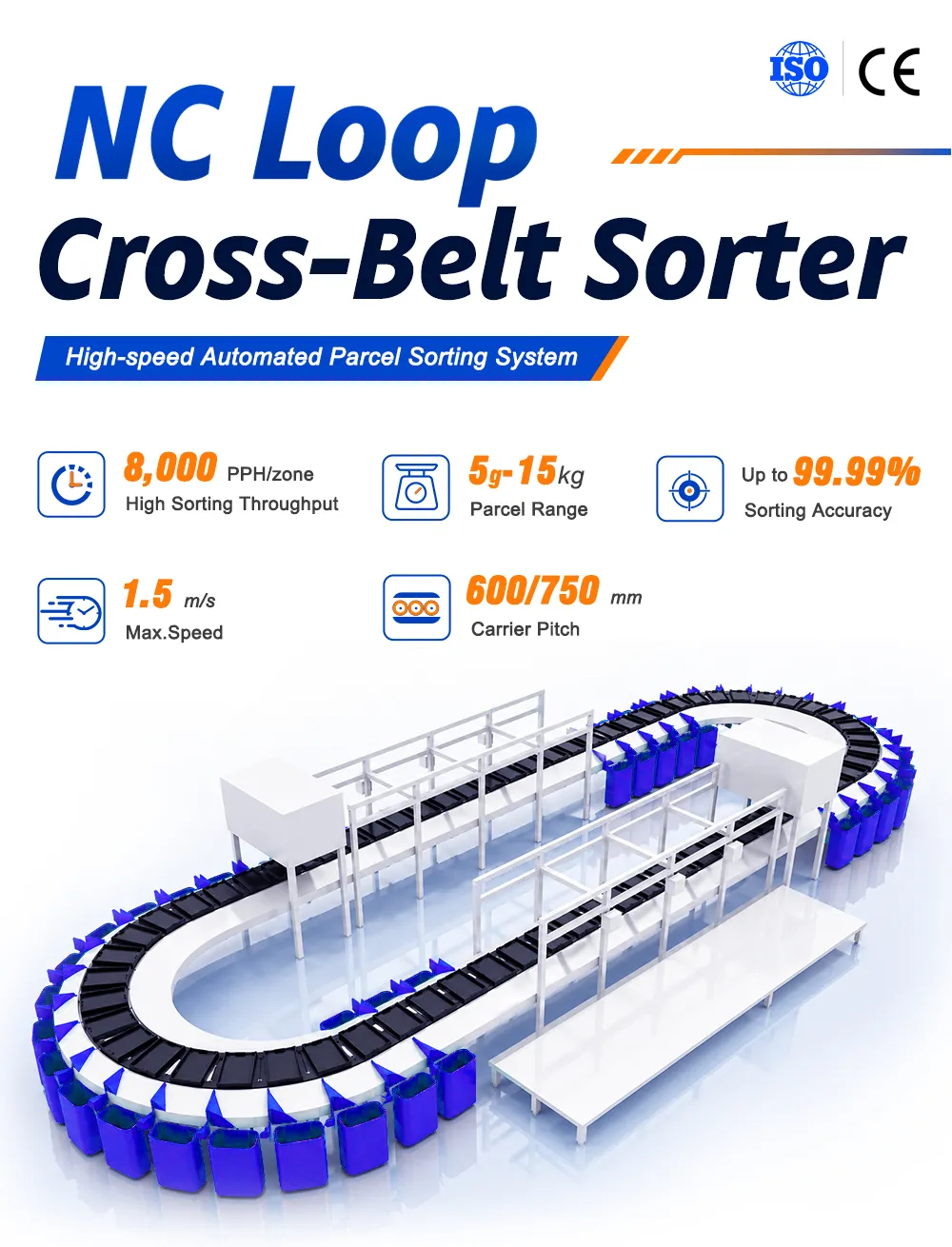
The NC Loop Cross-Belt Sorter is designed for parcel operations where conventional sorting equipment may struggle with mixed packaging, soft parcels or stable irregular-shaped items. Its defining feature is the NC tray-cart: a fixed carrying platform with a bi-directional short conveyor belt rather than a traditional tray-tilting mechanism.
This design keeps the carrier platform stable while the cross belt performs the discharge. For logistics operators, that means the sorting mechanism can be engineered around a broader range of parcel forms while maintaining a continuous closed-loop flow.
The supplied product material specifies up to 8,000 pieces/hour per zone, 5g–15kg parcel weight, up to 99.99% sorting accuracy, 1.5 m/s maximum speed and 600/750mm carrier pitch. Actual project capacity should be determined from the customer's parcel profile, induction conditions and destination requirements.
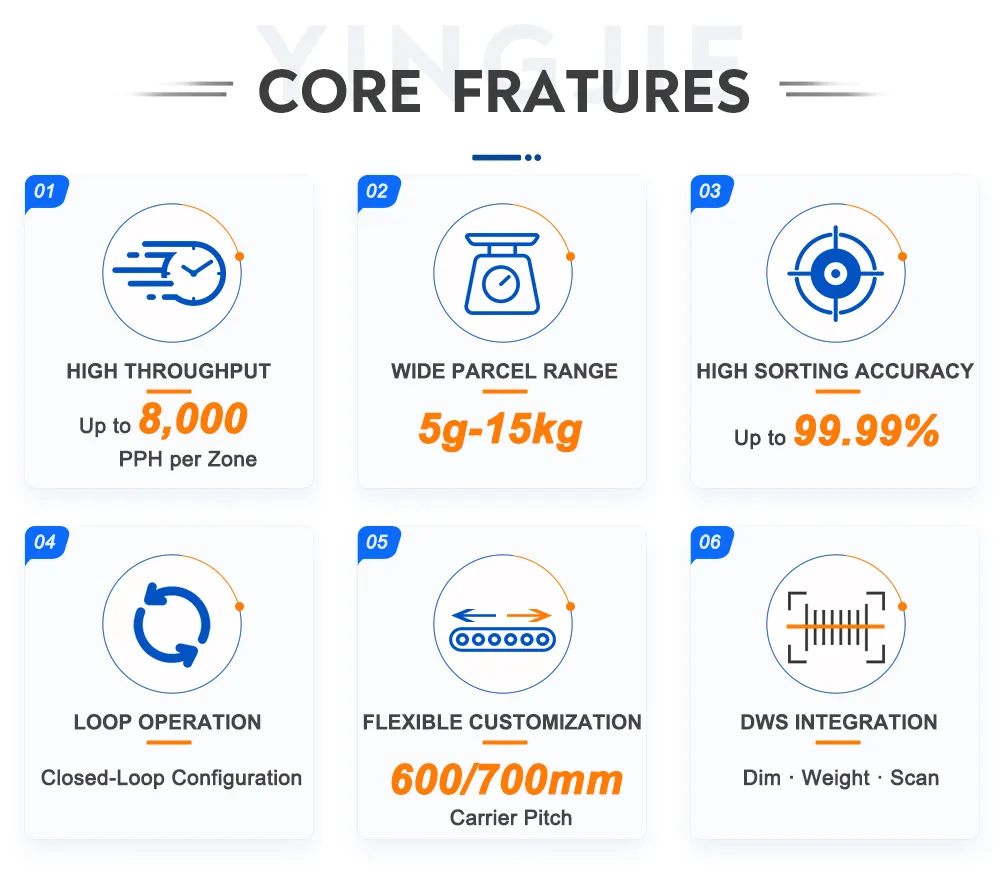
NC Loop Cross-Belt Sorting Principle
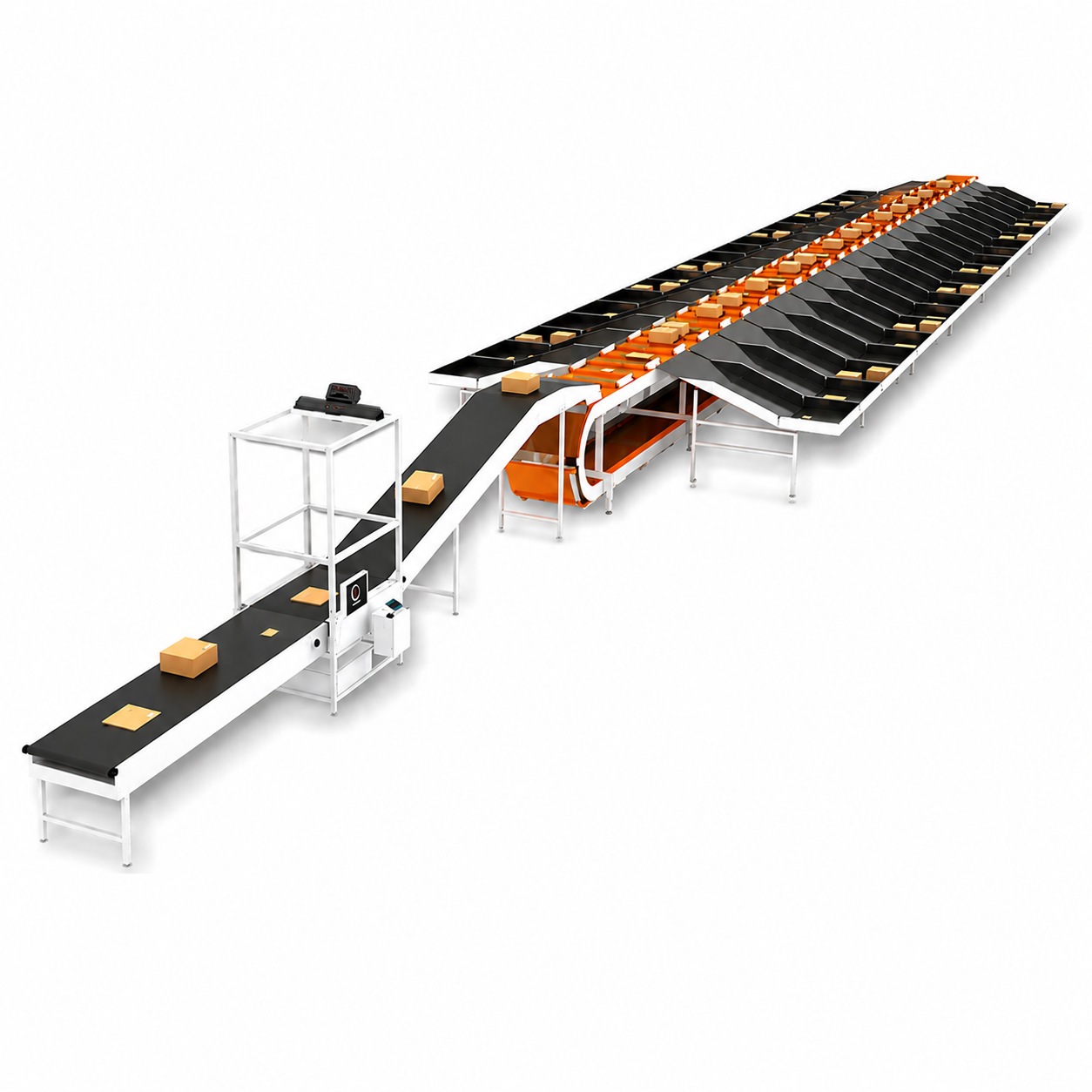
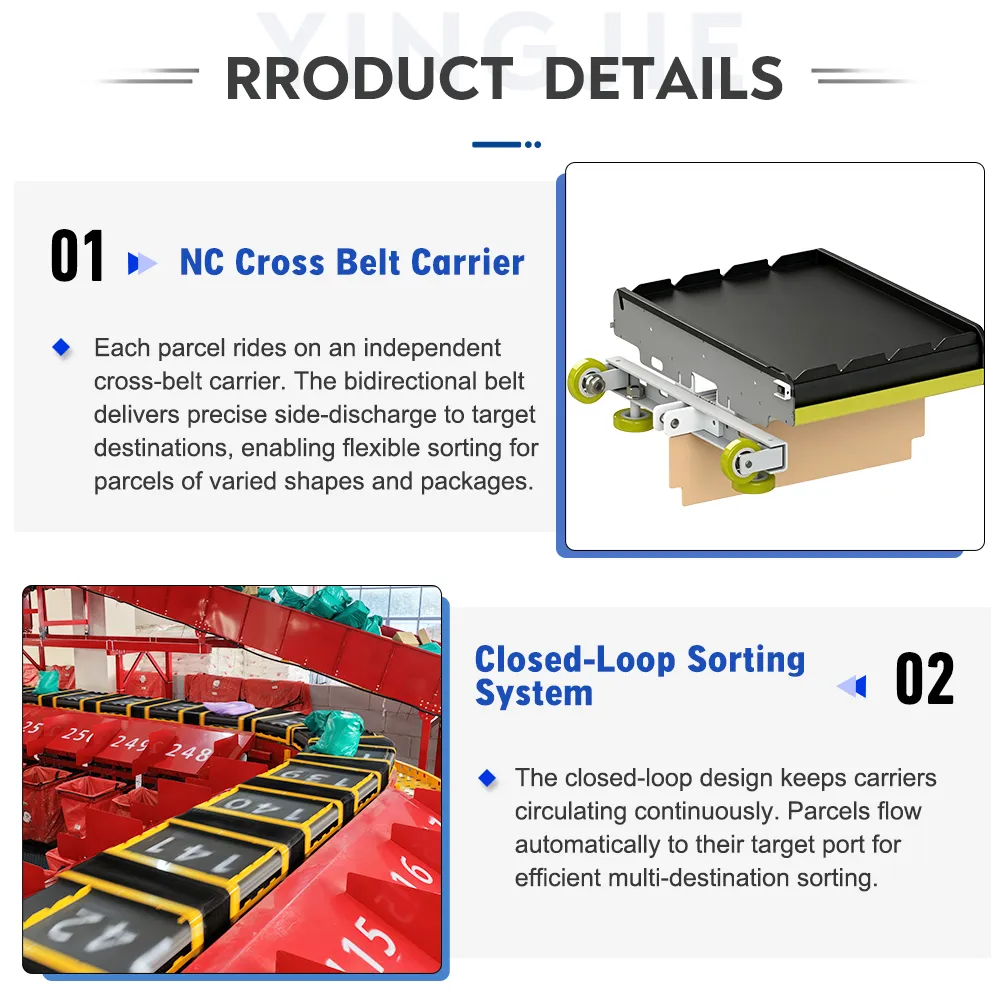
The system uses individual NC carriers connected into a continuous loop. Each carrier transports one parcel through the sorting cycle and is controlled according to the parcel's assigned destination.
The operating sequence is:
Parcel Induction → Identification → Carrier Assignment → Continuous Loop Transport → Destination Tracking → Cross-Belt Discharge → Takeaway
When the carrier reaches the assigned destination, its short cross belt moves laterally and transfers the parcel into the corresponding chute or takeaway conveyor. The carrier then returns to the circulation path for the next parcel.
NC Tray-Carrier Design for Diverse Parcel Shapes
The NC tray-cart is the main engineering difference of this sorter. The carrier uses a fixed platform and a bi-directional short conveyor belt with baffles instead of tilting the complete tray during discharge.
For B2B parcel operations, this architecture is valuable when the incoming flow contains cartons together with polybags, soft parcels or stable irregular-shaped packages. Handling suitability still depends on parcel dimensions, weight distribution, center of gravity and packaging stability, so representative parcel testing should be completed for unusual items.
Closed-Loop Sorting for Continuous Multi-Destination Flow
The closed-loop structure allows carriers to circulate continuously rather than moving through a single linear path. This makes it possible to arrange multiple sorting destinations around the loop and return carriers to the induction area after discharge.
Sorting-port positions can be planned around destination count, outbound volume, warehouse columns, available floor space, chute locations and downstream conveyor routes. This project-based approach helps the sorter fit the actual facility instead of forcing the warehouse to follow a fixed machine footprint.
Linear Motor Electromagnetic Drive
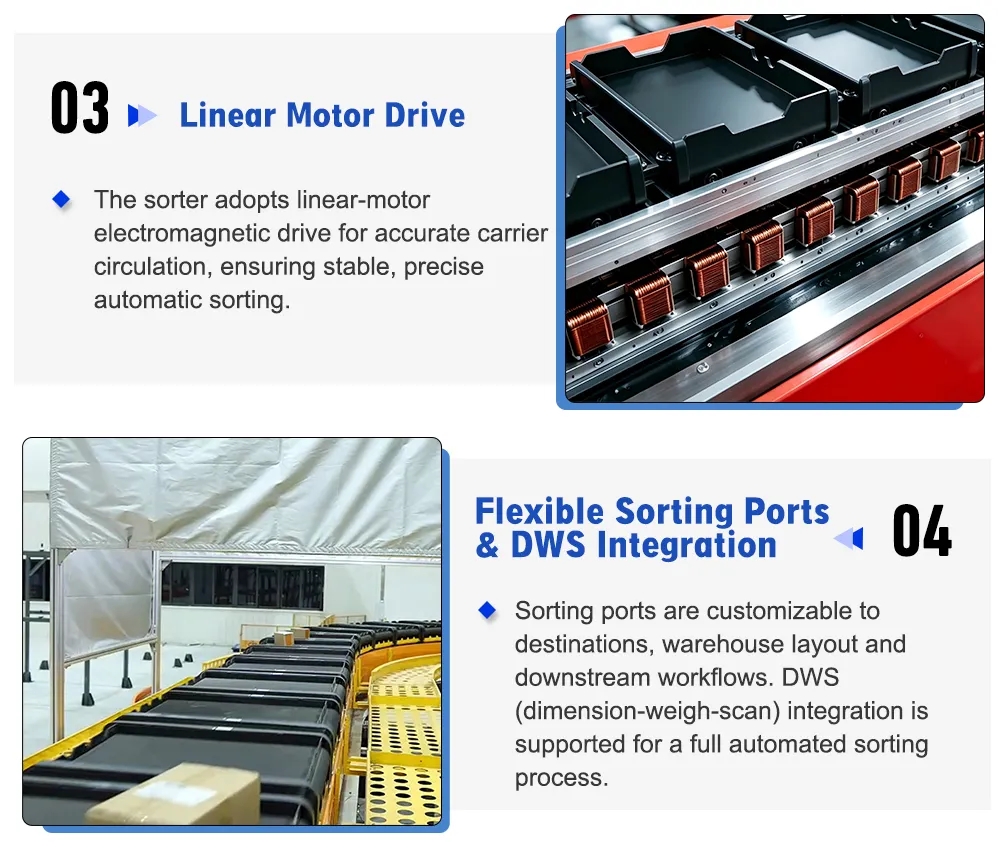
The NC Loop Cross-Belt Sorter uses a linear motor electromagnetic drive system for continuous carrier movement. The supplied configuration supports slip-ring or non-contact inductive power supply options.
The drive and power architecture are selected together with the carrier configuration, operating speed, loop geometry and maintenance requirements. Final engineering should therefore be based on the complete sorter layout rather than treating the drive as an isolated component.
Flexible Sorting Ports and Downstream Connections
Each sorting destination can be connected to a chute, takeaway conveyor or another downstream parcel-handling section. Port positions and interfaces can be configured according to the customer's outbound process.
This is particularly important for multi-destination parcel hubs. The engineering team can consider destination volume, shipping routes, floor space, chute arrangement and downstream conveyor direction when developing the final layout.
DWS and Parcel Identification Integration
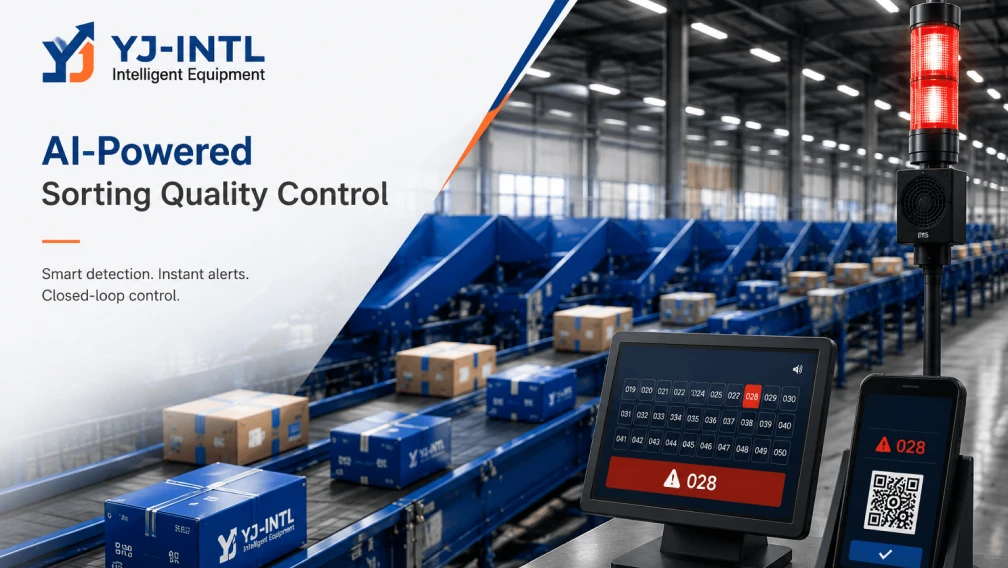
The sorter can be integrated with parcel identification and data-capture equipment according to project requirements. DWS can provide dimension and weight information, while barcode identification supplies the data needed for routing decisions.
At system level, the induction equipment, identification layer, sorter control, WMS/WCS interfaces and downstream conveyors should be designed as one coordinated material-flow process. This helps avoid a common automation problem: a high-speed sorter being installed without sufficient upstream identification or downstream discharge capacity.
Applications
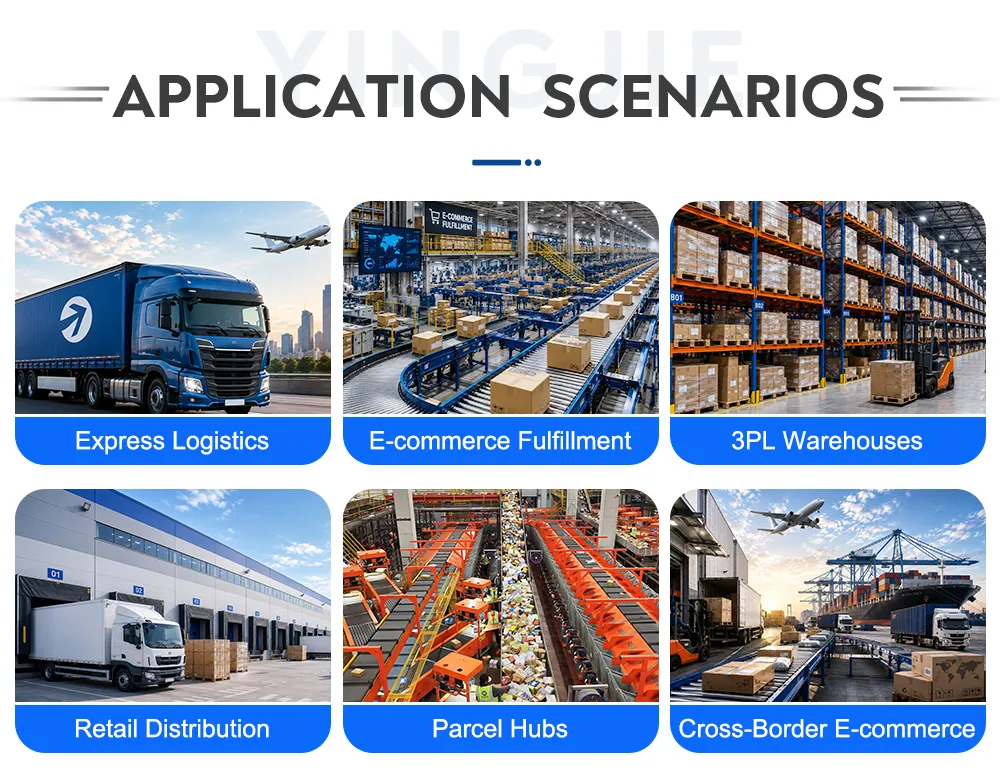
Express Logistics Hubs
Automates the routing of parcels to delivery regions, stations, routes or outbound lanes while maintaining continuous circulation.
E-Commerce Fulfillment
Suitable for fulfillment operations handling a changing mix of cartons, polybags and packaged orders across multiple destinations.
3PL Distribution Centers
Supports multi-client distribution environments where destination rules and parcel profiles may vary between operations.
Retail Distribution
Can be configured to sort goods toward stores, regional distribution points or shipping lanes according to the outbound process.
High-Volume Parcel Processing
The closed-loop architecture is suited to facilities that require continuous multi-destination sorting and a scalable automated material-flow layout.
Why Choose the YJ-INTL NC Loop Cross-Belt Sorter?
Designed Around Irregular Parcel Handling
The fixed NC tray-cart and bi-directional short cross belt remove the need for traditional tray tilting and provide a practical architecture for diverse parcel shapes.
Continuous Closed-Loop Operation
Carriers circulate continuously, allowing multiple destinations to be arranged around the loop and supporting a repeatable parcel sorting process.
Project-Specific Capacity Design
The reference capacity is up to 8,000 pieces/hour per zone, while the actual operating target is engineered from parcel mix, induction rate, carrier pitch, destination distribution and downstream capacity.
Flexible Destination Configuration
Sorting ports, chutes and takeaway interfaces can be arranged according to the customer's warehouse layout and outbound process.
Integration-Ready Architecture
DWS, barcode identification, control systems and WMS/WCS interfaces can be incorporated according to the overall automation design.
Engineering Based on Real Parcel Data
Final selection can be validated using parcel dimensions, weight distribution, packaging types, peak volume, destination count and site layout rather than relying only on catalog specifications.
What YJ-INTL Needs to Engineer Your Sorting Solution
For an accurate proposal, provide your typical and peak parcel volume, parcel size and weight distribution, percentage of soft or irregular packages, number of destinations, barcode requirements, DWS requirements, induction method, available installation area and downstream conveyor arrangement.
Representative parcel photos, sample data or sample packages are particularly useful when the application includes deformable, soft or irregular-shaped items.
Request a Project-Specific Quote → Send Your Parcel Profile, Throughput Target and Layout for Engineering Review.
FAQ
The NC tray-cart uses a fixed carrying platform with a bi-directional short conveyor belt and baffles instead of tilting the entire tray. This architecture reduces restrictions caused by the traditional tray-tilting mechanism and can be engineered for soft and stable irregular-shaped parcels, subject to parcel testing and engineering validation.
The supplied product specification states a maximum throughput of up to 8,000 pieces per hour per zone. Actual sustained throughput depends on parcel mix, induction spacing, carrier configuration, identification performance, destination distribution and downstream capacity.
The supplied specification indicates a parcel weight range of 5g to 15kg. Final compatibility should also be checked against parcel dimensions, shape, center of gravity, packaging stability and carrier configuration.
Parcels are inducted onto individual carriers, identified and associated with a destination. The carriers circulate around the closed loop, and when a carrier reaches its assigned destination, the cross belt moves laterally to discharge the parcel into the corresponding chute or takeaway conveyor.
The supplied technical specification lists 600mm and 750mm carrier pitch options. The appropriate pitch should be selected according to parcel profile, required throughput, induction spacing and system layout.
The sorter uses a linear motor electromagnetic drive system. Depending on the project configuration, the power supply can use a slip ring or non-contact inductive power supply.
Yes. DWS, barcode identification and WMS/WCS interfaces can be integrated according to project requirements. The final interface architecture should be defined from the upstream data-capture process, sorter control logic and downstream material flow.
Yes. Sorting-port locations and downstream discharge arrangements can be customized according to destination count, outbound volume, facility layout, chute positions and takeaway conveyor requirements.
For engineering and quotation, provide parcel dimensions and weight distribution, peak and average hourly volume, percentage of soft or irregular parcels, destination count, induction method, barcode requirements, DWS requirements, available installation space and downstream conveyor layout. Representative parcel samples or photos are helpful for irregular-item applications.
Yes. The NC Loop Cross-Belt Sorter can be designed into an existing parcel-processing line. Upstream induction, identification, DWS, control interfaces, sorting chutes and downstream conveyors should be coordinated during system engineering.
No. 8,000 PPH is the maximum capacity stated in the supplied product material, not a universal guaranteed operating rate. Final sustained throughput must be validated against the actual parcel profile and complete system configuration.