Cross Belt Sorter
Linear Cross Belt Sorter | Automated Parcel Sortation System
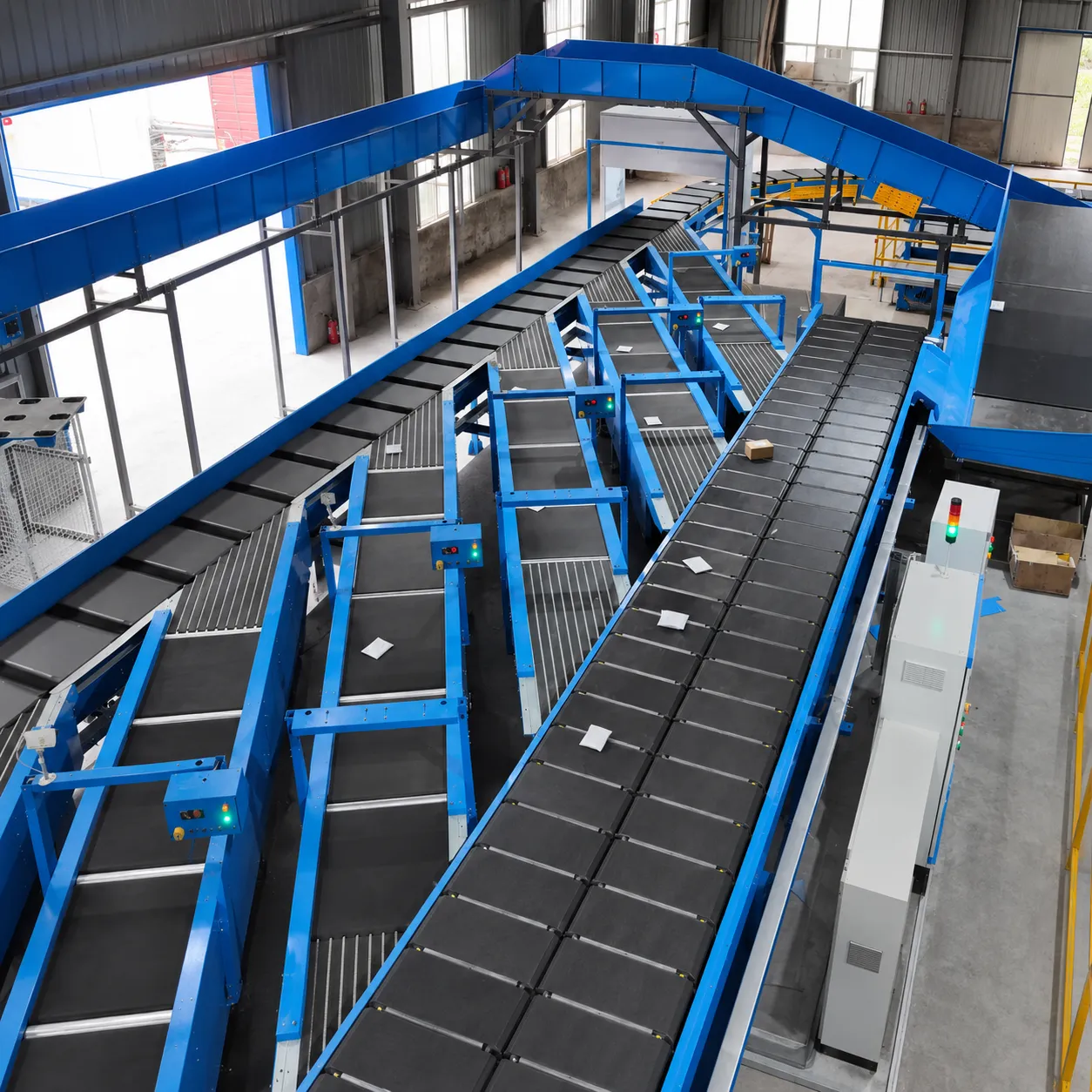
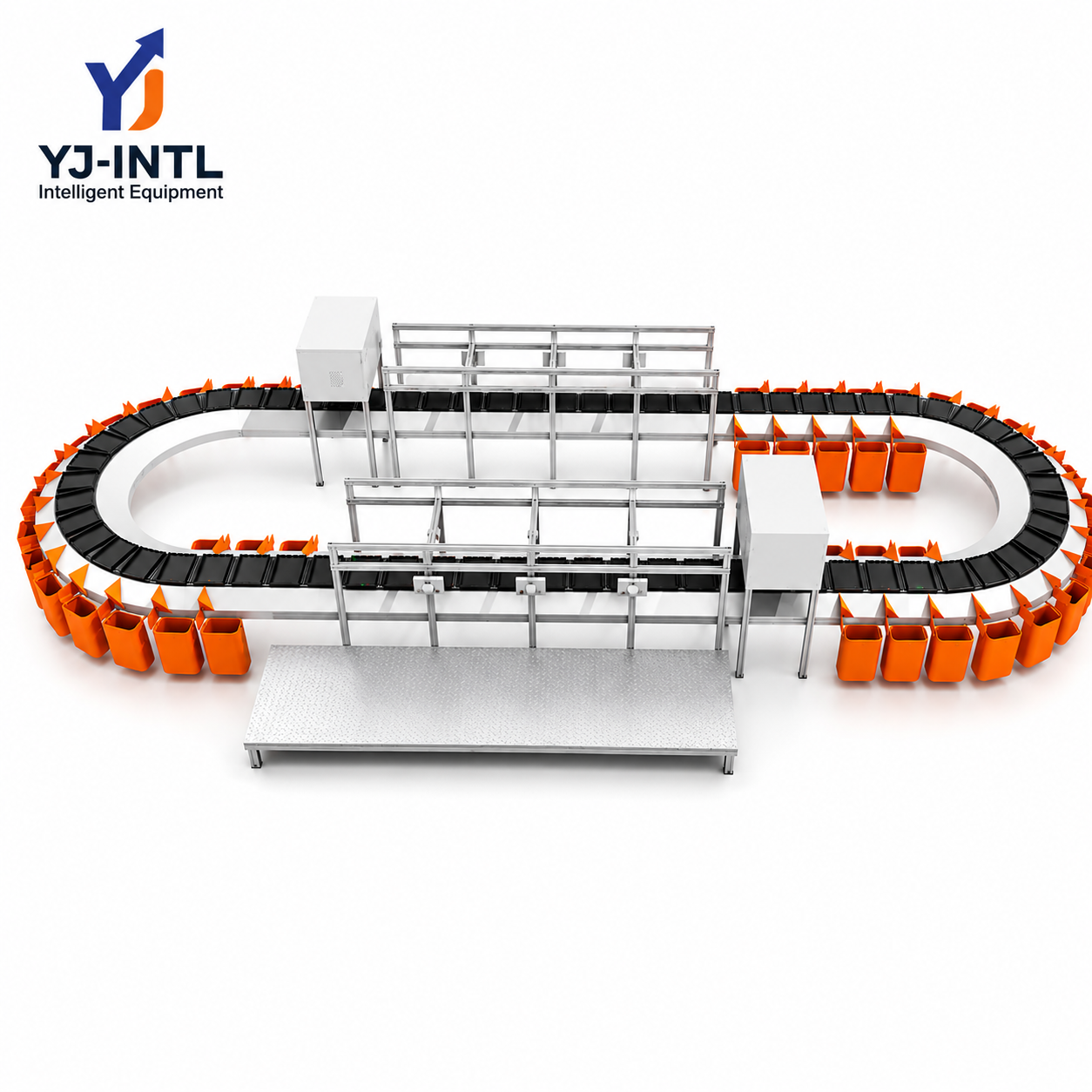
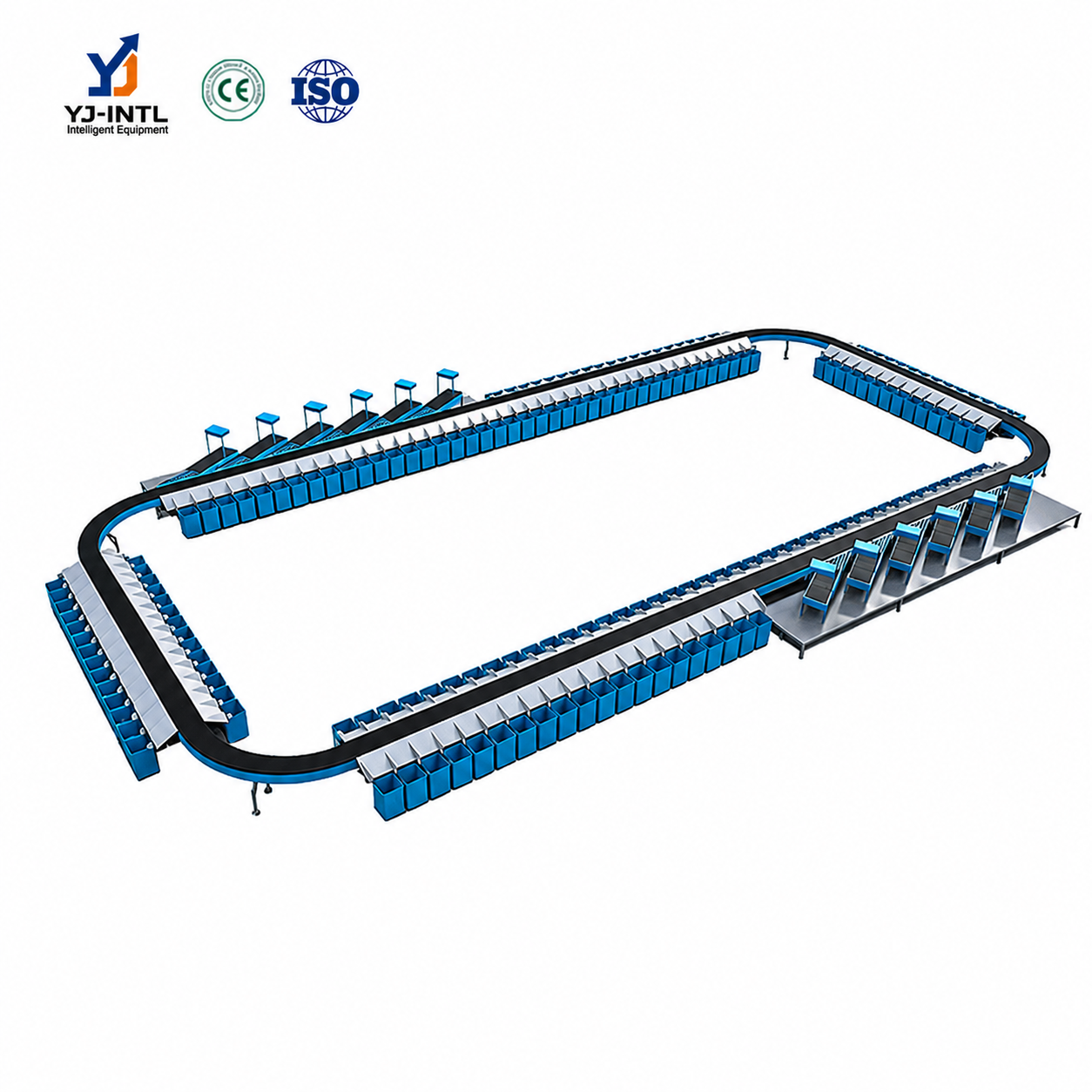
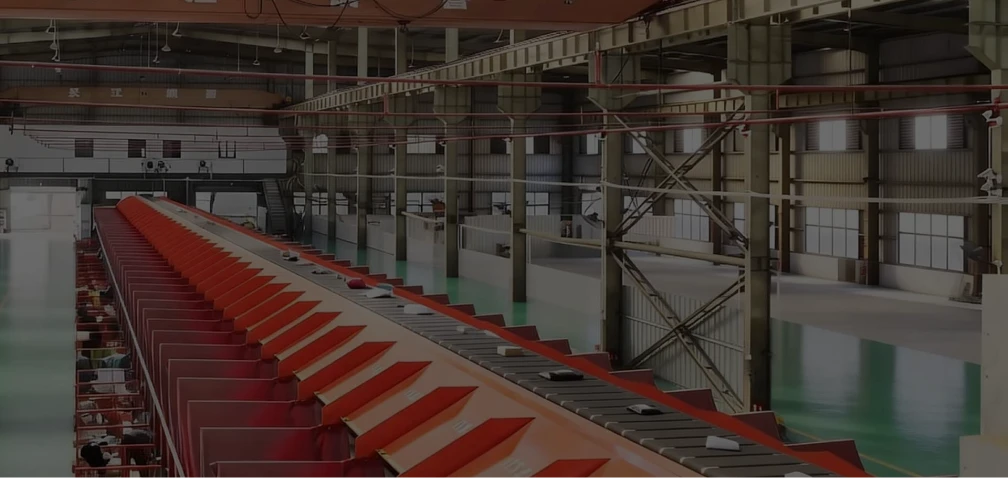
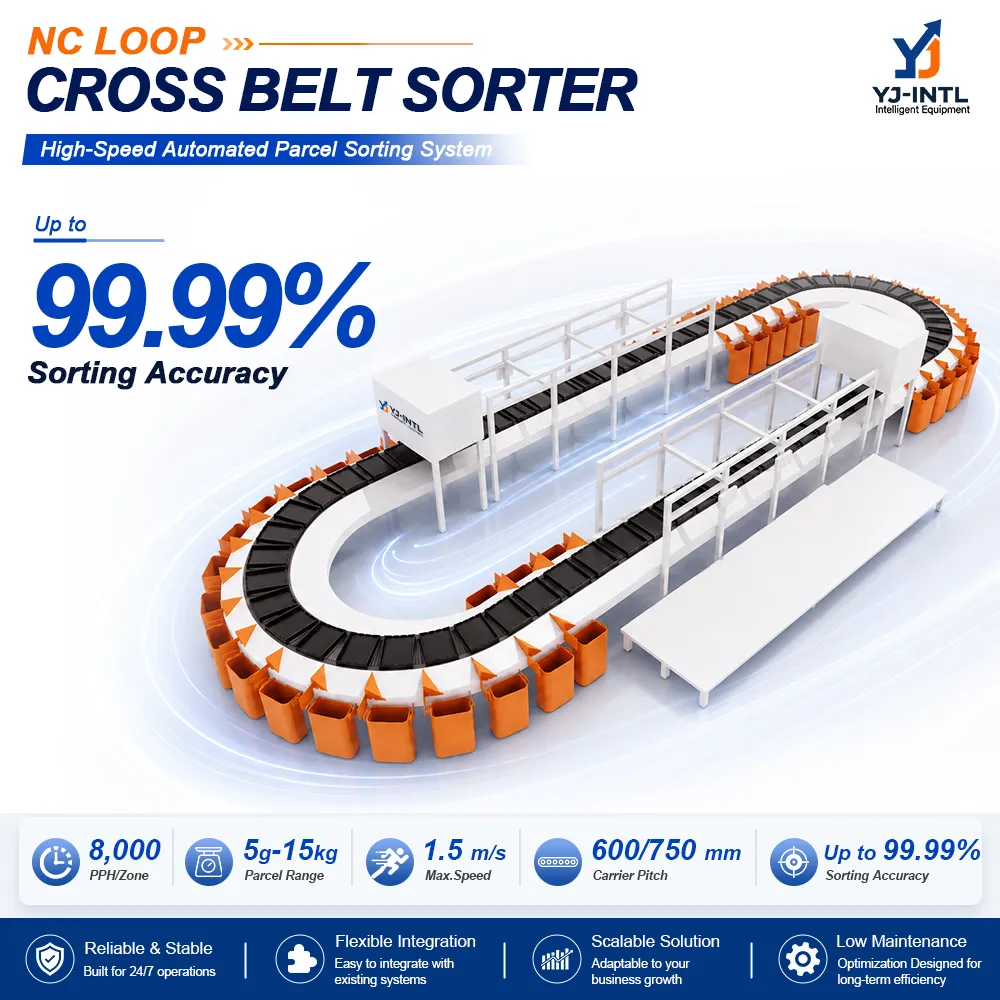
YJ-INTL Linear Cross Belt Sorter is a continuous parcel sortation system designed for high-volume logistics, e-commerce, 3PL and distribution operations. The supplied product material specifies capacity up to 12,000 pieces/hour, while actual throughput depends on parcel profile, induction rate, carrier configuration, destination distribution and downstream capacity.
Each parcel is assigned to a carrier and routed to a defined destination, where the cross belt performs controlled lateral discharge. The system can integrate parcel identification, DWS, sorting chutes, takeaway conveyors and WMS/WCS interfaces into a complete automated sorting solution.
- Up to 12,000 Parcels/Hour
- Continuous Carrier-Based Sorting
- Controlled Lateral Cross-Belt Discharge
- Flexible Chutes & Destinations
- Barcode / DWS / WMS / WCS Integration
- Custom CAD-Based System Engineering
- High-Volume Parcel Sortation
Technical Specifications
| Parameter | Specification |
|---|---|
| Product Type | Linear Cross Belt Sorter |
| Sortation Principle | Carrier-based cross-belt lateral discharge |
| System Layout | Linear configuration |
| Maximum Capacity | Up to 12,000 pieces/hour* |
| Sorting Destinations | Project-specific; chute quantity and positions are configurable |
| Induction | Manual, automated or hybrid according to project design |
| Parcel Identification | Barcode scanning; DWS integration available |
| Weighing & Dimensioning | Available as part of the integrated parcel data-capture process |
| Parcel Compatibility | Parcels, cartons, bags and stable unit loads subject to engineering review |
| Control | Project-specific sorter control and PLC architecture |
| WMS/WCS Integration | Available according to project interface requirements |
| Downstream Connection | Chutes, takeaway conveyors and dispatch processes can be integrated |
| Layout Engineering | Custom CAD and project-based system layout |
| Typical Applications | Express logistics, e-commerce, 3PL, retail distribution and parcel hubs |
Details
Linear Cross Belt Sorter for High-Volume Parcel Sortation
When a distribution operation needs to route a large number of parcels to multiple destinations within tight dispatch windows, sorter speed alone is not enough. The induction process, parcel identification, carrier loading, routing logic, discharge layout and downstream capacity must work as one coordinated flow.
YJ-INTL Linear Cross Belt Sorter is engineered around this complete material-flow process.
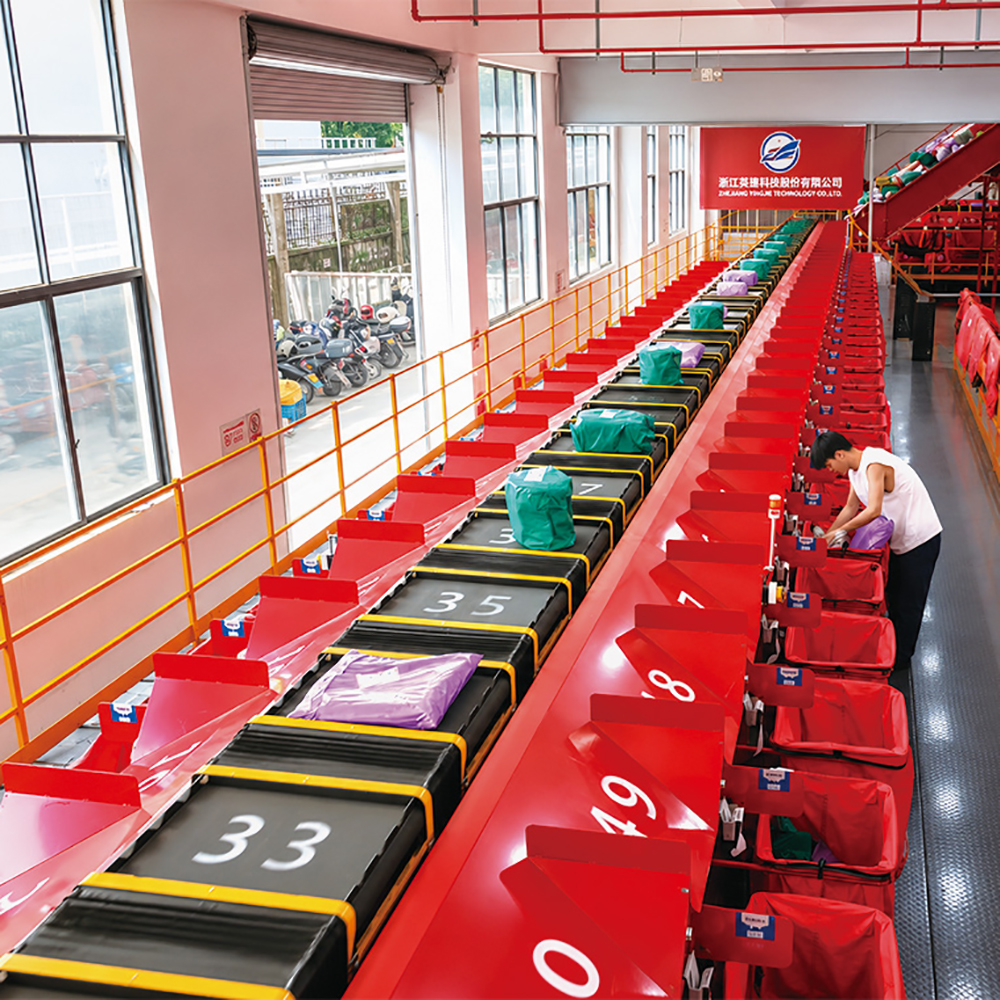
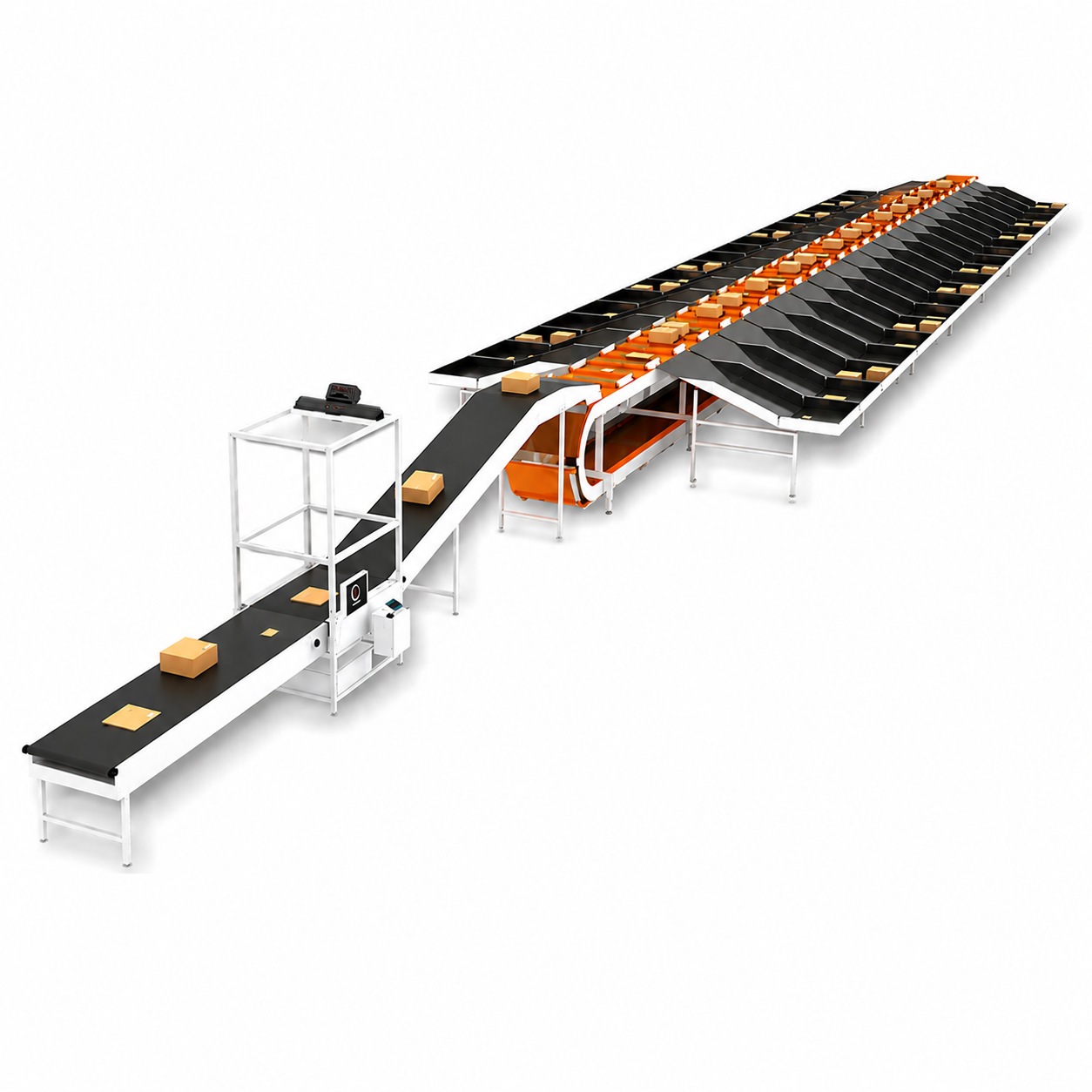
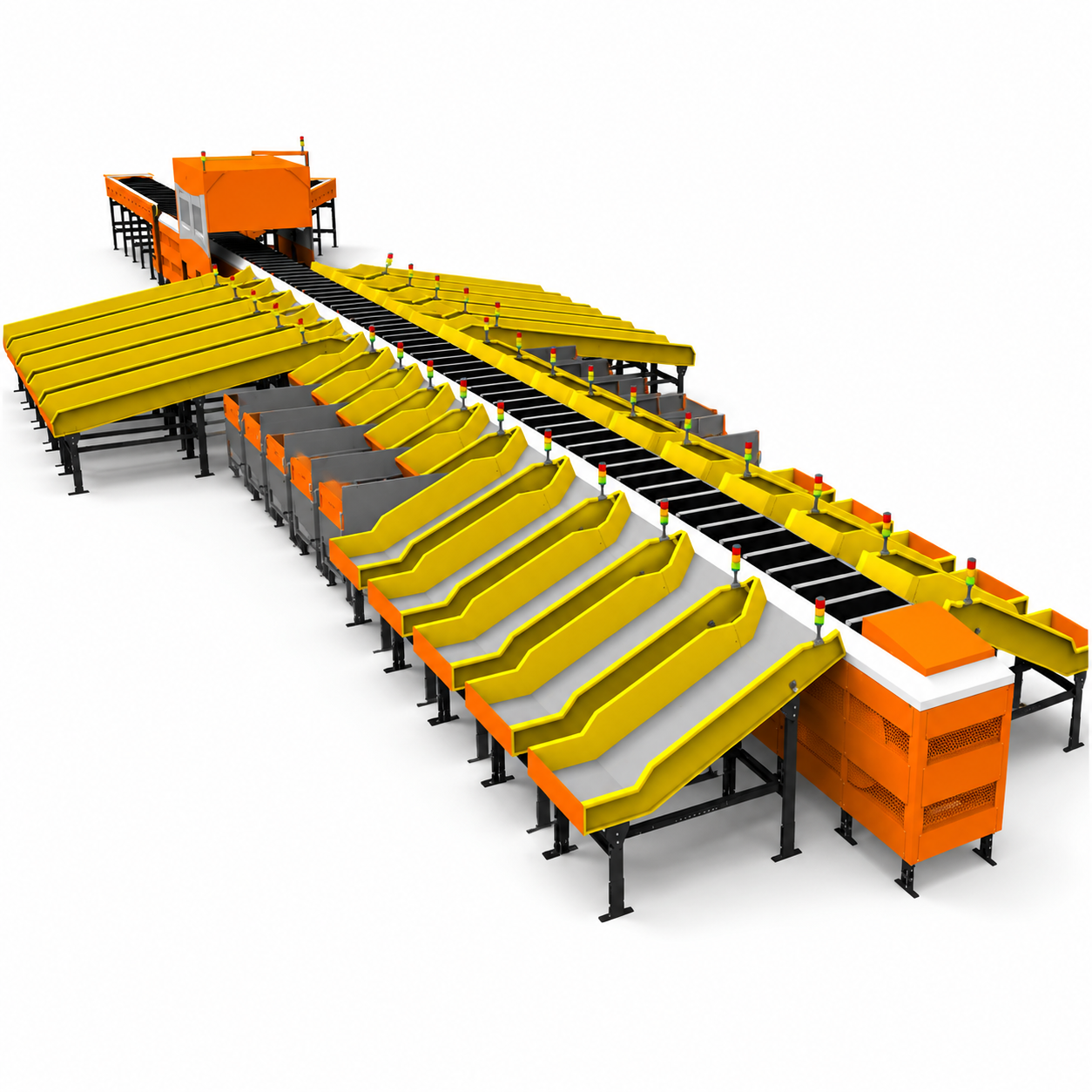
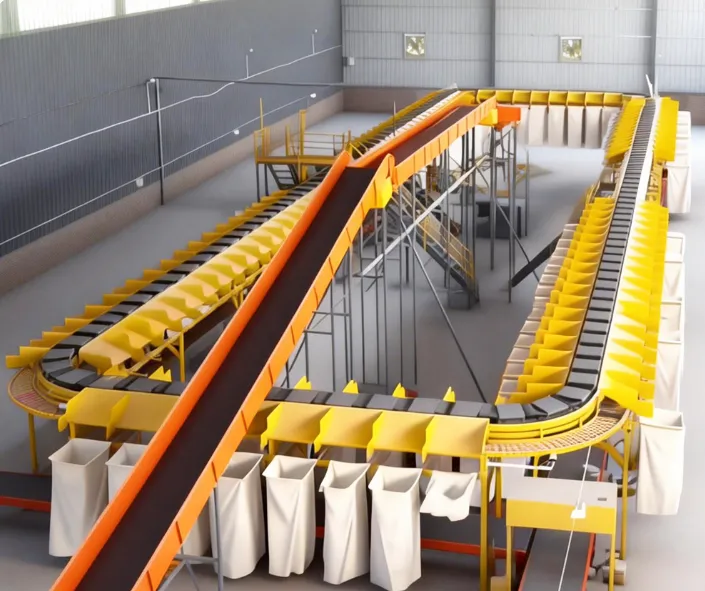
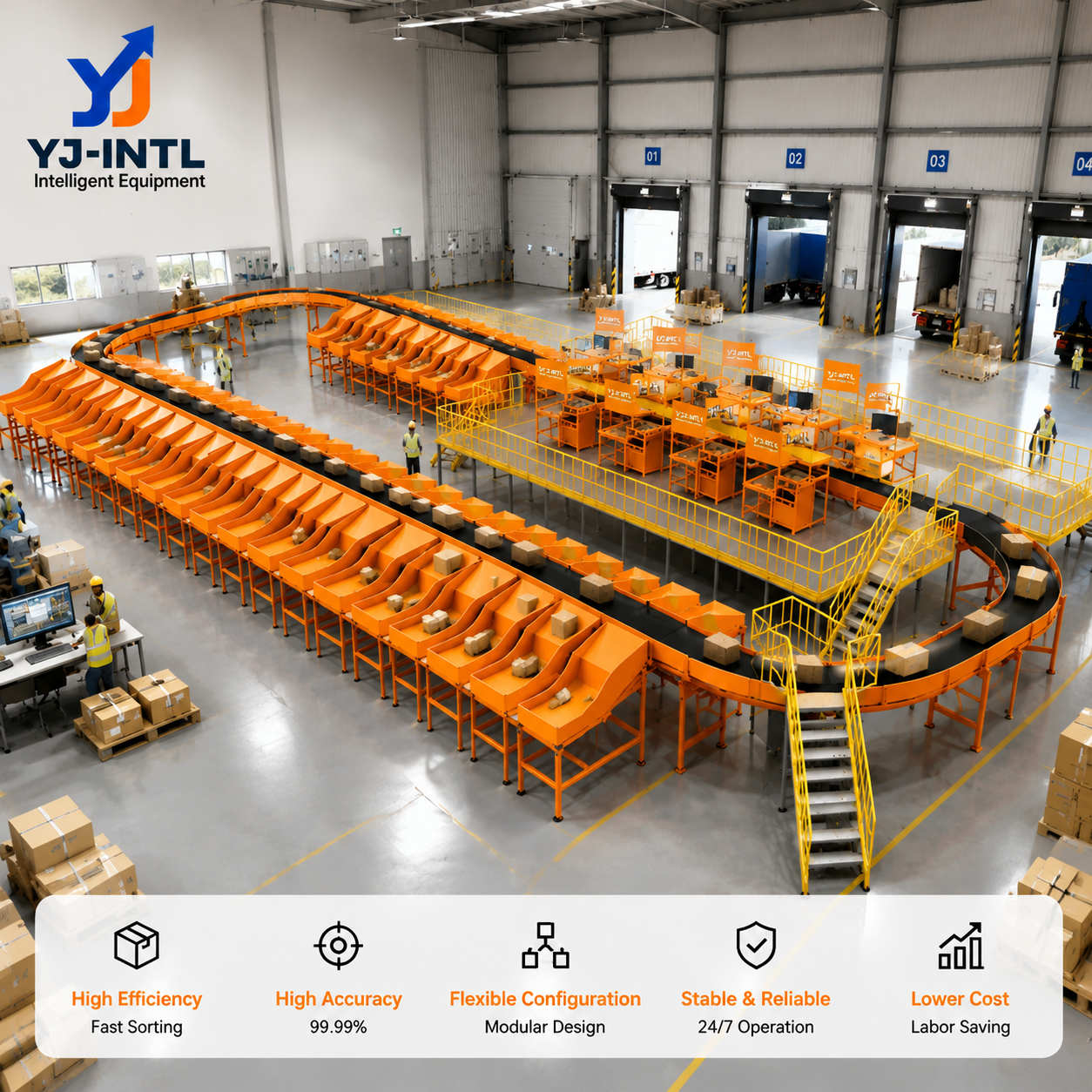
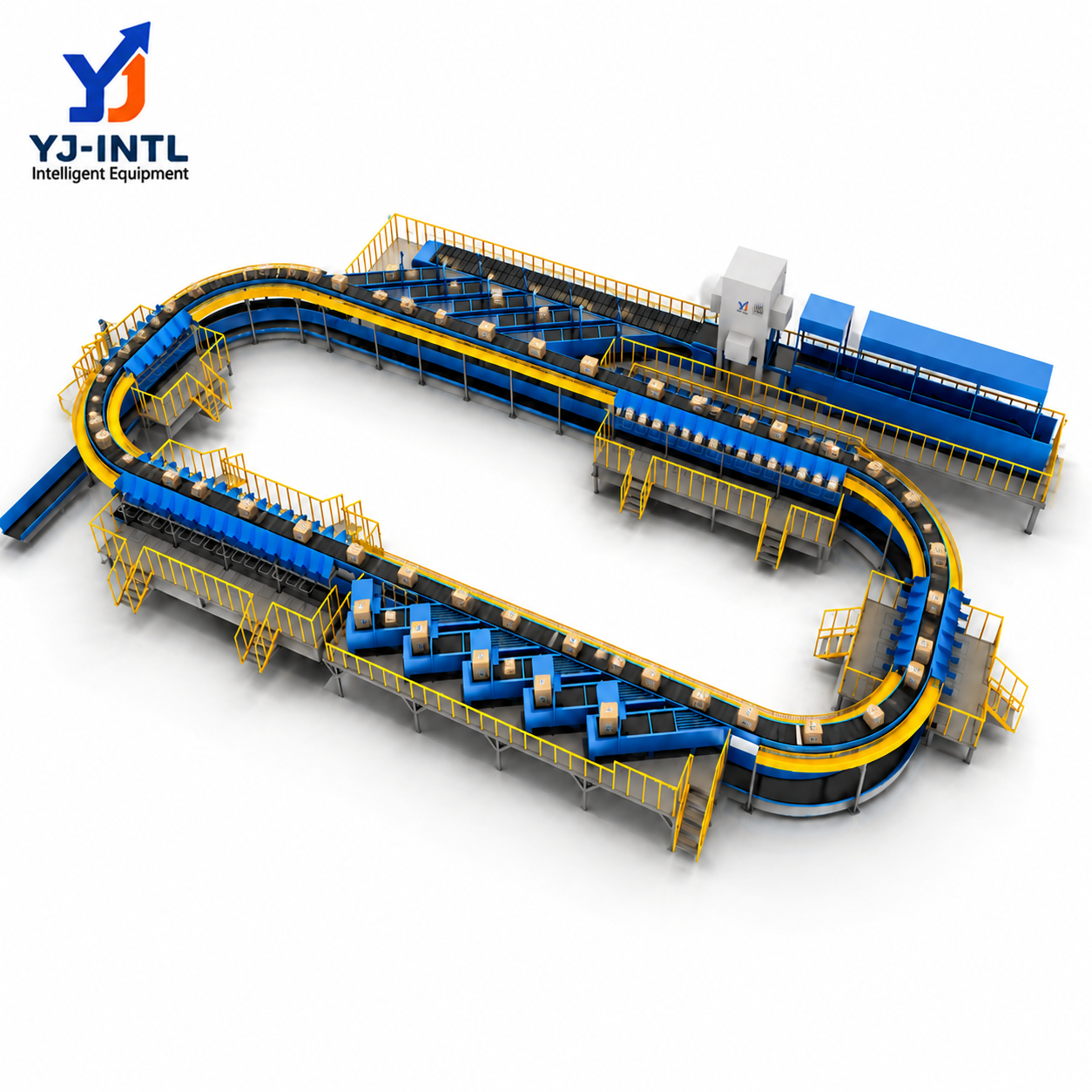
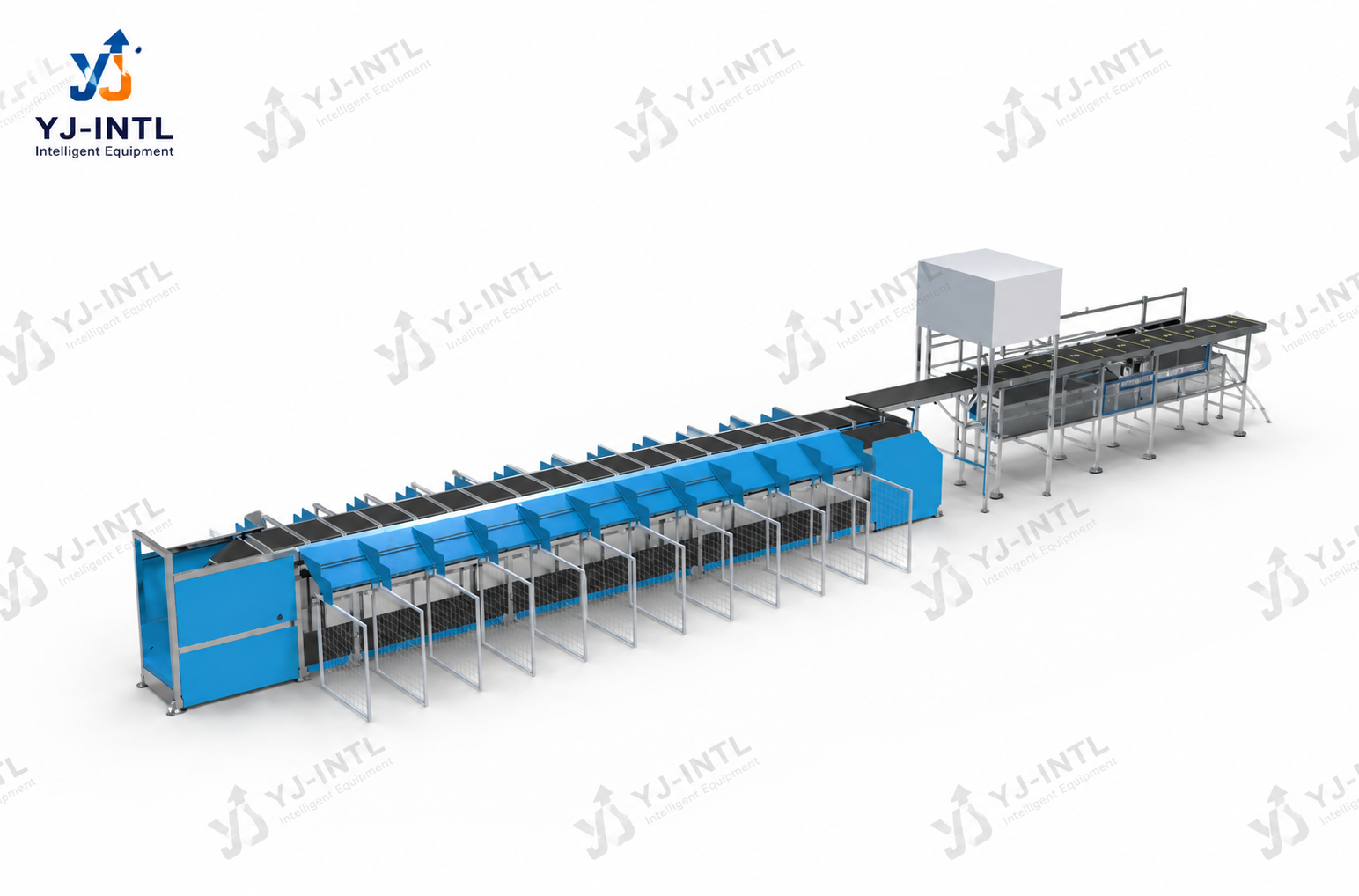
The system uses a series of cross-belt carriers moving along a linear sorting track. Once a parcel is identified and assigned to a destination, the control system tracks its carrier position and triggers the cross belt at the required discharge point. The parcel is transferred laterally to a chute or takeaway conveyor while the main sorting flow continues.
This architecture is suitable for operations where increasing parcel volume, multiple destinations and dispatch requirements make manual sorting difficult to scale consistently.
What Makes Linear Cross Belt Sorting Different?
Linear cross belt sorter combines continuous carrier movement with individual parcel discharge.
Instead of relying on manual destination decisions or a conventional conveyor divert, each parcel travels on an individual carrier and is discharged when that carrier reaches the assigned destination.
This provides a controlled routing sequence and allows the destination layout to be engineered around the warehouse's actual outbound process.
How the Linear Cross Belt Sorter Works?
1. Parcel Induction and Spacing
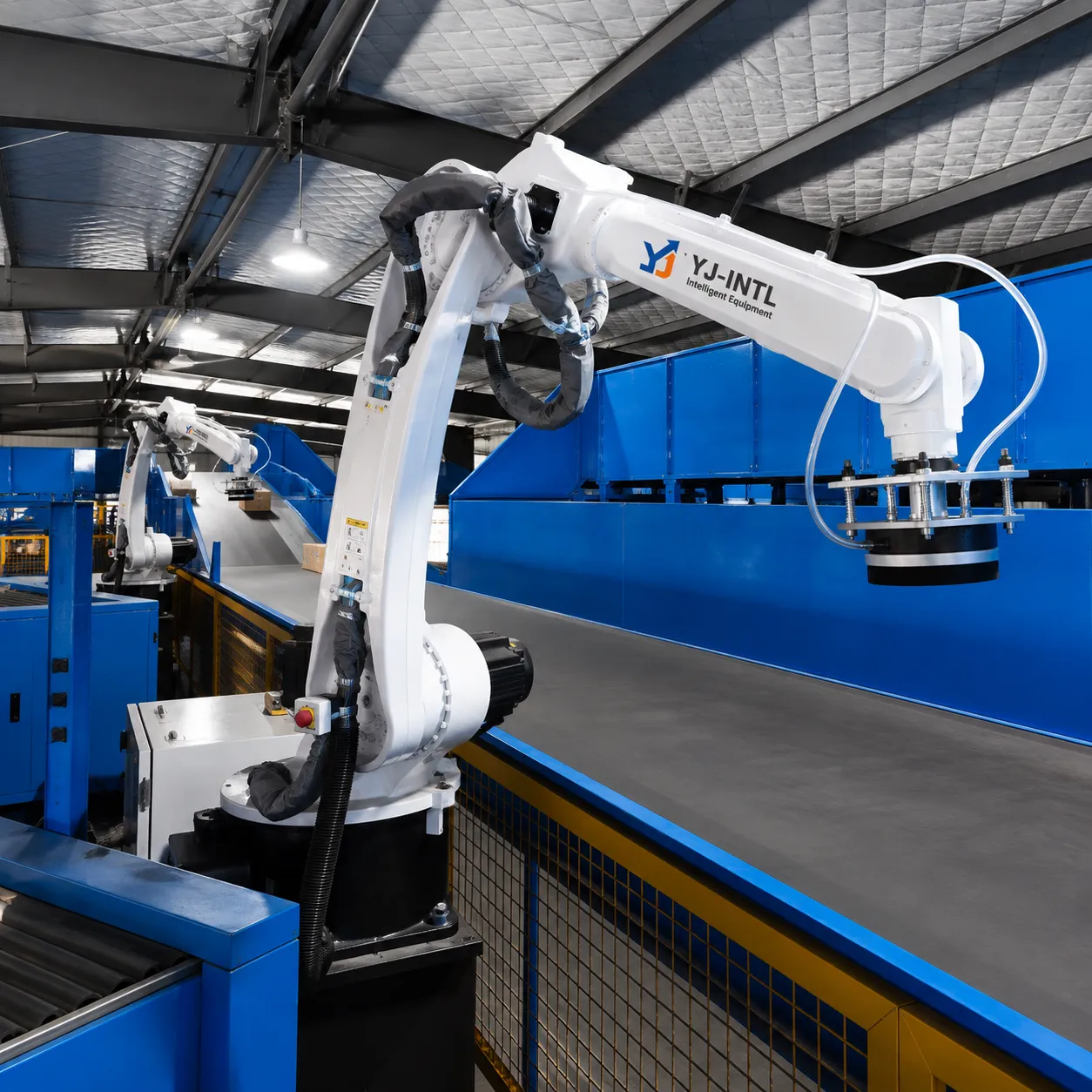
Parcels are introduced into the sorting line through a manual, automatic or hybrid induction process.
Controlled parcel spacing is important because it directly affects carrier assignment, line utilization and achievable throughput.
2. Identification and Data Capture
Barcode scanning identifies the parcel and provides the information required for routing.
Where required, DWS systems can capture parcel weight and dimensions and associate this information with the parcel record.
3. Carrier Assignment
The control system associates the parcel with a carrier and its destination.
This association must remain accurate while the carrier travels through the sorting section.
4. Continuous Transport
The carrier moves along the linear sorting track while the control system maintains the parcel's routing status.
The sorter therefore operates as a continuous material-flow system rather than a sequence of manual sorting decisions.
5. Destination Discharge
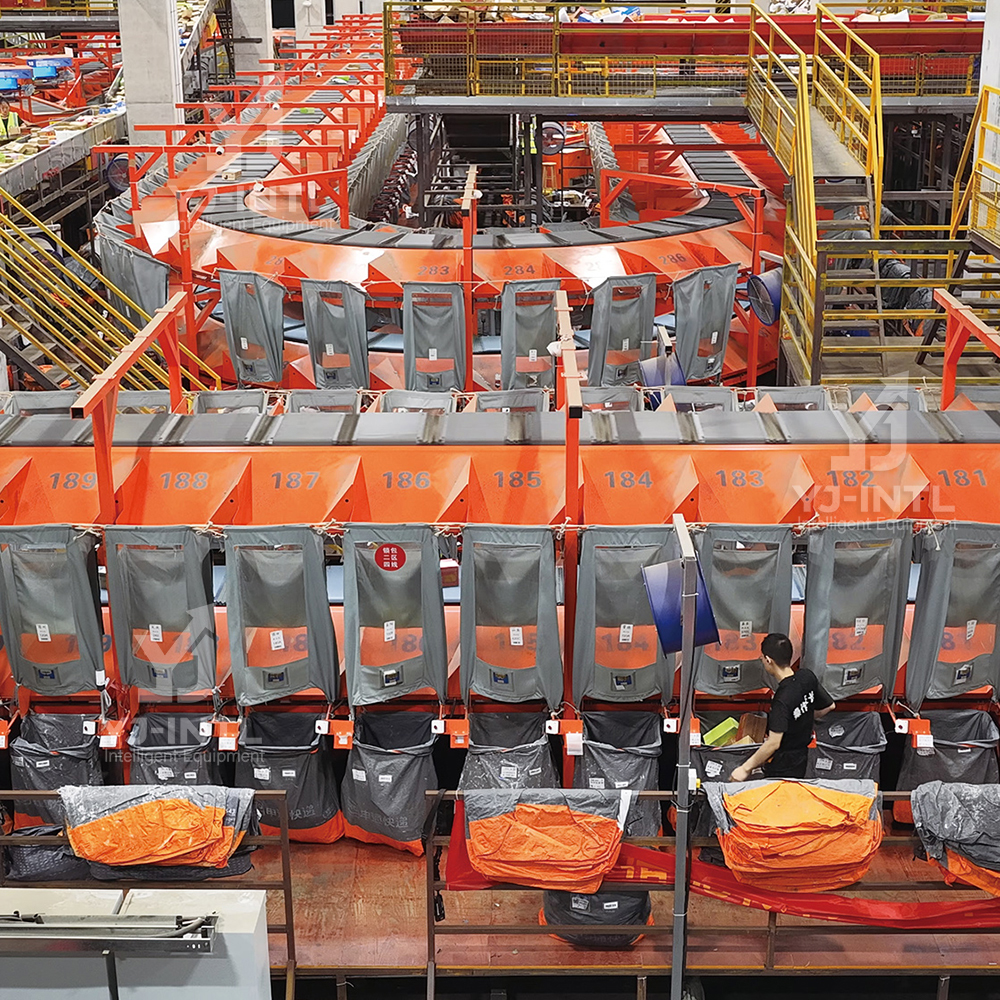
When the carrier reaches the assigned destination, the cross belt moves laterally and transfers the parcel to the designated chute or takeaway conveyor.
6. Downstream Processing
The sorted parcel then moves to consolidation, bagging, loading, packing or another downstream process.
The final system should be designed so downstream capacity does not become the bottleneck of the overall sorting line.
Core System Components
Induction System
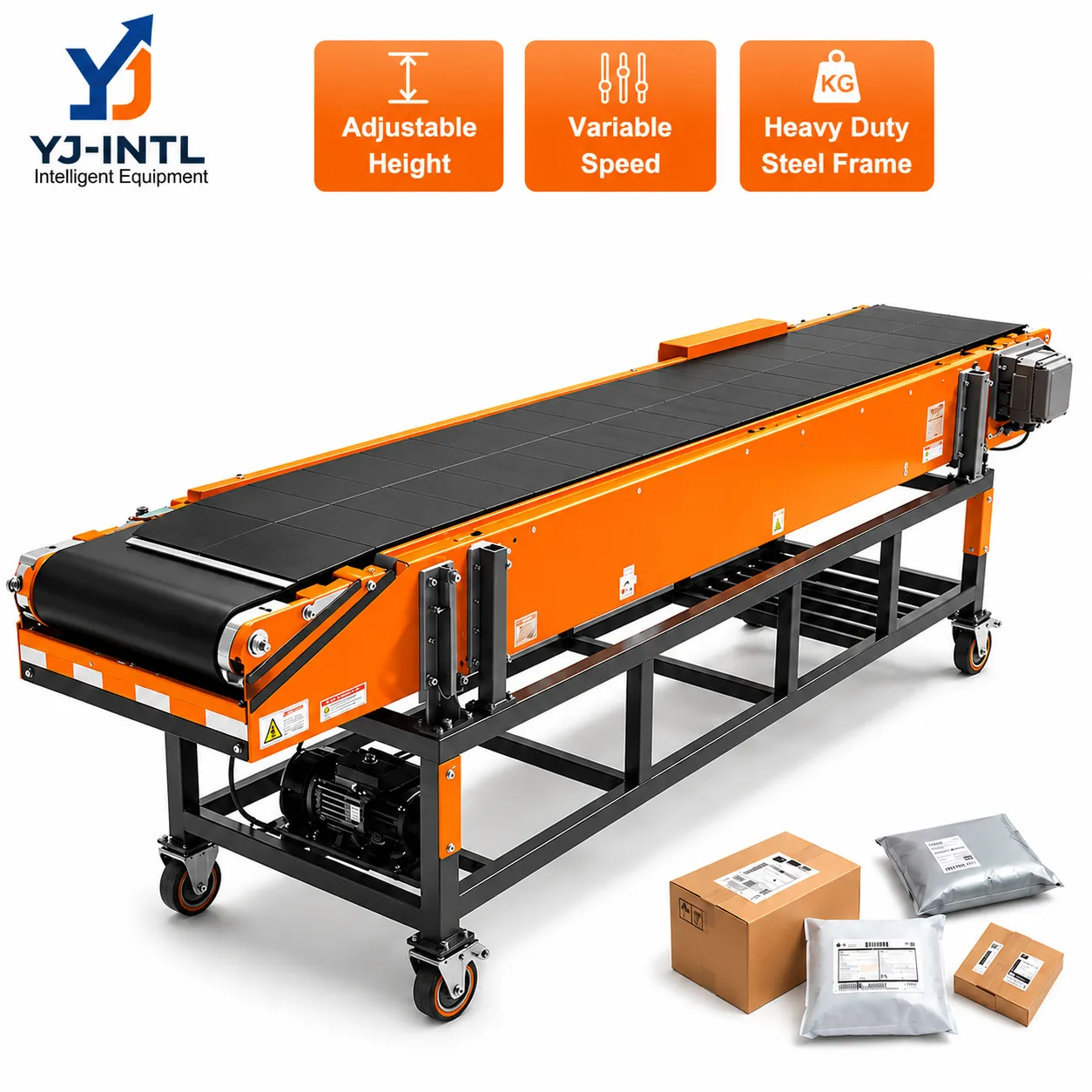
Feeds parcels into the sorter and establishes controlled parcel spacing.
Identification System
Barcode scanning and optional DWS equipment provide parcel information for routing.
Cross-Belt Carriers
Carry individual parcels through the sorting section and perform controlled lateral discharge.
Linear Track and Drive
Provides the carrier transport path and controlled movement throughout the sorting line.
Sorting Chutes
Receive parcels at their assigned destinations.
Takeaway Conveyors
Transfer sorted parcels to the next processing stage.
Control System
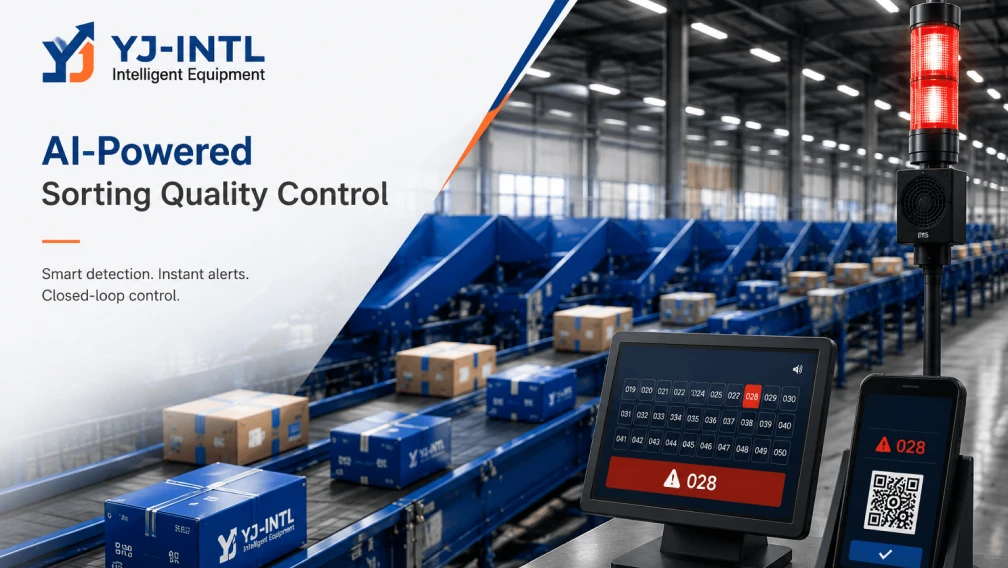
Coordinates carrier tracking, routing, discharge, equipment status and exception handling.
WMS/WCS Interface
Exchanges parcel, destination and operational information with warehouse software according to project requirements.
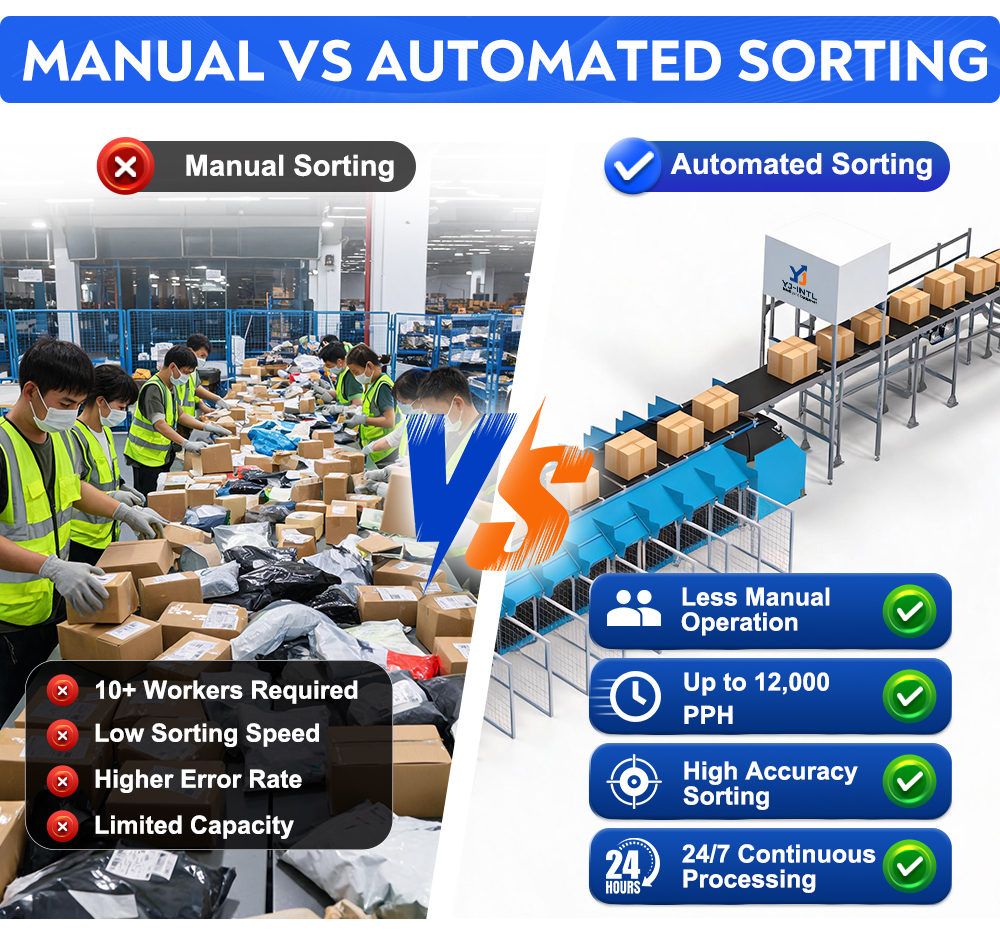
Linear Cross Belt Sorter vs. Manual Sorting
Automation becomes particularly valuable when repetitive sorting work has become a constraint on throughput, labor availability or sorting consistency.
The appropriate investment comparison should therefore consider labor requirements, peak volume, dispatch windows, error costs, floor space and future growth—not only equipment purchase price.
Integration with DWS, WMS and WCS
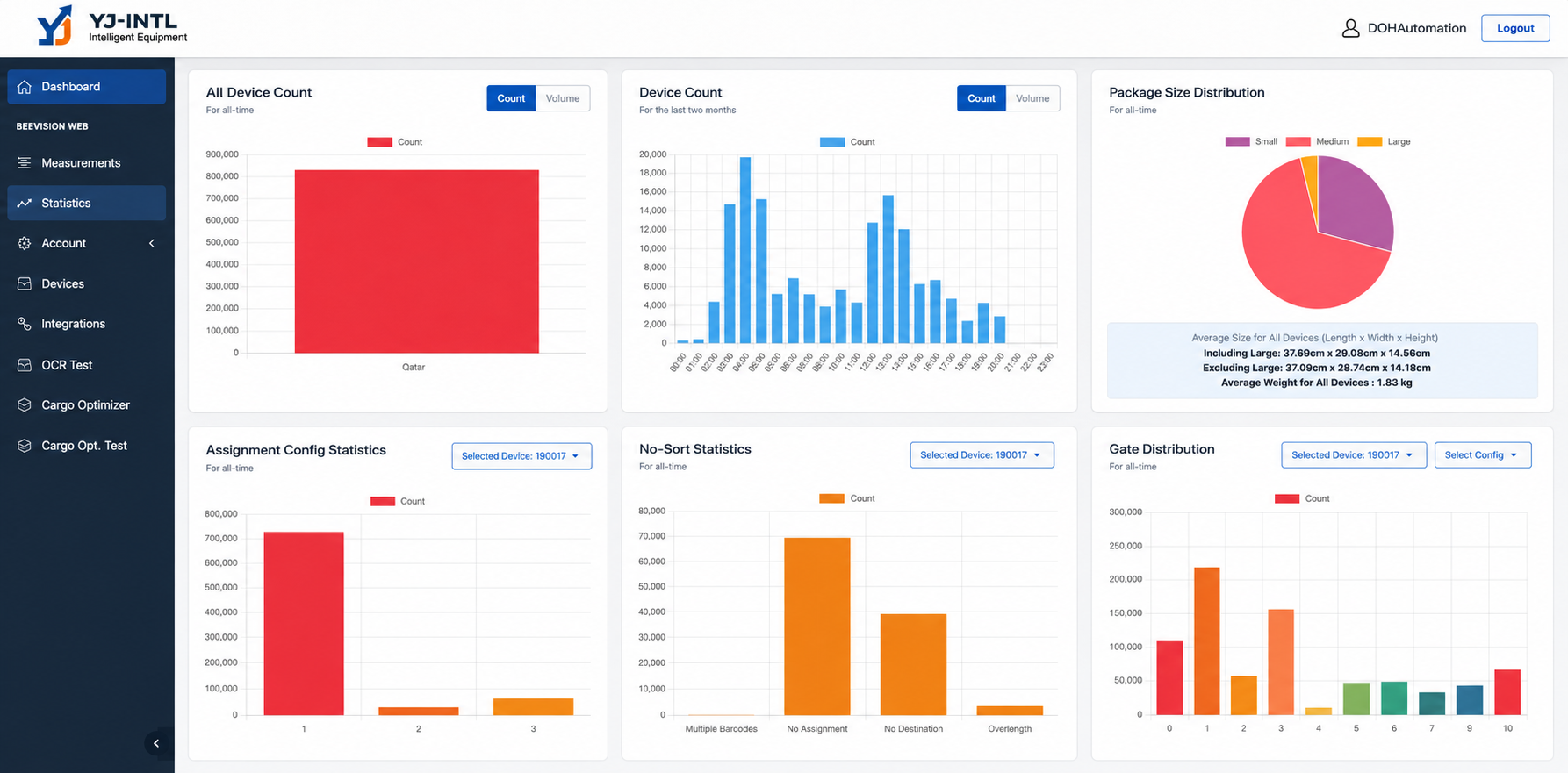
For a complete parcel automation line, the sorter must receive reliable identification data and return reliable execution status.
A typical architecture can connect barcode readers and DWS with the sorter control layer, while WMS/WCS provides or receives destination, parcel and equipment-status information.
Typical interface functions include:
- Parcel ID exchange
- Destination assignment
- Carrier tracking
- Divert confirmation
- Unread-code handling
- Exception routing
- Equipment alarms
- Production reporting
- Sorting status monitoring
Exact software interfaces should be defined during project engineering according to the customer's WMS/WCS architecture.
FAQ
The supplied YJ-INTL product material specifies a maximum capacity of up to 12,000 pieces/hour. Actual sustained throughput depends on carrier configuration, induction spacing, parcel mix, identification performance, destination distribution and downstream capacity.
The system can be engineered for parcels, cartons, bags and other stable unit loads that meet the final carrier and induction requirements. Parcel dimensions, weight, shape and packaging stability should be reviewed before final selection.
After a parcel is assigned to a destination, its carrier travels to the corresponding discharge point. The cross belt then moves laterally to transfer the parcel to the designated chute or takeaway conveyor while the main carrier flow continues.
Yes. Barcode scanning, weighing and dimensioning can be integrated according to the project design. The sorter can also exchange parcel and routing information with WMS/WCS and connect with upstream and downstream automation.
The destination count is project-specific. Chute quantity and positions are designed from the required destination list, facility layout, outbound process, throughput and future expansion requirements rather than a single fixed standard.
A quotation normally requires parcel dimensions and weight distribution, daily and peak volume, destination count, facility layout, induction method, barcode/read conditions, downstream process and WMS/WCS interface requirements. Parcel samples are useful when available.